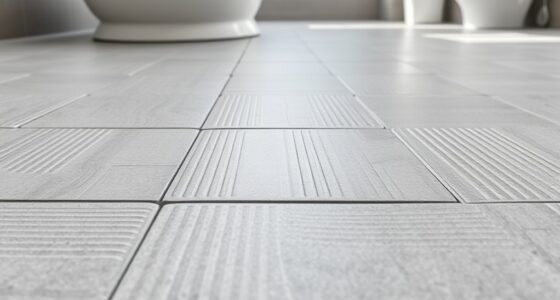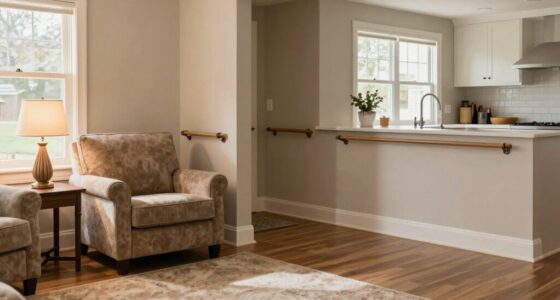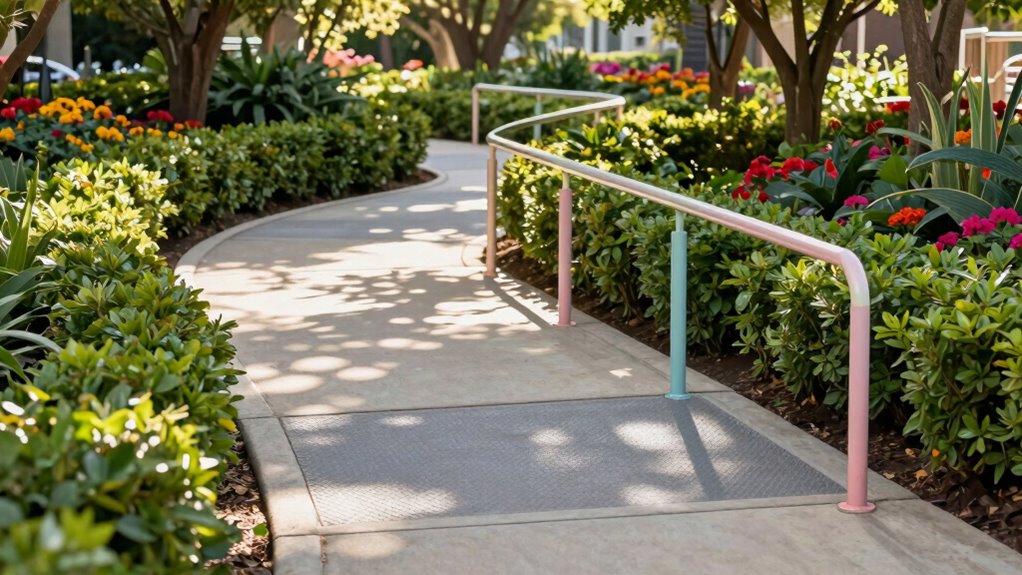

To make outdoor paths safer for seniors, focus on good lighting, such as motion-activated or solar-powered lights, to improve visibility at night. Choose non-slip surfaces like textured concrete or rubber mats, and keep pathways clear of obstacles and overgrowth. Design paths with gentle curves and add support features like handrails on steep sections. Regular maintenance and prompt repairs also prevent hazards. Keep exploring to discover more tips for creating a safe outdoor environment.

Get health and wellness essentials delivered free with Prime
- Fast, free delivery on millions of items
- Prime Video, Amazon Music and more included
- Member-only deals all year
Key Takeaways
- Install adequate, evenly spaced lighting to improve visibility and reduce shadows along the pathway.
- Use non-slip surfaces like textured concrete or rubber mats to prevent slips and falls.
- Design pathways with gentle curves, at least 36 inches wide, and add handrails on steep sections.
- Keep pathways clear of obstacles, overgrown plants, and debris to minimize tripping hazards.
- Incorporate proper drainage solutions to prevent water pooling and surface slipperiness.
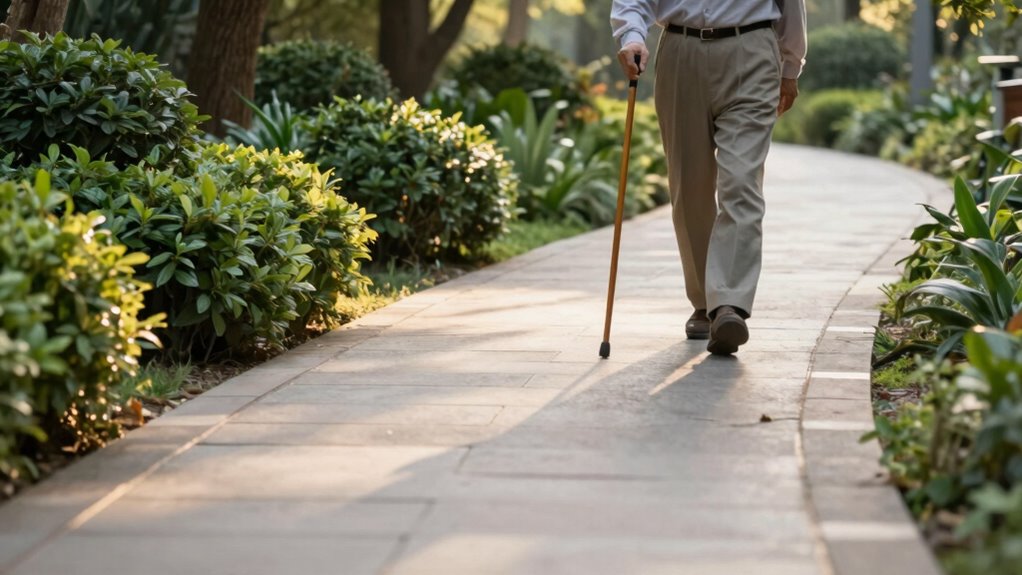
Ensuring outdoor paths and walkways are safe is essential for protecting seniors from falls and injuries. When you focus on safety, you create a space where seniors can move confidently without fear of slipping or tripping. One of the most effective ways to improve safety is by installing landscape lighting. Proper lighting illuminates walkways during the evening and nighttime hours, reducing shadows and making hazards more visible. Use motion-activated or solar-powered lights along the edges of paths to provide consistent illumination without adding to energy costs. Bright, evenly spaced lights help seniors see changes in terrain and avoid obstacles, ultimately decreasing the risk of falls.
In addition to lighting, the surface of your outdoor paths plays a critical role in safety. Non-slip surfaces are a must-have for walkways used regularly by seniors. Consider replacing loose gravel or uneven paving with textured concrete, rubber mats, or stamped concrete that provides better traction. Regular maintenance, such as sweeping away leaves, dirt, and debris, ensures surfaces stay slip-free. If your walkways are made of wood or other slick materials, apply anti-slip coatings or install textured strips to improve grip. Keep in mind that transitions between different surface types can be hazardous, so smoothing out any abrupt changes helps maintain a consistent level of safety. Proper surface choice is crucial for reducing slips and falls. Additionally, selecting surfaces with good drainage can prevent water accumulation, which increases slip risks during rainy conditions. Incorporating anti-slip coatings can further enhance traction on existing surfaces, providing extra safety for seniors. Regularly inspecting the surfaces for wear and tear will help identify potential hazards early and prevent accidents before they happen. Implementing proper drainage solutions is vital to ensure water does not pool on walkways, further reducing slip hazards.
You also want to pay attention to the design of the walkway itself. Curved paths are generally safer because they encourage slower, more controlled movement, but make sure they’re wide enough for easy navigation—about 36 inches minimum. Adding handrails or low barriers along steep or uneven sections offers additional support for those who need it. Clear, unobstructed pathways are vital, so remove any overgrown plants, garden tools, or outdoor furniture that could cause someone to trip. Regularly inspect your walkways for cracks, uneven patches, or loose stones, and repair them promptly to prevent accidents.
Finally, consider the overall environment around your outdoor paths. Keep the area well lit and free of clutter, and plant shrubs or bushes away from the walkway to avoid overhanging branches or low-hanging limbs that could cause falls. By combining proper landscape lighting, non-slip surfaces, and thoughtful pathway design, you’ll create a safer outdoor space where seniors can enjoy spending time comfortably and confidently. Your efforts will not only reduce the risk of injury but also promote independence and peace of mind for everyone using the outdoor area.
solar-powered outdoor pathway lights
As an affiliate, we earn on qualifying purchases.
As an affiliate, we earn on qualifying purchases.
Frequently Asked Questions
What Materials Are Best for Slip-Resistant Outdoor Walkways?
You should choose materials with a textured surface and high durability, like textured concrete, rubber pavers, or asphalt with a slip-resistant coating. These materials provide better traction, reducing slip risks. Avoid smooth surfaces that become slick when wet. By selecting durable materials with a rough surface texture, you guarantee your outdoor walkways stay safe and slip-resistant, offering seniors a reliable and secure path.
How Can Lighting Be Optimized for Nighttime Safety?
You want to shed light on nighttime visibility, so think of lighting placement as your guiding star. Position lights along the edges of walkways and at key points to eliminate dark spots. Use energy-efficient LED fixtures for consistent brightness and easy maintenance. Guarantee the lighting is evenly spaced and not too harsh, creating a safe environment that helps seniors navigate confidently after sunset. Proper lighting truly makes all the difference.
Are There Specific Design Features That Reduce Trip Hazards?
You can reduce trip hazards by adding non-slip rugs along walkways and ensuring they’re securely fixed. Installing sturdy handrails along slopes or steps provides extra support, helping seniors maintain balance. Keep pathways clear of clutter, and choose smooth, even surfaces to prevent stumbling. Regularly inspect for uneven sections or loose paving, and promptly repair them. These design features make outdoor paths safer, giving seniors confidence and independence while walking.
How Often Should Outdoor Paths Be Inspected and Maintained?
You should inspect and maintain outdoor paths at least quarterly, or more often if there’s frequent use or adverse weather. Establish a regular maintenance schedule that includes checking for cracks, uneven surfaces, and debris. Inspection frequency depends on usage and conditions, but consistent evaluations guarantee hazards are identified early. Prompt repairs and upkeep keep walkways safe, reducing trip risks for seniors and maintaining accessibility all year round.
What Are Affordable Ways to Upgrade Existing Walkways?
You can upgrade existing walkways affordably by adding landscape edging to define and protect the path, reducing trips and falls. Guarantee proper walkway drainage by clearing debris and fixing any low spots or uneven surfaces, which helps prevent water pooling and slipping. Consider applying a textured, non-slip coating or adding grip tape to the surface. These simple, cost-effective improvements enhance safety without major renovations, making outdoor paths safer for seniors.
As an affiliate, we earn on qualifying purchases.
Conclusion
By taking these simple steps, you can create outdoor paths that are safer and more accessible for seniors. Imagine Mrs. Thompson, who struggled with uneven walkways but now enjoys her garden again after adding smooth, slip-resistant surfaces and clear markings. Small changes like these can greatly boost confidence and independence. So, start evaluating your outdoor spaces today—your loved ones will thank you for making their environment safer and more inviting.
As an affiliate, we earn on qualifying purchases.
As an affiliate, we earn on qualifying purchases.
Halloween Picks
halloween
As an affiliate, we earn on qualifying purchases.