
To safely declutter and simplify your home, start by evaluating your storage options and organizing belongings to maximize space. Recognize and honor emotional attachments, taking photos of keepsakes to reduce physical clutter. Tackle small areas step-by-step, celebrating each success to stay motivated. Use intention and reflection to decide what to keep, letting go of items that no longer serve you. Continue exploring ways to create a peaceful, functional space that fits your lifestyle.

Get health and wellness essentials delivered free with Prime
- Fast, free delivery on millions of items
- Prime Video, Amazon Music and more included
- Member-only deals all year
Key Takeaways
- Evaluate your storage options and organize belongings to maximize space and accessibility safely.
- Prioritize sentimental items by capturing photos and decluttering in small, manageable steps.
- Use systematic sorting methods and set clear goals to streamline the decluttering process safely.
- Incorporate storage solutions like bins and shelves to reduce clutter and create a safer, more functional home.
- Practice patience, celebrate small victories, and maintain consistency to sustain a simplified, clutter-free environment.

Have you ever felt overwhelmed by the clutter in your home? It’s a common experience, and tackling it can seem intimidating. The key is to approach decluttering with a clear plan, starting with understanding your storage solutions and recognizing emotional attachment. Your belongings aren’t just objects; they often carry memories, making it tough to let go. But by addressing this emotional attachment directly, you can free yourself from unnecessary clutter and create a more serene space.
Overwhelmed by clutter? Tackle it with a plan, understanding storage and emotional ties for a calmer, more organized home.
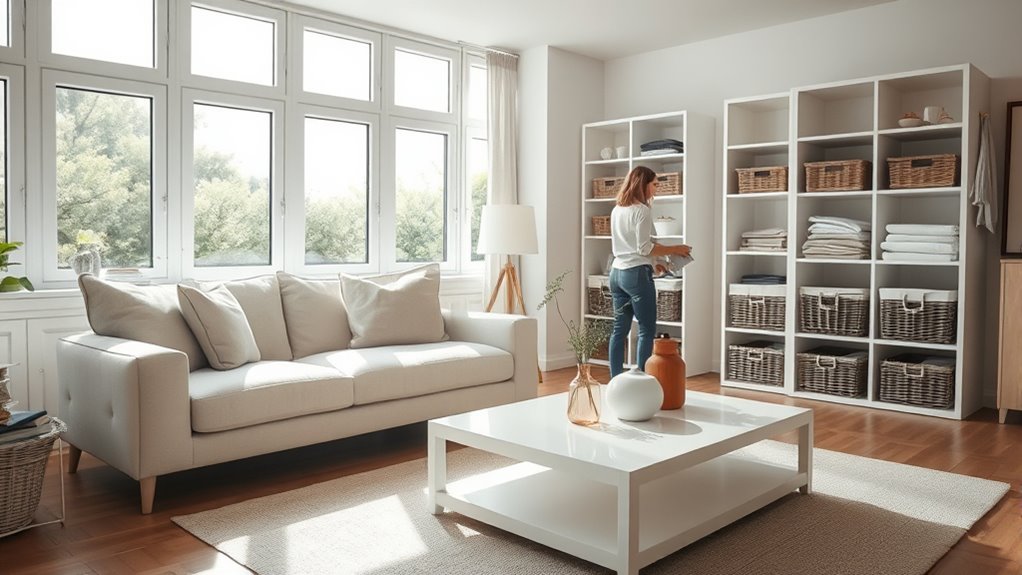
First, assess your current storage solutions. Do you have enough space to keep what genuinely serves you? If not, it’s time to get creative. Invest in smart storage options like stackable bins, under-bed drawers, or wall-mounted shelves. These solutions help maximize every inch of your home, making it easier to organize and access your belongings. When your storage is functional and efficient, clutter has fewer places to hide, and your home immediately feels more spacious and orderly.
Next, acknowledge the emotional attachment you might have to certain items. It’s natural to feel sentimental about keepsakes, but it’s also important to be honest about whether those objects truly add value to your life now. Take a moment to reflect on why you’re holding onto each item. Does it bring you joy or serve a practical purpose? If not, consider gently letting it go. Remember, letting go doesn’t mean forgetting or dismissing the memories attached to these objects. Instead, it’s about creating space for new experiences and reducing the mental burden associated with clutter.
To make this process easier, consider taking photos of items that hold sentimental value. This allows you to preserve the memory without keeping the physical object. When you’re ready, set aside a dedicated decluttering session. Break it into manageable chunks—perhaps a drawer or a box at a time. Be decisive, and remind yourself that you’re creating a home environment that supports your well-being, not one that’s weighed down by unnecessary possessions.
Throughout this process, keep in mind that decluttering is a journey, not a one-time event. Celebrate small victories, like clearing a shelf or organizing a closet. Over time, your storage solutions will improve, and your home will reflect your true priorities and lifestyle. Ultimately, decluttering isn’t about perfection; it’s about designing a space that feels welcoming, functional, and free of the emotional weight of clutter. With patience and intentionality, you’ll find yourself enjoying a simpler, more peaceful home.
Additionally, exploring grocery savings strategies can free up resources that support a more organized lifestyle, reducing the tendency to accumulate unnecessary items.
stackable storage bins for closet
As an affiliate, we earn on qualifying purchases.
As an affiliate, we earn on qualifying purchases.
Frequently Asked Questions
How Often Should I Declutter My Home?
You should declutter your home every three to six months to maintain a tidy space. Incorporate storage solutions that maximize space and support your minimalist habits, making it easier to keep things organized. Regular decluttering prevents clutter from piling up and helps you stay mindful of what you truly need. By establishing a routine, you’ll enjoy a simplified, stress-free environment that stays functional and clutter-free with less effort.
What Are Eco-Friendly Disposal Options for Unwanted Items?
Think of your unwanted items as seeds for new growth. To dispose of them eco-friendly, take usable goods to donation charities, giving them a second chance. For other items, visit local recycling centers to guarantee proper processing. By choosing these options, you help reduce waste and support sustainability. Your mindful disposal not only declutters your space but also nurtures the environment, turning your clutter into positive change.
How Do I Involve Children in Decluttering?
You can involve children in decluttering by encouraging child participation through fun decluttering games. Turn it into a game where they find items to donate or organize, making the process playful and engaging. Set clear, age-appropriate tasks and praise their efforts. This approach helps children feel involved and teaches them valuable skills, all while making decluttering a positive experience for the whole family.
Can Decluttering Reduce Stress and Anxiety?
Decluttering can definitely reduce stress and anxiety by promoting mindful organization and emotional clearing. When you clear clutter, you create a calm environment that helps your mind relax. As you organize your space, you gain a sense of control and clarity, which eases worries. Taking small steps toward decluttering allows you to experience these benefits gradually, making your home a peaceful sanctuary and improving your overall well-being.
What Tools or Organizers Help Maintain a Simplified Space?
You can keep your space simple with smart storage solutions and clear labeling systems. Baskets and stackable bins help organize clutter, while drawer dividers create designated spots for smaller items. Label everything clearly, so you know where things belong, reducing chaos and saving time. These tools make it easy to maintain a tidy, stress-free home, turning decluttering into a manageable, even satisfying, routine.
As an affiliate, we earn on qualifying purchases.
Conclusion
Remember, decluttering can boost your mental clarity and even reduce stress. Did you know that a cluttered space can increase cortisol levels, the stress hormone? By taking small, consistent steps to simplify your home, you’ll create a more peaceful environment and improve your overall well-being. So, start today—your calmer, more organized space is within reach. Keep at it, and enjoy the benefits of a simplified home that truly feels like your sanctuary.
wall mounted shelves for living room
As an affiliate, we earn on qualifying purchases.
As an affiliate, we earn on qualifying purchases.
As an affiliate, we earn on qualifying purchases.
Cold & flu season Picks
humidifiers
As an affiliate, we earn on qualifying purchases.