
To create safer walking paths through your busy home, regularly remove obstacles like toys, tools, or debris, and keep walkways clear and wide enough for easy passage. Repair uneven surfaces and use durable, visible materials with clear markings or edging. Add safety features like handrails and proper lighting to improve visibility and support. Incorporate signage to alert of hazards and guarantee paths are well-maintained. For more practical tips on enhancing your home’s safety, keep exploring how each step can make a difference.

Get health and wellness essentials delivered free — and shop member deals
- Fast, free delivery on millions of items
- Access to Prime Big Deal Days deals on October 6–7
- Prime Video, Amazon Music and more included
Key Takeaways
- Regularly inspect and clear walkways of toys, debris, and overgrown plants to prevent tripping hazards.
- Repair uneven surfaces and use durable, consistent materials to ensure smooth, safe pathways.
- Install clear signage and reflective markings to guide pedestrians and alert them to hazards.
- Improve lighting along pathways for enhanced visibility during nighttime and low-light conditions.
- Add handrails and safety features where needed to assist mobility and prevent falls.
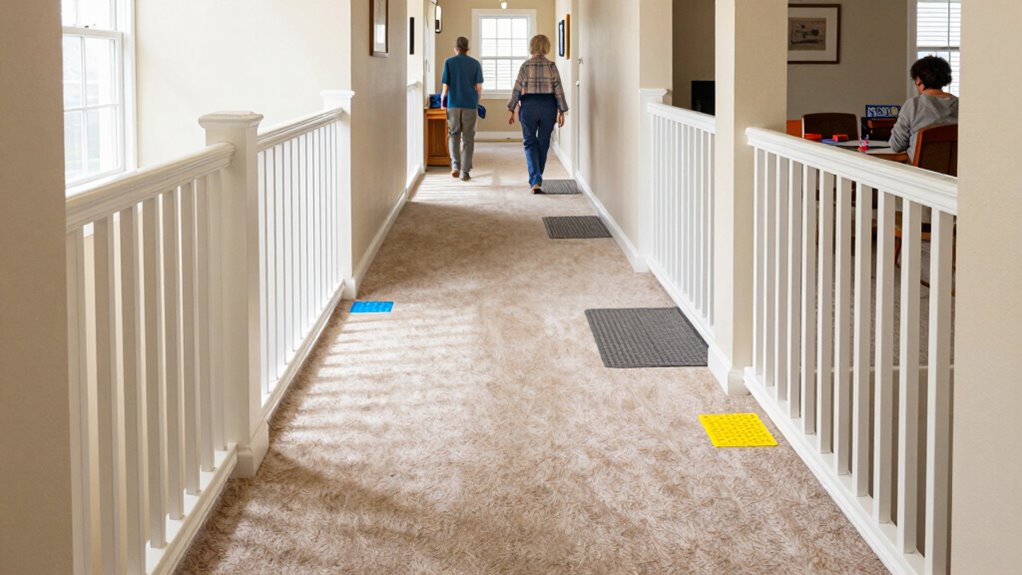
Obstacle clearance is equally important in creating a safe walking environment. Regularly check your walkways for any objects that might cause tripping or obstruction. This helps prevent accidents and maintains a safe pathway. This includes small items like toys, garden tools, or debris, as well as larger hazards such as uneven pavement or loose stones. By keeping your pathways clear of obstacles, you reduce the risk of falls and injuries. Trim overgrown plants or branches that might encroach on the walking space, and ensure that pathways are wide enough for comfortable passage. If you have uneven surfaces, consider leveling or repairing them to create a smooth, consistent surface for walking. Additionally, understanding mental wellbeing can encourage you to stay attentive and proactive about safety in your environment, reducing stress and increasing mindfulness during walks. Incorporating appropriate signage can also serve as a reminder to stay cautious and aware of potential hazards, further promoting safety. Incorporating durable materials in your walkway construction can enhance long-term safety and reduce maintenance needs. Adding clear, visible markings or edging can help define the path, guiding pedestrians and preventing them from wandering into unsafe areas. Reflective paint or tape can be helpful for marking edges or steps, especially in low-light conditions, making sure the path is clearly visible at night. Regularly inspecting your pathways can also help identify wear and tear early, preventing small issues from becoming major hazards. Lastly, consider incorporating safety features like handrails or signage where appropriate. Handrails can assist those with mobility challenges, while signs can warn of any ongoing maintenance or hazards. Proper lighting is essential for nighttime safety, as it ensures visibility and reduces the likelihood of accidents. When you prioritize lighting improvements and obstacle clearance, you create a walking environment that’s inviting, accessible, and safe for everyone in your busy home.
As an affiliate, we earn on qualifying purchases.
Frequently Asked Questions
How Can I Improve Lighting Along the Walking Paths?
You can improve lighting along your walking paths by installing motion sensors and solar lighting. Motion sensors turn on lights automatically when you approach, enhancing safety and conserving energy. Solar lighting is eco-friendly and easy to install, providing consistent illumination without wiring. Combining these options guarantees your paths stay well-lit during all hours, reducing tripping hazards and making your home safer and more accessible for everyone.
What Are the Best Materials for Non-Slip Flooring?
Like a wise old owl, you need durable materials for safety. Opt for non-slip coatings or textured surfaces that grip underfoot, reducing slips and falls. Rubber, vinyl, and textured tiles are excellent choices, providing traction and resilience. These materials mimic the roughness of natural terrains, making your walking paths safer and more secure, especially in high-traffic areas or where spills are common.
How Do I Mark the Walking Paths Clearly?
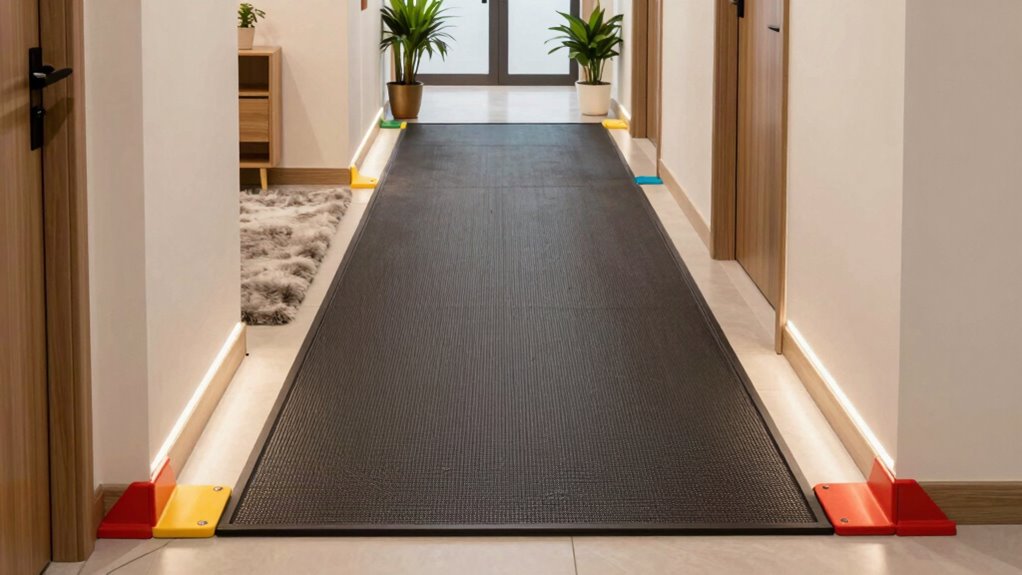
You can mark walking paths clearly by using visual cues like colorful tape, rugs, or painted lines to define the route. Incorporate path delineation techniques such as contrasting colors or patterns that stand out against the floor. Keep the markings consistent and simple, ensuring they’re easy to follow at a glance. Regularly maintain and update these visual cues to keep pathways obvious and safe for everyone traversing your busy home.
Are There Specific Safety Signs to Consider?
Yes, you should consider using specific safety signs to improve walkability. Incorporate visual signage with clear safety symbols, like arrows or caution signs, to guide everyone safely. Place these signs at key points, such as entrances, narrow passages, or near obstacles. Using consistent, easily recognizable safety symbols helps people quickly understand the message, reducing accidents and making your home’s walking paths safer and more efficient for everyone.
How Can I Prevent Pets From Blocking the Paths?
Coincidentally, pet barriers and training techniques can keep pets from blocking paths. You can set up physical barriers like gates at key entrances to prevent pets from wandering into walkways. Consistently applying training techniques, such as rewarding good behavior and redirecting pets, helps them learn to stay clear of busy paths. Combining these methods creates a safer, more accessible home environment, reducing accidents and keeping your walking routes clear.
reflective safety tape for walkways
As an affiliate, we earn on qualifying purchases.
As an affiliate, we earn on qualifying purchases.
Conclusion
By taking these simple steps, you can transform your home into a safer space for everyone. It’s understandable to worry about the effort involved, but think of the peace of mind you’ll gain knowing loved ones can move around confidently and securely. Don’t let fear hold you back—your proactive choices protect those you care about most. A safer home isn’t just a goal; it’s a heartfelt gift that keeps your family protected and connected.
handrails for stairs and walkways
As an affiliate, we earn on qualifying purchases.
As an affiliate, we earn on qualifying purchases.
As an affiliate, we earn on qualifying purchases.
Halloween Picks
halloween
As an affiliate, we earn on qualifying purchases.