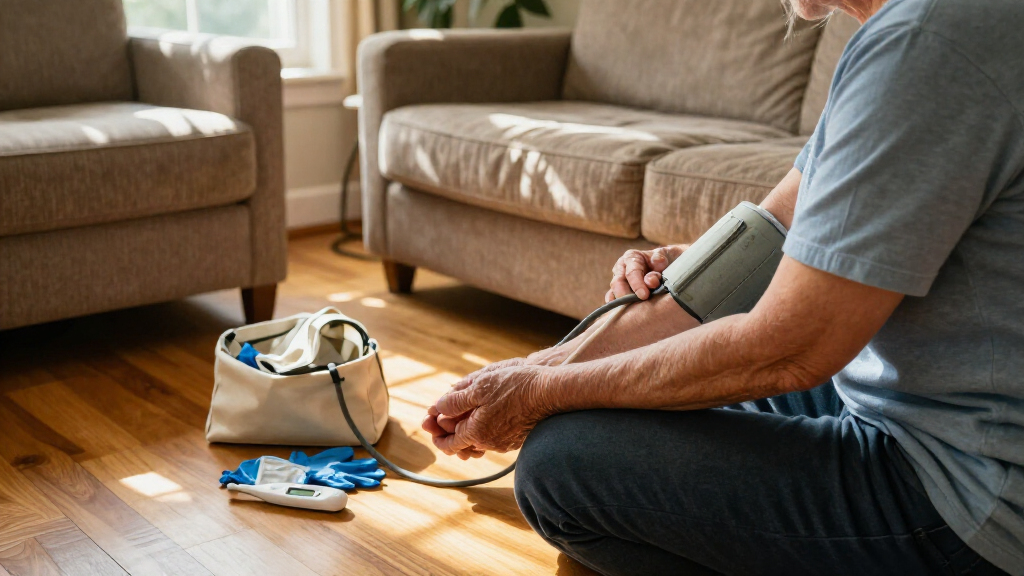

Finding the best home health aide supplies requires balancing durability with ease of use for both the caregiver and the patient. My top pick is the Washable Positioning Bed Pad with 8 Reinforced Handles, which stands out for its superior grip strength and machine-washable design that withstands frequent sanitization. For those prioritizing documentation and compliance, the Caregiver Daily Log Book offers a structured format that simplifies shift handoffs and insurance reporting. While adhesive bandages and first aid kits are essential staples, the real differentiator in this category is whether a tool reduces physical strain during repetitive tasks. This roundup breaks down the tradeoffs between bulk consumables and specialized equipment to help you build a kit that lasts.

Get health and wellness essentials delivered free with Prime
- Fast, free delivery on millions of items
- Prime Video, Amazon Music and more included
- Member-only deals all year
Key Takeaways
- Reinforced handle placement on positioning pads directly correlates with caregiver back safety and patient comfort during transfers.
- Structured log books with pre-printed fields reduce documentation errors compared to blank notebooks, a critical factor for agency compliance.
- Latex-free bandage options are no longer a niche preference but a standard requirement for avoiding allergic reactions in vulnerable populations.
- Long-reach tools with magnetic tips offer better utility than standard grabbers for retrieving small medical supplies like pill bottles.
- Waterproof bed pads with breathable backing prevent skin maceration, whereas cheaper vinyl alternatives can trap heat and moisture.
| Washable Positioning Bed Pad with 8 Reinforced Handles, 34 x 52 in, Navy |  | Best for Transfers and Bed Protection | Dimensions: 34 x 52 in | Color: Navy | Handles: 8 reinforced handles | VIEW LATEST PRICE | See Our Full Breakdown |
| The Home Health Aide Handbook (6th Edition) |  | Best Training Reference | Edition: 6th Edition | Format: Printed handbook | Topics: Caregiving techniques, regulatory standards, and day-to-day scenarios | VIEW LATEST PRICE | See Our Full Breakdown |
| BAND-AID Flexible Fabric Adhesive Bandages, Assorted Sizes, 100 Count |  | Best Everyday Wound-Care Refill | Count: 100 | Sizes: Assorted | Material: Flexible fabric with Memory Weave Technology | VIEW LATEST PRICE | See Our Full Breakdown |
| Caregiver Daily Log Book |  | Best for Shift-to-Shift Notes | Format: Daily log book | Records: Daily needs, vital signs, medications, and meals | Intended users: Nurses, CNAs, and home health aides | VIEW LATEST PRICE | See Our Full Breakdown |
| BAND-AID Brand Travel Ready Portable First Aid Kit, 80 Pieces |  | Best Portable First-Aid Assortment | Piece count: 80 | Case: Durable, compact, portable, and refillable | Contents: Cleansing wipes, gauze pads, antibiotic cream, pain relief caplets, and adhesive bandages | VIEW LATEST PRICE | See Our Full Breakdown |
| Band-Aid Brand Adhesive Bandages Family Pack, Assorted Sizes, 280 Count |  | Best for Everyday First-Aid Coverage | Count: 280 | Sizes: 5 different sizes and shapes | Bandage mix: 210 sheer and 70 clear | VIEW LATEST PRICE | See Our Full Breakdown |
| A4 Storage Clipboard with Pen Holder, Side-Opening Compartment, and Low-Profile Clip |  | Best for Carrying Visit Paperwork | Dimensions: 14.4 x 9.8 x 1.2 inches | Weight: 440 g | Material: Polypropylene, metal, and rubber | VIEW LATEST PRICE | See Our Full Breakdown |
| Wound Care Nurse Reference Cards with Badge Reel |  | Best Pocket Reference for Wound Care | Pages: 20 | Material: Waterproof PVC | Size: Credit-card size | VIEW LATEST PRICE | See Our Full Breakdown |
| CURAD Assorted Bandages Variety Pack, 300 Count, 6 Styles, Latex-Free |  | Best Variety for a Shared First-Aid Kit | Count: 300 | Styles: 6 | Antibacterial bandages: 30 | VIEW LATEST PRICE | See Our Full Breakdown |
| CUFOTPLS Washable Waterproof Positioning Bed Pad with Handles, 34 x 52 in |  | Best Reusable Aid for Bed Repositioning | Brand: CUFOTPLS | Dimensions: 34 x 52 inches | Material: Polyester | VIEW LATEST PRICE | See Our Full Breakdown |
| Caregiver Daily Log Book, 8.5 x 11 Inches, 100 Pages |  | Best for Coordinated Care Documentation | Pages: 100 | Page size: 8.5 x 11 inches | Paper: 80 gsm offset paper | VIEW LATEST PRICE | See Our Full Breakdown |
| BAND-AID Brand Tru-Stay Sheer Adhesive Bandages, Assorted Sizes, 80 Count |  | Best for Individually Wrapped Everyday Wound Care | Count: 80 | Sizes: Assorted | Latex-free: Yes | VIEW LATEST PRICE | See Our Full Breakdown |
| 32-Inch Folding Reacher Grabber Tool with Magnetic Tip and Swivel Head, Purple |  | Best for Reaching and Retrieving Small Items | Length: 32 inches | Head rotation: 360 degrees | Magnet: 8 mm | VIEW LATEST PRICE | See Our Full Breakdown |
| Fanwer Long-Reach Toilet Aid for Toilet Paper and Wipes |  | Best for Toileting Assistance | Length: 14 inches | Materials: Plastic and rubber | Compatible materials: Toilet paper and pre-moistened wipes | VIEW LATEST PRICE | See Our Full Breakdown |
More Details on Our Top Picks
Washable Positioning Bed Pad with 8 Reinforced Handles, 34 x 52 in, Navy
For aides who need both bedding protection and help repositioning a client, this pad combines two useful tasks in one washable layer. Its eight reinforced handles provide multiple grip points for assisted movement, while the waterproof base helps keep moisture off the mattress. Compared with the CUFOTPLS Washable Waterproof Positioning Bed Pad in this roundup, the listed details here specify a capacity of up to 400 pounds and durability through 500-plus washes, which helps caregivers plan for repeated use. The tradeoff is that laundering is part of the routine, and a 34-by-52-inch pad may not suit every bed or transfer setup. I’d choose it for recurring home-care use, not as a substitute for a transfer device or hands-on safety guidance.
Pros:- Combines an absorbent bed pad with handles for repositioning
- Eight reinforced handles provide several grip points
- Waterproof base helps protect the mattress
- Designed for reuse through 500-plus washes
Cons:- Requires regular laundering to keep it ready for use
- The 34-by-52-inch dimensions may not fit every bed or care arrangement
Best for: Home health aides and family caregivers who regularly reposition a bedbound person and want a reusable pad that also protects bedding.
Not ideal for: Caregivers who need a pad sized for a nonstandard bed or who cannot manage frequent laundering.
- Dimensions:34 x 52 in
- Color:Navy
- Handles:8 reinforced handles
- Weight capacity:Up to 400 lbs
- Care:Washable and reusable
- Wash durability:500+ washes
- Backing and base:Non-slip backing; waterproof base
Our verdict“Choose this pad for repeated bed care that calls for both moisture protection and repositioning support, provided its size fits your setup.”
The Home Health Aide Handbook (6th Edition)
This handbook is the most education-focused choice in the group: it covers caregiving techniques, regulatory standards, and practical situations rather than supplying equipment for a shift. Its organized explanations and case studies can help new aides connect general guidance with day-to-day care, while experienced workers may use it to revisit core responsibilities. Unlike the Caregiver Daily Log Book, which is built to record a particular client’s needs, this book offers broader instruction and reference material. That breadth also makes it a less convenient tool for quick checks during a busy visit. The printed content can age as rules change, and limited diagrams may not suit readers who learn best visually. I’d treat it as a study and orientation resource, then check current workplace policies for operational decisions.
Pros:- Covers core home health aide responsibilities
- Organized layout helps readers locate topics
- Case studies connect guidance to practical situations
- Includes regulatory standards and care practices
Cons:- Dense text can be difficult to use for quick lookups
- Limited diagrams and photos may not suit visual learners
- Printed regulatory information may become outdated
Best for: New home health aides studying core caregiving responsibilities, and experienced aides seeking a structured refresher outside active care visits.
Not ideal for: Aides who need a fast, visual bedside reference or current policy guidance for a specific employer or jurisdiction.
- Edition:6th Edition
- Format:Printed handbook
- Topics:Caregiving techniques, regulatory standards, and day-to-day scenarios
- Learning features:Explanations and practical case studies
Our verdict“Pick this handbook for structured learning and a broad refresher, but verify current rules through your employer or relevant authorities.”
BAND-AID Flexible Fabric Adhesive Bandages, Assorted Sizes, 100 Count
For a caregiver restocking routine supplies, this box prioritizes flexible coverage over a broad first-aid assortment. The stretchable fabric is designed to move with the body, and the cushioned, nonstick pad helps shield minor cuts, scrapes, and burns while allowing gentler removal. Individually wrapped bandages make it easier to keep a few on hand without carrying an entire kit. Compared with the BAND-AID Brand Travel Ready Portable First Aid Kit, this option gives you more bandages in assorted sizes but lacks its wipes, gauze, and other supplies for treating a wider range of minor mishaps. These bandages are for minor wounds, not a replacement for appropriate clinical assessment, and they need changing daily, when wet, or as needed. I’d pick them as a replenishment staple rather than a full first-aid solution.
Pros:- Stretchable fabric moves with the body
- Cushioned nonstick pad helps protect minor wounds
- Individually wrapped for clean storage and carrying
- Assorted sizes suit a range of small cuts and scrapes
Cons:- Limited to minor cuts, scrapes, and burns
- Bandages need changing daily, when wet, or as needed
Best for: Home health aides and family caregivers who frequently need individually wrapped, flexible bandages for minor wounds.
Not ideal for: Caregivers assembling a complete first-aid kit or seeking dressings for wounds that need more than a standard adhesive bandage.
- Count:100
- Sizes:Assorted
- Material:Flexible fabric with Memory Weave Technology
- Pad:Quilt-Aid Comfort Pad and nonstick Hurt-Free Pad
- Sterility:Sterile, individually wrapped
- Wear time:Up to 24 hours
- Latex:Not made with natural rubber latex
- Intended use:Minor cuts, scrapes, and burns
Our verdict“Choose this box as a flexible bandage refill, not as a substitute for the broader supplies in a portable first-aid kit.”
Caregiver Daily Log Book
A daily log can help caregivers keep essential routine details together instead of relying on memory or scattered notes. This book is designed to record daily needs, vital signs, medications, and meals, making it a practical fit for aides coordinating care across visits or handing information to another caregiver. Compared with The Home Health Aide Handbook, it is not a training resource; its purpose is to document what happened with a particular person. That narrower focus is useful, but the supplied product details do not specify page count, layout, or room for longer notes, so buyers cannot judge how much information each entry accommodates. A written log also depends on consistent, careful completion and should be handled in line with privacy practices. I’d select it for routine tracking, while keeping a separate reference for care procedures.
Pros:- Provides one place to record daily care information
- Includes tracking for vital signs and medications
- Meal records can help communicate routine intake
- Intended for nurses, CNAs, and home health aides
Cons:- Product details do not specify page count or entry layout
- Paper records require consistent completion and careful handling
- Does not provide caregiving instructions or clinical guidance
Best for: Home health aides and family caregivers who need a dedicated paper record for daily care details and handoffs.
Not ideal for: Care teams that need a digital shared record, extensive narrative space, or a specified page layout before purchasing.
- Format:Daily log book
- Records:Daily needs, vital signs, medications, and meals
- Intended users:Nurses, CNAs, and home health aides
Our verdict“Choose this log book when your priority is recording daily care and sharing routine information between caregivers.”
BAND-AID Brand Travel Ready Portable First Aid Kit, 80 Pieces
This kit suits aides who want a compact assortment ready for minor wound care away from a fully stocked supply cabinet. Its 80 pieces include cleansing wipes, gauze pads, antibiotic cream, pain relief caplets, and assorted latex-free bandages, so it covers more steps than a box of adhesive bandages alone. The refillable case also makes it easier to keep supplies together between home visits or in a vehicle. Compared with the BAND-AID Flexible Fabric Adhesive Bandages, the kit is broader and more portable, but it contains fewer bandages and some supplies will need replenishing as they’re used. It is meant for minor injuries and temporary pain, not serious emergencies; check contents and suitability before use. I’d choose it for mobile, basic readiness rather than as a replacement for a properly equipped emergency response kit.
Pros:- Includes supplies for cleaning and covering minor wounds
- Adds gauze, antibiotic cream, and pain relief caplets to bandages
- Compact, durable case is portable and refillable
- Adhesive bandages are not made with natural rubber latex
Cons:- Intended for minor injuries and temporary pain, not serious emergencies
- Pain relief caplets and antibiotic cream may need replenishing
- Contains fewer adhesive bandages than a dedicated bandage pack
Best for: Mobile home health aides and family caregivers who want a compact set of basic wound-care supplies for visits, a car, or travel.
Not ideal for: Care teams preparing for serious emergencies or buyers who need a large supply of one specific item, such as adhesive bandages.
- Piece count:80
- Case:Durable, compact, portable, and refillable
- Contents:Cleansing wipes, gauze pads, antibiotic cream, pain relief caplets, and adhesive bandages
- Bandages:Assorted sizes; not made with natural rubber latex
- Use:Minor wound care and temporary pain relief
Our verdict“Choose this kit for portable coverage of everyday minor injuries, but keep a separate plan and supplies for serious emergencies.”
Band-Aid Brand Adhesive Bandages Family Pack, Assorted Sizes, 280 Count
For a home aide’s basic wound-care drawer, this pack’s advantage is its mix of five sizes and shapes rather than a specialty dressing. The 280 latex-free bandages include sheer and clear options, making it easier to match coverage to small cuts and scrapes without relying on one bandage shape. Its Quilt-Aid pad adds cushioning, while the four-sided seal and tri-ply backing help protect minor wounds during routine activity. Compared with the CURAD Assorted Bandages Variety Pack, this one has fewer bandages and does not list distinct waterproof or antibacterial styles, but its simpler assortment may suit a straightforward household kit. The limitation is scope: these are for minor injuries, not deep or large wounds, and the supplied details do not specify how many of each size are included.
Pros:- Five sizes and shapes cover a range of minor injuries.
- Latex-free construction is suitable for households avoiding latex.
- Quilt-Aid pad provides cushioning over the wound.
- Four-sided seal and tri-ply backing help keep dirt and germs out.
Cons:- Intended only for minor cuts, scrapes, and burns.
- Does not list specialized waterproof or antibacterial bandage styles like the CURAD pack.
- The quantity breakdown across the five sizes is not provided.
Best for: Home health aides and families stocking a general first-aid drawer for minor cuts and scrapes, especially when latex-free options are preferred.
Not ideal for: Caregivers who need specialized wound dressings, large-wound coverage, or clearly allocated quantities for each bandage size.
- Count:280
- Sizes:5 different sizes and shapes
- Bandage mix:210 sheer and 70 clear
- Latex-free:Yes
- Bandage types:Sheer and clear
- Pad:Quilt-Aid Comfort Pad
- Seal and backing:4-sided seal; tri-ply backing
Our verdict“Choose this pack for a versatile, latex-free supply of everyday minor-wound bandages, but look elsewhere for specialized styles or serious wound care.”
A4 Storage Clipboard with Pen Holder, Side-Opening Compartment, and Low-Profile Clip
This clipboard is the most useful pick here for aides who carry forms between rooms or visits and need a writing surface that also stores paperwork. Its side-opening compartment holds up to 200 letter-size sheets, while the low-profile clip keeps the top of a working page accessible. A smooth polypropylene surface supports writing while standing, and the case is described as waterproof and wipe-clean—practical traits around routine care work. Compared with the Wound Care Nurse Reference Cards with Badge Reel, it is built for holding documents rather than quick clinical prompts, so it takes more bag space but carries far more paper. At 14.4 x 9.8 inches, it may feel bulky in compact bags, and its stated capacity applies to letter-size documents even though it also supports A4 paper.
Pros:- Compartment stores up to 200 letter-size sheets.
- Waterproof, stain-resistant polypropylene case can be wiped clean.
- Smooth surface supports writing while standing.
- Pen holder fits up to six pencils, and a hanging hole allows storage.
Cons:- Its 14.4 x 9.8-inch footprint may be bulky in compact bags.
- The stated 200-sheet capacity is for letter-size documents.
- A document carrier does not provide the quick clinical prompts offered by the wound-care reference cards.
Best for: Home health aides who carry care forms, schedules, or notes between visits and want a protected writing surface with paper storage.
Not ideal for: Caregivers who travel with a small bag or need a compact clinical reference they can wear on a badge reel.
- Dimensions:14.4 x 9.8 x 1.2 inches
- Weight:440 g
- Material:Polypropylene, metal, and rubber
- Paper sizes:A4 and letter
- Maximum sheet capacity:200 letter-size sheets
- Pen holder capacity:Up to 6 pencils
- Clip:Low-profile clip
- Opening style:Side opening
Our verdict“Pick this clipboard if paperwork management matters more than a compact carry, and skip it if your aide kit needs to stay small.”
Wound Care Nurse Reference Cards with Badge Reel
These cards are a focused reference aid for aides or nursing students who need wound-care prompts close at hand, not a substitute for training or clinical judgment. The 20 waterproof PVC pages cover pressure injury staging, dressing selection, the Braden Scale, burn protocols, and measurement; visual guides and a ruler edge make the compact format more useful during an assessment. A badge-reel slot also keeps the deck accessible without taking up clipboard space. Compared with the A4 Storage Clipboard, this is far easier to carry during a visit, but the tradeoff is limited detail: credit-card-sized pages cannot hold the depth of a handbook or full protocol. Guidance may not cover every clinical situation, so aides should follow care plans and workplace procedures when a case falls outside the card prompts.
Pros:- Compact deck is convenient during visits and clinicals.
- Waterproof PVC can be wiped clean with alcohol.
- Visual staging guides and ruler edge support assessment and measurement.
- Badge-reel slot allows attachment to a reel or lanyard.
Cons:- Credit-card-sized pages limit the detail each card can show.
- Reference guidance may not cover every clinical situation.
- A quick-reference deck carries less paperwork than the A4 Storage Clipboard.
Best for: Home health aides in training and caregivers who want concise wound-assessment reminders attached to a badge reel or lanyard.
Not ideal for: Readers seeking an in-depth wound-care manual or caregivers who need guidance for complex cases beyond quick reference prompts.
- Pages:20
- Material:Waterproof PVC
- Size:Credit-card size
- Topics:Pressure injury staging, dressing selection, Braden Scale, and burn protocols
- Visual aids:Visual staging guides
- Measurement feature:Ruler edge
- Attachment:Badge reel slot
- Pack count:1
Our verdict“Choose these cards for portable wound-care reminders, not as a replacement for formal training or detailed clinical guidance.”
CURAD Assorted Bandages Variety Pack, 300 Count, 6 Styles, Latex-Free
When several people share a home first-aid supply, this pack’s six bandage styles make it more adaptable than a basic assortment. The 300 latex-free bandages include waterproof, sheer, plastic, heavy-duty, and flex-fabric options, plus 30 antibacterial bandages. Each has a four-sided seal and a non-stick absorbent pad, so the selection can cover different minor-injury needs without stocking separate packs. Compared with the Band-Aid Brand Family Pack, CURAD offers more named styles and a larger total count, while the Band-Aid pack emphasizes its Quilt-Aid cushioning and five size-and-shape assortment. The tradeoff is that the style quantities are uneven, and this remains a minor-wound product—not a substitute for dressings suited to serious injuries or clinical wound care.
Pros:- Six styles offer varied protection and durability for minor injuries.
- Four-sided seal helps keep dirt and germs out.
- Non-stick pad is described as twice as absorbent as its dry weight.
- Includes 30 antibacterial bandages and is latex-free.
Cons:- Designed for minor scrapes, cuts, and burns rather than serious wounds.
- Style quantities are uneven across the pack.
- Its range of styles may be more than needed for a small, simple first-aid kit.
Best for: Families or home health aide teams maintaining a shared first-aid kit for varied minor cuts, scrapes, and burns.
Not ideal for: Caregivers who need large or specialized wound dressings, or who want equal quantities of every bandage style.
- Count:300
- Styles:6
- Antibacterial bandages:30
- Waterproof bandages:30
- Other styles:80 sheer, 60 plastic, 30 heavy-duty, and 70 flex-fabric
- Latex-free:Yes
- Seal:Four-sided
- Pad:Non-stick; described as twice as absorbent as its dry weight
Our verdict“Choose CURAD for a shared kit that benefits from multiple bandage styles, but not for serious wounds or a uniform style mix.”
CUFOTPLS Washable Waterproof Positioning Bed Pad with Handles, 34 x 52 in
This pad serves a different need from the bandages and paperwork tools in this roundup: it is designed to help caregivers reposition, turn, or transfer a bed-bound person. Its 34 x 52-inch waterproof surface can also function as a draw sheet, while handles give caregivers grip points for assisted movement. Because it is machine washable and dryer safe, it can be reused rather than treated as a disposable supply. Compared with the other listed washable positioning pad with eight reinforced handles, this product’s supplied details do not state the number or reinforcement of its handles, so buyers who need that specific information should check before choosing. The size may not suit every bed or patient, and laundering between uses adds time and handling to the care routine.
Pros:- Handles support repositioning, turning, and transferring.
- Waterproof surface helps protect bedding.
- Machine washable and dryer safe for repeated use.
- Can be used as a positioning pad or draw sheet.
Cons:- The 34 x 52-inch size may be limited for some patients or beds.
- Requires laundering between uses.
- The supplied product details do not state handle count or reinforcement.
Best for: Home health aides and family caregivers who regularly reposition or turn a bed-bound person and can launder reusable supplies.
Not ideal for: Caregivers needing a larger transfer surface, a specified count of reinforced handles, or a disposable option between uses.
- Brand:CUFOTPLS
- Dimensions:34 x 52 inches
- Material:Polyester
- Color:Blue
- Features:Waterproof, washable, with handles
- Care:Machine wash; rinse with soap; dryer safe
- Unit count:1
Our verdict“Choose this reusable pad for routine bed repositioning when its size fits and laundering is practical; compare handle details if reinforcement is a priority.”
Caregiver Daily Log Book, 8.5 x 11 Inches, 100 Pages
For households sharing care duties across family members or aides, this log book gives daily notes a dedicated place rather than scattering them across loose sheets. Its structured sections cover schedules, meals, medications, activities, personal care, and health observations, which can make handoffs easier to follow. The spiral binding lays flat while someone writes, and the waterproof polypropylene cover offers some protection from everyday spills. Compared with the A4 Storage Clipboard in this roundup, this book is better for maintaining an ongoing care record; the clipboard is more suited to carrying a few forms and supplies. The tradeoff is its letter-size footprint, which takes more room in a bag or drawer, and the black-and-white interior offers no color cues for quick scanning.
Pros:- Organized sections cover multiple parts of a daily care routine.
- Spiral binding lets the book lie flat during note-taking.
- Waterproof polypropylene cover helps protect pages from spills.
- Pen holder and elastic band help keep the writing tool and pages together.
Cons:- The 8.5-by-11-inch format is less portable than a small notebook.
- Black-and-white pages lack color cues for fast visual sorting.
Best for: Families and home aides who need a shared, ongoing record of schedules, medication notes, meals, and daily observations.
Not ideal for: Aides who need a compact notebook for visits on the go or prefer color-coded pages for quickly scanning entries.
- Pages:100
- Page size:8.5 x 11 inches
- Paper:80 gsm offset paper
- Cover:Waterproof polypropylene
- Binding:Spiral
- Interior:Black and white
- Storage features:Pen holder and elastic band
- Intended use:Care documentation for home care, nursing, assisted living, and senior care
Our verdict“Choose this log book when several caregivers need one roomy, organized record; skip it if portability matters more than page space.”
BAND-AID Brand Tru-Stay Sheer Adhesive Bandages, Assorted Sizes, 80 Count
These bandages suit an aide who wants a ready supply of individually wrapped strips for minor cuts, scrapes, and burns. The assorted sizes give some flexibility for different small injuries, while the four-sided seal is designed to help keep dirt and germs away from the wound. A cushioned Quilt-Aid pad and non-stick contact surface focus on comfort during wear and removal, and the latex-free construction may suit people avoiding latex. Compared with the BAND-AID Family Pack, this 80-count option is a more contained supply for a home care kit, while the larger pack better fits households that go through bandages frequently. The sheer finish can make placement harder to judge, and adhesion may falter on very wet or heavily exuding wounds, so these are not a substitute for dressings suited to those needs.
Pros:- Individually wrapped strips are convenient to store and carry.
- Assorted sizes accommodate a range of minor cuts and scrapes.
- Four-sided seal is designed to help shield wounds from dirt and germs.
- Latex-free bandages have a cushioned pad with a non-stick surface.
Cons:- Adhesion may weaken on very wet skin or heavily exuding wounds.
- The sheer design can make accurate placement harder to see.
Best for: Home aides assembling a small, organized first-aid supply for routine minor cuts and scrapes, including for people avoiding latex.
Not ideal for: Care settings treating heavily exuding wounds or needing a high-volume stock of bandages for frequent use.
- Count:80
- Sizes:Assorted
- Latex-free:Yes
- Packaging:Individually wrapped
- Seal:Four-sided seal
- Pad:Quilt-Aid Comfort Pad and non-stick Hurt-Free Pad
- Intended use:Minor cuts, scrapes, and burns
Our verdict“Pick this pack for portable, individually wrapped coverage of everyday minor injuries, but choose a larger supply or another dressing for frequent or wet-wound care.”
32-Inch Folding Reacher Grabber Tool with Magnetic Tip and Swivel Head, Purple
This reacher is geared toward aides helping someone retrieve objects without repeated bending or stretching. Its 32-inch reach extends access to items on the floor or beyond an easy arm’s reach, while the 360-degree swivel head lets the claw approach from different angles. The small magnetic tip can help pick up coins or keys, and the folding design makes the tool easier to store than a rigid reacher. Compared with the Fanwer Long-Reach Toilet Aid, this is the more versatile choice for household objects; the Fanwer is built for a specific personal-care task. The tradeoff is that the magnet only helps with metal items, and the full-length tool may still be awkward to carry when unfolded. Its reach also does not replace hands-on assistance when an item is heavy or difficult to grip.
Pros:- 32-inch length extends reach to items beyond easy arm’s reach.
- Swivel head can approach objects from different directions.
- Magnetic tip helps retrieve small metallic items such as keys or coins.
- Folding design makes storage and carrying easier.
Cons:- The magnet does not help with nonmetallic objects.
- At full length, it can be inconvenient to carry or maneuver in tight spaces.
Best for: Home aides supporting someone who has difficulty bending or reaching and needs help retrieving lightweight household items.
Not ideal for: People who need a compact tool to carry while unfolded, or who mainly need a dedicated aid for toileting.
- Length:32 inches
- Head rotation:360 degrees
- Magnet:8 mm
- Design:Folding
- Grip:Claw grip
- Shaft and jaw:Dual-channel shaft and molded jaw housing
- Color:Purple
Our verdict“Choose this folding reacher for general household retrieval assistance, not for a compact carry tool or a specialized toileting aid.”
Fanwer Long-Reach Toilet Aid for Toilet Paper and Wipes
For a person with limited range of motion, this tool addresses a specific personal-care task: holding toilet paper or a pre-moistened wipe within reach. Its 14-inch handle extends reach, while the soft, flexible head grips the material and a push-button release helps discard it without pulling it free by hand. That focused design makes it more appropriate for toileting than the 32-Inch Folding Reacher Grabber, which is meant for retrieving household items and does not provide a paper-holding head. The Fanwer aid is also much shorter, but its usefulness is narrower: it does not help pick up objects or address other daily tasks. The user or aide must place the paper or wipe into the head manually, so it may not suit someone who cannot manage that step.
Pros:- Extends reach for wiping from the front or back.
- Works with toilet paper and pre-moistened wipes.
- Soft, flexible head is designed to hold wiping material.
- Push-button actuator helps release used material.
Cons:- Its design is limited to wiping assistance rather than general household reach.
- Paper or wipes must be placed manually in the head.
Best for: People with limited shoulder, arm, or trunk mobility who can load toilet paper or wipes but need extra reach while wiping.
Not ideal for: Users who need a general-purpose reacher or cannot independently place paper or wipes into the tool’s head.
- Length:14 inches
- Materials:Plastic and rubber
- Compatible materials:Toilet paper and pre-moistened wipes
- Head:Soft, flexible head
- Release mechanism:Push-button actuator
- Use:Wiping assistance from the front or back
Our verdict“Choose this dedicated toilet aid when wiping reach is the main challenge and the user can load the head; choose a general reacher for other tasks.”
How We Picked
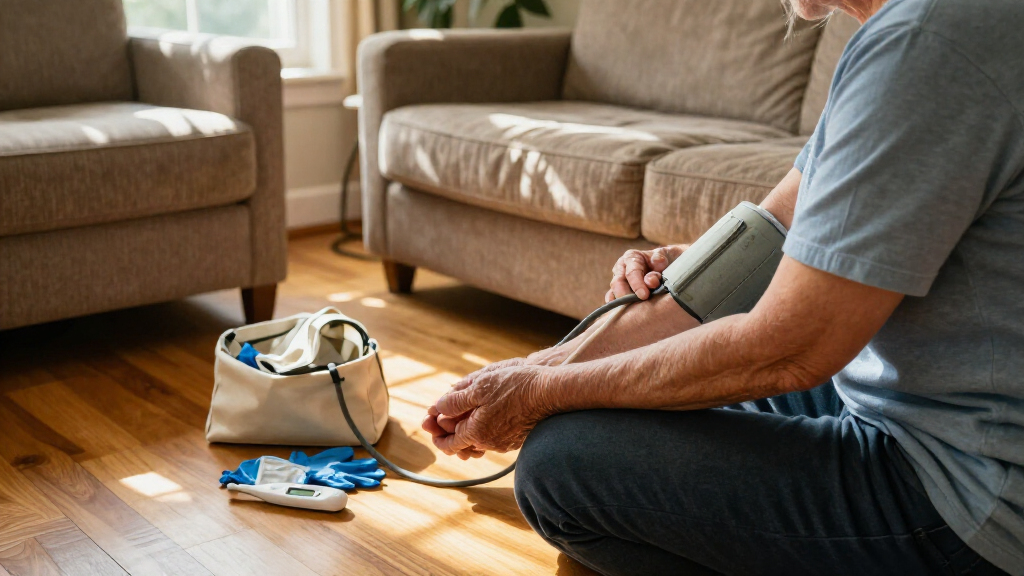
I evaluated these supplies based on three core criteria: durability under high-frequency use, ergonomic design for caregiver safety, and hygiene maintenance. Home health aides often perform dozens of transfers and cleanings daily, so materials that degrade after a few washes or handles that tear under weight were disqualified. I also prioritized items that simplify compliance, such as log books with clear sections for medication and vitals, because accurate record-keeping protects both the aide and the patient.
Ranking was driven by the balance between cost and long-term value. While bulk bandage packs are necessary, they do not differentiate a professional kit as much as specialized tools like positioning pads or reachers. I favored products that reduce physical strain, recognizing that caregiver burnout is often caused by poor equipment rather than just high workload.
Factors to Consider When Choosing Best Home Health Aide Supplies
Selecting supplies for home health care is not just about restocking consumables; it is about equipping yourself to handle the physical and administrative demands of the job. The right tools can prevent injury, reduce documentation time, and improve patient outcomes. Here are the key factors to weigh before making your purchases.
Durability vs. Cost in Consumables
When buying bandages, gloves, or pads, the cheapest option often leads to higher long-term costs due to waste and replacement frequency. Low-cost adhesive bandages frequently lose their stickiness after exposure to moisture or sweat, requiring reapplication and increasing material usage. In contrast, fabric-based or latex-free options tend to maintain integrity longer, reducing the frequency of changes. For aides handling multiple patients per shift, investing in mid-tier consumables ensures that supplies do not fail during critical moments of care. Always check for hypoallergenic certifications to avoid skin reactions that complicate wound care.
Ergonomics and Physical Strain Reduction
Home health aides are prone to musculoskeletal injuries, making ergonomic tools a priority over generic alternatives. Positioning pads with multiple handles allow aides to maintain neutral spine positions during patient transfers, unlike single-handle sheets that force twisting motions. Similarly, long-reach tools with swivel heads reduce the need for bending and stooping when retrieving items from the floor or high shelves. When evaluating tools, consider the weight and grip diameter; handles that are too thin or heavy can cause hand fatigue during prolonged use. Prioritizing ergonomics protects your career longevity and reduces the risk of workers’ compensation claims.
Compliance and Documentation Efficiency
Accurate documentation is as important as physical care, as it justifies billing and tracks patient progress. Dedicated caregiver log books with pre-printed fields for vitals, medications, and incidents save time compared to blank notebooks. Look for formats that align with your agency’s reporting requirements to avoid re-entry errors. Some books include shift handoff sections that highlight critical changes, ensuring continuity of care between aides. Investing in a structured documentation tool reduces administrative burden and protects against liability issues arising from incomplete records.
Hygiene and Maintenance Requirements
Supplies that are difficult to clean or reuse pose infection risks in home settings. Washable positioning pads must be compatible with high-temperature laundering and strong disinfectants without losing structural integrity. Check for seamless construction or reinforced stitching, as frayed edges harbor bacteria and weaken the product. Vinyl-backed pads may be waterproof but can trap heat, leading to patient discomfort and skin breakdown; look for breathable waterproof layers instead. Regular maintenance checks for wear and tear are necessary to ensure that reusable items remain safe for patient contact.
Portability and Kit Organization
Aides often carry supplies between multiple client homes, making portability a key factor. Compact first aid kits and slim storage clipboards fit easily into standard caregiving bags without adding bulk. Consider the organization layout of kits; pockets that separate sterile items from general supplies prevent cross-contamination and speed up access during emergencies. For aides covering large geographic areas, lightweight and durable cases reduce daily carrying fatigue. Ensure that essential tools like badge reels and reference cards are easily accessible without rummaging through the main compartment.
Frequently Asked Questions
Do I need a specialized log book if I already use digital apps for documentation?
Even if your agency uses digital apps, a physical log book serves as a reliable backup in case of technology failures or power outages. Digital apps can crash or sync incorrectly, leaving critical patient data unrecorded during a shift. A paper log ensures that you have a contemporaneous record of events, which is often required for legal and insurance audits. Furthermore, writing by hand can sometimes be faster for quick notes than typing on a mobile device, especially when hands are wet or gloved. It is a low-cost insurance policy for your daily workflow.
Are latex-free bandages really necessary for home health care?
Yes, latex-free options are highly recommended because many elderly or chronically ill patients have developed sensitivities over time. Allergic reactions to latex can cause contact dermatitis, which complicates wound healing and increases infection risk. Using latex-free adhesive bandages prevents these issues and ensures that the patient remains comfortable. Additionally, many healthcare facilities are moving toward latex-free environments to protect staff and patients alike. Choosing these supplies demonstrates professional foresight and adherence to modern safety standards.
How often should washable positioning pads be replaced?
Washable positioning pads should be replaced when the fabric shows signs of fraying, thinning, or handle detachment. Even if the pad looks intact, repeated washing can weaken the internal structure, reducing its ability to support patient weight safely. Inspect the stitching and handle anchors before each use, as a failed transfer can lead to serious injury. Most high-quality pads last between 6 to 12 months with daily use and proper care. If the waterproof layer begins to peel or leak, replace it immediately to maintain hygiene standards.
What is the advantage of a folding reacher over a standard one?
Folding reachers offer significant portability advantages for aides who travel between multiple homes. A standard 32-inch reacher can be bulky and difficult to store in a compact caregiving bag, while folding models collapse to half their length. This makes them easier to transport without taking up space needed for medical supplies. Despite the folding mechanism, high-quality models maintain rigid jaw strength for picking up heavy items like water bottles or books. Ensure the locking mechanism is secure to prevent accidental closing during use.
Can I use generic store-brand first aid kits for professional care?
While generic kits are acceptable for basic needs, professional-grade kits often include specific items that generic versions omit, such as sterile gauze pads, antiseptic wipes, and medical tape. Home health aides may need to respond to minor injuries or dressing changes, requiring higher-quality sterile supplies. Professional kits are also typically more compact and organized, allowing for quicker access during emergencies. However, for aides who already carry their own specialized supplies, a generic kit can serve as a supplemental resource for family members of the patient. Always check the expiration dates and restock used items promptly.
Conclusion
Choosing the right home health aide supplies depends on your specific daily challenges and agency requirements. For most professionals, the Washable Positioning Bed Pad with 8 Reinforced Handles is the best overall choice because it directly addresses the physical toll of patient transfers. If you are just starting out, the Caregiver Daily Log Book provides a structured foundation for professional documentation that prevents costly errors. For those needing to manage tight budgets without sacrificing hygiene, the CURAD Assorted Bandages Variety Pack offers essential latex-free protection in bulk. If portability is your priority, the 32-Inch Folding Reacher ensures you have mobility assistance without the bulk. Ultimately, the best kit is one that reduces your physical strain and keeps your documentation accurate.