
📊 Full opportunity report: What Families Can Expect From AI Check-In Calls on IdeaNavigator AI — validation score, market gap, and execution plan.

Get health and wellness essentials delivered free with Prime
- Fast, free delivery on millions of items
- Prime Video, Amazon Music and more included
- Member-only deals all year
TL;DR
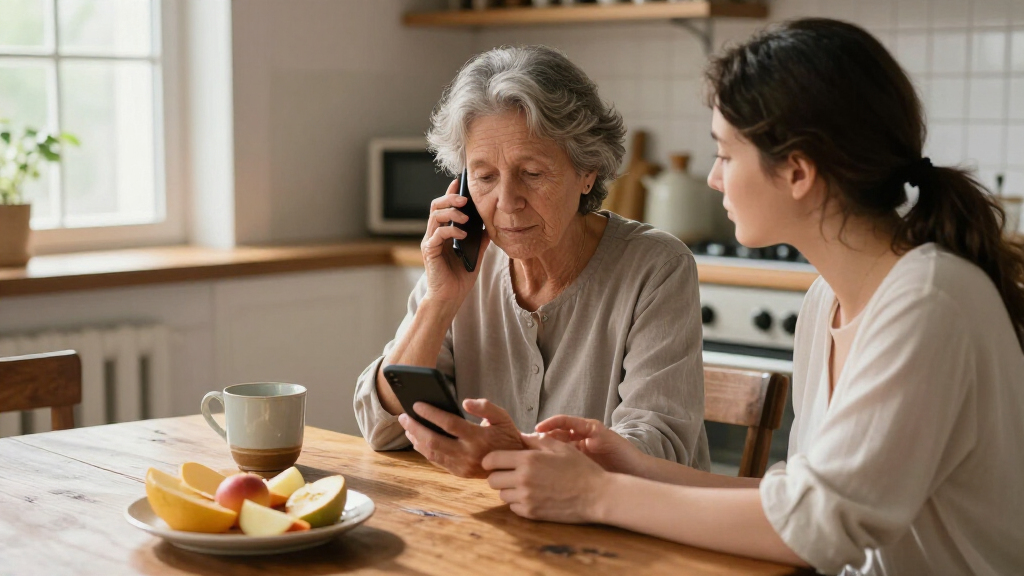
IdeaNavigator AI proposes testing scheduled AI phone calls that ask seniors living alone a few brief wellness questions, then text an adult child an all-clear or flag a missed or concerning call. The proposal outlines a three-week trial with 15 senior-and-family pairs; it does not report that the service has launched or that the trial has taken place.
IdeaNavigator AI has proposed a small pilot of daily automated phone calls for seniors living alone, with a text message to an adult child if a call is missed or raises concern. The proposal describes a possible service rather than an operating program: it recommends testing the calls with 15 senior-and-family pairs for three weeks, and provides no results from a completed trial.
The suggested service would place a scheduled daily call to a senior’s landline or mobile phone and ask a few brief questions about how the person is doing. The proposed response to the family is intentionally simple: an all-clear text after a routine check-in, or a flag if the senior does not answer or gives a concerning response. The outline does not specify the questions or how the system would determine that an answer warrants a flag.
The intended customer is an adult child who lives in another city and cannot call a parent every day. IdeaNavigator AI frames the service as an option for families seeking a regular check without relying on a relative to place every call. Its proposed business model is a monthly subscription billed to the adult child, but no price, service provider, or commercial launch is identified.
To test whether the idea is useful, the proposal calls for setting up daily calls with 15 senior-and-child pairs over three weeks. It recommends measuring how often seniors answer and whether families consider the all-clear alerts valuable enough to pay for. Those measures would offer an initial indication of usability and customer interest, not evidence that the calls prevent injuries or reliably detect emergencies.
A Routine Check, Not Emergency Care
For families separated by distance, a dependable daily check-in could provide a regular signal about whether a parent answered, without requiring the adult child to make every call. A missed call or a response that prompts concern could also draw attention to a day when the family may need to follow up. The proposal addresses the gap between wanting frequent contact and being able to provide it personally.
But the proposed all-clear is only as useful as the process behind it. A completed phone call cannot by itself establish that someone is safe, and a missed call does not explain why the person did not answer. Families would need to know what the system can and cannot infer, how quickly an alert arrives, and what action they are expected to take. The concept is presented as a wellness check-in, not a substitute for emergency response, hands-on care, or contact with health professionals.
The suggested pilot’s focus on answer rates and willingness to pay reflects that distinction. Those results could help show whether seniors will use the service and whether families value the messages. They would not, on their own, establish the accuracy of concern flags or the service’s effect on health and safety.
Products Worth Considering

Levoit Core 600S-P Smart Air Purifier for Large Rooms

Levoit Vital 200S-P Smart Air Purifier for Large Rooms

Therabody Theragun Relief Massage Gun, 3-Speed, Black
As an affiliate, we earn on qualifying purchases.
The Proposed Three-Week Trial
The idea is aimed at aging-in-place wellness: helping independent seniors remain at home while giving relatives a routine way to check in. The problem described is practical. An adult child may worry that a fall or a difficult day could go unnoticed if no one calls, but may not be able to speak with a parent every day. The proposed AI call is intended to fill that communication gap with a short, scheduled interaction.
The proposal points to improvements in natural-sounding voice AI as a reason the calls may now be feasible by landline or mobile phone. That is a rationale for testing the idea, not proof that seniors will find the calls comfortable or that the technology will work consistently for different callers. The outline does not name a product or provider, describe any technical system, or offer performance data.
Its suggested first step is deliberately limited: 15 pairs for three weeks, with call answer rates and family willingness to pay as measures. This is a proposed validation exercise, rather than a reported study or announcement of a deployed service. No findings, participant experiences, or independent evaluation are included.
Questions Before Families Rely on Alerts
No completed pilot results are reported. It is not clear whether seniors would answer daily calls, how often a call might be missed, or whether family members would find the messages useful enough to subscribe. The proposal also gives no subscription price or details about how a service would be set up and supported.
Operational safeguards are also unspecified. The outline does not explain how the system would identify a concerning response, distinguish a routine missed call from a possible emergency, or notify a family member if a call fails. It does not describe what happens when the adult child cannot be reached, whether the senior can speak to a person, or how personal information and call responses would be handled.
The limits of an automated check are not defined. A call can confirm that a person answered and responded, but the proposal does not claim that it can verify someone’s physical condition or prevent a fall. Until a pilot tests both use and alert handling, families should not interpret a routine all-clear as a guarantee of safety.
Testing Call Use and Family Value
The next step described by IdeaNavigator AI is a three-week trial involving 15 senior-and-family pairs. The proposed evaluation would track how often seniors answer and ask families whether the all-clear messages are worth paying for. No start date, participants, provider, or trial results are given.
If such a test proceeds, its findings could clarify whether the daily format fits participants’ routines and whether the subscription idea has appeal. Further information would still be needed about alert accuracy, response procedures, accessibility, privacy, and how the service behaves when a call is unanswered. Until those details and trial results are available, the proposal remains an idea for validation rather than a service families can be assumed to use.
Source: IdeaNavigator AI
Key Questions
Is a daily AI check-in service available now?
The proposal describes a potential service, but it does not identify a launched product or provider. It also reports no completed pilot.
What would the AI call ask?
The outline says the call would ask a few brief wellness questions, but it does not provide the questions or explain how responses would be assessed.
When would a family member receive a text?
The proposed service would send an all-clear after a routine check-in or flag a missed or concerning call. The timing, alert criteria, and follow-up process are not specified.
Would an all-clear mean the senior is safe?
No such guarantee is established. The concept describes a phone check-in and does not claim to verify a person’s physical condition or replace emergency help or personal care.
How would the idea be tested?
IdeaNavigator AI suggests a three-week trial with 15 senior-and-adult-child pairs, measuring call answer rates and whether families consider the all-clear alerts worth paying for.
Source: IdeaNavigator AI