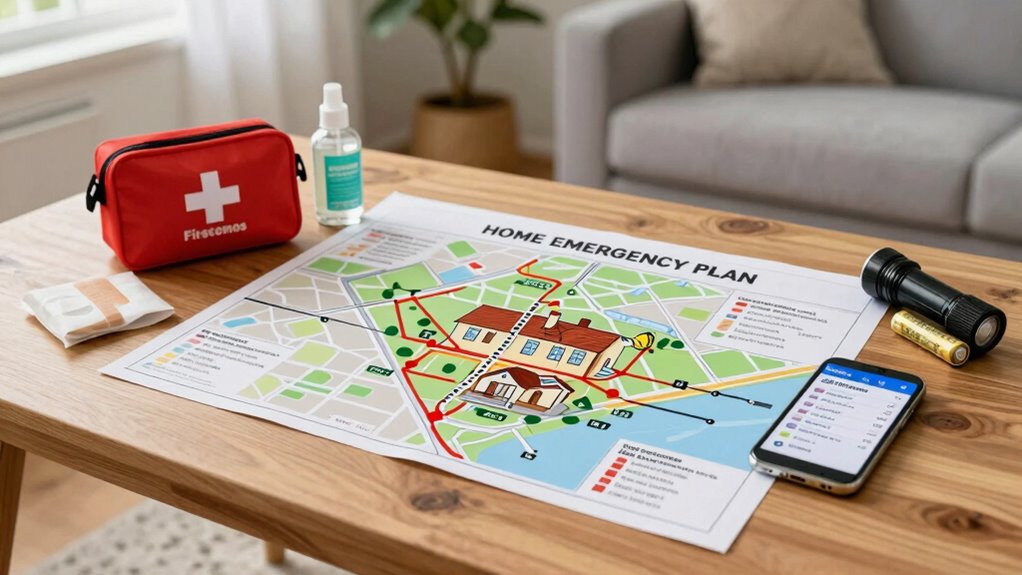

To create an emergency plan for home care, start by organizing a list of all medications, treatments, and medical devices, storing it in an accessible location. Develop clear communication strategies, including multiple contact methods and backup devices, and practice emergency drills with your loved one. Keep documentation, emergency contacts, and safety procedures up to date and secure. Implement additional security measures as needed, and discover more ways to prepare effectively by exploring the detailed steps below.

Get health and wellness essentials delivered free with Prime
- Fast, free delivery on millions of items
- Prime Video, Amazon Music and more included
- Member-only deals all year
Key Takeaways
- Develop a comprehensive, accessible emergency plan including medication management, communication strategies, and evacuation procedures.
- Keep updated, organized records of medications, medical devices, and emergency contacts in multiple accessible formats.
- Regularly practice emergency drills with the loved one to ensure familiarity and confidence in response actions.
- Establish multiple communication methods and inform neighbors or nearby contacts for assistance during crises.
- Stay informed about local natural disaster protocols and incorporate safety precautions relevant to your area.

Creating an emergency plan for home care situations is crucial to guarantee the safety and well-being of your loved ones when unexpected events occur. One of the most important aspects of this planning is medication management. You need to keep an organized list of all medications your loved one takes, including dosages, schedules, and any special instructions. Make sure this list is easily accessible, perhaps in a waterproof folder or digital format, so you can quickly provide information to emergency responders if needed. Regularly review and update this list to reflect any changes prescribed by healthcare providers. Additionally, consider preparing extra medication supplies or a portable medication kit that can be quickly grabbed during an emergency, guaranteeing your loved one’s treatment isn’t interrupted.
Keep an organized, accessible medication list and prepare extra supplies to ensure uninterrupted care during emergencies.
Alongside medication management, establishing effective communication strategies is crucial. Develop a clear plan that details how you’ll stay in touch with your loved one during an emergency. This includes setting up multiple ways to contact each other—phone calls, texts, emails, or even alternative devices like a tablet or emergency communication app. Make sure your loved one knows how to reach emergency services and understands the importance of reporting their medical conditions or needs promptly. It’s also wise to inform neighbors, friends, or nearby family members about your loved one’s situation so they can assist if you’re unavailable. Keep a list of emergency contacts visible in your home or stored digitally, with updated information and preferred communication methods. Incorporating an emergency communication system can further enhance your readiness. To ensure comprehensive preparedness, familiarize yourself with natural disaster protocols relevant to your area. Ensuring your privacy and data security is maintained when managing these contacts and communication tools is also vital. Moreover, understanding the affiliate disclosure policies of your communication or health management tools can help you stay informed about any potential data sharing or commission-related information linked to third-party services. Additionally, exploring water safety tips and precautions for your loved one can be an important part of your overall emergency plan, especially if they are prone to swimming or near water hazards.
You should also practice your plan regularly, simulating different scenarios to see how well your communication strategies and medication management systems work. For example, test whether your loved one can reach you in case of a power outage or if they can access their medication kit easily. Ensure that emergency numbers are programmed into all phones and that your loved one knows how to use any medical devices or alert systems. Involving your loved one in these drills not only boosts their confidence but also ensures they understand what to do during a real crisis.
Finally, document your entire emergency plan, including medication details, communication strategies, and contact information. Keep copies in multiple locations—your home, with a trusted neighbor, or digitally—so they’re accessible when needed. By taking these steps, you’re not only protecting your loved one’s health but also creating a sense of preparedness that can drastically reduce panic and confusion during emergencies.
As an affiliate, we earn on qualifying purchases.
Frequently Asked Questions
How Often Should I Review and Update My Emergency Plan?
You should review and update your emergency plan at least once a year, or after significant changes like a move or new health needs. Regularly practicing community drills helps identify gaps, while updating your plan communication guarantees everyone stays informed. Keep your plan current by incorporating feedback from drills and changes in your home or community, so you’re prepared for any unexpected situation.
What Specific Supplies Should Be Included in a Home Emergency Kit?
Think of your emergency kit as a lifeboat in a storm. You should include first aid supplies like bandages, antiseptic wipes, and pain relievers. Don’t forget communication devices such as a fully charged cell phone, extra batteries, and a portable charger. Also, add essential items like bottled water, non-perishable snacks, flashlight, batteries, and any necessary medications to make certain you’re prepared for any crisis.
How Can I Ensure My Emergency Plan Accommodates Special Needs?
You can guarantee your emergency plan accommodates special needs by incorporating accessible communication methods, like visual alerts or sign language, tailored to individual requirements. Create tailored safety measures, such as mobility aids or medication management, to address specific challenges. Regularly review and practice these adaptations with your loved ones, making adjustments as needed, so everyone knows how to respond effectively during emergencies. This approach guarantees safety and clarity for all involved.
Who Should I Designate as Emergency Contacts or Caregivers?
You should designate someone with appropriate caregiver qualifications, like a trusted family member or a trained aide, as your emergency contact or caregiver. For example, if your regular caregiver can’t respond, an alternative with emergency contact protocols in place guarantees quick action. Make certain your emergency plan clearly states who to contact, their roles, and how to reach them. This way, you’re prepared for any situation, minimizing delays and confusion.
How Do I Train Family Members on Emergency Procedures?
You should start by holding family communication sessions where you clearly explain emergency procedures. Use simple language and demonstrate actions, then conduct regular training exercises to reinforce learning. Encourage family members to ask questions and practice scenarios together, making sure everyone understands their roles. Repetition builds confidence, so schedule these exercises periodically. This approach keeps everyone prepared, reduces panic, and guarantees coordinated responses during actual emergencies.
emergency communication device for seniors
As an affiliate, we earn on qualifying purchases.
As an affiliate, we earn on qualifying purchases.
Conclusion
By taking the time to create a solid emergency plan, you’re setting yourself up for success when it counts the most. Remember, it’s better to be safe than sorry, so don’t leave anything to chance. Keep your plan updated and practice it regularly with your loved ones. The more prepared you are, the more confident you’ll feel in facing home care situations. After all, forewarned is forearmed—being ready truly makes all the difference.
waterproof medical record folder
As an affiliate, we earn on qualifying purchases.
As an affiliate, we earn on qualifying purchases.
As an affiliate, we earn on qualifying purchases.
Cold & flu season Picks
humidifiers
As an affiliate, we earn on qualifying purchases.