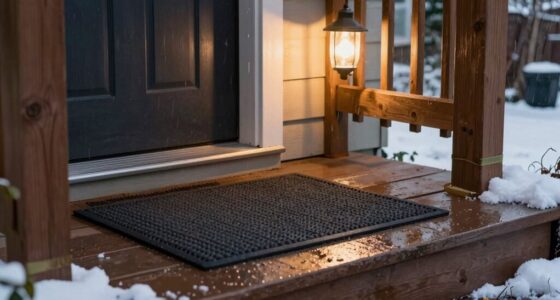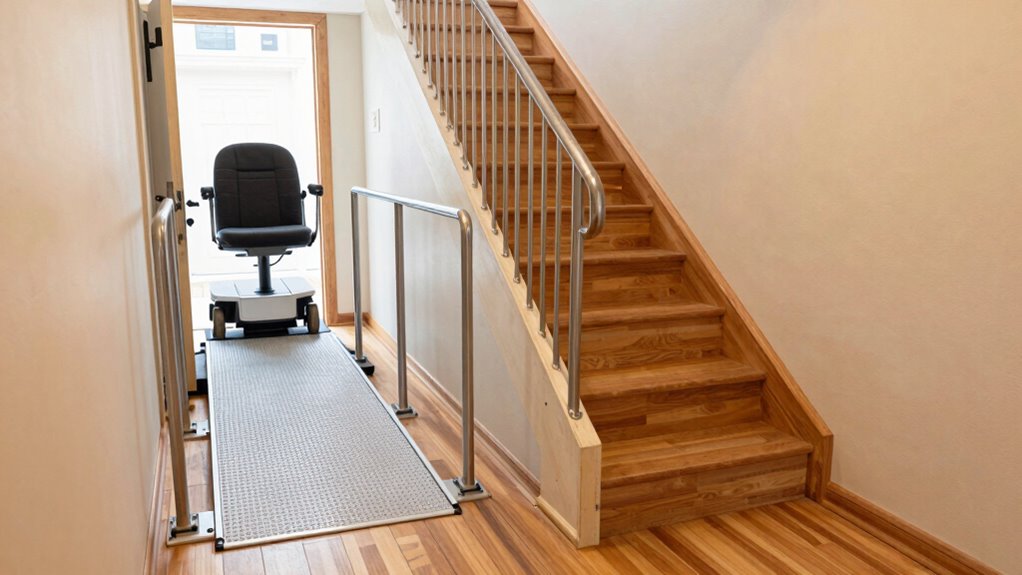

Before adding a stair lift or ramp, consider safety features like secure seats, fall barriers, non-slip surfaces, and sturdy handrails. Accurately measure entryways for a proper fit and guarantee equipment meets safety standards and local regulations. Budget for both initial costs and ongoing maintenance, and choose quality installation for durability. Investing in these solutions will boost safety and independence—continue exploring to learn more about making the right choice for your home.

Get health and wellness essentials delivered free — and shop member deals
- Fast, free delivery on millions of items
- Access to Prime Big Deal Days deals on October 6–7
- Prime Video, Amazon Music and more included
Key Takeaways
- Ensure the equipment meets safety standards and includes features like secure seat belts and non-slip surfaces.
- Measure stairways or entryways accurately for proper fit and safety.
- Consider both upfront costs and ongoing maintenance expenses for long-term value.
- Consult professionals for proper installation to ensure safety and compliance with regulations.
- Explore financial assistance options and resources to support affordability and proper setup.
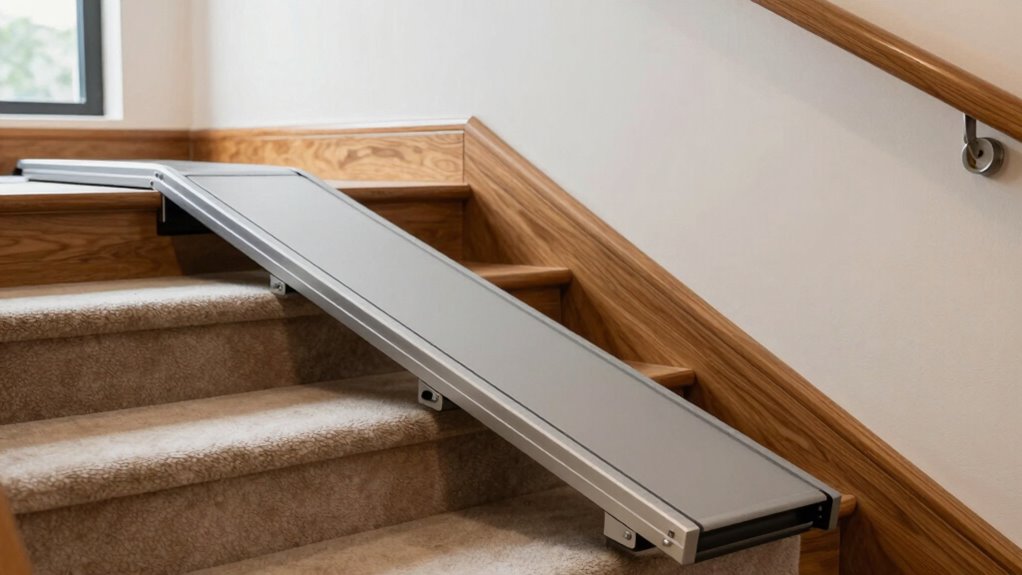
Considering a stair lift or ramp can greatly improve mobility and safety in your home, but it’s important to understand the key factors involved before making a decision. One of the first things to consider is safety. You want to guarantee that any solution you choose provides reliable support and minimizes the risk of falls or accidents. For stair lifts, check that the device has safety features like smooth stopping, secure seat belts, and barriers to prevent falls. For ramps, stability is essential—look for non-slip surfaces, sturdy handrails, and appropriate weight capacity. It’s also indispensable to measure your stairs or entryway accurately so that the equipment fits perfectly and functions safely. Poorly fitted ramps or lifts can cause tripping hazards or instability, defeating their purpose entirely.
Another important aspect is understanding the cost implications. Installing a stair lift or ramp involves upfront expenses that vary depending on the type, materials, and complexity of the installation. Stair lifts tend to be more expensive than ramps, especially if your staircase has a complex design or requires customized features. Ramps can be more budget-friendly, but costs add up with high-quality materials, handrails, and non-slip surfaces. Beyond the initial investment, think about ongoing maintenance costs. Stair lifts often need regular servicing to keep them running smoothly and safely, while ramps typically require less maintenance but may need repairs or adjustments over time. Be sure to factor in these expenses when planning your budget.
Additionally, understanding the safety standards for mobility equipment can help ensure that you choose options that meet recommended guidelines, further safeguarding users. When evaluating the cost, also think about the long-term value. While a stair lift might seem costly upfront, it can greatly enhance independence and safety for someone with mobility challenges. Ramps, on the other hand, are usually less expensive initially and can accommodate multiple users or visitors, offering a versatile solution. Incorporating proper installation techniques as outlined in safety standards can significantly improve the longevity and effectiveness of your mobility solutions. It is also helpful to be aware of regulatory requirements to ensure your installation complies with local laws and guidelines. It’s also helpful to consult with professionals who are familiar with compliance requirements to ensure your equipment is installed correctly. You should also explore available financial assistance programs or grants that can offset some of the costs, especially if the installation is medically necessary.
Ultimately, balancing safety considerations with cost implications helps you make an informed decision. You want to invest in a solution that’s not only affordable but also safe and reliable for your specific needs. Take the time to research different options, consult with professionals, and weigh the benefits and expenses carefully. By doing so, you’ll guarantee your home remains accessible and secure, giving you peace of mind and improved quality of life.
As an affiliate, we earn on qualifying purchases.
Frequently Asked Questions
How Much Does a Stair Lift or Ramp Typically Cost?
A stair lift typically costs between $3,000 and $5,000, while ramps usually range from $1,000 to $3,000. When planning your budget, consider energy efficiency features that could save you money in the long run. Keep in mind that installation costs vary based on your home’s layout. By weighing these factors, you can choose a solution that fits your needs without overspending.
Are There Any Specific Building Codes I Should Be Aware Of?
Yes, you should check local building codes and safety regulations before installing a stair lift or ramp. These codes ensure your setup is safe, accessible, and compliant with legal standards. They may specify dimensions, railing requirements, and installation procedures. Neglecting to follow these regulations could lead to fines or safety hazards. Always consult your local authorities or a professional installer to ensure your modifications meet all relevant building codes and safety standards.
How Long Does Installation Usually Take?
Usually, installation takes about a few hours to a day, depending on your home’s layout. As you plan, keep in mind safety precautions, like clearing the area and ensuring proper support. The installation timeline can vary, but a professional team typically works efficiently to minimize disruption. You might find that coordinating with your installer beforehand helps everything go smoothly, so you can enjoy your new stair lift or ramp sooner.
Can Stair Lifts Be Customized for Unique Staircases?
Yes, stair lifts can be customized for unique staircases. You have design flexibility to choose from various material options that match your home’s aesthetic. Whether your staircase is curved, narrow, or has unusual angles, manufacturers can adapt the design to fit perfectly. You’ll find many options to guarantee the stair lift complements your space while providing safe, comfortable mobility tailored specifically to your staircase’s unique features.
What Maintenance Is Required for a Stair Lift or Ramp?
You should follow a regular cleaning schedule for your stair lift or ramp to keep it safe and functioning smoothly. Wipe down surfaces and check for dust or debris that might cause slipping. Repair considerations include inspecting for loose parts, ensuring the tracks are clean, and promptly addressing any mechanical issues. Regular maintenance helps prevent costly repairs and extends the lifespan of your stair lift or ramp.
As an affiliate, we earn on qualifying purchases.
Conclusion
Before installing a stair lift or ramp, remember it’s more than just a simple upgrade — it’s a game-changing decision that can transform your daily life. Think of it as revealing a new level of independence that’s so powerful, it’s like having your own personal superhero cape. Take the time to plan carefully, explore your options, and choose the best solution for your needs. With the right setup, you’ll be unstoppable in your pursuit of comfort and freedom.
As an affiliate, we earn on qualifying purchases.
As an affiliate, we earn on qualifying purchases.
Halloween Picks
halloween
As an affiliate, we earn on qualifying purchases.