
To make your entryway safer in rain, snow, and low light, install bright, energy-efficient LED lighting with motion sensors to improve visibility. Use sturdy, non-slip mats outside the door and regularly clear snow and ice, applying salt or sand for extra grip. repair cracks or loose boards on stairs and add handrails for support. Keeping these features maintained and well-lit can dramatically reduce accidents; explore further tips to fully winter-proof your entryway.

Get health and wellness essentials delivered free with Prime
- Fast, free delivery on millions of items
- Prime Video, Amazon Music and more included
- Member-only deals all year
Key Takeaways
- Install bright, energy-efficient lighting with motion sensors to improve visibility during low-light and poor weather conditions.
- Use textured, non-slip mats outside entryways to prevent slips from rain, snow, or ice buildup.
- Regularly clear snow and ice, applying salt or sand for added traction on walkways and steps.
- Maintain and repair cracks, loose boards, and handrails to ensure safe footing and support.
- Incorporate weather-resistant materials and coatings to enhance durability and safety in harsh weather.
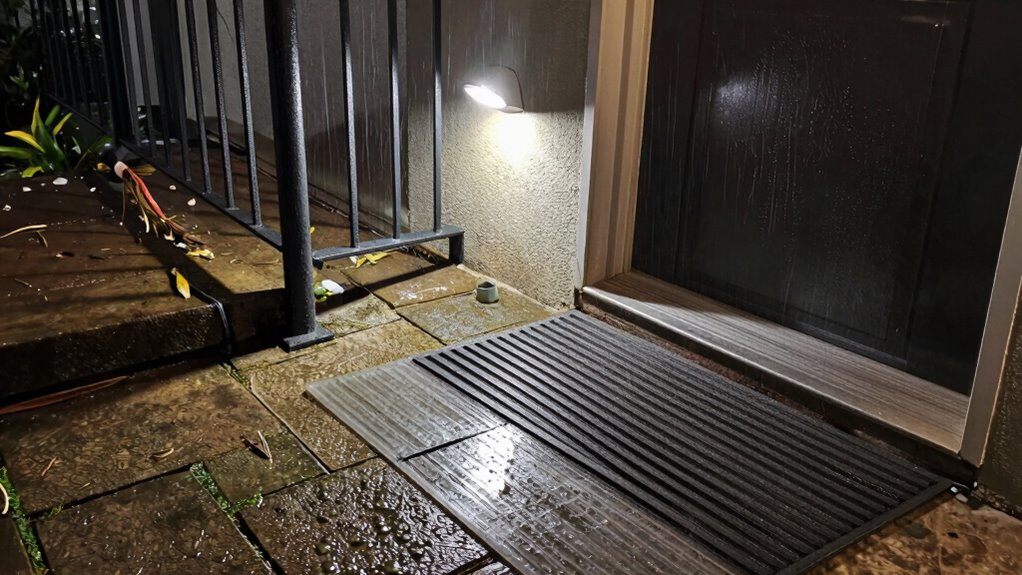
During bad weather, your entryway becomes a critical point for safety, and taking proactive steps can prevent accidents. Rain, snow, and low light conditions turn what should be a simple step into a potential hazard. To keep yourself and your family safe, start with lighting upgrades. When daylight fades or weather causes poor visibility, bright, well-placed lights ensure you can see where you’re stepping. Install motion sensor lights or floodlights that turn on automatically as you approach the door. This not only illuminates the area but also discourages intruders. Use energy-efficient LED bulbs for longevity and brightness. Proper lighting helps you identify icy patches or obstacles, reducing the risk of slips and falls. Additionally, ensuring your lighting system offers adequate color accuracy can improve visibility in low-light conditions, making hazards more noticeable.
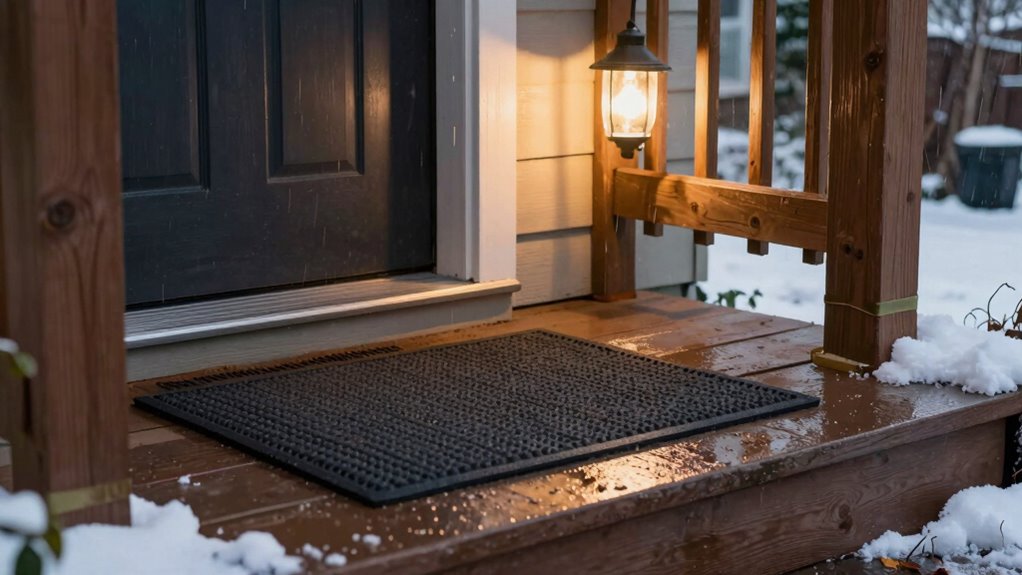
Next, focus on the ground surface. Non slip mats are essential in weather conditions that make surfaces slick and dangerous. Place a sturdy, non slip mat just outside your door. These mats trap moisture from shoes, preventing puddles or ice from spreading onto your floors. Make sure the mat is large enough to cover the entire entry area and with a textured surface that provides grip under wet or icy shoes. Consider using mats with deep ridges or bristles to scrape off dirt and snow effectively. Regularly shake out or clean the mats to maintain their effectiveness, especially after heavy storms. Incorporating weather-resistant materials into your mats can further extend their durability during harsh conditions. To maximize safety, consider adding traction-enhancing treatments or coatings to outdoor surfaces, which can help reduce slipping risks.
Combine lighting upgrades with non slip mats for a thorough approach. Bright lighting highlights the non slip mats, making them more visible and encouraging visitors to use them properly. This combination minimizes the chances of slipping on wet pavement or icy patches. Additionally, ensure your porch and steps are in good repair—repair any cracks or loose boards to prevent tripping hazards. Clear snow and ice promptly, and use salt or sand on icy patches to improve traction. If you have stairs, install handrails to offer extra support, especially in slippery conditions. Using proper maintenance practices ensures these safety measures remain effective throughout the season.
outdoor motion sensor LED floodlights
As an affiliate, we earn on qualifying purchases.
As an affiliate, we earn on qualifying purchases.
Frequently Asked Questions
How Can I Improve Outdoor Lighting for Safety?
You can improve outdoor lighting for safety by installing landscape lighting along walkways and entry points, ensuring they’re well-lit and visible. Use motion sensors on lights to activate them as you approach, deterring intruders and increasing visibility. Choose bright, energy-efficient bulbs that illuminate pathways clearly. Regularly maintain and clean fixtures to keep them functioning at their best, creating a safer, more welcoming entrance during rain, snow, and low-light conditions.
What Materials Are Best for Slip-Resistant Entryway Surfaces?
Think of slip-resistant entryway surfaces like a gentle hug for your feet. You should opt for textured surfaces or apply non-slip coatings to concrete, tile, or wood. These materials create more grip, especially in wet or icy conditions, reducing fall risks. Rubber mats or textured stones are also excellent choices. By choosing these materials, you’ll keep your entryway safer and more secure during tricky weather.
How Often Should I Clean and Maintain My Entryway?
You should clean your entryway at least once a week to keep it safe and slip-free. Maintain it by sweeping away debris, wiping down surfaces, and checking for damage regularly. Follow a consistent cleaning schedule and maintenance tips, like using a mild cleaner on slip-resistant mats and guaranteeing proper drainage, to prevent buildup of dirt, ice, or water. Regular upkeep ensures your entryway stays safe during rain, snow, and low light conditions.
Are There Specific Footwear Recommendations for Rainy or Snowy Conditions?
For rainy or snowy conditions, you should choose waterproof boots with good traction footwear to prevent slips and keep your feet dry. Look for boots with non-slip soles and water-resistant materials. Avoid smooth-soled shoes that can be slippery on wet surfaces. Wearing appropriate footwear helps you stay safe and comfortable, especially during harsh weather, and guarantees you can navigate your entryway confidently without risking falls.
How Can I Prevent Ice Buildup at My Entrance?
To prevent ice buildup at your entrance, act fast with effective ice melt strategies and snow removal tips. Start by applying a high-quality ice melt before snow begins to accumulate, reducing the risk of ice formation. Regularly shovel snow promptly, especially after storms, to keep the surface clear. Keep pathways dry with salt or sand, and consider installing heated mats for continuous safety. Don’t wait—timing is everything to avoid dangerous ice patches.
As an affiliate, we earn on qualifying purchases.
Conclusion
Remember, your entryway is both a gateway and a hazard—an inviting welcome in good weather, but a potential danger in rain, snow, or low light. By taking simple precautions, you turn this space from a risky obstacle into a safe haven. So, don’t wait for accidents to happen; make your entryway secure now. Because in the end, safety isn’t just about avoiding falls; it’s about welcoming every guest with confidence, no matter the weather.
As an affiliate, we earn on qualifying purchases.
ice melt salt and sand for walkways
As an affiliate, we earn on qualifying purchases.
As an affiliate, we earn on qualifying purchases.
Cold & flu season Picks
humidifiers
As an affiliate, we earn on qualifying purchases.