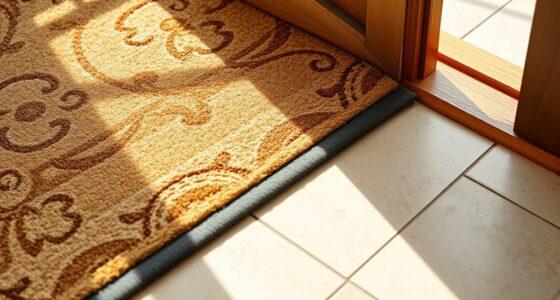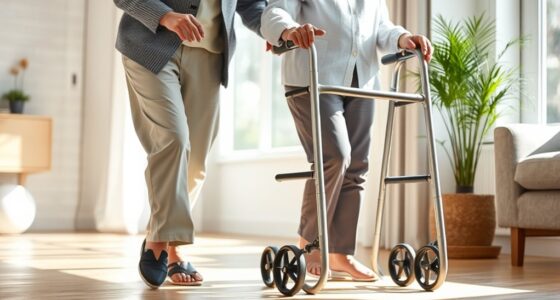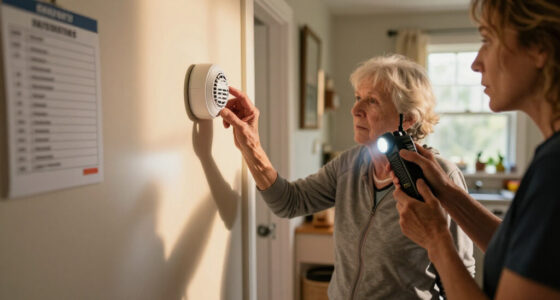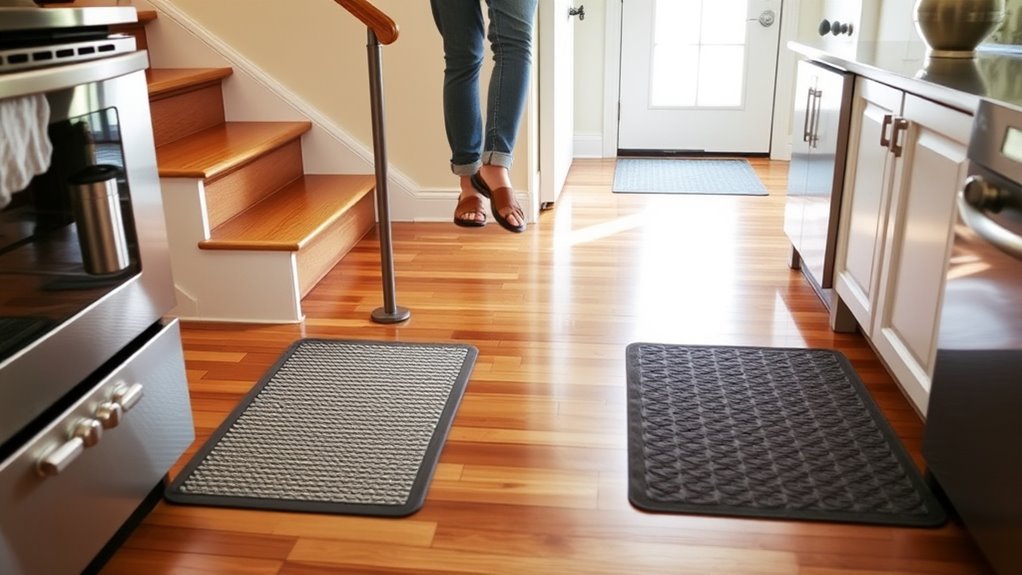

To prevent slips and falls at home, clear clutter from walkways, keep floors dry, and use non-slip mats in wet areas. Improve lighting in hallways, stairways, and entry points, and add contrasting tape to stair edges for better visibility. Install sturdy handrails, secure loose rugs, and ensure stair treads are safe. Small adjustments like these can considerably reduce risks—if you want to discover more safety tips, you’ll find helpful advice below.

Get health and wellness essentials delivered free with Prime
- Fast, free delivery on millions of items
- Prime Video, Amazon Music and more included
- Member-only deals all year
Key Takeaways
- Clean up spills immediately and use non-slip mats in wet areas like kitchens and bathrooms.
- Install grab bars and slip-resistant mats in bathrooms and showers for added stability.
- Ensure proper lighting and contrast on stair edges to improve visibility and prevent missteps.
- Keep pathways clear of clutter and secure rugs with non-slip backing to prevent tripping.
- Remove or secure loose cords and wires to eliminate tripping hazards throughout the home.

Have you ever slipped on a wet floor or tripped over clutter at home? If so, you already know how quickly a fall can happen and how serious the consequences can be. Falls are a leading cause of injury, especially among the elderly, making elderly safety a top priority in any household. The good news is, many household hazards that cause slips and falls are easy to identify and fix. Taking simple steps to improve safety can make your home much safer for everyone living there.
First, focus on eliminating common household hazards. Wet floors are a major risk, so always clean up spills immediately and use non-slip mats in areas prone to moisture, like the kitchen and bathroom. Check that your rugs have secure, non-slip backing or use double-sided tape to keep them in place. Clutter also creates tripping hazards, so keep pathways clear and organized. Store items in accessible places to prevent reaching or bending awkwardly, especially if someone in the household has mobility issues. Good lighting plays a vital role, too. Well-lit hallways, staircases, and entryways help you see potential hazards clearly, reducing the risk of missteps.
Stairs are another common hazard, so make sure handrails are sturdy and on both sides of staircases. Install contrasting tape or paint on the edge of steps to improve visibility. For those with limited mobility or balance issues, consider adding stair tread covers or installing stair lifts. In bathrooms, where slips are most frequent, use grab bars near the toilet and shower, and opt for slip-resistant mats in the bathtub or shower stall. Regularly check that these safety features are secure and in good condition.
For elderly safety, it’s vital to adapt your home to their needs. Remove or secure loose cords and wires that can cause tripping. Encourage the use of walking aids if necessary, and ensure they’re always within easy reach. Maintaining good footwear with non-slip soles can also prevent falls when walking around the house. Additionally, consider arranging furniture to create wide, unobstructed paths, making it easier to navigate safely. Recognizing that trust issues can influence safety practices, fostering open communication about concerns can help address potential hazards more effectively.
Frequently Asked Questions
How Often Should I Inspect My Home for Slip Hazards?
You should inspect your home for slip hazards at least monthly and conduct seasonal inspections. Monthly checks help catch everyday issues like spills or loose rugs, while seasonal inspections prepare you for weather-related dangers, such as ice or wet leaves. Regularly reviewing high-risk areas like bathrooms, kitchens, and entryways guarantees you keep your home safe. Staying proactive reduces the risk of slips and falls, keeping you and your loved ones secure.
Are There Specific Shoes That Reduce Fall Risk Indoors?
Yes, choosing shoes with ankle support and slip-resistant soles can substantially reduce your fall risk indoors. Opt for footwear that stabilizes your ankles, giving you balance and confidence with every step. Shoes with slip-resistant soles grip the floor, preventing slips on wet or smooth surfaces. Make these smart choices part of your daily routine, and you’ll feel steadier and safer as you move around your home.
What Are the Best Lighting Options to Prevent Falls at Night?
You should install night lighting with motion sensors to prevent falls at night. Motion-activated lights turn on automatically when you enter a room or hallway, providing clear visibility without fumbling for switches. Use low-level, soft lighting to guide your path safely. This setup minimizes tripping hazards and guarantees you can see obstacles easily, making nighttime navigation safer and reducing fall risks effectively.
Can Home Modifications Help Prevent Falls for Elderly Residents?
Did you know that falls are the leading cause of injury among seniors? Home modifications considerably reduce this risk; installing grab bars in bathrooms provides essential support, while stair lifts make traversing stairs safer. These simple changes create a safer environment, helping elderly residents maintain independence and confidence. By making these adjustments, you actively prevent falls and promote a secure, comfortable living space.
How Do I Choose the Safest Rugs and Mats for My Floors?
To select the safest rugs and mats, look for ones with non-slip backing or add a rug pad to prevent slipping. Opt for rugs made from durable, non-slip materials like rubber or latex, which provide better grip. Avoid rugs with loose edges or thin backing, as they can cause tripping. Always verify the rug material and backing are designed for safety, especially in high-traffic or wet areas.
Conclusion
By taking small steps to secure surfaces, spot hazards, and stay vigilant, you can substantially reduce slips and falls. Consistent caution creates a safer space, so you stay steady and secure. Remember, prevention is powerful; proactive precautions protect your peace of mind. Prioritize proper planning and persistent vigilance, because a safe home is a secure haven. Stay mindful, minimize mishaps, and make your home a fortress against falls.
Halloween Picks
halloween
As an affiliate, we earn on qualifying purchases.