
TL;DR

Get health and wellness essentials delivered free — and shop member deals
- Fast, free delivery on millions of items
- Access to Prime Big Deal Days deals on October 6–7
- Prime Video, Amazon Music and more included
Sixty and Me published a humorous first-person essay about everyday mishaps, drawing on stories from friends, family and social-media commenters. The piece groups examples into household accidents and awkward movements, but it is not a medical report and provides no verified injury data.
Sixty and Me published a first-person essay collecting anecdotes about people getting hurt during routine activities at home, from reaching for a bedside glass to using a recliner. The piece is a humorous personal account, not a study or safety report, and its examples do not establish how common such injuries are.
The author says she had spent about a year collecting stories from friends and family about injuries they associated with everyday movements, sleep and household tasks. She also points to a social-media video by Sandy Hill Edwards, whom the essay describes as an older influencer. According to the author, the video was shared thousands of times and attracted hundreds of comments about unusual mishaps; the source gives no independent count or platform data.
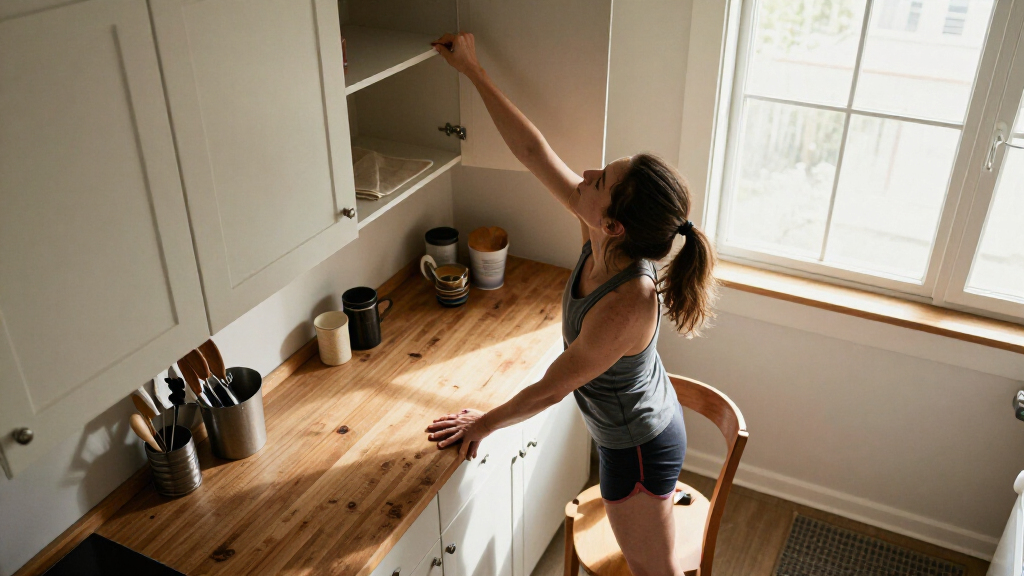
The essay organizes its examples into four categories: simple movements, falls and other mishaps involving gravity, household equipment, and recliners. Stories include pulling a muscle while reaching, hurting a toe on stairs, striking an open cupboard door, burning a hand on a curling iron, and being cut by a broken recliner mechanism. These are anecdotes reported by the writer, rather than independently verified accounts.
The author says the piece is intended to take a lighter look at minor or memorable mishaps and expressly distinguishes them from serious injuries. It closes with a tongue-in-cheek nod to home-safety advice for older adults, but does not offer a formal assessment of risks, prevention methods or medical guidance.
Anecdotes Are Not Injury Data
The article reflects a familiar concern: ordinary home activities can lead to pain or accidents, including for people who do not think of themselves as doing anything strenuous. Its stories may resonate with readers who have had a minor mishap while getting dressed, doing household chores or relaxing in a chair.
But the distinction between personal experience and evidence matters. The essay supplies no survey method, medical records, injury rates or comparison by age. Its comments and family stories cannot show whether older adults face a particular risk, how often these incidents occur, or which household changes would reduce harm. Readers should treat it as entertainment and conversation, not a substitute for reliable safety guidance or medical care.
home fall prevention safety equipment
As an affiliate, we earn on qualifying purchases.
As an affiliate, we earn on qualifying purchases.
How the Essay Was Assembled
The essay begins with a comic about how the explanation for an injury might change with age: a dramatic accident in youth becomes a slip on wet grass in middle age and, in the final panel, an injury blamed on opening a jar. The author uses that joke to introduce stories of unexpected everyday mishaps.
She describes seeing Edwards’ video, which showed a woman painting near a ceiling while standing on a stepladder in flip-flops. The woman wondered aloud whether a fall would make the post more visible, according to the essay. The writer says the comments prompted her to arrange the stories into categories. The supplied source does not give the essay’s publication date, the video’s date, or documentation supporting the engagement figures.
As an affiliate, we earn on qualifying purchases.
What the Stories Cannot Establish
The source does not identify the dates of the social-media video or essay, name the platform, or provide records to verify the reported shares and comments. It is also unclear how many of the commenters’ accounts involved a diagnosed injury, how severe the incidents were, or whether they happened at home.
No data in the article establish that these events are more frequent among older people than among other age groups. The essay offers no systematic sample, and its examples may reflect which stories people chose to share. Its playful references to falls, burns and other injuries should not be read as evidence that those incidents are harmless.
As an affiliate, we earn on qualifying purchases.
No Follow-Up Reported
The supplied source describes a completed personal essay and gives no announced follow-up, research project or official response. It does not say whether Sixty and Me plans to publish further reader stories or provide additional safety resources.
Readers seeking practical guidance should consult reputable home-safety resources or a qualified health professional for advice suited to their circumstances. Anyone with a serious injury or concerning symptoms should seek appropriate medical care; the essay itself does not provide triage or treatment recommendations.
As an affiliate, we earn on qualifying purchases.
Key Questions
What is the news development?
Sixty and Me published a humorous essay compiling personal stories about people getting hurt during ordinary activities at home. The source does not provide a publication date.
Is the article based on medical research?
No. It is a first-person collection of anecdotes from the author’s friends, family and social-media commenters. It reports no study, survey method or medical data.
Does it show that older adults are more likely to be injured at home?
No. The article shares stories framed around aging, but it gives no age-group comparison or injury-rate data to support that conclusion.
Does the essay offer home-safety advice?
Not as a formal guide. The author says she is not qualified to advise readers on preventing injuries and uses humor to describe the anecdotes. For personal safety questions, consult a qualified professional or reliable safety resource.
Source: rss
Cold & flu season Picks
humidifiers
As an affiliate, we earn on qualifying purchases.