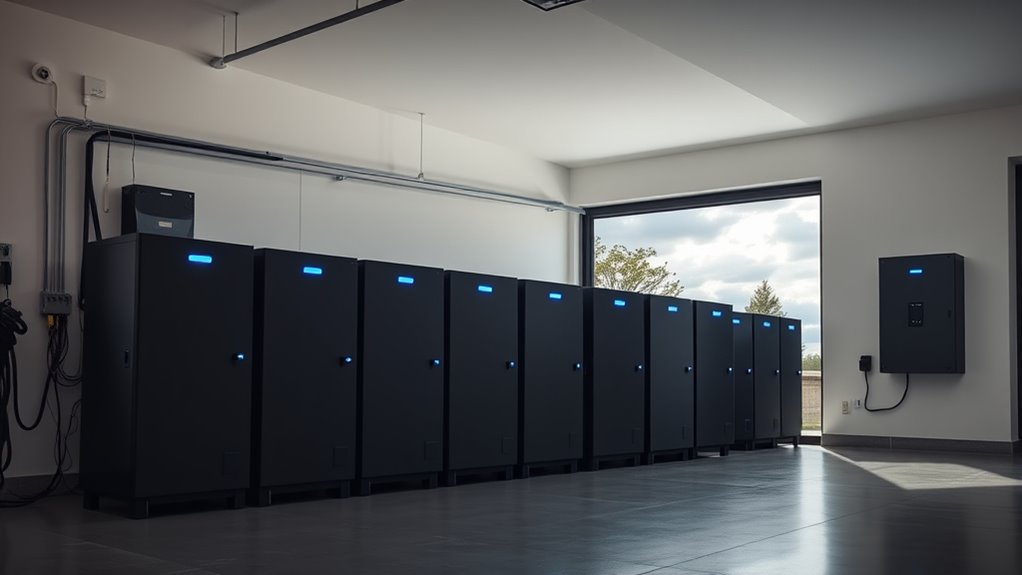

Power outages can disrupt daily life, making reliable home energy storage essential. The best systems balance capacity, portability, and cost to keep your essentials running. The BLUETTI AC180 stands out as the overall top pick thanks to its portability and solid capacity, while the EF ECOFLOW DELTA Pro offers premium power for larger homes or extended outages. However, these options come with tradeoffs—higher capacity often means higher cost or heavier units. Continue reading for a detailed breakdown to find the best fit for your needs.

Get health and wellness essentials delivered free with Prime
- Fast, free delivery on millions of items
- Prime Video, Amazon Music and more included
- Member-only deals all year
Complete the kit


Key Takeaways
- High-capacity systems like the EF ECOFLOW DELTA Pro provide the most power but are also the most expensive and heaviest.
- Portability varies widely; smaller units like the BLUETTI AC180 are easier to move but offer less total capacity.
- Expandable systems, such as the AFERIY 3840Wh, offer scalability for future needs, but often come with higher upfront costs.
- Battery chemistry impacts longevity and safety; LiFePO4 options tend to last longer and are more stable.
- Pricing and features are highly variable; balancing capacity, portability, and budget is key to choosing the right system.
| BLUETTI AC180 Portable Power Station 1152Wh 1800W LiFePO4 Solar Generator |  | Best Overall for Versatility and Speed | Battery Capacity: 1152Wh | Voltage: 120 volts | Output Wattage: 1800W | VIEW ON AMAZON | See Our Full Breakdown |
| Growatt Helios 3600 Portable Power Station, 3600Wh LFP Solar Generator |  | Best for Whole-House Backup and Long-Term Reliability | Battery Capacity: 3600Wh | Output Power: 3600W | Battery Type: LFP (Lithium Iron Phosphate) | VIEW ON AMAZON | See Our Full Breakdown |
| Anker SOLIX C1000 Gen 2 Portable Power Station |  | Best for Compact, Rapid Recharging and Versatility | Capacity: 1024Wh | Output Power: 2000W | Recharge Time: 49 minutes (HyperFlash) | VIEW ON AMAZON | See Our Full Breakdown |
| Dyness Portable Power Station, 2048Wh, 2400W Output, LiFePO4 Battery |  | Best for High Capacity and Long-Term Outdoor Use | Capacity: 2048Wh | Output Power: 2400W | Charge Cycles: 4000+ | VIEW ON AMAZON | See Our Full Breakdown |
| EBL 2400W Portable Power Station LiFePO4 Battery for Home Use |  | Best for Heavy-Duty Home and Outdoor Power | Capacity: 1843.2Wh | Max Power Output: 2400W | Charge Cycles: Over 3500 | VIEW ON AMAZON | See Our Full Breakdown |
| ABOK Ark3600 Portable Power Station with 200W Solar Panel |  | Best Overall for Long-Term, High-Capacity Power Storage | Wattage: 3600 watts | Battery Capacity: 3840Wh (expandable to 11520Wh) | Battery Type: LiFePO₄ | VIEW ON AMAZON | See Our Full Breakdown |
| Jackery HomePower 3600 Pro Max Power Station, 3584Wh, 2000W 120V/4000W 240V |  | Best for Reliable Home Backup with Fast Setup | Wattage: 4000 watts | Battery Capacity: 3584Wh | Battery Type: LFP (Lithium Iron Phosphate) | VIEW ON AMAZON | See Our Full Breakdown |
| Portable Solar Generator 300W with 60W Solar Panel |  | Best for Outdoor Use and Small Device Backup | Wattage: 300 watts | Battery Type: Battery-Powered, Solar Powered, AC/DC | Output Wattage: 300W | VIEW ON AMAZON | See Our Full Breakdown |
| Jackery HomePower 3600 Plus Power Station, 3584Wh, 3600W AC Output |  | Best for Heavy Household Use and Versatile Power Needs | Capacity: 3584Wh | AC Output: 3600W | Parallel Output: 7200W | VIEW ON AMAZON | See Our Full Breakdown |
| DABBSSON Portable Power Station 2000L, 2048Wh Semi-Solid LiFePO4 Battery, 2200W AC Output |  | Best Compact Power for Versatile Off-Grid and Backup Use | Battery Capacity: 2048Wh | Continuous Power Output: 2200W | Surge Power: 3300W | VIEW ON AMAZON | See Our Full Breakdown |
| EF ECOFLOW Portable Power Station 3600Wh DELTA Pro, 120V 3600W AC Output |  | Best Overall for Large-Scale Home Backup | Wattage: 3600 watt-hours | Output Wattage: 4500 | Battery Type: Non-gasoline | VIEW ON AMAZON | See Our Full Breakdown |
| Anker SOLIX F3000 Portable Power Station, 3,072Wh, 6,000W, Solar Generator |  | Best for High-Power, Fast Recharging | Capacity: 3,072Wh | Peak Power: 6,000W | Recharging Power: 6,000W | VIEW ON AMAZON | See Our Full Breakdown |
| UDPOWER S1200 Portable Power Station 1200W (Surge 1800W), Solar Input, UPS, UL2743, for Home RV Emergency, Pure Sine Wave |  | Best for Sensitive Devices and Quiet Operation | Capacity: 1200Wh | Surge Power: 1800W | Battery Type: LiFePO4 | VIEW ON AMAZON | See Our Full Breakdown |
| AFERIY 3840Wh Portable Power Station, Expandable Solar Generator to 11520Wh |  | Best for Large-Scale, Flexible Backup | Battery Capacity: 3840Wh | Expandable Capacity: Up to 11520Wh | Continuous Output: 3600W | VIEW ON AMAZON | See Our Full Breakdown |
| EF ECOFLOW 12kWh Power Station: DELTA Pro Ultra with Extra Battery |  | Best Premium for Heavy-Duty Home Backup | VIEW ON AMAZON | See Our Full Breakdown |
| home energy storage for power outage | Battery Type | Weight |
|---|---|---|
| BLUETTI AC180 Portable Power S | — | — |
| Growatt Helios 3600 Portable P | LFP (Lithium Iron Phosphate) | — |
| Anker SOLIX C1000 Gen 2 Portab | — | less than similar models |
| Dyness Portable Power Station | LiFePO4 | — |
| EBL 2400W Portable Power Stati | LiFePO4 | — |
| ABOK Ark3600 Portable Power St | LiFePO₄ | 92 pounds |
| Jackery HomePower 3600 Pro Max | LFP (Lithium Iron Phosphate) | 74 pounds |
| Portable Solar Generator 300W | Battery-Powered, Solar Powered, AC/DC | — |
| Jackery HomePower 3600 Plus Po | — | Lightweight |
| DABBSSON Portable Power Statio | — | 41 lbs |
| EF ECOFLOW Portable Power Stat | Non-gasoline | 99 pounds |
| Anker SOLIX F3000 Portable Pow | LiFePO4 | Approximately 70 lbs |
| UDPOWER S1200 Portable Power S | LiFePO4 | Approximately 80 lbs |
| AFERIY 3840Wh Portable Power S | — | 80.46 lbs |
| EF ECOFLOW 12kWh Power Station | — | — |
More Details on Our Top Picks
BLUETTI AC180 Portable Power Station 1152Wh 1800W LiFePO4 Solar Generator
The BLUETTI AC180 stands out for its rapid 1-hour charging time, making it ideal for those who need quick power restoration during outages. Its high capacity of 1152Wh combined with an expandable output up to 2700W makes it suitable for powering essential appliances and multiple devices. Compared with the Growatt Helios 3600, the AC180 offers faster charging but is less suited for whole-house backup due to its lower capacity. The tradeoff is weight; at 37.4 pounds, it’s less portable than smaller models like the Anker SOLIX C1000. Still, its fast recharge, high capacity, and solar support make it a versatile choice for emergency preparedness and outdoor use.
Pros:- Fast charging in just 1 hour for immediate readiness
- High capacity with 1152Wh battery suitable for multiple devices
- Expandable power output up to 2700W for larger appliances
- Supports solar charging for off-grid use
Cons:- Relatively heavy at 37.4 pounds, less portable for frequent movement
- Limited to 11 outlets, which might not cover larger setups
- Requires external solar panels for solar charging, adding to setup complexity
Best for: Individuals needing quick, portable backup power for outdoor adventures or short-term emergencies
Not ideal for: Homeowners seeking a large capacity for entire-house backup, due to its weight and limited outlets
- Battery Capacity:1152Wh
- Voltage:120 volts
- Output Wattage:1800W
- Number of Outlets:11
- Charging Time:1 hour (AC), 2.8-3.3 hours (solar)
- Item Weight:37.4 pounds
Our verdict“This model works best for users who prioritize quick recharge times and moderate portability for outdoor or emergency use.”
Growatt Helios 3600 Portable Power Station, 3600Wh LFP Solar Generator
The Growatt Helios 3600 is tailored for comprehensive backup needs, boasting a substantial 3600Wh capacity and fast AC charging that can reach full in 3 hours at 120V. Its expandable capacity up to 36kWh and 4000 cycle life make it a durable, long-term solution for home power outages. Compared to the BLUETTI AC180, it offers much greater capacity but is significantly heavier and bulkier, making portability less practical. The Helios excels in reliability and weather resilience, with a seamless transfer switch for continuous power. Its higher initial cost reflects its advanced features, making it ideal for those seeking a near-permanent backup system rather than portable convenience.
Pros:- Large 3600Wh capacity suitable for whole-house backup
- Fast solar and AC charging options for quick recovery
- Expandable capacity up to 36kWh for future scalability
- Long cycle life of 4000 cycles ensures longevity
Cons:- Heavy and bulky, less portable for mobile use
- Higher upfront investment compared to smaller models
- Requires some technical setup for expansion and integration
Best for: Homeowners or small businesses seeking a reliable, scalable backup power system for prolonged outages
Not ideal for: Individuals needing lightweight, portable solutions for outdoor use or frequent transport
- Battery Capacity:3600Wh
- Output Power:3600W
- Battery Type:LFP (Lithium Iron Phosphate)
- Expandable Capacity:Up to 36kWh
- Charging Time (AC):3 hours at 120V
- Cycles:4000
Our verdict“This system is best suited for users prioritizing extensive, long-term backup power over portability or size.”
Anker SOLIX C1000 Gen 2 Portable Power Station
The Anker SOLIX C1000 Gen 2 makes a compelling case for portability combined with speed, offering a 1024Wh capacity and ultra-fast recharge in just 49 minutes via HyperFlash tech. Its 2000W continuous output handles most essential devices during outages, making it a smart choice for those who need reliable power without bulk. Compared with the larger Dyness 2048Wh, it sacrifices some capacity but wins on weight and recharge speed. Its lightweight design and multiple ports suit outdoor enthusiasts and urban dwellers alike. The main tradeoff is that it may not run larger appliances for extended periods, so it’s best for quick power needs rather than long-term backup.
Pros:- Ultra-fast recharge in under 50 minutes for rapid readiness
- Compact and lightweight, easy to carry for outdoor use
- Multiple ports including USB-C, USB-A, and AC outlets for versatility
- Supports solar recharging to extend off-grid use
Cons:- Limited capacity means it can’t power large household appliances for long
- Price not clearly listed, which could impact affordability
- Requires additional panels or power sources for recharging
Best for: Campers, frequent travelers, or urban dwellers needing quick recharging and portable backup power
Not ideal for: Home users seeking large capacity or whole-house backup, due to smaller battery size and limited run time
- Capacity:1024Wh
- Output Power:2000W
- Recharge Time:49 minutes (HyperFlash)
- Ports:10
- Battery Cycles:4,000 cycles
- Weight:less than similar models
Our verdict“This unit is ideal for those who prioritize quick recharge and portability over extended power capacity.”
Dyness Portable Power Station, 2048Wh, 2400W Output, LiFePO4 Battery
The Dyness 2048Wh offers a robust power solution with a 2400W output and a durable LiFePO4 battery rated for over 4000 cycles. Its high capacity makes it suitable for powering appliances and electronics during extended outages or outdoor trips. Compared with the EBL 2400W, it provides slightly more capacity, but with a similar weight and size profile, making it less portable. The inclusion of smart app control adds convenience for managing settings remotely. The main tradeoff is its weight—heavier and bulkier than smaller units like the Anker SOLIX—limiting portability for frequent movers. Still, for long-term or semi-permanent backup, it excels.
Pros:- High-capacity 2048Wh battery suitable for multiple devices
- Long cycle life with over 4000 charge cycles
- Powerful 2400W output capable of running larger appliances
- Smart app control for easy remote management
Cons:- Relatively heavy and less portable for frequent movement
- Higher price point may limit accessibility for some users
- Size and weight reduce ease of transport in tight spaces
Best for: Users who need dependable, long-lasting power for outdoor activities or prolonged outages
Not ideal for: People requiring lightweight, portable units for quick, short-term power needs
- Capacity:2048Wh
- Output Power:2400W
- Charge Cycles:4000+
- Recharge Time:1.8 hours (80%)
- Battery Type:LiFePO4
- Warranty:5 years
Our verdict“This station is best suited for users seeking a long-term, reliable power source with high capacity and durability.”
EBL 2400W Portable Power Station LiFePO4 Battery for Home Use
The EBL 2400W is designed for demanding backup scenarios with a substantial 1843.2Wh capacity and a 2400W max power output. Its extensive port selection—including AC, USB-C, USB-A, DC, and wireless charging—makes it suitable for powering multiple devices simultaneously. Compared to the Dyness 2048Wh, it offers comparable capacity but emphasizes more ports and a robust build for durability. Weighing 55 pounds, it’s less portable, making it suitable for semi-permanent outdoor setups or home backup. Its fast charging and long lifespan—over 3500 cycles—are key advantages, but its size and weight can limit mobility for users needing lightweight options.
Pros:- High-capacity 1843.2Wh battery for versatile backup needs
- Supports multiple devices simultaneously with diverse ports
- Fast recharge with over 3500 cycles for long-term reliability
- Durable design suitable for outdoor and home use
Cons:- Heavy at 55 pounds, less portable for frequent transport
- Large size may limit use in tight spaces or on the go
- Price may be prohibitive for budget-conscious buyers
Best for: Homeowners or outdoor enthusiasts needing a heavy-duty power station capable of running multiple devices during prolonged outages
Not ideal for: Users seeking lightweight, portable solutions or frequent movers, due to its weight and size
- Capacity:1843.2Wh
- Max Power Output:2400W
- Charge Cycles:Over 3500
- Recharge Time:2.3 hours (full)
- Battery Type:LiFePO4
- Dimensions:16.9 x 11.8 x 11 inches
Our verdict“This unit is best for users who prioritize power capacity and durability over portability for home or semi-permanent outdoor backup.”
ABOK Ark3600 Portable Power Station with 200W Solar Panel
The ABOK Ark3600 stands out for its massive 3840Wh capacity, which is ideal for those needing extensive backup during prolonged outages. Its expandable capacity up to 11520Wh makes it suitable for larger households or multiple devices, surpassing smaller models like the Portable Solar Generator 300W. The LiFePO₄ batteries ensure over 4000 cycles, promising longevity, but this comes with a significant weight of 92 pounds, making it less practical for frequent moving. Its diverse output ports support many devices simultaneously, yet the high price tag and bulk could deter casual users. This option suits users prioritizing long-term, scalable energy supply over portability.
Pros:- High-capacity expandable to 11520Wh for long-term power needs
- Supports multiple devices with diverse ports including AC, USB-C, and DC
- Long-lasting LiFePO₄ batteries with over 4000 cycles
Cons:- Heavy at 92 pounds, difficult to move manually
- High cost and large size may be prohibitive for casual users
Best for: Families or small businesses needing reliable, long-lasting backup power with high capacity
Not ideal for: Individuals seeking a lightweight, portable solution for occasional outages or outdoor trips
- Wattage:3600 watts
- Battery Capacity:3840Wh (expandable to 11520Wh)
- Battery Type:LiFePO₄
- Cycle Life:over 4000 cycles
- Lifespan:up to 10 years
- Output Power:3600W rated, 4500W peak
- Charging Methods:AC, PV, car
- Weight:92 pounds
- Dimensions:21.6″L x 12.6″W x 18.5″H
Our verdict“This power station is best suited for users who need extensive, reliable energy storage and don’t mind the weight or cost.”
Jackery HomePower 3600 Pro Max Power Station, 3584Wh, 2000W 120V/4000W 240V
The Jackery HomePower 3600 Pro Max provides a solid 3584Wh capacity combined with a 4000W output, making it well-suited for whole-home backup during outages. Its easy installation with a manual transfer switch simplifies setup compared to larger, more complex systems like the Jackery HomePower 3600 Plus. While it weighs a manageable 74 pounds, its portability is limited by size, and it requires professional installation for full home integration. The long lifespan of over 16 years adds value, but the initial cost may be steep for smaller households or those with limited budgets. This model makes the most sense for homeowners seeking a dependable, ready-to-go backup that can power essential appliances efficiently.
Pros:- High capacity with 3584Wh suitable for home essentials
- Fast, straightforward installation with a manual transfer switch
- Long lifespan of over 16 years with high safety standards
Cons:- Heavy at 74 pounds, less portable for frequent relocation
- Requires professional installation, adding to setup complexity
Best for: Homeowners wanting a reliable, easy-to-install backup power solution for essential appliances
Not ideal for: Renters or users needing portable power for outdoor activities, due to its size and installation needs
- Wattage:4000 watts
- Battery Capacity:3584Wh
- Battery Type:LFP (Lithium Iron Phosphate)
- Lifespan:16+ years
- Weight:74 pounds
- Dimensions:14.76″L x 10.83″W x 17.72″H
Our verdict“This power station is ideal for homeowners seeking a durable, ready-to-use backup with straightforward setup.”
Portable Solar Generator 300W with 60W Solar Panel
The Portable Solar Generator 300W offers a compact, lightweight option for outdoor enthusiasts and light emergency needs. Its included 60W foldable solar panel provides flexible recharging outdoors, making it ideal for camping or short-term power outages. Compared with larger units like the ABOK Ark3600, it can’t handle heavy appliances or multiple devices simultaneously, but its portability and safety features make it perfect for quick, small-scale backup. Performance in low-light conditions may vary, and it’s not designed for appliances over 300W. The junction box isn’t waterproof, which could limit outdoor use in rain. This generator suits users who prioritize mobility and moderate power for small devices.
Pros:- Includes a 60W foldable solar panel for eco-friendly recharging
- Multiple outlets and USB ports for versatile device charging
- Built-in safety features and cooling system for reliable operation
Cons:- Limited to 300W output, unsuitable for larger appliances
- Performance drops in low-light conditions
Best for: Campers, outdoor adventurers, or those needing backup for essential small devices during brief outages
Not ideal for: Homeowners seeking to power large appliances or multiple devices continuously during outages
- Wattage:300 watts
- Battery Type:Battery-Powered, Solar Powered, AC/DC
- Output Wattage:300W
- Additional Features:Overload and Short Circuit Protection
- Solar Panel Included:Yes, 60W foldable
Our verdict“This generator is best for outdoor use or small device backup where portability outweighs capacity needs.”
Jackery HomePower 3600 Plus Power Station, 3584Wh, 3600W AC Output
The Jackery HomePower 3600 Plus combines a 3584Wh capacity with a robust 3600W continuous output, capable of powering multiple essential household appliances during outages. Its lightweight, luggage-style design makes it more portable than many competitors, like the Ark3600, despite its high capacity. Multiple charging options, including rapid AC and solar, add convenience. However, the unit’s price could be a barrier for smaller households, and for larger power demands, multiple units might be necessary. Its 6,000-cycle lifespan offers longevity but may be overkill for casual users. This model is best for homeowners who want dependable, large-capacity backup with easy portability.
Pros:- Large 3584Wh capacity suitable for whole-home backup
- Lightweight, portable design with luggage-style convenience
- Multiple charging options including fast AC and solar
Cons:- Higher initial cost relative to smaller units
- May require more than one unit for extensive power needs
Best for: Homeowners needing a portable, high-capacity backup for multiple appliances
Not ideal for: Users with very limited budgets or those seeking a stationary system without portability concerns
- Capacity:3584Wh
- AC Output:3600W
- Parallel Output:7200W
- Voltage:120V & 240V in parallel
- Lifespan:6,000 cycles, 10 years
- Charging Time (AC+DC):2 hours
- Weight:Lightweight
- Dimensions:Lighter and smaller than comparable units
Our verdict“This power station is best for users wanting a portable, high-capacity backup that can handle multiple household essentials during outages.”
DABBSSON Portable Power Station 2000L, 2048Wh Semi-Solid LiFePO4 Battery, 2200W AC Output
The DABBSSON 2000L offers a balanced mix of capacity and portability with 2048Wh of semi-solid LiFePO₄ batteries and a 2200W continuous output. Its fast 1-hour recharge makes it convenient for quick turnarounds, and the smart app control adds modern usability. It’s lighter at 41 pounds compared to larger systems like the Ark3600 or Jackery Plus, making it more manageable for outdoor or mobile applications. While its capacity may be less suited for prolonged outages or large appliances, it excels in camping, job sites, or backup for essential devices. Its higher price point reflects the advanced battery technology and long lifespan, but you’ll need compatible solar panels for solar recharging. This unit is ideal for users who need reliable power in a portable, versatile package.
Pros:- Long-lasting 2048Wh semi-solid LiFePO₄ battery with 10+ years lifespan
- Fast 1-hour recharge and multiple recharging options including solar
- Portable design weighing only 41 lbs with smart app control
Cons:- Limited capacity for large appliances or extended outages
- Requires compatible solar panels for solar recharging
Best for: Outdoor enthusiasts, campers, or professionals needing reliable, portable power with quick recharge
Not ideal for: Homeowners with large backup needs or those requiring power for heavy appliances over 2200W
- Battery Capacity:2048Wh
- Continuous Power Output:2200W
- Surge Power:3300W
- Weight:41 lbs
- Fast Charge Time:1 hour
- Recharging Methods:AC, solar, car
- Warranty:5 years
Our verdict“This power station suits users seeking a portable, fast-charging power source for outdoor, camping, or small backup needs.”
EF ECOFLOW Portable Power Station 3600Wh DELTA Pro, 120V 3600W AC Output
The EF ECOFLOW DELTA Pro stands out for its enormous 3600Wh capacity and ability to expand up to 25kWh, making it ideal for whole-home backup during prolonged outages. Its rapid recharge time under 3 hours and multiple charge options ensure you’re powered quickly after a blackout, while remote app control adds convenience. Compared to smaller units like the UDPOWER S1200, it offers greater capacity but at a weight of 99 pounds, it’s less portable. The high price and need for additional batteries for full expansion are tradeoffs, but for those needing reliable, large-scale power, this is a top choice.
Pros:- Massive expandable capacity suitable for whole-home backup
- Fast recharging with multiple options, including fast wall charging
- Multiple output ports and remote app control for customization
Cons:- Heavy at nearly 100 pounds, difficult to move
- Higher cost, especially with expansion batteries
Best for: Homeowners seeking a robust, expandable backup system that can power essential circuits during extended outages.
Not ideal for: People looking for lightweight, portable solutions for occasional use or camping, due to its weight and size.
- Wattage:3600 watt-hours
- Output Wattage:4500
- Battery Type:Non-gasoline
- Weight:99 pounds
- Recharging Time:Under 3 hours
- Expandability:Up to 25kWh
Our verdict“Best suited for those prioritizing high capacity and home-wide backup with minimal portability concerns.”
Anker SOLIX F3000 Portable Power Station, 3,072Wh, 6,000W, Solar Generator
The Anker SOLIX F3000 offers a compelling balance of capacity and power, with 3,072Wh and a peak output of 6,000W, making it capable of running multiple appliances during outages. Its standout feature is the industry-leading 6,000W recharging input, allowing it to fully recharge in a short period, unlike smaller units such as the UDPOWER S1200, which has a more modest capacity. While it is somewhat bulky and heavy for portability, this model excels for users who need quick recharges and high surge capacity. The higher initial cost and need for accessories for full features are factors to consider.
Pros:- High capacity with 3,072Wh and 6,000W peak power
- Fast recharging via 6,000W input
- Versatile AC and DC outputs, solar compatible
Cons:- Heavy and less portable
- High initial price
Best for: Preppers or homeowners who want rapid recharging and high surge capacity for running demanding appliances during outages.
Not ideal for: Individuals seeking ultra-light, portable units for sporadic emergency use, due to its weight and size.
- Capacity:3,072Wh
- Peak Power:6,000W
- Recharging Power:6,000W
- Battery Type:LiFePO4
- Solar Compatibility:165V or 60V ports
- Weight:Approximately 70 lbs
Our verdict“Ideal for users needing rapid recharge and high surge power for demanding appliances during outages.”
UDPOWER S1200 Portable Power Station 1200W (Surge 1800W), Solar Input, UPS, UL2743, for Home RV Emergency, Pure Sine Wave
The UDPOWER S1200 is a compact, reliable choice for emergency backup and off-grid power, with a 1200W continuous output and over 4,000 cycle LiFePO4 battery. Its quiet operation (<25dB) and pure sine wave output make it excellent for sensitive electronics, surpassing smaller units like the ABOK Ark3600 in durability and safety. The 400W solar input limits rapid recharging from solar sources, but its fast 1.5-hour AC recharge compensates for this. Weighing around 80 pounds, it’s portable for its capacity, but still substantial. It’s a good pick for those prioritizing clean, quiet power for critical devices.
Pros:- Over 4,000 charge cycles with LiFePO4 battery
- Pure sine wave output safe for sensitive devices
- Fast recharge time of 1.5 hours from AC
Cons:- Limited solar input capacity at 400W
- Relatively heavy for portability
Best for: Homeowners or RV users seeking a quiet, safe backup for sensitive electronics and moderate power needs.
Not ideal for: Users needing high-capacity, large-scale backup systems or long-duration power for heavy appliances, due to limited capacity and solar input.
- Capacity:1200Wh
- Surge Power:1800W
- Battery Type:LiFePO4
- Cycle Life:4000+
- Solar Input:400W
- Weight:Approximately 80 lbs
Our verdict“Great for sensitive electronics and quiet backup in small to medium outages, but not for heavy loads or extended power needs.”
AFERIY 3840Wh Portable Power Station, Expandable Solar Generator to 11520Wh
The AFERIY 3840Wh offers a sizable starting capacity with the ability to expand up to 11,520Wh, making it suitable for demanding backup needs or off-grid use. Its seamless UPS transfer ensures critical devices stay powered without interruption, and smart app control simplifies management. Compared to the EF ECOFLOW DELTA Pro, it provides nearly the same capacity but with more flexibility in expansion and additional ports. The 80-pound weight limits portability, but for stationary backup, its expansive capacity and fast 1.5-hour recharge are advantageous. Its higher price reflects its advanced features, making it best for users with substantial backup requirements.
Pros:- Large expandable capacity up to 11,520Wh
- Fast recharge in 1.5 hours
- Seamless UPS transfer for critical devices
Cons:- Heavy and less portable
- Higher price point
Best for: Home or business owners needing a large, expandable backup system with seamless UPS transfer.
Not ideal for: Individuals seeking lightweight, portable solutions for occasional or outdoor use, due to its weight and size.
- Battery Capacity:3840Wh
- Expandable Capacity:Up to 11520Wh
- Continuous Output:3600W
- Recharge Time:1.5 hours
- Ports:15 including AC, USB, DC
- Weight:80.46 lbs
Our verdict“Designed for those who want a highly expandable, reliable backup with seamless critical load transfer.”
EF ECOFLOW 12kWh Power Station: DELTA Pro Ultra with Extra Battery
The EF ECOFLOW DELTA Pro Ultra elevates home backup capacity with a 7200W inverter and expandable batteries up to 90kWh, ideal for powering entire homes during outages. Its multiple charging options, including solar and vehicle, combined with smart app management for circuit prioritization, make it a comprehensive solution. Compared to smaller options like the Growatt Helios 3600, it provides significantly more power and extendability, though at a weight approaching 294 pounds, it’s impractical for frequent movement. This unit makes sense for large households or small businesses that need extended, reliable backup but accept the high cost and size.
Pros:- High power output up to 7200W
- Expandable up to 90kWh for extended outages
- Multiple charging methods, including solar and vehicle
- Smart app for detailed energy management
Cons:- Very heavy, nearly 294 pounds, difficult to move
- Limited runtime at full load (~30 minutes)
Best for: Homeowners or small business owners seeking a heavy-duty, fully expandable backup system capable of powering most household appliances.
Not ideal for: Individuals needing lightweight, portable backup solutions or those with limited space for installation, due to its weight and size.
Our verdict“Best suited for backup scenarios where maximum power, expandability, and reliability outweigh portability concerns.”

How We Picked
The products in this roundup were selected based on a combination of performance, usability, build quality, and value. We prioritized systems that can reliably power essential appliances during outages, with capacities ranging from around 1000Wh to over 12,000Wh. Ease of use, portability, and safety features like battery chemistry also influenced our choices. Additionally, we considered expandability options and the ability to integrate with solar panels, which are important for off-grid or long-term backup scenarios. The rankings reflect a balance between capacity, cost, and practical usability for typical home outage needs.| home energy storage for power outage | Battery Type |
|---|---|
| BLUETTI AC180 Portable Power S | — |
| Growatt Helios 3600 Portable P | LFP (Lithium Iron Phosphate) |
| Anker SOLIX C1000 Gen 2 Portab | — |
| Dyness Portable Power Station | LiFePO4 |
| EBL 2400W Portable Power Stati | LiFePO4 |
| ABOK Ark3600 Portable Power St | LiFePO₄ |
| Jackery HomePower 3600 Pro Max | LFP (Lithium Iron Phosphate) |
| Portable Solar Generator 300W | Battery-Powered, Solar Powered, AC/DC |
| Jackery HomePower 3600 Plus Po | — |
| DABBSSON Portable Power Statio | — |
| EF ECOFLOW Portable Power Stat | Non-gasoline |
| Anker SOLIX F3000 Portable Pow | LiFePO4 |
| UDPOWER S1200 Portable Power S | LiFePO4 |
| AFERIY 3840Wh Portable Power S | — |
| EF ECOFLOW 12kWh Power Station | — |
Factors to Consider When Choosing Home Energy Storage For Power Outages
Choosing the right home energy storage system involves more than just capacity. Here are key factors to consider that can help you make an informed decision and avoid common pitfalls.Capacity and Power Output
Assess how much energy you need to store and the power requirements of your essential appliances. Larger capacity units can keep more devices running longer but tend to be heavier and more expensive. Look for systems with continuous power ratings that meet or exceed your critical loads, such as refrigerators, lights, and communication devices. Remember, peak or surge power ratings are also important if you plan to run appliances with motors or other high-startup power needs.
Portability and Size
Decide whether your system needs to be portable or primarily stationary. Smaller, lightweight units are easier to move and store, but they usually offer less capacity. If you anticipate frequent relocations or need a backup system that can be easily stored away, prioritize compact designs. Conversely, permanent installations can accommodate larger, more powerful units but require space and potentially more complex setup.
Battery Chemistry and Longevity
Battery chemistry affects lifespan, safety, and performance. Lithium Iron Phosphate (LiFePO4) batteries are generally safer, more stable, and longer-lasting than other types like lithium-ion. Investing in a system with high-quality chemistry can save money in the long run through reduced replacement costs. However, these batteries may come at a higher initial price, so weigh the upfront cost against long-term durability.
Expandability and Solar Compatibility
Consider whether your system can be expanded if your energy needs grow or if you want to integrate solar panels. Expandable units often allow adding extra batteries or solar input, providing greater flexibility and resilience. Be aware that not all systems are compatible with solar charging, so check for supported solar panel connections and the availability of expansion options to future-proof your investment.
Cost and Value
Price varies widely based on capacity, features, and brand reputation. Cheaper units might suffice for short outages or minimal needs but can fall short during extended or high-demand scenarios. On the other hand, premium systems offer more power, safety features, and longevity but come at a premium price. Balance your budget with your anticipated needs, and consider whether investing more now will provide better reliability and longer-term value.
Frequently Asked Questions
Can I run my entire house on a portable home energy storage system?
While some high-capacity systems can power essential parts of your home during an outage, running an entire house typically requires a dedicated, permanently installed home backup system connected to your electrical panel. Portable units are better suited for powering critical devices or small sections of your home. For full-home backup, consulting with a professional for a custom solution is advisable to ensure safety and proper integration.
How long can a home energy storage system power my appliances during an outage?
The duration depends on the capacity of the system and the power draw of your devices. For instance, a 2000Wh unit might run a refrigerator for about 8-12 hours, depending on its energy consumption. Larger systems with over 10,000Wh can last multiple days if managed carefully. Estimating your total load and matching it with the system’s capacity helps set realistic expectations for outage duration.
Is it worth investing in solar-compatible energy storage systems?
Yes, solar-compatible systems can significantly extend your backup power capacity by allowing you to recharge during the day, especially in prolonged outages. This setup reduces dependence on grid power and can lower ongoing costs. However, solar integration tends to increase upfront costs and complexity, so consider your long-term energy independence goals and available sunlight before investing.
What safety features should I look for in a home energy storage system?
Safety features such as battery management systems (BMS), thermal monitoring, and fire-resistant casing are essential for preventing overheating, overcharging, and ensuring overall stability. Lithium Iron Phosphate batteries are inherently safer, but verifying that the unit has proper safety certifications provides extra peace of mind. Proper installation and regular maintenance further enhance safety during use.
How much should I expect to spend on a reliable home energy storage system for power outages?
Costs can vary widely, with smaller portable units starting around $1,000 and larger, expandable systems exceeding $10,000. For most homes, a mid-range system offering 3000-6000Wh capacity provides a good balance of affordability and performance. Investing in a system that meets your specific power needs and includes safety and expandability features often pays off by providing more reliable backup power over time.
Conclusion
For those seeking a reliable, all-around backup solution, the EF ECOFLOW DELTA Pro stands out as the best overall choice, especially for larger homes or extended outages. Budget-conscious buyers should consider the Jackery HomePower 3600 Plus for its solid capacity at a more accessible price. Beginners or those with smaller needs might prefer the BLUETTI AC180 for its portability and ease of use. For homeowners planning for future expansion or solar integration, systems like the AFERIY 3840Wh offer scalability. Ultimately, matching your energy demands, budget, and safety considerations will guide you to the best system for your power outage needs.Halloween Picks
halloween
As an affiliate, we earn on qualifying purchases.