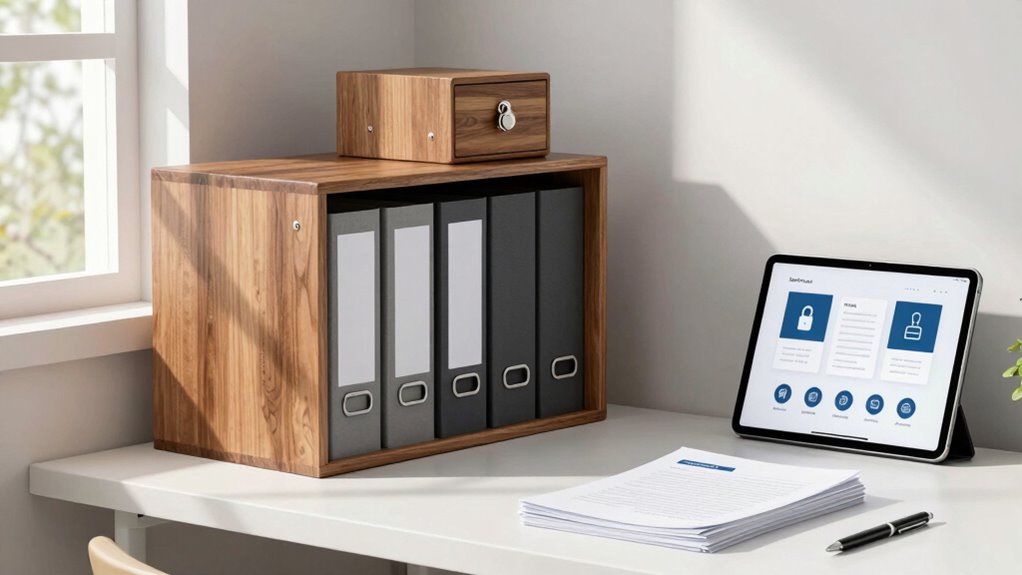

To keep your family paperwork secure but accessible, use a combination of digital encryption for important files and physical safes for paper documents. Always use strong, unique passwords and enable two-factor authentication for online storage. Store physical papers in fireproof, lockable safes and keep a master list of where everything is. Regularly review and update your security measures. If you want to learn how to implement these strategies effectively, there’s more to explore below.

Get health and wellness essentials delivered free with Prime
- Fast, free delivery on millions of items
- Prime Video, Amazon Music and more included
- Member-only deals all year
Key Takeaways
- Store papers in a fireproof, lockable safe or secure cabinet for physical protection.
- Create a detailed master list of document locations, kept separate from the papers.
- Use encryption and password protection for digital copies and scans of important documents.
- Limit physical and digital access with strong passwords, two-factor authentication, and permission controls.
- Educate family members on security best practices and regularly review all access and security measures.
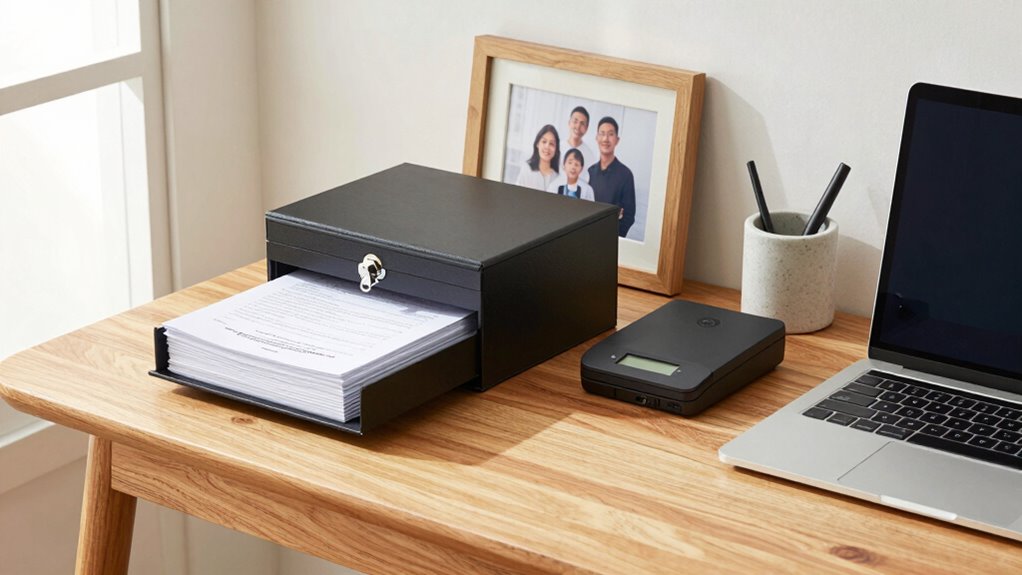
Keeping your family’s important documents secure is essential in today’s world, where identity theft and data breaches are common. You want to protect sensitive information like birth certificates, social security cards, and legal documents, but you also need quick access when emergencies arise. Achieving this balance requires thoughtful organization combined with modern security measures. Digital encryption plays a crucial role in safeguarding your digital copies of these documents. When you scan or store important files electronically, encrypting them ensures that only authorized individuals can access the data. Encryption acts as a digital lock, making it difficult for hackers or unauthorized users to read your information even if they gain access to your computer or cloud storage. This way, you can keep digital copies of your family paperwork safe while maintaining the convenience of electronic access.
Alongside digital encryption, access control is equally important. You should limit who can see or modify your documents, especially those stored online or on shared devices. Setting strong, unique passwords for your storage accounts and enabling two-factor authentication creates a layered defense that deters unauthorized access. If multiple family members need access, consider creating individual accounts or profiles with appropriate permissions. This approach allows you to track who views or edits sensitive files and helps prevent accidental alterations or leaks. Physical access control is just as essential. Store paper documents in a fireproof, lockable safe or a secure cabinet that only trusted family members can open. Keep a master list of where these documents are stored, but avoid leaving it in the same location as the documents themselves. Regularly reviewing who has access and updating security measures keeps your system resilient against potential breaches. Additionally, understanding the horsepower of your digital security setup can help you gauge its effectiveness in protecting your data. Having a clear security strategy for your digital and physical files is vital for maintaining long-term protection. Moreover, educating your family about security practices can further strengthen your overall protective measures. Implementing routine backups ensures that your data remains safe even if your primary storage is compromised or damaged.
You should also develop a routine for updating and backing up your files. Digital encryption and access controls are only effective if your files are current and protected against loss. Use encrypted external drives or secure cloud services for backups, and ensure your backup copies are also encrypted. Keep your security software up to date to defend against malware or hacking attempts. Educate your family members about the importance of security and safe handling of sensitive information. By combining strong access controls, digital encryption, and careful physical storage, you create a comprehensive security system that keeps your family paperwork protected yet accessible when you need it most. This proactive approach helps you reduce the risk of identity theft, loss, or unauthorized access, giving you peace of mind that your family’s vital documents are both safe and within reach.
fireproof lockable safe for documents
As an affiliate, we earn on qualifying purchases.
As an affiliate, we earn on qualifying purchases.
Frequently Asked Questions
How Often Should I Review My Family Paperwork Security Measures?
You should review your paperwork organization and security checklist at least once every six months. Regular reviews help you spot any vulnerabilities or outdated information. During these checks, guarantee your security measures are still effective and update any necessary details. Staying proactive keeps your family’s paperwork safe and accessible, preventing potential theft or loss. Setting a recurring reminder can help you maintain consistent security habits and stay on top of your paperwork management.
What Are the Best Ways to Store Digital Family Documents Securely?
You should store digital family documents securely by using reputable cloud storage services that offer strong encryption methods. Make sure your files are protected with complex passwords and enable two-factor authentication for added security. Regularly update your security settings and backups. This way, your documents stay accessible when needed but remain protected from unauthorized access, giving you peace of mind knowing your family’s important information is safe and secure.
How Can I Prevent Identity Theft Related to Family Paperwork?
Think of your family paperwork as treasure needing protection—because it is. To prevent identity theft, practice vigilant identity theft prevention by shredding unnecessary documents and avoiding sharing sensitive info. Use secure document storage, like locked filing cabinets or safes, and keep digital files encrypted. Regularly review your accounts for suspicious activity. These steps help shield your family’s information from falling into the wrong hands, ensuring your family’s security.
What Should I Do if I Lose Access to My Secured Documents?
If you lose access to your secured documents, first, check if you have emergency access options set up, like a trusted family member or a digital key. Then, use your backup solutions—such as encrypted cloud storage or physical copies stored elsewhere—to retrieve important files quickly. Consider updating your access methods regularly to make certain you can always regain control, and inform trusted individuals about your backup plans for added security.
Are There Legal Requirements for Storing Family Paperwork Securely?
Did you know that 60% of families face legal issues due to improper document storage? Legally, you must follow specific requirements for storing important family paperwork, especially sensitive documents like wills or tax records. Ensuring legal compliance involves using confidentiality protocols, such as secure safes or encrypted digital files. These steps protect your documents from theft, loss, or unauthorized access, giving you peace of mind while keeping everything accessible when needed.
digital document encryption software
As an affiliate, we earn on qualifying purchases.
As an affiliate, we earn on qualifying purchases.
Conclusion
Keeping your family paperwork secure doesn’t mean locking it away forever—it’s about finding a balance. Remember, nearly 60% of home burglaries involve some form of forced entry, so a secure yet accessible system is essential. By organizing documents thoughtfully and using a fireproof safe or digital backups, you protect your family’s important information without hassle. Stay vigilant, stay organized, and your papers will be safe, ready when you need them most.
secure family document storage cabinet
As an affiliate, we earn on qualifying purchases.
As an affiliate, we earn on qualifying purchases.
two-factor authentication USB key
As an affiliate, we earn on qualifying purchases.
As an affiliate, we earn on qualifying purchases.
Halloween Picks
halloween
As an affiliate, we earn on qualifying purchases.