
An efficient medical paper trail at home is well-organized with clearly labeled physical and digital files for all important health documents. You should store recent test results, medication lists, allergies, and emergency contacts in a dedicated folder, regularly updating it. Keep physical copies in fireproof containers and digital files in secure cloud storage for quick access during emergencies. Staying compliant with legal and privacy standards guarantees your records are safe and ready when needed. Keep exploring to discover more ways to streamline your health management.

Get health and wellness essentials delivered free with Prime
- Fast, free delivery on millions of items
- Prime Video, Amazon Music and more included
- Member-only deals all year
Key Takeaways
- Clearly labeled physical and digital folders for different health documents ensure easy access and organization.
- Regularly update and review records to keep information current and remove outdated files.
- Store physical copies in fireproof, waterproof containers for added security and durability.
- Use secure cloud storage for digital records, enabling quick access during emergencies from any location.
- Maintain a summarized medical folder or printout for quick reference in emergencies or safe keeping.
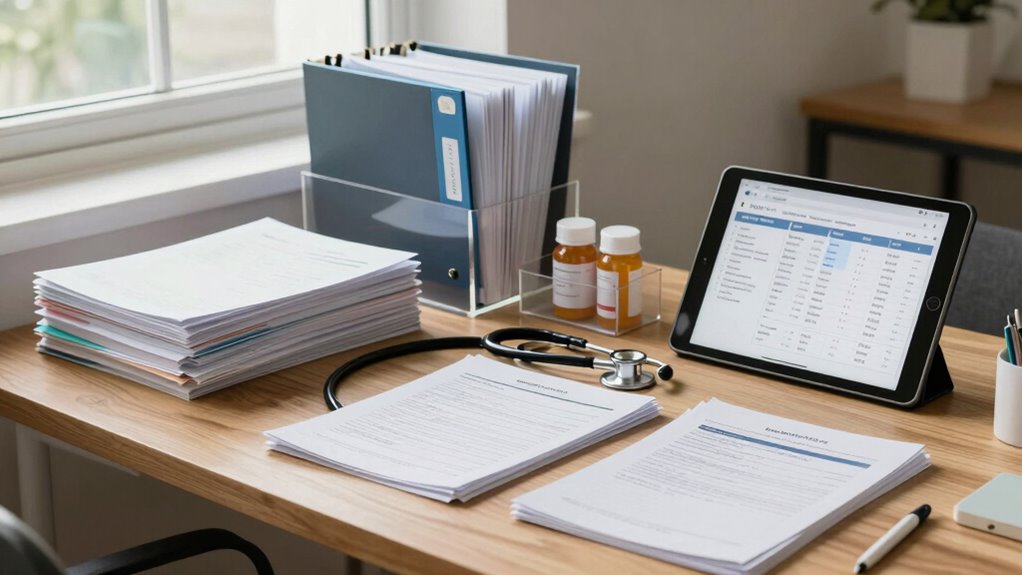
Managing your medical paperwork at home can feel overwhelming, but organizing a clear paper trail is crucial for your health and peace of mind. An efficient medical paper trail isn’t just about keeping files; it’s about creating a system that’s easy to navigate when you need information quickly. One of the most effective ways to do this is through digital record keeping. Instead of relying solely on paper copies, you can scan and store important documents electronically. Digital records are more accessible, less prone to damage, and easier to update. With secure cloud storage, you can access your health information from anywhere, whether you’re at home or on the go. This setup not only streamlines your organization but also reduces clutter, making it simpler to find what you need in an emergency.
Organize your medical records digitally for easy access, enhanced safety, and quick emergency response.
Emergency preparedness is a crucial aspect of maintaining your medical paper trail. You should keep a dedicated folder or digital folder with all essential health information, including recent test results, medication lists, allergies, and emergency contacts. In urgent situations, having quick access to this information can make a significant difference. You might also consider printing a summarized version of your medical details to keep in your wallet or a known safe location. Regularly updating these summaries ensures that first responders or healthcare providers have the most current information, saving precious time during emergencies. Additionally, understanding your state-specific health regulations can help you ensure your records meet legal requirements and are comprehensive enough for healthcare providers.
An efficient medical paper trail is also about consistency and organization. Use clearly labeled folders—both physical and digital—to separate different types of documents, like prescriptions, lab reports, and insurance information. Keep your physical copies in a fireproof, waterproof container to protect them from damage. For digital files, establish a logical naming system, such as “2023_Medical_Visit_January” or “Allergy_List.” Regularly review and purge outdated or irrelevant documents to keep your files manageable. This habit ensures you’re not sifting through obsolete paperwork when you need crucial information quickly. Incorporating standardized naming conventions can further improve retrieval efficiency by making it easier to locate specific documents. To further enhance your organization, consider researching digital security best practices to ensure your sensitive medical information remains protected from unauthorized access. Staying informed about privacy laws relevant to health records can help you better protect your personal information and comply with legal standards.
To further enhance your organization, consider researching state-specific health regulations to ensure your records comply with local requirements. Finally, consider sharing your organized system with trusted family members or caregivers. This way, they’ll be aware of your medical history and know where to find critical documents if needed. An organized, complete medical paper trail supports your health management, simplifies doctor visits, and enhances your emergency preparedness. It’s a proactive step that empowers you and provides peace of mind, knowing your medical information is well-structured and accessible whenever you need it.
fireproof waterproof document safe
As an affiliate, we earn on qualifying purchases.
As an affiliate, we earn on qualifying purchases.
Frequently Asked Questions
How Long Should I Keep Medical Records at Home?
You should keep medical records at home for at least a year, but it’s wise to store important documents like immunization records or hospital discharge papers indefinitely. For medical record storage, organize papers in clearly labeled folders or binders to keep everything accessible. Use paper organization tips like sorting by date or provider, and regularly review and dispose of outdated files to maintain an efficient, manageable medical paper trail.
What Digital Tools Can Help Organize My Medical Documents?
Imagine having a superhero sidekick for your medical files! Digital tools like cloud storage options make this possible. Use consistent digital file naming to keep everything organized, and store your documents securely online. Cloud services like Google Drive, Dropbox, or OneDrive let you access your health records anytime, anywhere, with a few clicks. You’ll save time, reduce clutter, and keep your medical history safe and easy to find.
How Do I Securely Dispose of Outdated Medical Papers?
To securely dispose of outdated medical papers, start by using document shredding to destroy sensitive information completely. After shredding, consider secure storage for any documents you still need to keep, like important medical records or insurance details. Keep the shredded materials in a secure bin until they can be properly disposed of. This approach guarantees your medical information stays confidential and is safely managed.
Should I Keep Copies of Prescriptions and Lab Results?
Think of your medical documents as a map guiding your health journey; yes, keep copies of prescriptions and lab results. They’re crucial for medication management and emergency preparedness, helping you navigate unexpected health issues swiftly. Store these copies securely, like treasures, so you can access critical information when needed. Keeping organized records ensures you’re always ready to face health challenges with confidence and clarity.
How Can I Ensure My Medical Information Remains Private?
To guarantee your medical information stays private, prioritize medical privacy by storing sensitive documents securely. Use data encryption when saving digital files or emails related to your health, protecting them from unauthorized access. Avoid sharing passwords and consider using strong, unique ones for your accounts. Regularly review access permissions on your devices and accounts, and stay vigilant about potential data breaches to keep your medical information safe.
digital medical record storage device
As an affiliate, we earn on qualifying purchases.
As an affiliate, we earn on qualifying purchases.
Conclusion
By maintaining an organized, up-to-date medical paper trail at home, you guarantee quick access to essential health information when needed. Imagine needing to see a new doctor; having your recent lab results, medication list, and immunizations ready saves time and reduces stress. Like Sarah, who kept her records in a dedicated folder, you’ll feel confident knowing your health history is always at your fingertips. Staying organized today helps safeguard your health tomorrow.
cloud storage subscription for documents
As an affiliate, we earn on qualifying purchases.
As an affiliate, we earn on qualifying purchases.
medical document organizer folder
As an affiliate, we earn on qualifying purchases.
As an affiliate, we earn on qualifying purchases.
Halloween Picks
halloween
As an affiliate, we earn on qualifying purchases.