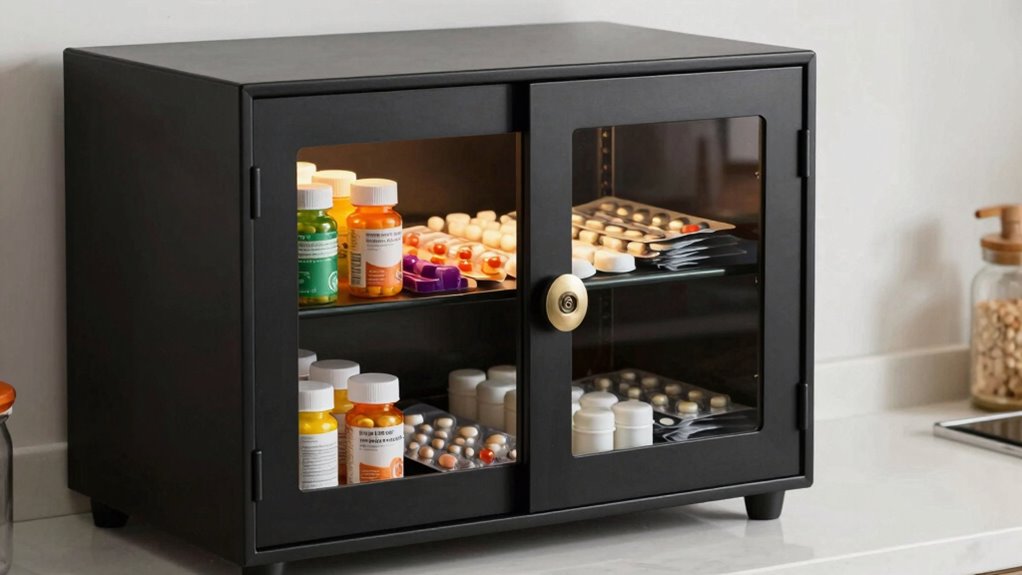

To store medications safely at home, keep them in a cool, dry place away from sunlight, heat, and humidity—avoid bathrooms and kitchens. Use a secure, childproof container and consider locking storage to prevent unauthorized access or theft. Regularly check for expiration dates and properly dispose of unused or expired drugs through local disposal programs. Organize your supplies for easy access in an emergency. If you want detailed steps, you’ll find useful tips on improving your medication safety.

Get health and wellness essentials delivered free with Prime
- Fast, free delivery on millions of items
- Prime Video, Amazon Music and more included
- Member-only deals all year
Key Takeaways
- Store medications in a cool, dry, and dark place away from humidity and sunlight.
- Keep all medicines in a secure, childproof, and labeled container for easy identification.
- Use a dedicated cabinet or drawer, preferably lockable, to prevent unauthorized access.
- Regularly check and dispose of expired or unused medications properly through take-back programs.
- Maintain an organized emergency kit with essential medications, updated regularly for accessibility.
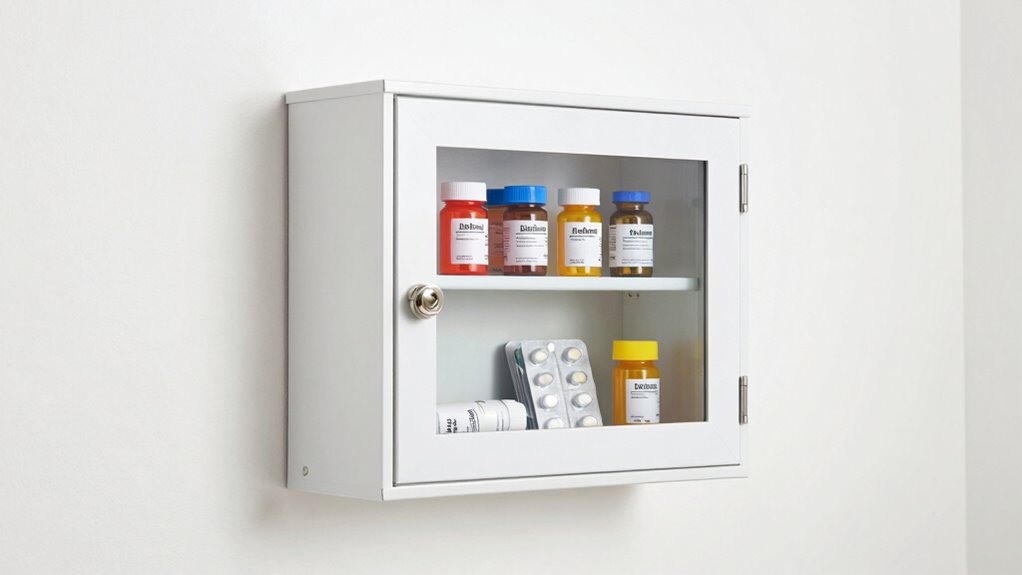
Keeping medications safe at home is essential to prevent accidents, misuse, and poisoning. Proper storage starts with understanding how to handle medications responsibly and knowing what to do when they’re no longer needed. One vital aspect is medication disposal. You should regularly check your medicine cabinet for expired or unused drugs and dispose of them properly. Flushing medications down the toilet isn’t always safe or environmentally friendly, so look for local disposal programs or drug take-back events. By doing so, you reduce the risk of someone accidentally ingesting outdated or dangerous medicines, especially children or pets. Proper medication disposal also helps prevent misuse, as leftover pills can be diverted and misused by others, including teens or visitors who might not realize the risks involved.
In addition to safe disposal, you should consider emergency preparedness as part of your medication storage plan. Keep a well-organized, easily accessible emergency kit that contains essential medications you might need in case of a sudden health crisis or natural disaster. This kit should include prescription medicines, over-the-counter remedies, and any necessary medical supplies. Make sure you regularly review and update this kit, replacing expired drugs and adding supplies as needed. Having your medications ready and accessible means you can respond quickly during emergencies, such as power outages, floods, or other unforeseen events. Label all medications clearly and store them in a sturdy, childproof container to prevent accidental ingestion. It’s also wise to keep a list of your medications, dosages, and healthcare contacts nearby, so you’re prepared to communicate effectively with medical professionals if needed. Proper medication storage can also help maintain their effectiveness over time. Additionally, understanding the importance of medication security can help prevent tampering and theft.
Storing medications in a cool, dry place away from direct sunlight, heat, or moisture, which can degrade their effectiveness, is crucial. Avoid storing medicines in bathrooms or near kitchens, where humidity levels fluctuate. Instead, choose a dedicated cabinet or drawer in a secure location, out of reach of children and pets. Consider using locking storage to add an extra layer of safety, especially if anyone in your household might accidentally or intentionally misuse medications. Regularly check your storage area to ensure medications are intact and properly stored, and dispose of any that are no longer needed or have expired. Additionally, be aware of medication tampering risks and take steps to secure your medications against unauthorized access. A well-informed approach to medication safety can greatly reduce potential hazards. By combining proper medication disposal practices with thoughtful emergency preparedness, you actively reduce risks at home, protect your loved ones, and make sure you’re ready for unexpected situations. Proper storage isn’t just about keeping medicines out of reach; it’s about creating a safe environment that promotes health and safety every day.
childproof medication storage container
As an affiliate, we earn on qualifying purchases.
As an affiliate, we earn on qualifying purchases.
Frequently Asked Questions
Can I Store Medications in the Bathroom Cabinet?
Storing medications in the bathroom cabinet isn’t ideal because humidity and temperature fluctuations can affect medication labeling and potency. You should keep them in a cool, dry place, away from direct sunlight. Check the storage temperature recommended on the label, usually between 68-77°F, to guarantee safety and effectiveness. Keep medications out of reach of children and use a dedicated container to maintain proper storage conditions.
Is It Safe to Store Medications in the Original Packaging?
It’s generally safe to store medications in their original packaging because it maintains medication labeling clarity, ensuring you can easily identify them and follow dosing instructions. Proper storage safety also involves keeping medications out of reach of children and in a cool, dry place. Avoid transferring medications to different containers, as this can cause confusion or misuse. Always check expiration dates and follow storage guidelines to keep your medications safe and effective.
How Do I Dispose of Expired Medications Properly?
You should dispose of expired medications properly to keep your home safe. First, check the medication labeling for specific disposal instructions. Many medications can be taken to a local pharmacy or pharmacy take-back program, which is the safest disposal method. If unavailable, mix the medications with unappealing substances like dirt or coffee grounds, then place them in a sealed bag before discarding, ensuring they don’t pose a risk to others.
Should I Store Medications in the Refrigerator?
You should store some medications in the refrigerator, but only if the medication labeling explicitly recommends it. Always follow the storage temperature instructions on the label, typically between 36°F and 46°F, to maintain medication effectiveness. Use a dedicated, secure container in the refrigerator, and avoid storing medications in the door or near food to prevent temperature fluctuations and contamination. Proper storage guarantees your medications stay safe and effective.
What Should I Do if a Child Finds My Medications?
If a child finds your medications, stay calm and quickly move them out of reach. Use child-proof locks on cabinets and drawers where medications are stored to prevent future incidents. Call your emergency contact or poison control immediately for guidance. Never try to induce vomiting unless instructed. Keep the medication container or label handy to provide accurate information to responders, ensuring the child receives prompt and proper care.
As an affiliate, we earn on qualifying purchases.
Conclusion
Now that you know how to store medications safely, it’s ironic how often we overlook these simple steps—like leaving pills within reach of curious kids or tossing bottles into junk drawers. You’ve got the tools to prevent accidents, yet a moment of carelessness can turn your well-planned safety into chaos. So, go ahead, take those extra seconds to secure your meds. After all, a little effort now could save you a lot of trouble later.
As an affiliate, we earn on qualifying purchases.
As an affiliate, we earn on qualifying purchases.
Halloween Picks
halloween
As an affiliate, we earn on qualifying purchases.