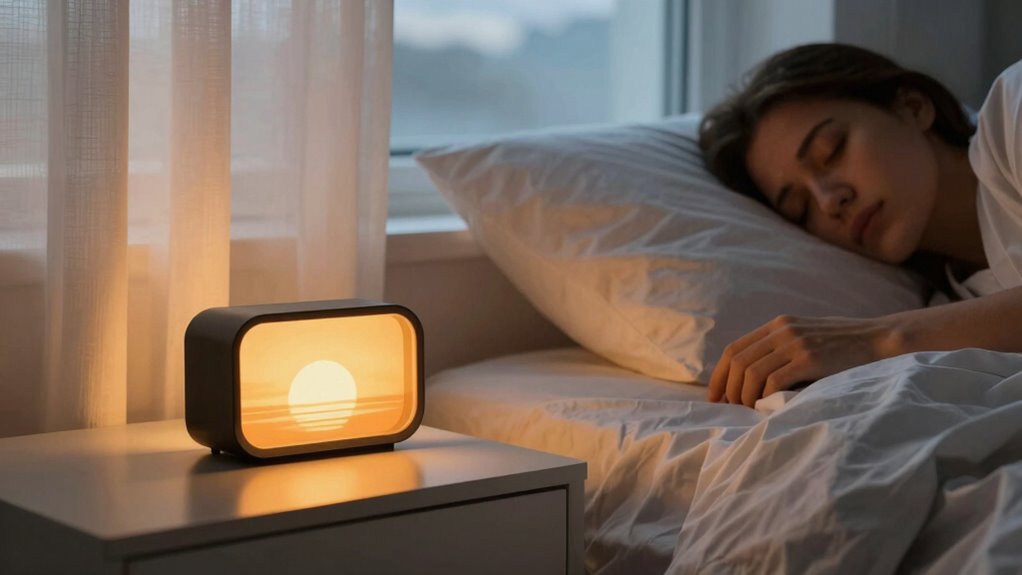

For exhausted caregivers, the Philips SmartSleep Wake-Up Light is my best overall pick because it combines sunrise and sunset simulation with natural sounds, FM radio, and a reading lamp. The Hatch Restore 3 is a stronger fit for people who want a more guided bedtime routine, while the Dekala Sunrise Alarm Clock stands out for multiple loud alarms and seven-day programming. The main tradeoff is choosing between a simple, dependable wake light and a feature-rich device that may take more setup or occupy more bedside space. Sound options, alarm flexibility, and ease of use matter especially when sleep is already interrupted by caregiving. Read on for the full breakdown and help choosing among these ten sunrise alarm clocks for exhausted caregivers.
Key Takeaways
- Philips SmartSleep leads for all-around use: It pairs sunrise and sunset simulation with five natural sounds, FM radio, and a reading lamp, covering more bedside needs than a light-only approach.
- Dekala suits changing schedules: Its seven-day programming and four loud alarms offer more scheduling flexibility than models centered on a single daily wake time.
- Hatch Restore 3 is the routine-focused pick: It is aimed at people who want a structured sleep-and-wake experience, rather than just a sunrise lamp with a basic alarm.
- Sound features divide the lineup: Ecozy, Odokee, and Dreamegg combine wake lighting with white noise, while the Philips and JALL options add radio for a different kind of bedside sound.
- Feature count is not the same as ease: Models with several alarm and sound settings can better match household routines, but a simpler clock may be easier to operate when a caregiver is tired.
| Sunrise Alarm Clock for Heavy Sleepers with Sunset Simulation, Dual Alarms, Natural Sounds, FM Radio, and Night Light |  | Best for Split Schedules | Display: Digital | Power source: Rechargeable battery | Alarm features: Dual alarms and snooze | VIEW ON AMAZON | See Our Full Breakdown |
| JALL Full-Screen Wake Up Light Sunrise Alarm Clock with Bluetooth and FM Radio |  | Best for Sound and Light Variety | Sunrise display: Full-screen illumination | Sunrise duration: Adjustable from 10 to 60 minutes | Natural sounds: 25 | VIEW ON AMAZON | See Our Full Breakdown |
| Ecozy Sunrise Alarm Clock for Bedroom, White Noise Sound Machine |  | Best for a Calmer Bedside Setup | Light source: LED | Connectivity: Bluetooth | Sound options: 26 soothing sounds | VIEW ON AMAZON | See Our Full Breakdown |
| Reacher Wood Grain Sunrise Alarm Clock and Sound Machine Nightlight |  | Best for a Warm, Low-Tech Look | Power source: Corded electric | Sleep sound tracks: 26 | White noise: Yes | VIEW ON AMAZON | See Our Full Breakdown |
| DreamSky Sunrise Alarm Clock Loud Radio Alarm for Heavy Sleepers Bedroom |  | Best for Caregivers Who Want Radio and Phone Charging | Display: Digital with brightness dimmer | Power source: Corded electric | Audio: FM radio and Bluetooth | VIEW ON AMAZON | See Our Full Breakdown |
| Hatch Restore 3 |  | Best for a Bedtime Routine | Lighting: Customizable circadian lighting | Audio: Sleep audio | Clock display: Dimmable | VIEW ON AMAZON | See Our Full Breakdown |
| Dekala Sunrise Alarm Clock with Pulse Wake, 7-Day Programmable, 4 Loud Alarms |  | Best for Heavy Sleepers | Sunrise brightness: 400 lumens | Pulse wake volume: 95 dB | Number of alarms: 4 | VIEW ON AMAZON | See Our Full Breakdown |
| Odokee Sunrise Alarm Clock White Noise Machine: Natural Wake Up Light |  | Best for Flexible Sound Choices | Sunrise duration: 5–60 minutes | Calming sounds: 25, including white, pink, brown, and blue noise, waves, and rain | Alarm sounds: 7 | VIEW ON AMAZON | See Our Full Breakdown |
| Philips SmartSleep Wake-Up Light, Sunrise and Sunset Simulation, 5 Natural Sounds, FM Radio & Reading Lamp |  | Best for a Familiar, Multi-Use Bedside Light | Power: Corded electric | Use: Indoor | Mounting: Tabletop | VIEW ON AMAZON | See Our Full Breakdown |
| Dreamegg Sunrise Alarm Clock, Natural Wake-up Light, White Noise Machine |  | Best Compact, Phone-Free Pick | Size: Hand-sized | Portability: Portable | Material: Cotton-linen fabric | VIEW ON AMAZON | See Our Full Breakdown |
More Details on Our Top Picks
Sunrise Alarm Clock for Heavy Sleepers with Sunset Simulation, Dual Alarms, Natural Sounds, FM Radio, and Night Light
When caregiving shifts make one shared alarm impractical, this model’s dual alarms and snooze give two people room to set different wake times. Its gradual sunrise can replace a jarring alarm with increasing light, while sunset simulation adds a wind-down routine for caregivers trying to protect a small window of rest. Compared with the JALL Full-Screen Wake Up Light, it offers a simpler feature set on paper, without Bluetooth or a stated library of 25 sounds; that may mean fewer distractions, but less variety for sound-based sleep cues. The tradeoff is a potentially involved setup, and the product data flags radio sound quality as a weakness. I’d choose it for flexible schedules, not for anyone who relies on FM audio as their main wake-up signal.
Pros:- Dual alarms accommodate different caregiver or household schedules.
- Sunrise and sunset simulations support both waking and bedtime routines.
- Snooze, sounds, and adjustable lighting allow a more tailored alarm.
- Rechargeable battery power may offer more placement flexibility than corded-only models.
Cons:- Setup may feel complicated when a tired caregiver needs quick, simple controls.
- Radio sound quality may disappoint people who use FM as their primary alarm audio.
- Indoor-only design limits use to a bedroom or other interior space.
Best for: Caregivers sharing a bedroom who need separate alarm times and want both a gradual wake-up and a sunset wind-down.
Not ideal for: Caregivers who want a straightforward, fast setup or depend on clear, high-quality FM radio audio.
- Display:Digital
- Power source:Rechargeable battery
- Alarm features:Dual alarms and snooze
- Light features:Sunrise simulation, sunset simulation, adjustable brightness, ambient lighting
- Audio:FM radio and multiple soothing sounds
- Mounting:Tabletop
- Dimensions:6.5 × 6.5 inches
- Weight:0.48 kg
Our verdict“Pick this if you need two wake times and a built-in wind-down light, but skip it if simple setup and strong radio sound matter most.”
JALL Full-Screen Wake Up Light Sunrise Alarm Clock with Bluetooth and FM Radio
The JALL’s defining advantage is choice: 25 natural sounds, FM radio, Bluetooth, and multiple lighting effects give caregivers several ways to wake or settle without adding another bedside device. Its full-screen sunrise brightens over a selectable 10–60-minute interval, so someone with a rough night can choose a slower ramp rather than a sudden alarm. Compared with the more pared-back Ecozy Sunrise Alarm Clock, JALL has a wider stated sound and lighting selection, but that breadth may bring a steeper setup learning curve. The listed 5W speaker also makes it useful for Bluetooth audio, though the product data does not describe battery backup or power options—a meaningful gap for households that need dependable alarms through outages. I’d favor it for caregivers who value flexible audio more than the simplest possible controls.
Pros:- Full-screen sunrise can brighten gradually over 10–60 minutes.
- Offers 25 natural sounds plus FM radio and Bluetooth audio.
- Dual alarms and snooze support different schedules.
- 17 lighting effects provide more ambience choices than simpler sunrise lights.
Cons:- The number of features may make setup and daily adjustments harder.
- Battery backup and power options are not specified in the supplied product data.
- A broad lighting and audio feature set may be more than users seeking a basic wake-up aid need.
Best for: Caregivers who want multiple alarm sounds, Bluetooth playback, and a sunrise duration they can adjust to their routine.
Not ideal for: Sleep-deprived users who prefer minimal settings, or households that need clearly specified backup power during outages.
- Sunrise display:Full-screen illumination
- Sunrise duration:Adjustable from 10 to 60 minutes
- Natural sounds:25
- FM radio range:76–108 MHz
- Lighting effects:17 (8 solid colors and 9 RGB effects)
- Connectivity:Bluetooth
- Speaker power:5 W
- Sleep timer:10–480 minutes
Our verdict“Choose the JALL if customizable sound and light matter more than a minimal interface or clearly documented outage backup.”
Ecozy Sunrise Alarm Clock for Bedroom, White Noise Sound Machine
For a caregiver who wants a less cluttered nightstand, Ecozy combines a simulated sunrise, 26 soothing sounds, adjustable night light, and Bluetooth in a modern tabletop unit. The built-in memory backup is a useful detail: it preserves settings during a power outage, though it does not mean the clock can keep operating unplugged. That distinction matters because this model requires a power connection, unlike the rechargeable Sunrise Alarm Clock for Heavy Sleepers in this lineup. Compared with the feature-heavy JALL, Ecozy’s appeal is its simpler-looking, minimalist design rather than a stated array of lighting effects or FM radio. It may suit caregivers who want familiar sounds or phone audio at bedtime, but there’s no app or remote control for changing settings from across the room. I’d pick it for a plugged-in, uncluttered bedside routine.
Pros:- Combines simulated sunrise with 26 soothing sounds.
- Adjustable brightness and night-light colors support different bedtime needs.
- Bluetooth allows playback from a phone.
- Memory backup preserves settings during power outages.
Cons:- Must remain plugged in during use, so it cannot serve as a portable or battery-powered clock.
- No app control or remote operation for adjustments from bed.
- Indoor-only use limits where it can be placed.
Best for: Caregivers with a fixed bedside outlet who want sunrise light, white-noise options, and Bluetooth in a modern-looking clock.
Not ideal for: People who need the alarm to operate during an outage, or caregivers who want app control or remote adjustments.
- Light source:LED
- Connectivity:Bluetooth
- Sound options:26 soothing sounds
- Controls:Push button
- Power:Requires a power connection during use; adapter included
- Mounting:Tabletop
- Weight:0.45 kg
- Warranty:1 year
Our verdict“Choose Ecozy for a streamlined, plug-in sound-and-light routine, but not if you need remote controls or operation without mains power.”
Reacher Wood Grain Sunrise Alarm Clock and Sound Machine Nightlight
The Reacher pairs a wood-grain finish with sunrise lighting and 26 sleep sounds, making it a good fit for caregivers who want a bedside aid that looks less like a gadget. Its sound library and adjustable nightlight colors give it more bedtime flexibility than a bare alarm, while its compact 6.7 × 2.7 × 6-inch footprint can suit a crowded nightstand. Compared with the Ecozy, it offers a more traditional decorative style; Ecozy, by contrast, lists Bluetooth and memory backup, features not specified for this Reacher. That simpler feature profile could be welcome when there’s little energy for another connected device, but corded power means it needs to stay near an outlet. The listing mentions a built-in battery while also specifying corded electric power, so I would not choose it for backup operation without clarifying what that battery supports.
Pros:- Wood-grain styling blends more naturally with bedroom furniture than a typical plastic clock.
- Includes 26 sleep sounds and white noise.
- Adjustable brightness and multiple nightlight colors support varied bedtime routines.
- Compact dimensions suit a limited bedside surface.
Cons:- Corded-electric power requires a nearby outlet.
- The product data is unclear about what the stated built-in battery supports.
- A large set of features may still take time to configure when the controls are unfamiliar.
Best for: Caregivers who want a compact sunrise clock with sleep sounds and a furniture-like finish, placed near a wall outlet.
Not ideal for: Anyone counting on battery operation during a power outage or looking for Bluetooth and clearly documented connected features.
- Power source:Corded electric
- Sleep sound tracks:26
- White noise:Yes
- Finish:Wood grain
- Listed material:Wood
- Dimensions:6.7 × 2.7 × 6 inches
- Weight:11.2 ounces
- Lighting:Sunrise simulation, adjustable brightness, multiple nightlight colors
Our verdict“Pick the Reacher for a compact, decor-friendly sound machine, but verify its battery function if outage backup is a priority.”
DreamSky Sunrise Alarm Clock Loud Radio Alarm for Heavy Sleepers Bedroom
DreamSky is the most direct fit here for caregivers who use radio or phone audio as part of their wake-up routine: it combines a sunrise light, FM radio, Bluetooth, and USB charging. The dimmable display and adjustable volume let users reduce nighttime glare while keeping an audible alarm option. Compared with the JALL, DreamSky lists fewer sound and lighting details, but its USB charging port is a practical bedside extra for a phone that needs to stay within reach. That convenience comes with a firm limitation: it runs on corded electric power and has no stated battery backup, so it is not the choice for a caregiver who needs alarm continuity during an outage. The product also includes several customizable features, which may take patience to set up. I’d choose it for a radio-first bedside routine, not for the simplest controls.
Pros:- Combines a wake-up light with FM radio and Bluetooth.
- USB charging port keeps phone charging available at the bedside.
- Dimmable display and volume controls allow adjustments for night and morning.
- RGB night light adds an alternate bedside lighting option.
Cons:- Requires AC power and has no stated battery backup.
- Multiple features may make setup less straightforward for a tired user.
- Indoor-only tabletop design is not suited to portable use.
Best for: Caregivers who want FM radio or Bluetooth audio, a sunrise wake-up light, and a USB port on one bedside device.
Not ideal for: Households that need an alarm to keep working through a power outage or users who want a very simple setup.
- Display:Digital with brightness dimmer
- Power source:Corded electric
- Audio:FM radio and Bluetooth
- Alarm features:Customizable alarm, snooze, and volume control
- Lighting:Wake-up light and RGB night light
- Sleep timer:Included
- USB charging:USB charging port
- Dimensions:6.6 × 6.9 inches
- Warranty:1-year replacement
Our verdict“Choose DreamSky for radio, Bluetooth, and phone charging in one clock, but skip it if outage-proof alarms or simple controls are essential.”
Hatch Restore 3
Hatch Restore 3 is the routine-focused choice for caregivers who need help winding down after a demanding day as well as a gentler bedroom atmosphere. Its customizable circadian lighting and sleep audio can support a repeatable bedtime sequence, while the dimmable clock avoids an overly bright display at night. Compared with the Philips SmartSleep Wake-Up Light, which lists sunrise and sunset simulation and includes FM radio and a reading lamp, the Hatch description emphasizes personalized audio and lighting rather than those specific extras. That makes it a better fit for shaping an evening routine than for buyers seeking a clearly specified array of wake-up sounds. The 30-day trial offers a chance to explore subscription content, but ongoing subscription costs may follow, and getting the setup tailored takes effort.
Pros:- Customizable lighting and audio support a more personal sleep environment
- Circadian lighting is designed to support bedtime routines
- Dimmable clock can reduce nighttime display brightness
- Includes a 30-day trial for subscription content
Cons:- Subscription content may involve a recurring expense after the trial
- Personalizing settings requires setup time
- Device compatibility details are limited
Best for: Caregivers who want customizable sleep audio and lighting to build a repeatable wind-down routine
Not ideal for: Buyers who want a clearly specified sunrise duration, radio, or wake-up sound selection, or who want to avoid subscription content and setup
- Lighting:Customizable circadian lighting
- Audio:Sleep audio
- Clock display:Dimmable
- Customization:Customizable light and audio
- Trial period:30 days
- Primary purpose:Sleep routines and sleep environment
Our verdict“Choose Hatch Restore 3 if your biggest need is a tailored wind-down routine, not a clearly documented range of sunrise-alarm extras.”
Dekala Sunrise Alarm Clock with Pulse Wake, 7-Day Programmable, 4 Loud Alarms
When a caregiver cannot risk sleeping through a shift or an early handoff, the Dekala Pulse Wake offers the strongest wake-up emphasis in this group: its pulse alarm reaches 95 dB, alongside a 400-lumen sunrise and four alarms. That makes it a more forceful choice than the gentler, sound-rich Odokee Sunrise Alarm Clock, which centers on gradual light, calming audio, and Bluetooth streaming. Dekala also works without an app or subscription, which can simplify setup and keep the routine offline. Its sunset timer and guided-breathing light add a wind-down option, though the number of modes may feel like too much when you are already tired. It needs corded power and has no battery backup, so a power interruption could leave you without the alarm you depend on.
Pros:- 95 dB pulse wake is aimed at heavy sleepers
- Four alarms support different schedules
- No app or subscription is required for setup
- Sunset timer and guided-breathing light add wind-down options
Cons:- Corded power with no battery backup
- Several modes and settings may take time to learn
- The loud pulse alarm may be too intense for a shared bedroom
Best for: Caregivers who sleep through gentler alarms or need several alarm schedules for shifts and household handoffs
Not ideal for: Light sleepers, buyers who want battery backup, or anyone who prefers a very simple clock with few settings
- Sunrise brightness:400 lumens
- Pulse wake volume:95 dB
- Number of alarms:4
- Programming:7-day programmable
- Display:2.8-inch digital display
- Controls:3-button control with dial
- Sleep features:Sunset sleep timer and guided-breathing light
- Power:Corded electric; C batteries required
- Safety certifications:FCC and UL
Our verdict“Pick Dekala if waking reliably is more important than a quiet, minimal bedside setup.”
Odokee Sunrise Alarm Clock White Noise Machine: Natural Wake Up Light
The Odokee Sunrise Alarm Clock combines a gradual 5–60-minute sunrise with 25 calming sounds, seven alarm sounds, and Bluetooth streaming. For caregivers who need familiar audio to mask household noise or settle into sleep, that range offers more flexibility than the Dreamegg Sunrise Alarm Clock, whose listed strength is a larger variety of soothing sounds but no Bluetooth. Odokee also gives you 12 night-light colors and physical buttons and dials, so basic adjustments do not depend on an app. The tradeoff is that all those options live on the device: there is no app or smart-home integration, and its physical controls may take some learning when you are tired. It suits someone who wants streaming and sound variety at the bedside, not remote control or a connected routine.
Pros:- Sunrise duration adjusts from 5 to 60 minutes
- Includes 25 calming sounds and seven alarm sounds
- Bluetooth supports streaming music and podcasts
- Dimmable display and 12 night-light colors allow bedside adjustments
Cons:- No app control or smart-home integration
- Physical buttons and dials may take practice
- Bluetooth streaming may be unnecessary for buyers seeking a basic wake light
Best for: Caregivers who want a long adjustable sunrise, many sleep sounds, and Bluetooth streaming without relying on an app
Not ideal for: Buyers who want smart-home routines, remote adjustments, or the simplest possible controls
- Sunrise duration:5–60 minutes
- Calming sounds:25, including white, pink, brown, and blue noise, waves, and rain
- Alarm sounds:7
- Bluetooth:Yes
- Speaker power:5 W
- Night-light colors:12
- Display:Dimmable
- Controls:Physical buttons and dials
Our verdict“Choose Odokee if adjustable sunrise timing and Bluetooth audio matter more than app-based control.”
Philips SmartSleep Wake-Up Light, Sunrise and Sunset Simulation, 5 Natural Sounds, FM Radio & Reading Lamp
The Philips SmartSleep Wake-Up Light is the most clearly specified all-round bedside light here: it pairs sunrise and sunset simulation with five natural sounds, FM radio, tap snooze, and a reading lamp. That gives caregivers more uses from one corded device than the more sleep-audio-focused Hatch Restore 3, whose description does not list radio or a reading lamp. Philips also offers 20 brightness settings for its display and lamp, useful when a bright bedside light would disturb someone sharing the room. The tradeoff is setup complexity, and it requires corded power, so it is less flexible to move around than the hand-sized Dreamegg. Its materials and weight are specified, but the supplied product data does not list a sunrise duration or alarm count, which may matter to buyers comparing exact schedules.
Pros:- Combines sunrise and sunset simulation
- Five natural sounds and FM radio offer different wake-up choices
- Reading lamp and 20 brightness settings support varied bedside use
- Tap snooze offers a simple way to pause the alarm
Cons:- Requires corded power, limiting placement flexibility
- Setup may feel complex for buyers seeking a basic clock
- Provided product details do not specify sunrise duration or alarm count
Best for: Caregivers who want one bedside device for sunrise and sunset routines, radio, natural sounds, and reading
Not ideal for: Buyers who need a portable clock, straightforward setup, or exact published sunrise timing and alarm-count details
- Power:Corded electric
- Use:Indoor
- Mounting:Tabletop
- Sounds:5 natural sounds
- Radio:FM radio
- Lighting:Sunrise and sunset simulation; reading lamp
- Brightness settings:20
- Weight:1113 g
- Material:Plastic
Our verdict“Choose Philips if you want a versatile, stationary bedside light with radio and reading functions in addition to sunrise simulation.”
Dreamegg Sunrise Alarm Clock, Natural Wake-up Light, White Noise Machine
The Dreamegg Sunrise Alarm Clock is the compact, phone-free option for caregivers who want a calmer bedside setup without adding smart-device steps. Its hand-sized form and cotton-linen fabric make it easier to fit into a crowded nightstand than the larger-featured Philips SmartSleep, while 29 sounds cover noise options, nature audio, meditations, lullabies, and fan sounds. The adjustable, nine-color light gives it more atmosphere choices than the Hatch Restore 3 description specifies, though Hatch focuses more explicitly on customizable sleep audio and circadian lighting. Dreamegg’s simplicity has limits: it lacks remote control and smart connectivity, and routines need manual setup. It is listed as portable, but its intended use remains bedside, so it is not a substitute for a device meant to travel with a caregiver through the day.
Pros:- Hand-sized design suits crowded bedside spaces
- 29 sounds include noise, nature, meditation, lullaby, and fan options
- Adjustable brightness and nine light colors allow atmosphere changes
- Phone-free setup avoids another app-based routine
Cons:- No smart-device connectivity or remote control
- Sleep routines require manual setup
- Compact size is best suited to bedside use
Best for: Caregivers with limited nightstand space who want varied sleep sounds, adjustable light, and a phone-free routine
Not ideal for: Buyers who want remote control, smart-home links, or routines that can be changed without manual setup
- Size:Hand-sized
- Portability:Portable
- Material:Cotton-linen fabric
- Sound options:29 soothing sounds
- Sound types:Nature sounds, meditations, lullabies, white, brown and pink noise, and fan sounds
- Night-light colors:9
- Night-light brightness:Adjustable
- Connectivity:No smart-device connectivity
Our verdict“Choose Dreamegg if you want a compact, no-phone bedside sound machine and wake light rather than connected controls.”

How We Picked
I ranked these clocks around the needs that tend to matter when sleep is interrupted: a wake light that can support a gentler morning, alarm controls that suit irregular routines, and sound options that can help create a calmer sleep environment. I also weighed day-to-day usability, including how much setup a device appears to ask of the user, whether it offers useful bedside functions beyond the alarm, and how clearly its features serve a distinct need.
The ranking favors versatility and practical fit over sheer feature count. The Philips SmartSleep earns the top position for combining several useful functions in one device; the Hatch Restore 3 stands out for routine-focused use, and the Dekala for flexible scheduling and louder alarms. White-noise-centered models make sense for different sleep environments, while radio-focused and simpler options may be preferable to caregivers who want familiar controls. I also considered tradeoffs: more choices can add setup, and a sound machine does not replace schedule flexibility or alarm audibility.
Factors to Consider When Choosing Sunrise Alarm Clocks For Exhausted Caregivers
Choosing a sunrise clock is less about finding the longest feature list and more about matching the device to your sleep pattern, room, and morning responsibilities. I would start with the routine you need it to support, then check whether its controls and sound options are manageable when you are tired.
Match the alarm schedule to your caregiving routine
A fixed wake time may be easy to manage on a predictable workday, but caregiving can bring appointments, night checks, and changing shifts. If your wake time varies across the week, look for day-by-day programming or multiple alarms rather than assuming a standard daily alarm will be enough. The Dekala’s seven-day programming and four alarms are aimed at that kind of flexibility. Before buying, decide whether you need separate settings for different days or just a backup alarm on the same morning. Multiple alarms can help with changing routines, but extra settings also mean more controls to learn. Keep the device’s schedule features proportionate to how often your real routine changes.
Choose sound for the room, not just the product description
White noise, nature sounds, and FM radio serve different preferences, so a longer sound list is not automatically more useful. White noise may suit someone trying to soften steady household sounds, while radio offers familiar voices or music at wake-up. Natural sounds can make a gradual alarm feel less abrupt, though personal preference and room acoustics matter. Think about whether you need sound overnight, only at wake-up, or both; those are different jobs. If another person shares the room, consider whether an audible alarm will disturb them before choosing the loudest option. A sunrise light alone may be the better fit if sound would add disruption rather than comfort.
Treat brightness and placement as part of the decision
A sunrise clock can only contribute to a gradual wake-up if its light reaches you in the position where you sleep. Check the bedside layout before focusing on extra functions: a large face or lamp may be hard to place on a crowded table, and an object facing away from the bed may be less helpful. A reading lamp can make one clock pull double duty, but it may not be useful if you already have suitable bedside lighting. Think about whether you sleep facing the device and whether another person might be sensitive to the glow. Avoid assuming that a brighter-looking product photo tells you how the light will feel in your own room. Choose based on the light’s role in your actual space, not appearance alone.
Decide how much bedtime guidance you will actually use
Some clocks focus on the alarm, while others aim to support a broader wind-down and wake-up routine. A routine-centered device such as Hatch Restore 3 may appeal if you want structure around bedtime as well as morning, but that extra focus may be unnecessary if you only need a dependable alarm. Before choosing a more involved system, ask whether you are likely to use its routines consistently during a busy caregiving week. A simpler unit can reduce setup and decision-making, while a feature-rich one can consolidate functions. Do not select extra guidance on the assumption that it will solve interrupted sleep; it can shape a routine, but it cannot control overnight care demands. Prioritize the features you can realistically use.
Balance a backup alarm against a gentler wake-up
A gradual light is meant to make waking feel less abrupt, but some people need an audible alarm as a reliable cue. Heavy sleepers, caregivers who must wake for a scheduled handoff, or people who sleep through soft sounds may prefer a model with a louder alarm or radio option. A louder alarm can also disturb a partner or child, so consider the room’s sleeping arrangements before choosing. If you want both a gentler lead-in and a stronger final cue, check that the clock’s alarm options support that combination rather than relying on the sunrise feature alone. Keep a separate backup alarm if missing a wake time would create a serious problem. The right balance is dependable for you without making the whole household wake unnecessarily.
Keep setup and bedside controls manageable
When sleep is scarce, a complicated setup can turn useful features into unused ones. Consider how often you will need to change alarm times, select sounds, or adjust the light, and whether those actions are easy to reach from bed. Familiar functions such as an FM radio may feel more straightforward than a device built around multiple routines, while simpler controls may limit customization. Before buying, check what can be set directly on the clock and what requires extra steps. A device with many modes is only an advantage if you can operate the modes you need without repeatedly consulting instructions. For a shared bedroom or a hectic schedule, predictable controls can matter more than having every possible setting.
Frequently Asked Questions
Can a sunrise alarm clock replace a loud alarm if I sleep through gentle sounds?
Not necessarily. Sunrise lighting offers a gradual visual cue, but how noticeable it feels depends on your room, sleeping position, and sensitivity to light. If you regularly sleep through alarms or must wake at a strict time, prioritize a model with a clear audible alarm, radio, or multiple alarm options. The DreamSky and Dekala are relevant to shoppers looking for louder alarm features, while the Philips adds FM radio alongside its light. You may also keep a separate backup alarm until you know the clock reliably fits your routine.
Should I choose white noise or natural sounds for a caregiver’s bedroom?
Choose based on the sounds you are trying to manage and what you find comfortable, rather than the number of included tracks. White-noise-focused options such as Ecozy, Odokee, and Dreamegg combine that function with a wake light, while the Philips and JALL offer FM radio. White noise may suit a room with steady background noise, whereas nature sounds may be preferable as a wake-up cue. If you share a room, check whether any sound at night could disturb another sleeper. You can also prioritize a model that lets you use its light without running sound.
Is a programmable model worth choosing if my wake time changes from day to day?
It can be, especially when those changes follow a weekly pattern rather than happening unpredictably every morning. The Dekala’s seven-day programming is a particularly relevant feature for setting different wake times across the week. If your schedule changes often at short notice, consider how quickly you can edit the alarm and whether the controls are comfortable to use while tired. Multiple alarms may help with separate responsibilities, but they can also make setup less simple. A basic clock can still work if you are willing to reset it regularly and prefer fewer settings.
Do I need a clock with bedtime features, or is a sunrise alarm enough?
A wake light may be all you need if your main goal is a gentler morning cue. Bedtime features are more relevant if you want one device to support a wind-down routine as well as waking, which is where the Hatch Restore 3 has a distinct role in this roundup. Extra routines do not remove night interruptions or guarantee better sleep, so their usefulness depends on whether you will actually use them. If setup simplicity is your priority, a clock centered on alarms, light, and sound may be a better match. Decide which part of your routine needs help before adding features for the other part.
What should I prioritize when sharing a bedroom with a partner or child?
Start with how light and sound affect the other sleeper, not with the clock’s full feature list. A bright wake light may be unwelcome to someone who keeps a different schedule, and a loud alarm can wake everyone in the room. Consider whether you can position the light toward your side of the bed and whether a quieter cue would be enough for you. Sound-focused models may be useful if both sleepers want background audio, but they may be a poor fit if one person needs silence. When you cannot avoid shared impact, favor simple controls that let you adjust light and sound separately.
Conclusion
My best overall pick is the Philips SmartSleep Wake-Up Light for its mix of sunrise and sunset simulation, natural sounds, radio, and reading light. For a best value in everyday function, the Reacher Wood Grain is the simpler sound-machine-and-nightlight choice for buyers who do not need a more involved routine system. The best premium, routine-focused option is Hatch Restore 3; it makes the most sense if bedtime structure matters as much as waking. For beginners, I would start with the Reacher or another straightforward light-and-sound model rather than paying attention to a long settings list. If your schedule changes across the week or you need several loud alarm options, the Dekala is the specific-needs pick; for white noise, compare Ecozy, Odokee, and Dreamegg by the controls and bedside fit that suit your room.