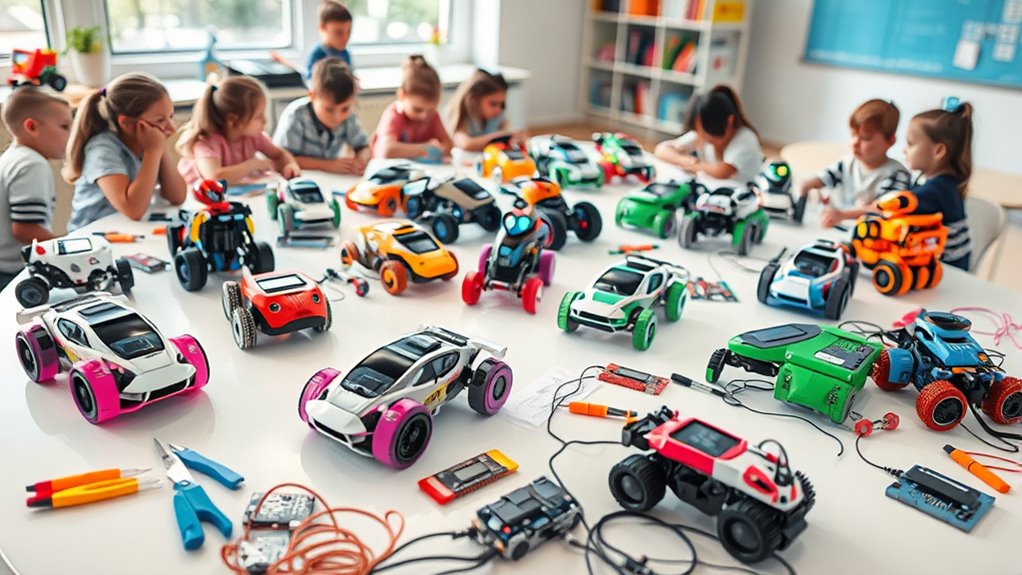

When searching for interactive STEM robots for kids, parents want engaging toys that promote learning without sacrificing fun. The Holyton 5088 Smart Robot stands out for its large size and versatile features, making it a top overall pick. For those on a budget, the Learning Resources Botley offers screen-free coding at a lower price, while the Makeblock mBot delivers robust coding capabilities for more advanced learners. Each option balances different priorities like complexity, price, and educational value. Keep reading to see how these robots compare and find the best fit for your child’s age and skill level.

Get health and wellness essentials delivered free — and shop member deals
- Fast, free delivery on millions of items
- Access to Prime Big Deal Days deals on October 6–7
- Prime Video, Amazon Music and more included
Key Takeaways
- The best robots combine engaging features with ease of use for different age groups.
- Advanced coding capabilities tend to come with higher costs and complexity, making them suitable for older kids.
- Size and build quality vary; larger robots often offer more interactive features but can be less portable.
- Most top picks include app control, but screen-free options are better for younger children or parents avoiding screen time.
- Price ranges significantly, with budget options still offering meaningful STEM learning, but premium models add advanced features.
| Holyton 5088 Smart Robot for Kids, Programmable Remote Control Robot, 15.7-inch Large Interactive Toy with Voice, App & Remote Control, Grab & Foam Dart Launcher, Music & Dancing, STEM Learning Gift |  | Best Overall Interactive Robot for Versatile Play | Material: ABS Plastic | Size: 15.7 inches tall | Age Range: 5+ years | VIEW ON AMAZON | See Our Full Breakdown |
| Makeblock mBot Robot Kit – STEM Coding Robot for Kids Ages 8-12 |  | Best Value for Progressive Coding and Expandability | Brand: Makeblock | Model: mBot | Recommended Age: 8-12 years | VIEW ON AMAZON | See Our Full Breakdown |
| Sillbird 12-in-1 Solar Robot Building Kit STEM Gift for Boys Ages 8-13 |  | Best for Hands-On Engineering and Renewable Energy Learning | Number of Models: 12 | Number of Pieces: 190 | Recommended Age: 8+ | VIEW ON AMAZON | See Our Full Breakdown |
| Sillbird STEM Robot Building Kit with Remote Control for Kids 8-13, 5-in-1 Programmable Robotic Set, Educational and Rechargeable |  | Best for Creative Variety and Control Options | Pieces: 488 | Buildable Models: Robot, Dinosaur, Car, Tank, and more | Control Modes: App (Bluetooth) and remote | VIEW ON AMAZON | See Our Full Breakdown |
| Learning Resources Botley the Coding Robot – Screen-Free STEM Programming Toy for Kids Age 5+ |  | Best Screen-Free Coding for Younger Kids | Ages: 5+ | Programming capabilities: 80-step programming, loops, obstacle detection | Includes: Detachable arms, 40 coding cards, accessories | VIEW ON AMAZON | See Our Full Breakdown |
| Robot Toys for Kids Aged 8-16 with APP and Remote Control – STEM Building Block Kit |  | Best Overall Versatility for Creative Builders | Pieces: 468+ | Control Modes: App Bluetooth, remote control, path, voice, gravity sensor, STEM programming | Remote Control Distance: Over 20 meters | VIEW ON AMAZON | See Our Full Breakdown |
| STEM 13-in-1 Educational Solar Power Robot Toys for Kids Age 8+ |  | Best for Solar-Powered, Eco-Friendly Engineering Fun | Number of Robots: 13 | Material: Non-toxic ABS | Power Source: Solar energy | VIEW ON AMAZON | See Our Full Breakdown |
| Ruko 1088 Smart Robot Toy for Kids, Programmable Interactive Robot with Remote and App Control |  | Best for Large, Engaging Play for Younger Kids | Height: 15.8 inches | Battery: Rechargeable, 150 min charging for 100 min play | Control: Remote, app via Bluetooth, gravity sensor | VIEW ON AMAZON | See Our Full Breakdown |
| 4 Pack STEM Robotics Kits for Kids Ages 6-13 |  | Best for Classroom and Group STEM Projects | Included Components: Multiple kits: ATEM activities, DC motor, robot building | Minimum Age: 96 months | Maximum Age: 156 months | VIEW ON AMAZON | See Our Full Breakdown |
| Smart Robot Dog – Interactive STEM Pet with Voice Control, 30+ Actions & App Programming for Kids 6+ |  | Best for Lifelike, Programmable Pet Play | Actions: 30+ | Control Methods: Voice, touchscreen app, remote | Battery: 600mAh, 6-hour runtime | VIEW ON AMAZON | See Our Full Breakdown |
| BeAndge STEM Kits for Kids 6-8 & 8-10 – Science & Robotics Toys for Ages 6-12 |  | Best Overall Multi-Activity STEM Kit | Number of Kits: 6-in-1 | Included Items: Reptile robot, balance car, bubble machine, fiber lamp, buzzer wire game | Recommended Age: 6-12 years | VIEW ON AMAZON | See Our Full Breakdown |
| Educational Insights Design & Drill Robot – Construction Toys & Tools for Kids, Robot Building Set with Screwdriver, STEM Learning, Ages 3+ |  | Best for Young Beginners | Recommended Age: 3+ | Includes: Screwdriver, robot with swiveling head, arms, upper body, 15 bolts, stickers | Material: Plastic | VIEW ON AMAZON | See Our Full Breakdown |
| Thames & Kosmos My Robotic Pet: Coding Chameleon STEM Building & Experiment Kit |  | Best for Coding & Biomimicry Enthusiasts | Sensor Type: Color sensor, infrared sensor, RGB LEDs | Play Modes: Coding Mode, Wild Mode, Pet Mode | Assembly Size: 15 inches long | VIEW ON AMAZON | See Our Full Breakdown |
| Learning Resources Cooper the STEM Robot | Coding Toy for Kids, Interactive STEM Robot for Classroom, Rechargeable Programming Toy, Ages 5+ |  | Best for Early Coding & Group Play | Includes: Cooper robot, 40 coding cards, activity guide, ball accessory, USB-C cable | Age Range: Ages 5+ | Rechargeable: Yes | VIEW ON AMAZON | See Our Full Breakdown |
| interactive stem robots for kid | Recommended Age |
|---|---|
| Holyton 5088 Smart Robot for K | — |
| Makeblock mBot Robot Kit | 8-12 years |
| Sillbird 12-in-1 Solar Robot B | 8+ |
| Sillbird STEM Robot Building K | — |
| Learning Resources Botley the | — |
| Robot Toys for Kids Aged 8-16 | 8 years and up |
| STEM 13-in-1 Educational Solar | 8+ |
| Ruko 1088 Smart Robot Toy for | — |
| 4 Pack STEM Robotics Kits for | — |
| Smart Robot Dog | — |
| BeAndge STEM Kits for Kids 6-8 | 6-12 years |
| Educational Insights Design & | 3+ |
| Thames & Kosmos My Robotic Pet | 8+ (with adult help), 12+ (independent) |
| Learning Resources Cooper the | — |
More Details on Our Top Picks
Holyton 5088 Smart Robot for Kids, Programmable Remote Control Robot, 15.7-inch Large Interactive Toy with Voice, App & Remote Control, Grab & Foam Dart Launcher, Music & Dancing, STEM Learning Gift
This large, expressive robot stands out for its engaging size and multiple control options, including voice commands, remote, and app, making it highly adaptable to different play styles. Unlike smaller or simpler robots like Botley, the Holyton 5088 offers a more dynamic experience with programmable actions, music, dancing, and active role-play features like the grab arm and foam dart launcher. The tradeoff is that it may be complex for very young children and requires batteries or charging, which can add to the cost and setup. Its size and feature set make it ideal for children who enjoy interactive, multi-faceted play and STEM learning combined with active fun.
Pros:- Large size with expressive LED eyes and engaging features
- Multiple control options including voice, remote, and app
- Includes programmable actions, music, and active role-play elements
Cons:- Requires batteries or charging—unspecified in the product details
- Complex setup may challenge very young children or non-tech-savvy parents
Best for: Families seeking a large, feature-rich robot that encourages active play and programming for kids aged 5-12.
Not ideal for: Parents of very young children under 5 or those preferring simple, screen-free toys, as the complexity and size may be overwhelming.
- Material:ABS Plastic
- Size:15.7 inches tall
- Age Range:5+ years
- Model Number:5088
- Warranty:30-day manufacturer warranty
Our verdict“This pick makes the most sense for families who want a versatile, interactive robot that combines active play with STEM learning for children aged 5-12.”
Makeblock mBot Robot Kit – STEM Coding Robot for Kids Ages 8-12
The Makeblock mBot is ideal for kids who are ready to learn coding step-by-step, transitioning from visual Scratch to Arduino with ease. Compared to Botley, which focuses more on basic programming and screen-free play, the mBot supports more advanced projects and offers a broad ecosystem of modules and parts, making it a smart investment for growing skills. Assembly takes about 15 minutes, and the robot supports fun features like line-following and obstacle avoidance, with the added benefit of expandability. The tradeoff is that it doesn’t have the large, expressive personality of models like Holyton, and batteries are not included. This kit is best suited for children who enjoy tinkering and want a flexible platform that can grow with their skills.
Pros:- Teaches coding from Scratch through Arduino with extensive tutorials
- Quick assembly in about 15 minutes with clear instructions
- Highly expandable with over 100 modules, LEGO compatibility, and multiple functions
Cons:- Batteries (4 AA + CR2025) are not included, adding extra cost
- Entry-level complexity may not challenge advanced or older kids for long
Best for: Parents of children aged 8-12 eager to develop coding skills through hands-on building and expansion.
Not ideal for: Younger kids under 8 or those seeking a ready-to-run robot with minimal setup, as the assembly and learning curve may be too high.
- Brand:Makeblock
- Model:mBot
- Recommended Age:8-12 years
- Programming Platforms:Scratch, Arduino, mBlock
- Assembly Time:Approximately 15 minutes
- Functions:Line-follow, obstacle avoidance, remote control
Our verdict“This kit is best for families wanting a durable, expandable coding robot that grows with their child’s skills from beginner to advanced levels.”
Sillbird 12-in-1 Solar Robot Building Kit STEM Gift for Boys Ages 8-13
This solar robot kit supports building 12 different models, making it a strong choice for hands-on STEM exploration and engineering creativity. Unlike the digital-centric options like Holyton or Makeblock, this kit emphasizes mechanical building and renewable energy concepts through solar power. The large set of 190 parts offers variety, though some models may be challenging for younger or less experienced kids, and solar operation depends on sunlight or artificial light. This kit is ideal for outdoor or indoor play on sunny days, fostering curiosity about energy sources and engineering. Its focus on physical construction and renewable energy makes it less suitable for children preferring digital coding or active role-play.
Pros:- Supports building 12 different models for varied play
- Encourages STEM skills and renewable energy awareness
- Clear, easy-to-follow instructions for outdoor and indoor use
Cons:- Requires sunlight or artificial light for operation
- Limited to children aged 8-13, with some models challenging for younger kids
Best for: Parents seeking a solar-powered, multi-model engineering project for children 8-13 with an interest in renewable energy and hands-on building.
Not ideal for: Children under 8 or those who prefer screen-based play or immediate digital feedback, as it requires sunlight and manual assembly.
- Number of Models:12
- Number of Pieces:190
- Recommended Age:8+
- Power Source:Solar, Artificial Light
Our verdict“This kit makes a great gift for budding engineers interested in renewable energy, especially for outdoor STEM projects with older kids.”
Sillbird STEM Robot Building Kit with Remote Control for Kids 8-13, 5-in-1 Programmable Robotic Set, Educational and Rechargeable
With 488 pieces and five different models, this Sillbird kit offers extensive building and control options, making it ideal for kids who love variety and hands-on creativity. Unlike the simpler Botley, which emphasizes screen-free coding, this set combines app and remote control, plus multiple models like robots, dinosaurs, and vehicles. The rechargeable feature promotes longer play sessions, but the complexity of assembly and control may be overwhelming for younger or less experienced builders. It also demands supervision during setup. This set suits children who enjoy detailed construction and want control over multiple types of models, though it may be less suitable for quick-play or very young users.
Pros:- Includes 488 pieces for extensive building options
- Supports five different models including robots and dinosaurs
- Dual control modes—app (Bluetooth) and remote—for flexible play
Cons:- Build complexity may be difficult for younger or less experienced kids
- Battery life of 40 minutes might limit extended play sessions
Best for: Parents of kids aged 8-13 who enjoy building complex models and prefer both remote and app control for versatile play.
Not ideal for: Younger children under 8 or those seeking quick, simple, and screen-free experiences, as the build complexity and assembly time can be challenging.
- Pieces:488
- Buildable Models:Robot, Dinosaur, Car, Tank, and more
- Control Modes:App (Bluetooth) and remote
- Playtime:Up to 40 minutes
- Battery:Rechargeable
Our verdict“This kit is perfect for creative kids who enjoy detailed building and prefer control versatility through app and remote for ages 8-13.”
Learning Resources Botley the Coding Robot – Screen-Free STEM Programming Toy for Kids Age 5+
Botley offers a simple, screen-free introduction to coding, making it ideal for children as young as 5. Compared with digital options like Holyton or Makeblock, Botley emphasizes basic programming skills through physical activity using coding cards, obstacle detection, and accessories. Its small size and straightforward interface make it accessible to early learners, but this simplicity means it won’t challenge older or more advanced coders who seek complex programming or active features. Batteries are required but not included, and the limited programming capabilities may be a drawback for kids ready for more sophisticated coding challenges. Overall, Botley is a practical choice for introducing young children to STEM without screens.
Pros:- Encourages STEM learning and coding skills without screens
- Includes multiple accessories for creative play
- Suitable for a wide age range with escalating difficulty
Cons:- Batteries are not included, requiring additional purchase
- Limited programming features for advanced users
Best for: Parents of children aged 5-7 who want a simple, screen-free way to develop early coding and problem-solving skills.
Not ideal for: Older children or those seeking advanced programming features, as Botley’s capabilities are quite basic and may not hold their interest long-term.
- Ages:5+
- Programming capabilities:80-step programming, loops, obstacle detection
- Includes:Detachable arms, 40 coding cards, accessories
- Batteries:5 AAA (not included)
Our verdict“This toy is ideal for introducing young children to STEM and coding in a simple, engaging, screen-free format for ages 5 and up.”
Robot Toys for Kids Aged 8-16 with APP and Remote Control – STEM Building Block Kit
This set stands out for its extensive 468+ pieces that enable kids to build a programmable robot capable of moving in multiple directions and performing stunts, making it ideal for those who want a complex, hands-on STEM experience. Unlike the simpler STEM 13-in-1 Solar Power Robot, this kit offers a broader range of control modes, including app Bluetooth, remote, voice, and gravity sensors, which provides a richer, more customizable play. The main tradeoff is that assembly can be challenging for younger children or those new to robotics, especially since some parts are small and require patience. It also demands a compatible device for app control, which may limit its use for some families. Still, this kit makes the most sense for older kids or robotics enthusiasts eager for a detailed, multi-modal experience that promotes both creativity and technical skills.
Pros:- Multiple control modes (app, remote, voice, sensors) for versatile play
- Promotes deep STEM learning and creativity
- Durable ABS plastic construction ensures safety and long-term use
Cons:- Assembly may be difficult for younger or inexperienced builders
- Requires a compatible device for app control, limiting accessibility
Best for: Older children or teens interested in advanced, multi-control robotics projects
Not ideal for: Younger kids under 8 or beginners who need simpler, plug-and-play options
- Pieces:468+
- Control Modes:App Bluetooth, remote control, path, voice, gravity sensor, STEM programming
- Remote Control Distance:Over 20 meters
- Material:ABS plastic
- Recommended Age:8 years and up
Our verdict“This set is perfect for older kids or serious hobbyists seeking a comprehensive, multi-control robotics experience.”
STEM 13-in-1 Educational Solar Power Robot Toys for Kids Age 8+
Compared with the more feature-rich Robot Toys for Kids Aged 8-16 with APP and Remote Control, this kit emphasizes sustainability and hands-on problem solving by allowing children to build 13 distinct robots powered solely by solar energy. It promotes STEM learning through active experimentation with gears, wheels, and water-moving robots. The main drawback is its reliance on sunlight or strong indoor lighting, which can limit playtime and effectiveness, especially on cloudy days. Assembly can also be challenging for younger children, and limited to solar power means no battery backup for consistent operation. This pick makes the most sense for eco-conscious families or children interested in renewable energy concepts, but less so for those seeking quick, always-ready robots.
Pros:- Encourages STEM learning through multiple robot designs
- Made from non-toxic, safe materials
- Promotes understanding of solar energy and sustainability
Cons:- Requires sunlight or strong indoor light for operation
- Assembly may be complex for younger children
Best for: Kids interested in renewable energy and hands-on engineering with a focus on eco-friendly tech
Not ideal for: Children who want instant, battery-powered robots or play indoors without sunlight
- Number of Robots:13
- Material:Non-toxic ABS
- Power Source:Solar energy
- Recommended Age:8+
- Includes:Gears, plates, tires, shafts, manual
Our verdict“Ideal for eco-conscious kids and families eager to explore solar energy through diverse robot builds.”
Ruko 1088 Smart Robot Toy for Kids, Programmable Interactive Robot with Remote and App Control
This sizable robot, standing up to 15.8 inches tall, offers a broad range of functions like dancing, storytelling, and music, making it highly engaging for children aged 4 to 9. Its size and interactive features make it more captivating than smaller, simpler robots like the Learning Resources Botley. Multiple control options—including remote, app, and gravity sensors—add versatility, but some features depend on smartphone compatibility, which could complicate setup for younger children. Battery life is somewhat limited, and charging requires a specific USB-C cable, which may not be included. This robot makes the most sense for families seeking a large, feature-rich robot that encourages imaginative play and basic programming for early learners, but less so for those prioritizing portability or minimal tech setup.
Pros:- Large size and engaging features stimulate creativity
- Multiple control methods enhance versatility
- Educational functions support basic coding and coordination
Cons:- Requires a specific USB-C cable for charging, possibly not included
- Battery life may limit extended use
- Some features depend on smartphone compatibility
Best for: Parents of young children (ages 4-9) seeking a large, multifunctional robot for imaginative activities
Not ideal for: Older kids or tech-savvy users who prefer compact, advanced programming robots
- Height:15.8 inches
- Battery:Rechargeable, 150 min charging for 100 min play
- Control:Remote, app via Bluetooth, gravity sensor
- Materials:Skin-safe ABS
- Certifications:FCC, CPC
Our verdict“This robot is ideal for young children who want a large, interactive playmate with simple programming capabilities.”
4 Pack STEM Robotics Kits for Kids Ages 6-13
Unlike single-robot kits like the Robot Toys for Kids Aged 8-16, this set offers four complete kits, making it perfect for group activities or classroom settings. It introduces children aged 6 to 13 to circuits, robotics, and engineering, fostering teamwork and collaborative learning. The inclusion of multiple kits—covering different aspects of STEM—makes it a versatile educational resource. However, the complexity of assembly and the limited details on instructions could challenge younger children, especially under age 8. This set is best for educators or parents looking for multiple, varied projects rather than a single, high-tech robot. It’s less suited for individual children seeking straightforward, ready-to-play robots.
Pros:- Includes four different kits for varied STEM learning
- Encourages teamwork and hands-on engineering
- Ideal for science fairs and group challenges
Cons:- May be too complex for children under 8
- Assembly can be challenging without detailed instructions
Best for: Classrooms, group activities, or families wanting multiple STEM projects for ages 6-13
Not ideal for: Individual kids under 8 who need simple, ready-to-use robots
- Included Components:Multiple kits: ATEM activities, DC motor, robot building
- Minimum Age:96 months
- Maximum Age:156 months
Our verdict“Perfect for educators or families seeking multiple projects to foster collaborative STEM learning among kids ages 6-13.”
Smart Robot Dog – Interactive STEM Pet with Voice Control, 30+ Actions & App Programming for Kids 6+
Compared with larger, more complex robots like the Ruko 1088, this robot dog offers a more approachable size and a focus on lifelike actions, voice control, and app programming, making it ideal for children aged 6 and up who love animals and programmable pets. Its 30+ actions and customizable features promote early coding skills and imaginative play, but its more limited scope and smaller size mean it won’t satisfy kids seeking large, multi-functional robots. The reliance on a smartphone app for programming might be a barrier for some younger children or those without compatible devices. This pick makes the most sense for pet-loving youngsters or beginners in programming, but less so for kids wanting complex robotic machines.
Pros:- Lifelike actions and voice control enhance play realism
- Supports STEM learning through basic programming
- Durable, non-toxic materials ensure safety
Cons:- Requires a compatible iOS or Android device for app control
- More expensive than basic robot toys
- Features might be complex for very young children
Best for: Young children who love animals and want a programmable, interactive pet robot
Not ideal for: Older kids or those seeking large, multi-action robots with extensive features
- Actions:30+
- Control Methods:Voice, touchscreen app, remote
- Battery:600mAh, 6-hour runtime
- Charging:USB-C fast charging in 1.5 hours
- Materials:Non-toxic ABS plastic
- Languages:CN/EN
Our verdict“This robot dog suits young kids interested in animals and beginner coding, offering engaging, programmable pet fun without overwhelming complexity.”
BeAndge STEM Kits for Kids 6-8 & 8-10 – Science & Robotics Toys for Ages 6-12
This 6-in-1 kit stands out for its variety of activities that introduce children to circuits, engineering, and science concepts through hands-on building. Unlike simpler kits like the Educational Insights Design & Drill Robot, which focuses solely on robot assembly, this set offers diverse projects like a reptile robot, balance car, and bubble machine, making it more engaging for kids who enjoy variety. The comprehensive instructions and safe materials make it suitable for family use, but the need for additional batteries and bubble solution adds some hassle. Some younger children might find certain components challenging without supervision, especially when assembling the more complex parts.
Pros:- Encourages STEM learning through varied hands-on projects
- Suitable for family bonding and educational use
- Includes detailed instructions and safety materials
Cons:- Requires extra batteries and bubble solution
- Some components may be difficult for younger children without supervision
Best for: Families seeking a versatile, all-in-one STEM activity for children aged 6-12 that combines science, engineering, and creative exploration
Not ideal for: Parents looking for a single focus robot kit for older kids or those preferring more advanced programming features
- Number of Kits:6-in-1
- Included Items:Reptile robot, balance car, bubble machine, fiber lamp, buzzer wire game
- Recommended Age:6-12 years
- Materials:Odorless, safety materials
- Assembly:Easy, with screwdriver and instructions
Our verdict“This kit offers a well-rounded, engaging introduction to STEM for kids who thrive on variety and hands-on exploration.”
Educational Insights Design & Drill Robot – Construction Toys & Tools for Kids, Robot Building Set with Screwdriver, STEM Learning, Ages 3+
Compared to more complex kits like the Thames & Kosmos Robotic Pet, this set simplifies robot construction for very young children, focusing on basic engineering skills with a kid-friendly screwdriver and reusability. It excels at developing fine motor skills and fostering early STEM interest, but its simplicity may leave older children or more advanced learners wanting more challenge. The small parts, including bolts and stickers, are suitable for kids aged 3 and up, but pose a choking hazard for the very youngest. Its repetitive assembly process makes it less ideal for kids seeking ongoing complexity.
Pros:- Encourages early engineering skills and creativity
- Reusable and customizable design for extended play
- Develops fine motor skills and hand-eye coordination
Cons:- Limited complexity may bore older children
- Small parts could be a choking hazard for very young children
Best for: Parents of preschoolers or early elementary children beginning their STEM journey and developing fine motor skills
Not ideal for: Older kids or those with prior experience in robotics looking for more advanced or programmable kits
- Recommended Age:3+
- Includes:Screwdriver, robot with swiveling head, arms, upper body, 15 bolts, stickers
- Material:Plastic
- Features:Reusable assembly, customizable design
Our verdict“This set makes the most sense for beginner young children just starting to build confidence with hands-on engineering tasks.”
Thames & Kosmos My Robotic Pet: Coding Chameleon STEM Building & Experiment Kit
This kit stands out by offering a programmable robotic chameleon that responds to gestures, changes colors, and interacts through touch, providing a screen-free coding experience unlike the Cooper the STEM Robot, which focuses more on path-following and light interactions. Its sensors and RGB LEDs enable children to explore biomimicry and simple coding in a tactile way, making it ideal for kids aged 8 and up. Assembly can be a bit challenging for younger children, and the three play modes limit software customization. However, the realistic movements and gesture responses make this a captivating STEM experience for budding roboticists interested in nature-inspired design.
Pros:- Interactive, gesture-responsive design
- Realistic movements and camouflage effects
- Encourages exploration of robotics and biomimicry
Cons:- Requires adult help for assembly and programming
- Limited to predefined play modes without software customization
Best for: Kids aged 8+ who are interested in coding, biomimicry, and hands-on robotics without screen-based programming
Not ideal for: Parents seeking a beginner robot for very young children or a programmable robot with extensive software customization
- Sensor Type:Color sensor, infrared sensor, RGB LEDs
- Play Modes:Coding Mode, Wild Mode, Pet Mode
- Assembly Size:15 inches long
- Recommended Age:8+ (with adult help), 12+ (independent)
- Includes:Action cards, manual
Our verdict“This kit is ideal for children who want an engaging, gesture-responsive robot that mimics nature and promotes creative coding exploration.”
Learning Resources Cooper the STEM Robot | Coding Toy for Kids, Interactive STEM Robot for Classroom, Rechargeable Programming Toy, Ages 5+
Compared with the Thames & Kosmos Robotic Pet, Cooper makes early coding accessible with its screen-free approach and simple path-following activities, which are ideal for children aged 5 and up. Its rechargeable design and multiple coding challenges encourage problem-solving and critical thinking, but the interactions are somewhat limited—it’s primarily reactive rather than programmable via software. The inclusion of multiple coding cards and accessories adds value, yet kids seeking more advanced programming or customization might find Cooper’s capabilities restrictive. Its durability and ease of use make it a good classroom or home starter robot, especially for introducing foundational coding skills.
Pros:- Encourages screen-free coding and problem-solving
- Interactive features and multiple challenges promote engagement
- Rechargeable with accessories for extended use
Cons:- Limited complexity for advanced users
- Requires physical interaction, which may limit engagement for some
Best for: Elementary school children or classroom settings where introducing basic coding concepts through hands-on play is a priority
Not ideal for: Older children or advanced coders looking for fully programmable robots with software customization options
- Includes:Cooper robot, 40 coding cards, activity guide, ball accessory, USB-C cable
- Age Range:Ages 5+
- Rechargeable:Yes
Our verdict“This robot is a strong choice for early learners who benefit from tactile, screen-free coding challenges in a classroom or home setting.”
How We Picked
Products were evaluated based on their educational value, ease of use, durability, versatility, and overall engagement. We prioritized options that offered meaningful STEM learning experiences and balanced affordability with feature set. Devices suitable for a wide range of ages and skill levels were favored, with particular attention to those that combine physical and digital interactions. Our ranking reflects how well each robot promotes learning outcomes while remaining accessible and fun for kids, considering both entry-level and advanced options.Factors to Consider When Choosing Interactive Stem Robots For Kids
Choosing the right interactive STEM robot involves considering several key factors to match your child’s age, interests, and skill level. It’s important to assess how complex the robot is—some are perfect for beginners, while others cater to more experienced young coders. Durability matters if the robot will be handled frequently or used outdoors. Price can vary widely, so understanding what features justify higher costs helps avoid overspending on unnecessary extras. Lastly, compatibility with devices and ease of setup can significantly impact the overall learning experience.Age and Skill Level
Matching the robot to your child’s age ensures they stay engaged without feeling overwhelmed. Younger kids benefit from simple, screen-free models that introduce basic programming concepts, like Botley. Older children or those with some coding experience will appreciate more complex robots like the Makeblock mBot, which support block-based coding or even text-based programming. Investing in a robot that aligns with their current skills helps prevent frustration and encourages ongoing learning.
Ease of Use and Setup
Robots that require minimal setup and intuitive controls tend to foster more independent exploration. Devices with clear instructions and user-friendly apps reduce the learning curve, especially for younger kids. Conversely, more advanced kits might need adult assistance during initial assembly or programming. Consider whether you prefer a ready-to-play robot or one that offers assembly as part of the learning process. Simplicity often correlates with sustained engagement for beginners, while complexity suits those ready for a deeper challenge.
Durability and Build Quality
Kids can be rough on toys, so durable construction is essential, especially for outdoor use or active play. Look for robots made from sturdy plastics and with reinforced joints. Larger models, like the Holyton 5088, tend to withstand more handling, but may be less portable. Cheaper models might use lightweight materials that wear out faster, so weigh cost savings against longevity. A well-built robot offers better value over time and reduces the need for replacements.
Features and Educational Content
Not all robots offer the same learning opportunities. Some focus on programming via apps, while others include physical building components or solar power features. Decide whether your child benefits more from hands-on construction or digital coding. Robots with sensors, obstacle avoidance, or voice recognition provide richer experiences. Higher-end models often incorporate multiple functions, but simpler robots can still effectively teach foundational STEM concepts at a lower price point.
Price and Value
Price varies from budget-friendly options to premium kits with advanced features. While cheaper models can introduce basic coding and robotics, investing more often provides better build quality, more features, and longer-lasting educational value. Look for products that match your budget but also meet your child’s learning needs. Sometimes, a higher initial investment results in a more engaging and durable robot that keeps kids interested over time.
Frequently Asked Questions
Are interactive STEM robots suitable for very young children?
Many interactive STEM robots are designed with age-appropriate features for young children, typically starting from age 5. These models often emphasize screen-free play, simple controls, and basic programming concepts to foster early interest in STEM. However, choosing a robot with a straightforward setup and durable build is key to ensuring a positive experience. For very young children, look for models like Botley that focus on introductory coding without requiring screens or complex assembly.
Can these robots be used for classroom learning or group activities?
Absolutely, many STEM robots are suitable for classroom use, especially those designed with multiple users in mind. Robots like Cooper or the 4-pack kits allow several children to participate simultaneously, promoting collaboration and peer learning. Features such as programmable apps and physical building components support structured lessons or free exploration. When selecting a robot for a classroom, consider durability, ease of setup, and compatibility with lesson plans to maximize educational value.
Do I need to have coding experience to help my kid with these robots?
Not necessarily. Many robots are designed with beginner-friendly interfaces, including drag-and-drop block coding or simple remote controls, making them accessible without prior experience. For parents new to coding, choosing a robot with intuitive app interfaces and guided tutorials can help you assist your child effectively. More advanced options may require some learning, but most products include comprehensive instructions or online resources, making it manageable for parents to support their child’s STEM journey.
Are solar-powered robots a good choice for kids?
Solar-powered robots, like the Sillbird Solar Kit or STEM solar models, introduce renewable energy concepts in a hands-on way. They are excellent for teaching sustainability and basic engineering principles, but their performance can depend on sunlight availability. For indoor or cloudy-day play, battery-operated or programmable robots might be more reliable. Solar kits tend to be simpler and encourage outdoor activity, making them a good supplementary option for eco-conscious learning.
Is it worth paying more for premium robotic kits?
Investing in premium robotic kits often delivers enhanced durability, more advanced features, and expanded learning options. These models may include programmable sensors, multi-functionality, and higher-quality components that last longer and offer richer educational experiences. However, for beginners or younger children, a more affordable robot can still provide meaningful STEM exposure. Consider your child’s age, interest level, and your budget when deciding whether the extra features justify the higher cost.
Conclusion
For parents seeking the best overall experience that balances features and ease of use, the Holyton 5088 Smart Robot makes a compelling choice. Those prioritizing value should consider the Botley the Coding Robot for its screen-free approach at a lower price point. If you’re looking for a premium kit with advanced coding and building options, the Makeblock mBot fits well. Beginners or younger kids will benefit from simple, durable models like Botley or the Learning Resources Cooper. For educators or groups, multi-pack options provide scalable learning opportunities. Ultimately, your choice depends on your child’s age, interests, and your budget, but these selections cover the full spectrum of what interactive STEM robots can offer in 2026.
Fall Picks
fall essentials
As an affiliate, we earn on qualifying purchases.