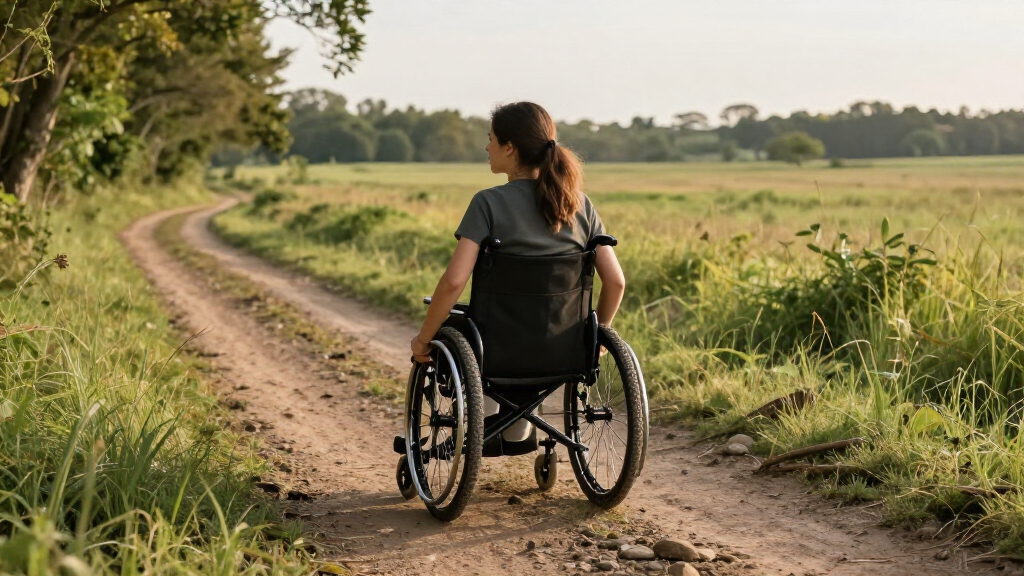

The best all-terrain wheelchairs balance outdoor traction with the range, seating, and portability a buyer actually needs. My best overall pick is the M16-1 Foldable All-Terrain Electric Wheelchair, which pairs a 20-inch seat with a purpose-built outdoor focus. The 500W electric wheelchair with a 25-mile range stands out for buyers prioritizing power and distance, while the foldable aluminum wheelchair with 24-inch wheels offers a manual alternative. The main tradeoffs are power versus transport weight, large wheels versus compact storage, and outdoor capability versus indoor maneuverability. Read on for the full breakdown and guidance on matching a chair to your routes and daily routine.

Get health and wellness essentials delivered free with Prime
- Fast, free delivery on millions of items
- Prime Video, Amazon Music and more included
- Member-only deals all year
Complete the kit


Key Takeaways
The M16-1 is my best overall choice because its all-terrain positioning and 20-inch seat make it a balanced starting point among the electric models.
The 500W, 25-mile-range model is the standout for buyers who prioritize motor output and longer outings, but advertised range should be checked against real-world conditions and user needs.
The 24-inch-wheel aluminum chair offers a manual route to outdoor mobility; it avoids dependence on a battery but calls for more effort from the user or caregiver.
The lineup splits into distinct priorities: the 440 lb-capacity chair with a 22-inch seat favors fit and support, while the WHLICKS transport chair favors lighter, shorter-distance transport.
Large front wheels appear across several electric picks, including the WEYRAL and another 16-inch-front-wheel model; wheel size alone does not prove suitability for sand, mud, or steep trails.
| WEYRAL Folding Electric Wheelchair with 16-Inch Front Wheels and 20-Inch Seat |  | Best for Longer Claimed Range | Front wheel size: 16 inches | Seat width: 20 inches | Weight capacity: 330 lbs | VIEW LATEST PRICE | See Our Full Breakdown |
| Foldable Aluminum Wheelchair with 24-Inch All-Terrain Wheels |  | Best Manual All-Terrain Pick | Frame material: Aluminum alloy | Weight capacity: 300 lbs | Seat widths: 17.7 inches or 20 inches | VIEW LATEST PRICE | See Our Full Breakdown |
| TerraWheels All-Terrain Wheelchair for Outdoor Use |  | Best for Mixed Outdoor Surfaces | Weight capacity: 300 lbs | Frame: Aluminum and stainless steel | Wheels: Heavy-duty all-terrain rubber | VIEW LATEST PRICE | See Our Full Breakdown |
| Goldseason 19-Inch Foldable Power Wheelchair for Adults and Seniors |  | Best for Adjustable Controls and Features | Seat width: 19 inches | Weight capacity: 330+ lbs | Frame: Steel X-frame | VIEW LATEST PRICE | See Our Full Breakdown |
| Foldable Electric Wheelchair with 500W Motor and 25-Mile Range |  | Best for Quick Folding and Claimed Range | Motor: Dual 250W motors (500W total) | Maximum range: Up to 25 miles | Maximum speed: 3.7 mph | VIEW LATEST PRICE | See Our Full Breakdown |
| M16-1 Foldable All-Terrain Electric Wheelchair, 20-Inch Seat |  | Best for Caregiver-Assisted Flexibility | Drive: 16-inch front-wheel drive | Seat width: 20 inches | Weight capacity: 330 lbs | VIEW LATEST PRICE | See Our Full Breakdown |
| WHLICKS Lightweight Foldable Transport Wheelchair with 12-Inch Wheels |  | Best Lightweight Transport Pick | Weight: 23.1 lbs | Maximum weight capacity: 300 lbs | Frame: Aluminum | VIEW LATEST PRICE | See Our Full Breakdown |
| Heavy-Duty Folding Electric Wheelchair, 22-Inch Seat, 440 lb Capacity |  | Best for Higher Capacity and a Wider Seat | Weight capacity: 440 lb | Seat width: 22 in | Motor power: 700 W | VIEW LATEST PRICE | See Our Full Breakdown |
| Foldable All-Terrain Electric Wheelchair with 16-Inch Front Wheel |  | Best for Longer Claimed Range and Speed Control | Front wheel size: 16 inches | Motor power: 2 × 250W | Battery: 24V 20Ah lithium-iron | VIEW LATEST PRICE | See Our Full Breakdown |
| all-terrain wheelchair | Weight capacity | Battery |
|---|---|---|
| WEYRAL Folding Electric Wheelc | 330 lbs | 24V 12Ah detachable lithium battery |
| Foldable Aluminum Wheelchair w | 300 lbs | — |
| TerraWheels All-Terrain Wheelc | 300 lbs | — |
| Goldseason 19-Inch Foldable Po | 330+ lbs | — |
| Foldable Electric Wheelchair w | — | Dual 12V 20Ah batteries |
| M16-1 Foldable All-Terrain Ele | 330 lbs | Detachable 24V 12Ah lithium |
| WHLICKS Lightweight Foldable T | — | — |
| Heavy-Duty Folding Electric Wh | 440 lb | 2 × 12 Ah lithium-ion |
| Foldable All-Terrain Electric | 350 lbs | 24V 20Ah lithium-iron |
More Details on Our Top Picks
WEYRAL Folding Electric Wheelchair with 16-Inch Front Wheels and 20-Inch Seat
The WEYRAL pairs a 20-inch seat with a manufacturer-claimed range of at least 20 miles, making it a more appealing fit for longer outings than the Goldseason, which lists up to 15 miles. Its two 250W motors and 16-inch front wheels are presented for varied terrain, while electromagnetic and manual brakes give users and caregivers separate ways to manage stopping. The caregiver rear controls, lap belt, and anti-tip design add useful support for assisted trips. I would treat its terrain performance and range as claims, not verified results: the supplied information offers no independent performance evidence. A 6–8-hour charge also calls for planning between outings, and the powerchair format may not suit buyers who prioritize a simple manual chair.
Pros:- 20-inch seat paired with a stated 330 lb capacity
- Electromagnetic and manual braking options
- Caregiver rear controls, adjustable lap belt, and anti-tip design
- Detachable lithium battery and foldable design
Cons:- The at-least-20-mile range and varied-terrain capability are manufacturer claims without independent evidence in the supplied information
- Charging takes 6–8 hours
- Powerchair features add complexity compared with the manual Foldable Aluminum Wheelchair
Best for: Powerchair users who want a 20-inch seat, caregiver rear controls, and a longer manufacturer-claimed range for outdoor outings.
Not ideal for: Buyers who need independently verified range or terrain performance, or who cannot plan around a 6–8-hour charging time.
- Front wheel size:16 inches
- Seat width:20 inches
- Weight capacity:330 lbs
- Motor power:2 × 250W (500W total)
- Battery:24V 12Ah detachable lithium battery
- Maximum speed:3.7 mph
- Claimed range:At least 20 miles
- Charging time:6–8 hours
- Warranty:1 year
Our verdict“Choose the WEYRAL if you want a wide-seat powerchair with caregiver controls and a longer claimed range, and can accept unverified performance claims.”
Foldable Aluminum Wheelchair with 24-Inch All-Terrain Wheels
For buyers who want a manual chair rather than a battery-powered model, this option has the clearest practical case: 24-inch quick-release rear wheels, an aluminum frame, and a listed net weight of 34 or 37 pounds depending on seat width. The folding backrest, flip-back armrests, and swing-away footrests can make transfers and vehicle storage more manageable. Compared with the TerraWheels, which lists rubber wheels for sand, gravel, grass, and snow, this chair offers more specific transport and transfer hardware but less detail about its performance on those surfaces. Its dual braking system includes caregiver assistance and a parking lock. The tradeoff is a manual setup that requires user or caregiver effort, and the wider 20-inch version takes up more space and weighs more than the 17.7-inch model.
Pros:- 24-inch quick-release rear wheels support easier transport and wheel removal
- Aluminum alloy frame with a listed capacity of up to 300 lbs
- Folding backrest, flip-back armrests, and swing-away footrests aid transfers and storage
- Caregiver assist brake includes speed reduction and a parking lock
Cons:- Manual propulsion may be tiring for users or caregivers over longer or rougher routes
- The 20-inch-seat version weighs 37 lbs and has wider unfolded dimensions than the 17.7-inch model
- The supplied description does not specify performance on particular terrain surfaces
Best for: Manual-chair users and caregivers who want quick-release wheels, transfer-friendly components, and a choice of seat widths for outdoor trips.
Not ideal for: People who need powered mobility or documented performance across sand, snow, and other challenging surfaces.
- Frame material:Aluminum alloy
- Weight capacity:300 lbs
- Seat widths:17.7 inches or 20 inches
- Seat depth:15.75 inches
- Net weight:34 lbs (17.7-inch seat); 37 lbs (20-inch seat)
- Front wheels:8 inches
- Rear wheels:24 inches, quick-release
- Folded dimensions:39.3 × 12.6 × 29.5 inches
- Brakes:User handbrake and caregiver assist brake with speed reduction and parking lock
Our verdict“Pick this manual model if transfer-friendly folding features matter more than powered assistance or surface-specific terrain claims.”
TerraWheels All-Terrain Wheelchair for Outdoor Use
TerraWheels is the most explicit about surface variety: it is designed for sand, gravel, grass, turf, and snow, supported by heavy-duty rubber wheels. That stated terrain focus sets it apart from the Foldable Aluminum Wheelchair, whose listing gives wheel dimensions and transport features but no comparable list of surfaces. The 22-by-20-inch reclining seat and adjustable belt may suit outings where positioning and secure seating matter, while UV- and seawater-resistant fabric is relevant for exposure to sun and coastal conditions. Tool-free assembly and folding are useful for transport, though the supplied specifications do not give folded dimensions or chair weight, making vehicle fit harder to judge. This is a manual outdoor-oriented option, not a powered alternative to the WEYRAL, and the listing provides no specific drawbacks or independent terrain results.
Pros:- Designed for a stated range of outdoor surfaces, including sand and snow
- Heavy-duty rubber all-terrain wheels
- Reclining seat measures 22 inches wide by 20 inches deep
- Folding, tool-free assembly and UV- and seawater-resistant fabric
Cons:- The supplied information does not state the chair’s weight or folded dimensions
- Manual format does not provide powered assistance like the WEYRAL
- Terrain suitability is described by the manufacturer, with no independent performance evidence supplied
Best for: Outdoor users seeking a manual wheelchair explicitly designed for mixed surfaces, including sand, gravel, grass, turf, and snow.
Not ideal for: Buyers who need power assistance, precise transport dimensions, or independent evidence of performance on difficult terrain.
- Weight capacity:300 lbs
- Frame:Aluminum and stainless steel
- Wheels:Heavy-duty all-terrain rubber
- Seat dimensions:22 inches wide × 20 inches deep
- Seat:Reclining
- Safety belt:Adjustable
- Brakes:Rear-wheel
- Fabric:UV- and seawater-resistant
- Assembly and storage:Tool-free assembly; folding design
Our verdict“Choose TerraWheels for a manual chair with the broadest stated surface range, provided its missing transport measurements are not a deal-breaker.”
Goldseason 19-Inch Foldable Power Wheelchair for Adults and Seniors
The Goldseason is a feature-focused powerchair for buyers who value adaptable controls and built-in convenience. Its joystick switches between left and right sides without tools, a useful distinction from the WEYRAL, whose listed caregiver controls support assisted operation but do not describe a reversible joystick. Dual 360W motors and a manufacturer-stated ability to handle slopes up to 12° make it a candidate for outdoor routes, while lighting and two storage bags suit outings that extend beyond a quick trip. The steel X-frame supports a stated capacity over 330 pounds, but the listing gives no overall chair weight, so lifting and vehicle loading are difficult to evaluate. Its claimed range of up to 15 miles is shorter than the WEYRAL’s at-least-20-mile claim, and real range can vary with terrain and use.
Pros:- Joystick switches between left- and right-side use without tools
- Steel X-frame with a stated capacity over 330 lbs
- Folds without tools and includes lighting plus two storage bags
- Manufacturer states a maximum slope of 12°
Cons:- Overall wheelchair weight is not stated, making transport planning difficult
- Claimed range is up to 15 miles and may vary with user weight, terrain, and use
- Slope and range statements are manufacturer specifications, not independent performance evidence in the supplied information
Best for: Powerchair users who need a joystick that can be moved between sides and value lighting, storage, and a stated slope capability.
Not ideal for: People who need a specified chair weight for lifting or vehicle loading, or who prioritize a longer claimed range than the WEYRAL offers.
- Seat width:19 inches
- Weight capacity:330+ lbs
- Frame:Steel X-frame
- Motor:Dual 360W
- Range:Up to 15+ miles per charge
- Maximum slope:12°
- Controls:Joystick switches between left and right sides without tools
- Included features:Built-in lighting, side bag, and rear storage bag
- Warranty:2 years for frame, motor, and controller; 1 year for battery
Our verdict“Choose Goldseason if reversible joystick placement and built-in outing features matter more than a longer claimed range or a known chair weight.”
Foldable Electric Wheelchair with 500W Motor and 25-Mile Range
This powerchair centers its case on three-second folding and a manufacturer-stated range of up to 25 miles. That range claim exceeds the WEYRAL’s stated minimum of 20 miles, but neither product’s supplied description includes independent range testing, so I would not treat the figures as directly verified comparisons. Dual 250W motors, 16-inch rear tires, puncture-resistant tires, and anti-tipping support are intended to support outdoor use; the listed 12° maximum incline gives buyers another manufacturer specification to check against their routes. Compared with Goldseason, this model folds faster according to its stated details, while Goldseason provides a reversible joystick and a longer stated frame, motor, and controller warranty. A major practical gap here is that the product text does not state overall weight or folded dimensions, which can complicate vehicle and storage planning.
Pros:- Stated folding time of about three seconds
- Dual 250W motors and manufacturer-claimed range up to 25 miles
- Electromagnetic braking and anti-tipping support
- Puncture-resistant tires and a stated 12° maximum incline
Cons:- Overall weight and folded dimensions are not provided
- The up-to-25-mile range and terrain suitability are manufacturer claims without independent evidence in the supplied information
- Maximum speed is limited to 3.7 mph
Best for: Powerchair users who prioritize quick folding and want a long manufacturer-claimed range for a mix of indoor and outdoor trips.
Not ideal for: Buyers who need a known chair weight or folded footprint for lifting, vehicle storage, or fitting a small space.
- Motor:Dual 250W motors (500W total)
- Maximum range:Up to 25 miles
- Maximum speed:3.7 mph
- Battery:Dual 12V 20Ah batteries
- Folding time:About 3 seconds
- Rear tire size:16 inches
- Maximum incline:12°
- Frame:Aerospace-grade alloy
- Safety features:Electromagnetic braking, anti-tipping support, and puncture-resistant tires
Our verdict“Pick this model if quick folding and a long claimed range lead your priorities, but verify its weight and storage footprint before buying.”
M16-1 Foldable All-Terrain Electric Wheelchair, 20-Inch Seat
The M16-1 pairs 16-inch front-wheel drive with rear suspension, making it a better match for uneven paths than the WHLICKS transport chair, which has large rear wheels but depends on someone else to push. Its 20-inch seat and 330-pound capacity also offer more room and support than that lightweight transport option. Electric and manual modes add flexibility if the battery runs low, while rear caregiver controls let an attendant help with operation. The tradeoff is a 6–8-hour charging time, and the advertised 20-plus-mile range is a claim that can change with terrain, load, and use. It folds for storage, but buyers prioritizing longer stated range or greater capacity should compare it with the 350-pound Foldable All-Terrain Electric Wheelchair with 16-Inch Front Wheel.
Pros:- 20-inch seat and stated 330-pound capacity
- 16-inch front-wheel drive and rear suspension for varied terrain
- Electric and manual modes, with rear caregiver controls
- Folds for storage and includes a light and carrying accessories
Cons:- Charging takes 6–8 hours
- The 20-plus-mile range is a listing claim and may fall with terrain or use
- Its capacity is lower than the 350-pound Foldable All-Terrain Electric Wheelchair with 16-Inch Front Wheel
Best for: Buyers who want a powered outdoor chair with a roomy seat and the option for an attendant to control it.
Not ideal for: People who need a lightweight transport chair or want a dependable long-distance range figure; this model’s listed range is not guaranteed and charging takes 6–8 hours.
- Drive:16-inch front-wheel drive
- Seat width:20 inches
- Weight capacity:330 lbs
- Motors:2 × 250W
- Battery:Detachable 24V 12Ah lithium
- Maximum speed:3.9 mph
- Claimed range:20+ miles
- Charging time:6–8 hours
Our verdict“Choose the M16-1 if you want a foldable powered chair with caregiver controls and a wide seat, but compare its claimed range and capacity with higher-capacity alternatives.”
WHLICKS Lightweight Foldable Transport Wheelchair with 12-Inch Wheels
At 23.1 pounds, the WHLICKS is the easiest option in this group to lift and stow, while its compact folded dimensions suit car trunks and tight storage spaces. That portability comes with a different purpose: it is a caregiver-pushed transport chair, not a powered chair for self-directed outdoor travel like the M16-1. Its 12-inch rear wheels, shock-absorbing front wheels, belt, and dual-action brakes suit short trips over a mix of indoor and outdoor surfaces, but they do not make it a substitute for a power wheelchair on rough trails. Removable, machine-washable cushions are a practical advantage for frequent transport and cleanup. The 300-pound capacity is also lower than the M16-1’s, so larger users should look elsewhere.
Pros:- Light 23.1-pound frame for lifting and transport
- Folds to 20 × 11 × 26 inches
- Removable, machine-washable cushions
- Adjustable handles and footrests, plus a belt and anti-fold lock
Cons:- Caregiver must push the chair; it has no powered drive
- 300-pound capacity is below the M16-1’s stated 330 pounds
- Transport-chair wheels are less suited to rough trails than the powered all-terrain models
Best for: Caregivers who need a lightweight folding chair for appointments, car transfers, and short outdoor trips on relatively manageable surfaces.
Not ideal for: People who need independent powered mobility or regularly travel over rough, uneven terrain; this transport chair must be pushed by a caregiver.
- Weight:23.1 lbs
- Maximum weight capacity:300 lbs
- Frame:Aluminum
- Rear wheel size:12 inches
- Folded dimensions:20 × 11 × 26 inches
- Handle height:32.68–34.65 inches, 3 levels
- Footrest height:4.13–5.91 inches, 3 levels
- Cushions:Removable and machine-washable
Our verdict“Pick the WHLICKS for caregiver-led trips where low carry weight matters more than powered control or trail capability.”
Heavy-Duty Folding Electric Wheelchair, 22-Inch Seat, 440 lb Capacity
This chair leads the group on stated user capacity, with a 440-pound limit and a 22-inch seat—more room and support than the M16-1’s 20-inch seat and 330-pound limit. Its 700W motor, six spring-loaded shock absorbers, anti-tip wheels, and electromagnetic braking are aimed at users who want powered mobility across varied surfaces, with manual mode available if electric drive is not in use. The listing also claims more than 30 miles from two 12Ah batteries, but that figure is not a guaranteed real-world result. Compared with the Foldable All-Terrain Electric Wheelchair with 16-Inch Front Wheel, this model offers higher capacity and a wider seat, but its listed details omit overall weight and folded dimensions. That gap makes transport and storage harder to judge before buying.
Pros:- 22-inch seat and 440-pound stated capacity
- 700W motor with six spring-loaded shock absorbers
- Electromagnetic braking and anti-tip wheels
- Electric and manual operating modes
Cons:- Overall weight and folded dimensions are not provided
- The more-than-30-mile range is a product claim and varies with use and terrain
- Its bulk and transport needs are difficult to evaluate from the supplied specifications
Best for: Users who need a wider seat and a higher stated weight capacity in a powered folding wheelchair for mixed-surface use.
Not ideal for: Frequent travelers who must lift the chair or fit it into a specific vehicle; the listing does not state its weight or folded dimensions.
- Weight capacity:440 lb
- Seat width:22 in
- Motor power:700 W
- Battery:2 × 12 Ah lithium-ion
- Claimed range:More than 30 miles
- Braking system:Electromagnetic
- Shock absorbers:6 spring-loaded
- Operating modes:Electric and manual
Our verdict“Choose this model when seat width and stated capacity matter most, but avoid committing before confirming its weight and folded size.”
Foldable All-Terrain Electric Wheelchair with 16-Inch Front Wheel
This foldable power chair stands out for a 24V 20Ah lithium-iron battery and a claimed range of up to 25 miles, exceeding the M16-1’s listed 20-plus miles on paper. Its five joystick speed settings give the rider more control over pace than the M16-1’s stated 3.9-mph maximum alone describes, while dual 250W motors, shock absorption, and a 12-degree maximum slope support outdoor use. The 350-pound capacity also tops the M16-1’s 330 pounds. Those advantages do not make the range a guarantee: terrain and rider load affect travel distance, and charging takes 6–8 hours. The warranty is uneven, too: five years for the frame, but only six months for the battery. Buyers focused on much higher capacity may prefer the 440-pound Heavy-Duty Folding Electric Wheelchair.
Pros:- 24V 20Ah lithium-iron battery and stated range of up to 25 miles
- Five joystick speed settings for adjustable pace
- 350-pound capacity, higher than the M16-1’s stated 330 pounds
- Folding frame, electric and manual modes, dual braking, and shock absorption
Cons:- Charging takes 6–8 hours
- Actual range can vary with terrain and use
- Battery warranty is six months, shorter than the five-year frame warranty
Best for: Riders seeking a foldable powered chair with multiple speed settings, a larger listed battery, and capacity above 330 pounds.
Not ideal for: Buyers who need a long battery warranty or a verified travel distance; battery coverage is six months and the up-to-25-mile figure is a claim.
- Front wheel size:16 inches
- Motor power:2 × 250W
- Battery:24V 20Ah lithium-iron
- Stated travel range:Up to 25 miles
- Maximum slope:12°
- Weight capacity:350 lbs
- Speed settings:5
- Charging time:6–8 hours
Our verdict“Choose this chair for its larger listed battery and adjustable speed control, but consider the Heavy-Duty model if your priority is a higher capacity.”
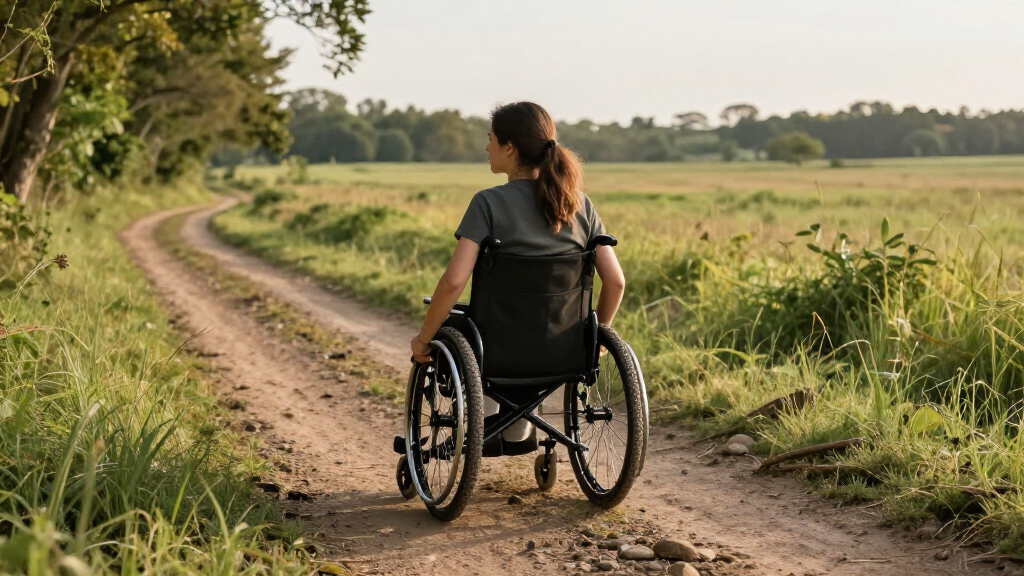
How We Picked
I compared the nine chairs through the needs implied by all-terrain use: wheel configuration, power or manual propulsion, seat dimensions, stated capacity, folding design, and the practical demands of taking a chair outdoors. I gave greater weight to clear outdoor-oriented design and useful fit information than to broad labels, since “all-terrain” can mean anything from uneven sidewalks to soft ground. I also separated powered chairs from manual and transport chairs rather than treating them as interchangeable.
The order reflects how broadly each option appears to serve outdoor users while accounting for its tradeoffs. The M16-1 leads as a balanced electric pick; the long-range 500W chair and large-wheel manual model follow for more specific priorities. Chairs with useful seat or capacity distinctions rank well for buyers whose fit needs are central, while compact transport designs rank lower for demanding terrain. Product names and supplied specifications do not establish performance on every surface, so I flag areas buyers should verify before purchase.
Factors to Consider When Choosing Best All-terrain Wheelchairs
Before choosing among these chairs, I would start with the route, the person’s fit needs, and who will handle transport. A chair that works on a firm park path may struggle on loose sand, while a powerful model can be impractical if it is difficult to lift into a vehicle. These factors help separate genuine needs from appealing but incomplete specifications.
Match the Wheels to the Surface You Actually Use
“All-terrain” is not a single performance standard, so name the surfaces you expect to cross: cracked pavement, grass, gravel, packed dirt, or soft sand. Larger wheels can help roll over bumps and shallow obstacles, but tread, wheel placement, ground clearance, and weight distribution also affect how a chair behaves. A chair suited to firm park paths may still bog down on loose ground. Ask the seller which surfaces the chair is designed for and whether the drive wheels are powered or manually propelled. If most trips include indoor doorways and tight turns, oversized wheels may bring less benefit than expected. Avoid choosing from wheel diameter alone.
Treat Range and Motor Claims as Conditions, Not Guarantees
Published range is usually a best-case figure, not a promise for every outing. Rider weight, hills, surface resistance, temperature, battery condition, and frequent stops can all reduce distance. A longer-range chair may suit extended trips, but a buyer who uses short routes may value easier charging and transport more. Ask whether the battery is removable, how long a full charge takes, and what replacement support is available. For hilly routes, look for clear information about slope limits and braking rather than relying on motor wattage alone. Keep a reserve for the return trip instead of planning to use the full claimed range.
Check Seat Fit and Capacity as Separate Requirements
A stated weight capacity does not tell you whether the seat will fit comfortably. Compare seat width and depth with the user’s measurements, then account for clothing, posture, cushions, and any supports used throughout the day. A wider seat can improve comfort for one person but make passage through narrow doors harder. Confirm that the capacity applies to the complete chair setup and ask about warranty terms if the user is near the stated limit. Also check footrest and armrest adjustability, since poor positioning can make longer outdoor outings tiring. Do not assume a model labeled for adults or seniors will fit every adult.
Balance Outdoor Capability Against Loading and Storage
Folding does not automatically mean easy to transport. Check the chair’s total weight, folded dimensions, battery handling, and whether its heaviest parts can be separated. A caregiver who loads the chair alone may need a lighter model even if a heavier chair offers more outdoor features. Measure the vehicle opening and storage space before ordering, including room for other mobility equipment. Find out whether folding requires tools or lifting awkward components. The common mistake is to focus on the chair’s folded footprint while overlooking the weight that must be moved.
Choose Manual, Powered, or Transport Use Honestly
A manual wheelchair with large wheels avoids battery charging and may suit a user who can self-propel or has reliable assistance. A powered chair reduces pushing demands but adds charging, controls, and battery maintenance. A transport chair is designed around caregiver movement and short transfers, not necessarily independent travel across rough ground. Think through who will propel the chair on slopes, how far a typical outing lasts, and whether the user needs independent control. If the chair will serve both indoor errands and outdoor routes, test the turning space and control layout as well as the outdoor setup. Buying for a rare trail excursion can lead to an inconvenient daily chair.
Verify Safety, Service, and Terrain Limits Before Buying
Outdoor use places extra demands on brakes, tires, frame joints, and electrical components. Ask about maximum slope, safe operating conditions, water exposure, and the process for servicing or replacing tires and batteries. A folding frame should lock securely when open, and the user should be able to reach the controls without shifting posture. Check whether the chair has anti-tip features and whether they suit the routes involved. Plan for routine cleaning after gravel or wet outings, especially around moving parts. When specifications leave a safety question unanswered, get written guidance from the seller or a mobility professional before relying on the chair outdoors.
Frequently Asked Questions
Can an all-terrain wheelchair handle sand, mud, or steep trails?
Not necessarily. The all-terrain label does not establish that a chair can travel on every loose or steep surface, and the nine options here do not all provide the same level of terrain detail. Wheel size, tread, drive system, ground clearance, weight, and slope limits all matter. Ask the manufacturer about the exact route conditions you expect, including wet ground and inclines. For difficult trails, get advice from a mobility professional before relying on a folding chair designed mainly for outdoor paths.
Should I choose the 25-mile-range electric chair or a large-wheel manual wheelchair?
Choose based on who will propel the chair and how long outings last. The 500W model’s stated range makes it the more relevant option for buyers seeking powered travel over longer distances, though actual range can fall short under demanding conditions. The 24-inch-wheel aluminum chair avoids battery dependence and may appeal to a capable self-propeller or caregiver, but manual effort can become tiring on hills or rough ground. Compare total chair weight and loading needs, too. If possible, assess both propulsion methods on a route similar to your regular outings.
Is a folding electric wheelchair easy for one person to load into a car?
Folding describes how the chair stores, not how easy it is to lift. Total weight, battery placement, folded dimensions, and the height of the vehicle’s trunk opening all affect loading. Ask for the chair’s transport weight with and without the battery, and check whether the battery can be removed safely. Measure your vehicle before buying, then consider a ramp or lift if lifting would strain the user or caregiver. A compact transport chair may be easier to handle but may not offer the same outdoor capability as a powered all-terrain model.
How do I know whether a 20-inch or 22-inch seat is the right fit?
Seat width should be selected from the user’s measurements and seating needs, not from the product category. Measure hip width while seated and allow suitable room for clothing or supports without leaving the user unstable or poorly positioned. Seat depth, armrest spacing, and leg position matter as much as width for longer outings. The 22-inch-seat heavy-duty chair may suit buyers needing more room, but its larger footprint could be less convenient through narrow doorways. A clinician or seating specialist can help when posture, pressure management, or specialized cushions are involved.
What should I check if the chair will be used both indoors and outdoors?
Consider whether its turning radius, overall width, and controls suit indoor doorways and tight rooms, then check tire and drive performance for the outdoor routes. Larger wheels can improve passage over uneven ground but may make indoor navigation harder. Verify the folded footprint and storage plan if the chair must travel in a car. Ask about cleaning and maintenance after wet or dusty use, since outdoor debris can affect moving parts. If the chair will be a daily primary wheelchair, prioritize fit and indoor usability alongside terrain claims rather than buying for the most demanding occasional outing.
Conclusion
For most buyers seeking a powered outdoor chair, I recommend the M16-1 as the best overall starting point because it combines an all-terrain focus with a 20-inch seat. The 500W, 25-mile-range model is my best premium-style choice for people who put power and longer outings first, while the 24-inch-wheel aluminum wheelchair is the best value-style manual alternative for users who can self-propel or have dependable assistance. Beginners comparing powered options should start with the Goldseason 19-inch foldable power wheelchair and confirm controls, fit, and transport needs before choosing. For specific needs, the 440 lb-capacity, 22-inch-seat chair is the clearest fit-focused pick, while the WHLICKS transport chair makes more sense for short assisted trips than rough-terrain independence. Match the final choice to your route, seat measurements, and loading plan, and verify terrain limits with the manufacturer.
Halloween Picks
halloween
As an affiliate, we earn on qualifying purchases.