At-home sleep apnea monitors can track overnight signals such as oxygen levels, breathing, movement, or heart rate, but they differ in what they measure and how useful their reports may be for follow-up. I’d name the Home Sleep Breathing Monitor with Airflow Tracking and App Reports as the best overall pick for its breathing-focused tracking and app reports; the EMAY Sleep Oxygen Monitor with 40-Hour Memory stands out for stored oxygen data, while the OnSky SkyPad-4 offers contact-free monitoring. The main tradeoff is between more targeted measurements and simpler, broader wellness tracking, along with differences in comfort, setup, and data access. These products are not interchangeable with a clinician-ordered sleep study, and consumer readings cannot diagnose sleep apnea. Read on for the full comparison and help matching a monitor to your priorities.

Get health and wellness essentials delivered free with Prime
- Fast, free delivery on millions of items
- Prime Video, Amazon Music and more included
- Member-only deals all year
Key Takeaways
- Breathing-focused tracking leads this lineup: the Home Sleep Breathing Monitor combines airflow tracking with app reports, giving it a clearer sleep-breathing role than a general wellness wearable.
- Oxygen data and breathing data answer different questions: EMAY’s oxygen monitors focus on overnight oxygen trends, while the breathing monitors target respiratory patterns.
- Contact-free devices trade wearability for placement dependence: the OnSky SkyPad models and SOMNDEEP avoid attaching a sensor to the body, but their readings depend on suitable positioning and room setup.
- EMAY’s options differ most in data workflow: the 40-hour-memory model favors stored readings, while the Bluetooth model adds app and PC access for people who want to review data on a screen.
- The RingConn Gen 2 is the broadest wellness-style option, not a dedicated apnea test: it may suit buyers already interested in wearable sleep tracking, but its role differs from monitors designed around breathing or oxygen signals.
| Home Sleep Breathing Monitor with Airflow Tracking and App Reports |  | Best for Airflow Trend Reports | Monitoring type: Nasal airflow | Sensors: Three airflow sensors | App features: Real-time waveforms, airflow trends, AHI reference data, snoring index, and breathing insights | VIEW LATEST PRICE | See Our Full Breakdown |
| EMAY Sleep Oxygen Monitor with 40-Hour Memory |  | Best for App-Free Oxygen Recording | Brand: EMAY | Model: EMO-80 | Built-in memory: 40 hours | VIEW LATEST PRICE | See Our Full Breakdown |
| OnSky SkyPad-4 Contact-Free Heart, Breathing, Sleep, and Seizure Monitor |  | Best for Contact-Free Caregiver Monitoring | Brand: OnSky | Model: SKYPAD4B | Sensor type: Non-contact | VIEW LATEST PRICE | See Our Full Breakdown |
| SOMNDEEP Contactless Sleep Monitor with Millimeter-Wave Radar |  | Best for General Sleep Trends | Sensing technology: Millimeter-wave radar | Design: Contactless; no camera | Tracked insights: Sleep duration, movement, restlessness, and routine trends | VIEW LATEST PRICE | See Our Full Breakdown |
| EMAY Sleep Breathing Monitor |  | Best for Simple Wearable Breathing Reports | Brand and model: EMAY Sleep Breathing Monitor | Weight: 10 g | Sensors: 3 | VIEW LATEST PRICE | See Our Full Breakdown |
| OnSky SkyPad Contact-Free Heart, Breathing, Sleep Apnea, and Seizure Monitor |  | Best Contact-Free Caregiver Monitor | Brand: OnSky | Users: Adults and children aged 1 year or older | Display: 5-inch touchscreen hub | VIEW LATEST PRICE | See Our Full Breakdown |
| EMAY Sleep Oxygen Monitor with Bluetooth, PC Software, and App |  | Best for Overnight Oxygen Data | Brand and model: EMAY EMO-90 | Tracking: Spot checks and continuous overnight SpO2 and heart rate | Measurement range: 70% to 100% | VIEW LATEST PRICE | See Our Full Breakdown |
| RingConn Gen 2 Smart Ring, Black, Size 7 |  | Best Wearable for Ongoing Sleep Trends | Material: Titanium | Size and color: Size 7, black | Weight: 2 g; varies by size | VIEW LATEST PRICE | See Our Full Breakdown |
| at home sleep apnea monitor | Connectivity | Weight |
|---|---|---|
| Home Sleep Breathing Monitor w | — | 10 g |
| EMAY Sleep Oxygen Monitor with | — | 0.01 kg |
| OnSky SkyPad-4 Contact-Free He | — | — |
| SOMNDEEP Contactless Sleep Mon | 2.4 GHz Wi-Fi only; 5 GHz Wi-Fi not supported | — |
| EMAY Sleep Breathing Monitor | Bluetooth; smartphone compatible | 10 g |
| OnSky SkyPad Contact-Free Hear | Smartphone app | — |
| EMAY Sleep Oxygen Monitor with | Bluetooth | — |
| RingConn Gen 2 Smart Ring | Bluetooth | 2 g; varies by size |
More Details on Our Top Picks
Home Sleep Breathing Monitor with Airflow Tracking and App Reports
I’d choose this monitor for someone who wants to review nasal breathing patterns rather than just general sleep trends. Its three airflow sensors feed real-time waveforms and app reports with airflow trends, snoring information, and AHI reference data, giving more breathing-specific context than the contact-free SOMNDEEP monitor, which tracks movement and routines but not oxygen or airflow. The 10 g wearable and three strap sizes also make it easier to pack and adjust than a bedside hub such as the OnSky SkyPad-4. The tradeoff is that this is a narrow tracking tool: it records neither SpO₂ nor pulse, is not intended to diagnose apnea, and is designed for nasal breathing. I’d skip it if you breathe mainly through your mouth or need to wear a CPAP mask overnight.
Pros:- Tracks nasal airflow overnight with three sensors
- App displays real-time waveforms, airflow trends, snoring information, and AHI reference data
- Lightweight 10 g design with three adjustable strap sizes
- Portable for home use or travel
Cons:- Not recommended for mouth breathers
- Does not record SpO₂ or pulse rate
- Cannot be used at the same time as a CPAP mask and does not diagnose or treat apnea
Best for: Nasal breathers who want app-based airflow, snoring, and breathing-pattern reports for personal tracking.
Not ideal for: Mouth breathers, CPAP users who need simultaneous monitoring, or anyone seeking oxygen or pulse readings or a diagnostic test.
- Monitoring type:Nasal airflow
- Sensors:Three airflow sensors
- App features:Real-time waveforms, airflow trends, AHI reference data, snoring index, and breathing insights
- Material:Food-grade silicone
- Fit:Adjustable elastic straps in three sizes
- Weight:10 g
- SpO₂ or pulse recording:Not supported
- CPAP compatibility:Not compatible for simultaneous use
- Intended use:Sleep data tracking only; not a diagnostic device
Our verdict“Choose it for portable nasal-airflow tracking and structured app reports, but not for oxygen monitoring or diagnosis.”
EMAY Sleep Oxygen Monitor with 40-Hour Memory
For buyers who want overnight oxygen and heart-rate data without relying on a phone at bedtime, I’d put the EMAY Sleep Oxygen Monitor ahead of the airflow-focused monitors in this group. It records continuously and stores up to 40 hours of data, with reports, graphs, and raw data available for download later. That makes it a better fit for oxygen trend tracking than the Home Sleep Breathing Monitor, which records nasal airflow but has no SpO₂ or pulse support. The tradeoff is a more limited battery runtime: the included two AAA batteries are listed for up to 16 hours, so longer use requires planning. Its stated use is sports and aviation, not medical or diagnostic monitoring, so I wouldn’t treat its readings as an apnea diagnosis or substitute for clinical advice.
Pros:- Continuously records overnight SpO₂ and heart rate
- Stores up to 40 hours of data without a smartphone or app
- Allows later downloads of reports, oxygen graphs, and raw data
- Includes two AAA batteries
Cons:- Not intended for medical or diagnostic use
- Battery life is listed as 16 hours
- Does not track nasal airflow like the EMAY Sleep Breathing Monitor
Best for: People who want to record overnight oxygen saturation and heart rate without using a smartphone or app during sleep.
Not ideal for: Buyers seeking a medical-grade apnea test, app-based live monitoring, or longer operation without changing batteries.
- Brand:EMAY
- Model:EMO-80
- Built-in memory:40 hours
- Measuring range:70%–100% SpO₂
- Battery:Two AAA batteries, included
- Battery life:16 hours
- Weight:0.01 kg
- Color:Grey and white
- Intended use:Sports and aviation use; not medical or diagnostic use
Our verdict“Pick this for standalone overnight oxygen and heart-rate logs, not for diagnosis or airflow analysis.”
OnSky SkyPad-4 Contact-Free Heart, Breathing, Sleep, and Seizure Monitor
The SkyPad-4 stands apart from the wearable options here: its non-contact sensor pad tracks heart rate, breathing, movement, and sleep patterns without asking the user to wear a mask or sensor. A touchscreen hub and phone app let caregivers check data remotely, while the SOS button can trigger notifications or calls. Compared with the SOMNDEEP radar monitor, it offers a hub, caregiver alerts, and a broader set of stated metrics; compared with the EMAY Sleep Breathing Monitor, it avoids a nasal wearable but provides less clearly specified apnea measurement detail. That distinction matters: the listing does not provide performance evidence for its sleep apnea or seizure claims. I’d treat it as a caregiver-oriented monitoring setup, not as a diagnostic apnea test. It also requires the app for remote viewing.
Pros:- Tracks heart rate, breathing, movement, and sleep patterns without skin contact
- Includes a touchscreen hub and sensor pad
- Supports remote viewing through a smartphone app
- SOS button can trigger phone notifications and calls; no subscription is required
Cons:- Remote monitoring requires a smartphone app
- Listing provides no supporting performance details for sleep apnea or seizure monitoring claims
- Does not provide a clearly specified diagnostic apnea test
Best for: Caregivers who want contact-free sleep and breathing monitoring with a bedside hub and remote phone alerts.
Not ideal for: Anyone seeking a validated sleep apnea diagnosis, a wearable-free setup with no phone app, or clearly documented performance for seizure detection.
- Brand:OnSky
- Model:SKYPAD4B
- Sensor type:Non-contact
- Tracked metrics:Heart rate, breathing, movement, sleep patterns, room temperature, and humidity
- Display:5-inch touchscreen hub
- Compatible devices:Smartphones
- Included components:Sensor pad, touchscreen hub with SOS button, and power adapter
- Minimum user age:1 year
- Warranty:1-year manufacturer warranty
Our verdict“Choose the SkyPad-4 for contact-free caregiver visibility and alerts, not as proof of sleep apnea.”
SOMNDEEP Contactless Sleep Monitor with Millimeter-Wave Radar
I’d choose the SOMNDEEP when the goal is to follow broad sleep routines without wearing anything or placing a camera in the room. Its millimeter-wave radar tracks sleep duration, movement, and restlessness, while the app adds reports, longer-term comparisons, reminders, and optional family messages. That makes it less intrusive than the EMAY Sleep Breathing Monitor, but also much less specific to apnea: it does not measure blood oxygen or nasal airflow. Unlike the OnSky SkyPad-4, the listing focuses on general sleep and routine trends rather than heart-rate data, a touchscreen hub, or an SOS button. This is a wellness monitor, not a medical device, so its trends can’t confirm or rule out sleep apnea. I’d also check for a 2.4 GHz Wi-Fi network before choosing it.
Pros:- Tracks sleep duration, movement, restlessness, and routine trends without a wearable
- Contactless, no-camera design
- App provides sleep reports and long-term trend comparisons
- Offers reminders and optional voice or text messages for family routines
Cons:- Does not measure blood oxygen or nasal airflow
- Requires 2.4 GHz Wi-Fi and does not support 5 GHz Wi-Fi
- General wellness monitor, not a medical device or apnea diagnostic
Best for: People who want camera-free, wearable-free sleep routine and movement trends at home.
Not ideal for: People seeking apnea-specific measurements, oxygen readings, a diagnostic result, or a home network that only supports 5 GHz Wi-Fi.
- Sensing technology:Millimeter-wave radar
- Design:Contactless; no camera
- Tracked insights:Sleep duration, movement, restlessness, and routine trends
- Connectivity:2.4 GHz Wi-Fi only; 5 GHz Wi-Fi not supported
- Blood oxygen monitoring:Not supported
- App features:Sleep reports, long-term trends, reminders, and optional voice or text messages
- Intended use:General wellness; not for medical use
Our verdict“Choose it for privacy-minded sleep routine tracking, but look elsewhere for apnea-specific or oxygen data.”
EMAY Sleep Breathing Monitor
The EMAY Sleep Breathing Monitor is a straightforward pick for nasal breathers who want a wearable record of overnight airflow and an app-generated report. Its three sensors capture breathing patterns, respiratory events, and related sleep data; at 10 g, it is more portable than the OnSky SkyPad-4’s sensor-pad-and-hub setup. Compared with the Home Sleep Breathing Monitor, the core approach is similar: both focus on nasal airflow, use three strap sizes, and omit oxygen and pulse readings. The EMAY listing adds Bluetooth connectivity, a one-year warranty, and named metrics including breath rate, airflow, AHI, and snoring. Those reports are for tracking, not diagnosis. It also won’t suit mouth breathers, and the mask cannot be worn alongside a CPAP mask, limiting its usefulness for some people already receiving therapy.
Pros:- Records nasal airflow and breathing patterns during sleep
- App analyzes respiratory events and provides a sleep report
- Lightweight 10 g design with three strap sizes
- Portable for home use or travel
Cons:- Not recommended for mouth breathers
- Cannot be worn at the same time as a CPAP mask
- Does not record SpO₂ or pulse and is not a breathing aid or diagnostic device
Best for: Nasal breathers who want a lightweight Bluetooth monitor with app reports on airflow, breathing rate, AHI, and snoring.
Not ideal for: Mouth breathers, CPAP users who need simultaneous monitoring, or buyers who need oxygen or pulse recordings.
- Brand and model:EMAY Sleep Breathing Monitor
- Weight:10 g
- Sensors:3
- Material:Food-grade silicone
- Strap sizes:3
- Connectivity:Bluetooth; smartphone compatible
- Metrics:Breath rate, airflow, AHI, and snoring
- Water resistance:Not water resistant
- Warranty and included items:1-year warranty; monitor, charging cord, and user manual
Our verdict“Choose this wearable for nasal airflow reports and portability, but not for oxygen tracking or clinical diagnosis.”
OnSky SkyPad Contact-Free Heart, Breathing, Sleep Apnea, and Seizure Monitor
Contact-free overnight monitoring is the SkyPad’s main distinction: its sensor pad tracks breathing, heart rate, movement, sleep patterns, and room conditions without requiring a wearable. That makes it a more practical fit for caregivers monitoring a child or adult who may not tolerate a finger sensor, unlike the EMAY Sleep Oxygen Monitor, which must be worn overnight. The touchscreen hub, app-based remote checks, and SOS button also put caregiver access ahead of the RingConn Gen 2’s personal health-tracking focus. The tradeoff is that the product information names sleep apnea and seizures but gives no performance details for detecting either condition. I’d treat it as a wellness-monitoring aid, not a substitute for a clinical sleep study or medical advice. There is no subscription requirement, though it depends on a powered hub and sensor pad rather than a compact wearable.
Pros:- Monitors without requiring skin contact
- Allows remote wellness checks through a smartphone app
- Includes an SOS button that can send notifications and call for assistance
- Does not require a subscription
Cons:- Provides no stated performance details for sleep apnea or seizure monitoring
- Requires a sensor pad and touchscreen hub rather than offering a portable wearable setup
Best for: Caregivers monitoring an adult or child aged 1 year or older who needs contact-free checks and remote app access
Not ideal for: Anyone seeking validated sleep apnea diagnosis or detailed evidence of apnea-detection performance
- Brand:OnSky
- Users:Adults and children aged 1 year or older
- Display:5-inch touchscreen hub
- Monitoring:Heart rate, breathing, movement, sleep patterns, room temperature, and humidity
- Connectivity:Smartphone app
- Included components:Sensor pad, touchscreen hub with SOS button, and power adapter
- Subscription:Not required
- Warranty:1 year manufacturer warranty
Our verdict“Choose the SkyPad for contact-free caregiver monitoring, but not as a stand-alone diagnostic test for sleep apnea.”
EMAY Sleep Oxygen Monitor with Bluetooth, PC Software, and App
For buyers focused on overnight oxygen readings rather than contact-free room monitoring, the EMAY Sleep Oxygen Monitor offers a clear, data-oriented approach. It supports spot checks and continuous overnight tracking of blood oxygen and heart rate, then stores up to 72 hours of readings even when a phone is not connected. Its PC software and mobile app can review and export records and generate reports, making it better suited to people who want data to share with a clinician than the OnSky SkyPad, which emphasizes caregiver checks and an SOS button. The tradeoff is physical: the monitor must stay on a finger during sleep, which may bother some users. Its stated measurement range begins at 70% oxygen saturation, so it is not a full sleep apnea diagnostic system or a replacement for professional evaluation.
Pros:- Supports both spot checks and continuous overnight tracking
- Stores up to 72 hours of readings without a phone connection
- Offers PC and mobile tools to review, export, and report data
- Rechargeable battery and configurable audio alerts
Cons:- Requires wearing a finger device throughout overnight tracking
- Stated oxygen measurement range starts at 70%
- Tracks oxygen and heart rate but is not described as a sleep apnea diagnostic system
Best for: Adults who can comfortably wear a finger monitor overnight and want stored oxygen and heart-rate records to review or share
Not ideal for: People who dislike sleeping with a finger-worn device or want contact-free monitoring and a clinically diagnostic apnea test
- Brand and model:EMAY EMO-90
- Tracking:Spot checks and continuous overnight SpO2 and heart rate
- Measurement range:70% to 100%
- Memory:Up to 72 hours
- Battery:Rechargeable lithium-ion
- Connectivity:Bluetooth
- Software:PC software and iOS/Android app
- Included components:Device
Our verdict“Pick the EMAY for exportable overnight oxygen and heart-rate records if a finger-worn monitor is comfortable for you.”
RingConn Gen 2 Smart Ring, Black, Size 7
The RingConn Gen 2 suits buyers who want sleep apnea monitoring as one part of a broader wearable health record, rather than a dedicated overnight monitor. It tracks blood oxygen, heart rate, HRV, sleep, stress, and activity through an app, with up to 10–12 days of battery life and no subscription fee. Compared with the EMAY Sleep Oxygen Monitor, the ring is less focused on exporting overnight oxygen records and avoids a finger clip, but it also offers a wider set of everyday metrics. Its small, lightweight titanium form can be easier to keep on for regular tracking; still, getting the right fit requires a sizing kit, and battery life varies by ring size. I would not treat its sleep apnea insights as a diagnosis: the product details do not specify clinical detection performance.
Pros:- Combines sleep apnea monitoring with sleep, blood oxygen, heart rate, HRV, stress, and activity tracking
- Runs without app subscription fees
- Offers up to 10–12 days of battery life
- Titanium construction and water resistance up to 100 meters
Cons:- Requires a sizing kit to find the correct fit
- Battery life varies by ring size
- Product details do not specify clinical performance for sleep apnea monitoring
Best for: People who want a subscription-free wearable for long-term sleep and health trends, including blood oxygen and sleep apnea insights
Not ideal for: Buyers seeking a dedicated or clinically validated apnea test, or anyone unwilling to confirm ring sizing before purchase
- Material:Titanium
- Size and color:Size 7, black
- Weight:2 g; varies by size
- Battery life:Up to 10–12 days
- Water resistance:Up to 100 meters
- Connectivity:Bluetooth
- Compatible platforms:Android and iOS
- Metrics tracked:Heart rate, sleep duration, blood oxygen, stress, activity, and HRV
- Warranty:12 months
Our verdict“Choose the RingConn Gen 2 if you want a versatile daily wearable with sleep apnea insights, not a stand-alone diagnostic monitor.”
How We Picked
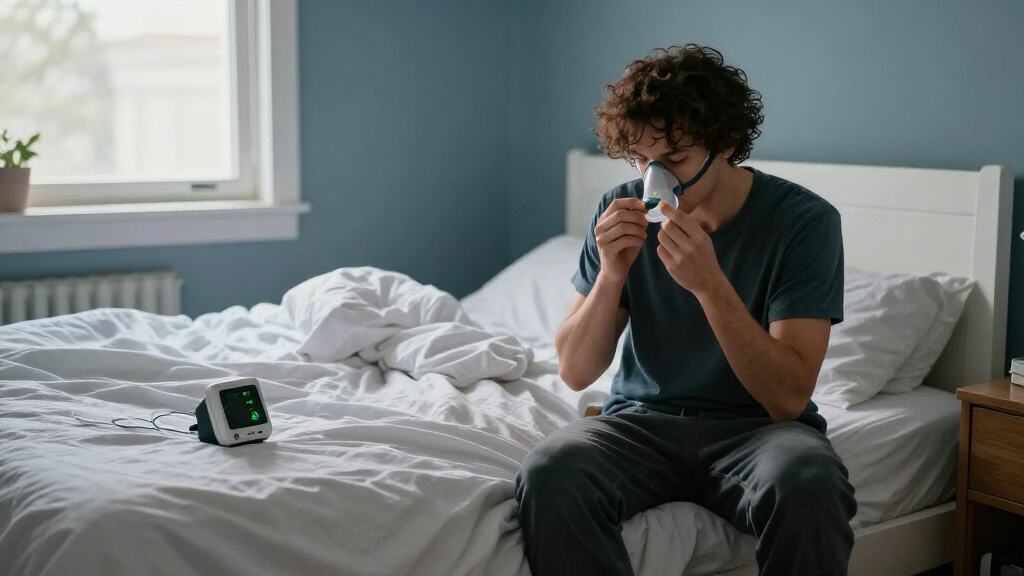
I compared the eight products by what they actually monitor, how directly that signal relates to overnight breathing concerns, and how a buyer can access the resulting data. I also weighed wearing comfort or sensor placement, setup demands, memory and connectivity, and whether the device’s role is focused or broad. These factors matter because a monitor that records a relevant signal but is difficult to use consistently may be less useful than a simpler device that fits a person’s routine.
The ranking favors products with a clear sleep-breathing or oxygen-monitoring purpose and a practical way to review overnight results. That places the Home Sleep Breathing Monitor with Airflow Tracking and App Reports first, while oxygen-focused EMAY devices and contact-free options serve narrower preferences. The RingConn ranks as a wearable wellness alternative rather than a substitute for a dedicated monitor. I do not treat any consumer device here as a diagnostic sleep study; suspected sleep apnea calls for discussion with a qualified healthcare professional.
Factors to Consider When Choosing At Home Sleep Apnea Monitors
Before choosing among at-home sleep apnea monitors, decide what you want the data to help you do: notice patterns, share a record with a clinician, or track general sleep signals. The device’s headline feature matters less than whether its measurement, report format, and nightly routine fit that goal.
Match the sensor to the question you have
Oxygen saturation, airflow, breathing patterns, heart rate, and movement are related but distinct signals. A low oxygen reading does not by itself explain why it occurred, while a breathing-focused measurement may still leave other clinical information unmeasured. Avoid assuming that more tracked metrics automatically mean a more accurate answer. Start by asking what signal the device captures and what it cannot infer from that signal. If a clinician has asked you to track a particular measure, prioritize that request over a broad feature list. When the concern is possible sleep apnea, use consumer data as context for a medical conversation rather than a diagnosis.
Check whether the report is usable beyond the app
A chart is only helpful if you can understand it and share it in a useful form. Before buying, find out whether the monitor stores readings on the device, syncs to a phone, offers computer software, or exports a report. App access can make nightly review convenient, while local memory may be a better fit for someone who does not want to sync data every morning. Check whether setup requires a particular phone or operating system, and whether the data can be retrieved after several nights. Do not assume that a polished display means a clinician will use the report as a formal test result. Choose the data workflow you will realistically maintain.
Be honest about comfort and placement
Wrist-worn or ring-style devices keep sensors on the body, which can make placement consistent but may feel intrusive during sleep. Contact-free monitors avoid wearable hardware, yet their readings can depend on where the device sits relative to the bed and sleeper. Consider whether you change sleeping positions, share a bed, or have a setup that makes stable placement difficult. A sensor that disturbs sleep or is frequently mispositioned can weaken the usefulness of repeated tracking. If possible, review the manufacturer’s placement instructions before choosing a contact-free design. Comfort is not a minor feature when the device is meant for nightly use.
Separate screening clues from diagnosis
Consumer monitors can provide personal tracking information, but they are not automatically equivalent to a home sleep apnea test ordered and interpreted by a clinician. A device may miss events, use different sensors, or present results that are not intended for clinical decision-making. Do not use a reassuring night of data to rule out a condition when symptoms or medical advice point to further evaluation. Likewise, repeated unusual readings are a reason to seek guidance, not to self-diagnose. Ask a healthcare professional how to interpret the readings and whether a validated test is appropriate. This distinction matters more than small differences in app design.
Choose a data routine you can sustain
Think through the full nightly process: charging, wearing or positioning the device, starting a recording, syncing, and reviewing results. A longer memory buffer can reduce the pressure to sync every day, while Bluetooth or app access may suit buyers who want frequent feedback. Neither approach is inherently better; the right one depends on your habits and comfort with technology. Check how the device handles missed nights, interrupted recordings, and storage limits before relying on a long-term record. Buyers often focus on the first setup and overlook the repeated tasks that follow. Favor the simplest routine that still captures the information you need.
Pay for a specific benefit, not a longer feature list
Extra tracking features are useful only when they support your reason for buying. A broader wearable may make sense if you already want general sleep and activity insights, while a breathing- or oxygen-focused monitor may be a closer fit for overnight respiratory tracking. Contact-free models may appeal to people who dislike wearing sensors, but that convenience comes with placement requirements. Compare what each device measures, how it presents the data, and what additional equipment or software is needed. A higher-feature option is not automatically a better choice for apnea concerns. Spend more only when the added capability solves a real limitation in your routine or data needs.
Frequently Asked Questions
Can an at-home sleep apnea monitor tell me whether I have sleep apnea?
Not necessarily. Consumer monitors can record signals such as oxygen, breathing, or heart rate, but their readings do not automatically meet the requirements of a diagnostic sleep study. A normal-looking result cannot reliably rule out sleep apnea, and an unusual result cannot confirm it on its own. If you have symptoms or a clinician has raised concern, discuss appropriate testing rather than relying on a consumer device as the final answer. These monitors are best treated as personal tracking tools or conversation aids.
Should I choose an oxygen monitor or a breathing monitor?
Choose based on the information you want to track, not the product label alone. An oxygen monitor records oxygen-related changes, while a breathing monitor is aimed at respiratory patterns or airflow; neither provides every signal used in clinical assessment. If a healthcare professional has requested a particular kind of measurement, follow that guidance. If you are deciding independently, check the device’s stated sensor and report details before buying. Avoid treating oxygen readings as a complete measure of breathing health.
Are contact-free sleep monitors a better choice for people who dislike wearables?
They can be more comfortable for people who do not want a ring, wrist sensor, or other device on their body overnight. The tradeoff is that contact-free units need appropriate placement and may be affected by the sleep environment or position. A wearable can keep its sensor attached to the user, but some people find it distracting or uncomfortable. Consider your bedroom layout and how reliably you can position a bedside device. Comfort should be weighed alongside recording consistency, not treated as a separate concern.
What should I check before buying a monitor for sharing results with a clinician?
Find out whether the device provides clear overnight summaries, how long it stores readings, and whether data can be viewed outside its phone app. A downloadable or computer-accessible report may make review easier, but it does not make a consumer monitor a diagnostic test. Ask the clinician whether readings from that type of device would be useful to them. Also check whether the device records the specific signal they want you to track. A short sample report can reveal more about practical usefulness than a long list of advertised metrics.
Is a smart ring a suitable substitute for a dedicated sleep apnea monitor?
A smart ring is better understood as a wearable sleep and wellness tracker unless its documentation clearly states a more specific intended role. Its convenience may appeal to someone who already wants broader sleep data, but that does not make it equivalent to a breathing- or oxygen-focused monitor. Compare the measurements and reporting methods rather than assuming all overnight tracking serves the same purpose. If apnea is the concern, a ring’s data should not replace clinical advice or recommended testing. It may complement personal tracking, but buyers seeking focused respiratory information should look closely at dedicated options.
Conclusion
For the best overall, I’d choose the Home Sleep Breathing Monitor with Airflow Tracking and App Reports because it combines a breathing-focused purpose with app-based review. The best value for straightforward oxygen tracking is the EMAY Sleep Oxygen Monitor with 40-Hour Memory, while the best premium-style data workflow is the EMAY Sleep Oxygen Monitor with Bluetooth, PC Software, and App for buyers who want several ways to review readings. For a beginner who prefers contact-free tracking, the OnSky SkyPad-4 offers a simple alternative to wearing a sensor; those wanting a focused breathing device can start with the EMAY Sleep Breathing Monitor. For specific needs, choose SOMNDEEP or an OnSky SkyPad model if avoiding body-worn hardware matters, and consider RingConn Gen 2 for broader wearable sleep tracking rather than apnea-focused monitoring. If you suspect sleep apnea, use any consumer readings as supporting information and ask a healthcare professional about appropriate testing.