

Get health and wellness essentials delivered free with Prime
- Fast, free delivery on millions of items
- Prime Video, Amazon Music and more included
- Member-only deals all year
Key Takeaways
- Upper-arm models dominate this lineup because they suit routine home readings; the rechargeable Oklar wrist monitor is the portability pick, but wrist positioning takes care.
- The iHealth Track’s wide-range cuff and app support make it the strongest connected option, while the iHealth Neo is a more compact wireless alternative.
- OMRON’s Silver, Bronze and Iron serve different needs: Silver is the balanced choice, Bronze keeps things simpler, and Iron is a straightforward upper-arm option.
- Large and backlit displays on the Guaever and Invaxe can help with visibility, but screen size alone does not address cuff fit or record keeping.
- Several picks advertise adjustable or wide-range cuffs, so checking the stated arm circumference range matters more than relying on a generic claim of broad fit.
| Oklar Rechargeable Wrist Blood Pressure Monitor |  | Best Wrist Monitor for Two Users | Measurement location: Wrist | Measurement time: About 35 seconds | Memory: Up to 240 readings for two users | VIEW LATEST PRICE | See Our Full Breakdown |
| Guaever Rechargeable Upper Arm Blood Pressure Monitor with Large Screen |  | Best for Readability | Measurement type: Upper arm | Battery: Built-in rechargeable lithium battery | Uses per charge: Up to 150 | VIEW LATEST PRICE | See Our Full Breakdown |
| OMRON Iron Upper Arm Blood Pressure Monitor |  | Best for Measurement Feedback | Monitor type: Upper-arm blood pressure monitor | Cuff fit: 9–17 inches | Accuracy feature: Advanced Accuracy Technology | VIEW LATEST PRICE | See Our Full Breakdown |
| Adjustable Upper Arm Blood Pressure Monitor with Storage Bag |  | Best for Flexible Power | User memory: Two users, 120 readings per user | Cuff circumference: 8.7–16.5 inches | Power options: Type-C cable or three AA batteries | VIEW LATEST PRICE | See Our Full Breakdown |
| iHealth Neo Wireless Upper Arm Blood Pressure Monitor |  | Best for Sharing Readings | Measurement location: Upper arm | Operation: One-button | Measurement time: 30 to 60 seconds | VIEW LATEST PRICE | See Our Full Breakdown |
| OMRON Silver Upper Arm Blood Pressure Monitor |  | Best for App-Based Tracking | Measurement type: Upper arm blood pressure | On-device storage: Up to 30 readings | Connectivity: Bluetooth | VIEW LATEST PRICE | See Our Full Breakdown |
| Yuwell Upper Arm Blood Pressure Monitor with Large Cuff |  | Best for Voice Guidance | Measurement type: Upper arm blood pressure | Cuff circumference: 8.7–17.7 inches | Memory capacity: 99 readings | VIEW LATEST PRICE | See Our Full Breakdown |
| Oklar Upper Arm Blood Pressure Monitor |  | Best for Two-Person Simplicity | Measurement type: Upper arm blood pressure | Operation: One-button | Display: Backlit LED | VIEW LATEST PRICE | See Our Full Breakdown |
| AILE Automatic Upper Arm Blood Pressure Monitor |  | Best Compact Two-User Pick | Measurement type: Automatic upper arm | Cuff size: 8.7–16.5 inches (22–42 cm) | Memory: 99 dated readings per user; two users | VIEW LATEST PRICE | See Our Full Breakdown |
| Invaxe Automatic Upper Arm Blood Pressure Monitor with Large Backlit Display |  | Best for a Large Display and Shared Tracking | Measurement location: Upper arm | Display: 4.5-inch backlit LCD | User profiles: Two | VIEW LATEST PRICE | See Our Full Breakdown |
| Alcedo Upper Arm Blood Pressure Monitor |  | Best for Two-Person Tracking | Display: LCD | Measurement averaging: Automatically averages 3 readings | User modes: 2 | VIEW LATEST PRICE | See Our Full Breakdown |
| Sinocare Upper Arm Blood Pressure Monitor with Adjustable Cuff |  | Best for Flexible Power | Monitor type: Upper-arm blood pressure monitor | Screen: 3.6 inches | Cuff size: 8.6–16.5 inches | VIEW LATEST PRICE | See Our Full Breakdown |
| iHealth Track Smart Upper Arm Blood Pressure Monitor with Wide-Range Cuff |  | Best for App-Based Tracking | Measurement type: Upper-arm blood pressure | Display: Large, multicolor backlit display | On-device memory: Up to 99 readings | VIEW LATEST PRICE | See Our Full Breakdown |
| OMRON Bronze Upper Arm Blood Pressure Monitor |  | Best for OMRON App Sharing | Monitor type: Upper-arm blood pressure monitor | On-device memory: Up to 14 readings | Connectivity: Bluetooth | VIEW LATEST PRICE | See Our Full Breakdown |
| Runstar Upper Arm Blood Pressure Monitor with Wide Range Cuff |  | Best for a Large, Angled Display | Cuff size: 8.6–16.5 inches | Display: 4.2-inch LCD, angled at 30 degrees, with backlight | Measurement time: About 30 seconds | VIEW LATEST PRICE | See Our Full Breakdown |
| digital blood pressure monitor | Display | Cuff size |
|---|---|---|
| Oklar Rechargeable Wrist Blood | Backlit LED | 4.92 to 8.46 inches |
| Guaever Rechargeable Upper Arm | Large LED screen | 22–42 cm (8.7–16.5 inches) |
| OMRON Iron Upper Arm Blood Pre | — | — |
| Adjustable Upper Arm Blood Pre | Large digital display | — |
| iHealth Neo Wireless Upper Arm | — | — |
| OMRON Silver Upper Arm Blood P | — | — |
| Yuwell Upper Arm Blood Pressur | — | — |
| Oklar Upper Arm Blood Pressure | Backlit LED | — |
| AILE Automatic Upper Arm Blood | Large digital display with systolic pressure, diastolic pressure, and pulse | 8.7–16.5 inches (22–42 cm) |
| Invaxe Automatic Upper Arm Blo | 4.5-inch backlit LCD | 9–17 inches |
| Alcedo Upper Arm Blood Pressur | LCD | — |
| Sinocare Upper Arm Blood Press | — | 8.6–16.5 inches |
| iHealth Track Smart Upper Arm | Large, multicolor backlit display | 8.7–16.5 inches (22–42 cm) upper-arm circumference |
| OMRON Bronze Upper Arm Blood P | — | Fits arms 9–17 inches |
| Runstar Upper Arm Blood Pressu | 4.2-inch LCD, angled at 30 degrees, with backlight | 8.6–16.5 inches |
More Details on Our Top Picks
Oklar Rechargeable Wrist Blood Pressure Monitor
Wrist-based convenience sets the Oklar apart from the upper-arm options in this roundup, including the Guaever Rechargeable Upper Arm Monitor. Its adjustable cuff and roughly 35-second readings may suit people who want a compact device that is quick to put on, while the backlit display and optional voice broadcast make results easier to access. Two-user memory holds up to 240 readings, giving a pair of household members room to keep separate histories. The rechargeable battery and Type-C port also avoid routine disposable battery changes. The tradeoff is the measurement location: buyers who prefer an upper-arm cuff should choose the Guaever or OMRON Iron instead. The charging adapter is not included, and careful wrist positioning may matter to users following a clinician’s measurement routine.
Pros:- Stores up to 240 readings for two users
- Voice broadcast can be adjusted or turned off
- Backlit LED display supports reading results in dim rooms
- Rechargeable battery uses a Type-C port
Cons:- Wrist measurement may not suit users who prefer an upper-arm cuff
- Charging adapter is not included
Best for: Two people who want a compact wrist monitor with separate reading histories and spoken results
Not ideal for: Buyers who specifically prefer upper-arm measurements or need a complete charging kit in the box
- Measurement location:Wrist
- Measurement time:About 35 seconds
- Memory:Up to 240 readings for two users
- Cuff size:4.92 to 8.46 inches
- Battery:Built-in rechargeable battery
- Charging port:Type-C
- Display:Backlit LED
- Voice broadcast:Adjustable volume or can be turned off
Our verdict“Choose the Oklar if two users want a rechargeable wrist monitor with voice output and ample shared-device memory.”
Guaever Rechargeable Upper Arm Blood Pressure Monitor with Large Screen
The Guaever puts readability and simple operation ahead of app features. A large LED screen, one-touch start, and voice prompts that can be switched off make it a straightforward shared monitor for people who want readings without navigating phone menus. Its rechargeable battery is specified for up to 150 uses per charge, slightly more than the iHealth Neo‘s stated 130 measurements, though iHealth adds Bluetooth syncing and data export. Guaever also provides two-user memory for 240 records total and an irregular-heartbeat alert. Its main constraint is fit: the cuff covers arms from 22 to 42 cm, so buyers outside that range need another model. Unlike the OMRON Iron, the supplied details do not mention body-movement detection, which may matter to users who want that additional measurement feedback.
Pros:- Large LED screen and optional voice prompts aid access to results
- Stores 240 records across two users
- Rechargeable battery is rated for up to 150 uses per charge
- Measures heart rate and alerts for irregular heartbeats
Cons:- Cuff only fits arms measuring 22–42 cm
- Built-in battery requires charging when depleted
- No app connectivity is listed for storing or sharing readings
Best for: Households seeking a readable upper-arm monitor with voice prompts, two-user memory, and rechargeable power
Not ideal for: People whose upper-arm circumference falls outside 22–42 cm or buyers who want app-based record sharing
- Measurement type:Upper arm
- Battery:Built-in rechargeable lithium battery
- Uses per charge:Up to 150
- Display:Large LED screen
- Voice prompts:Can be turned off
- Memory:240 records total; 120 per user for two users
- Cuff size:22–42 cm (8.7–16.5 inches)
- Additional monitoring:Heart rate monitoring and irregular heartbeat alert
Our verdict“Pick the Guaever for an easy-to-read, rechargeable upper-arm monitor when app syncing is not a priority.”
OMRON Iron Upper Arm Blood Pressure Monitor
The OMRON Iron is the pick for buyers who value measurement feedback over expanded memory or connected tracking. It detects irregular heartbeats and alerts users to excessive body movement, giving more immediate cues during a reading than the Adjustable Upper Arm Monitor, whose listed strengths center on memory and flexible power. One-touch operation keeps the routine simple, and the included wide-range D-ring cuff fits arms from 9 to 17 inches. Compared with the rechargeable Guaever, the supplied product details do not specify battery type, screen format, voice prompts, or multi-user storage, so buyers prioritizing those conveniences have clearer alternatives. This model’s role is narrower: it suits people who want movement alerts and a broad cuff fit, while its limited listed features offer less guidance for maintaining a long-term household log.
Pros:- Detects irregular heartbeats during readings
- Alerts users to excessive body movement
- One-touch operation keeps routine measurements simple
- Included D-ring cuff fits arms from 9 to 17 inches
Cons:- Product details do not specify memory capacity or multi-user tracking
- Battery and power details are not provided
- No voice prompts or app connectivity are listed
Best for: Upper-arm monitor buyers who want movement alerts, irregular-heartbeat detection, and a broad-fitting cuff
Not ideal for: Households that need specified multi-user memory, rechargeable power, voice prompts, or app syncing
- Monitor type:Upper-arm blood pressure monitor
- Cuff fit:9–17 inches
- Accuracy feature:Advanced Accuracy Technology
- Irregular heartbeat detection:Yes
- Body movement detection:Yes
- Operation:One-touch
- Included cuff:Wide-range D-ring cuff
- Included materials:Instruction manual and quick start guide
Our verdict“Choose the OMRON Iron if movement feedback and a wide-range cuff matter more than connected or multi-user features.”
Adjustable Upper Arm Blood Pressure Monitor with Storage Bag
Power choice and simple storage give this monitor a practical role for households that move the device between rooms or pack it away between readings. It can run from a Type-C cable or three AA batteries, while its storage bag keeps the monitor and included accessories together. The two-user memory stores 120 readings per person, half the total capacity listed for the Guaever Rechargeable Upper Arm Monitor, but Guaever relies on a built-in battery. The adjustable cuff fits arms from 8.7 to 16.5 inches, and one-touch operation with a large display keeps the basics accessible. Buyers who want voice prompts, heart-rate details, or an irregular-heartbeat alert will find more listed features on Guaever. This model’s tradeoff is a more basic feature set, though its replaceable battery option can be useful where recharging is inconvenient.
Pros:- Can operate with a Type-C cable or three AA batteries
- Keeps separate records for two users
- One-touch operation and large display simplify routine readings
- Includes a storage bag, cable, and guides
Cons:- Memory is limited to 120 readings per user
- Cuff fit is limited to upper arms measuring 8.7–16.5 inches
- Product details do not list voice prompts or irregular-heartbeat alerts
Best for: People who want a straightforward upper-arm monitor that can use either a Type-C cable or replaceable AA batteries
Not ideal for: Users who need voice prompts, listed irregular-heartbeat alerts, or more than 120 stored readings per person
- User memory:Two users, 120 readings per user
- Cuff circumference:8.7–16.5 inches
- Power options:Type-C cable or three AA batteries
- Operation:One-touch
- Display:Large digital display
- Included accessories:Type-C cord, instruction manual, user guide, and storage bag
Our verdict“Choose this monitor if flexible power and a storage bag matter more than advanced alerts or larger memory.”
iHealth Neo Wireless Upper Arm Blood Pressure Monitor
The iHealth Neo is the lineup’s clearest fit for buyers who want their readings to travel beyond the monitor. Its Bluetooth connection to the MyVitals app supports storage, export, and sharing in CSV, XLS, or PDF, making it more useful for organized record keeping than the screen-focused Guaever. One-button operation, an upper-arm cuff, and an ultra-thin portable design keep the device itself simple, while the rechargeable battery is specified for up to 130 measurements per charge. Readings take 30 to 60 seconds, so it is not necessarily faster than the roughly 35-second Oklar wrist monitor. The key tradeoff is app dependence: syncing and data management require MyVitals. Buyers who prefer keeping records on the device or want voice prompts should look to the Guaever or Oklar instead.
Pros:- Bluetooth syncing supports storage and sharing through MyVitals
- Exports data as CSV, XLS, or PDF
- Portable, ultra-thin design with one-button operation
- Rechargeable battery is rated for up to 130 measurements per charge
Cons:- Requires the MyVitals app for syncing and data management
- Measurement time can take up to 60 seconds
- Product details do not list built-in multi-user memory
Best for: People who want to export or share upper-arm readings from a phone app with a clinician or caregiver
Not ideal for: Buyers who avoid smartphone apps or want voice-guided readings and on-device multi-user memory
- Measurement location:Upper arm
- Operation:One-button
- Measurement time:30 to 60 seconds
- Battery:950mAh rechargeable lithium battery
- Measurements per charge:Up to 130
- Connectivity:Bluetooth 4.0
- Compatible app:MyVitals
- Data export formats:CSV, XLS, PDF
- Calibration:No calibration required
Our verdict“Choose the iHealth Neo if app-based record keeping and shareable exports are more useful to you than voice prompts or on-device logs.”
OMRON Silver Upper Arm Blood Pressure Monitor
The OMRON Silver is the strongest fit here for people who want to keep a longer-term record beyond the monitor itself. It holds 30 readings on the device, while Bluetooth and OMRON Connect add trend tracking and report sharing; Apple Health and Google Fit compatibility may also fit an existing health-data routine. Compared with the Yuwell Upper Arm Blood Pressure Monitor, which keeps more readings locally and speaks results aloud, the Silver prioritizes connected record keeping over voice guidance. Its irregular-heartbeat detection and hypertension indicator add useful context to measurements, but they are not a diagnosis. The main tradeoff is its 30-reading local limit: buyers who do not want to use an app may find the Yuwell’s 99-reading memory more convenient.
Pros:- Bluetooth syncs readings with OMRON Connect
- App supports trend tracking and report sharing
- Detects irregular heartbeats and flags elevated readings
- Includes a ComFit cuff, storage case, and batteries
Cons:- Stores only 30 readings on the device
- Getting the longer-term tracking benefits depends on using the app
Best for: People who want to track blood pressure trends in an app and share records with a doctor
Not ideal for: Buyers who avoid smartphone apps and want extensive reading storage directly on the monitor
- Measurement type:Upper arm blood pressure
- On-device storage:Up to 30 readings
- Connectivity:Bluetooth
- App compatibility:OMRON Connect, Apple Health, and Google Fit
- Cuff fit:Arms 9–17 inches
- Additional indicators:Irregular heartbeat detection and hypertension indicator
- Included:Monitor, ComFit cuff, storage case, instruction manual, quick start guide, and four AA batteries
Our verdict“Choose the OMRON Silver if app-based tracking and sharing readings matter more to you than keeping a large history on the device.”
Yuwell Upper Arm Blood Pressure Monitor with Large Cuff
The Yuwell makes readings easier to access without relying on a phone or a small display: it broadcasts results by voice, stores 99 readings, and averages the latest three. Its cuff range of 8.7–17.7 inches is wider than the Oklar monitor’s 8.7–15.7-inch range, which may make it a better fit for some larger arms. Movement and posture reminders also speak to users who want prompts during setup. In contrast to the app-connected OMRON Silver, Yuwell keeps a larger history on the monitor itself, but the supplied details do not list Bluetooth or app sharing. The voice feature may not suit every listener, and the reminders do not replace careful cuff placement or clinical advice.
Pros:- Voice broadcasts measurement results
- Stores up to 99 readings and averages the latest three
- Cuff fits upper arms from 8.7 to 17.7 inches
- Includes movement and posture reminders
Cons:- Voice broadcast accent may not suit every user
- Bluetooth or app connectivity is not listed in the supplied product details
Best for: People who benefit from spoken results and want a wide-range cuff with on-device reading history
Not ideal for: Buyers who prefer silent operation or need app-based syncing and report sharing
- Measurement type:Upper arm blood pressure
- Cuff circumference:8.7–17.7 inches
- Memory capacity:99 readings
- Average readings:Latest three measurements
- Alerts and reminders:Hypertension indicator, irregular heartbeat alert, movement and posture reminders
- Voice function:Broadcasts measurement results
- Included accessories:Power adapter, batteries, arm cuff, manual, and storage bag
Our verdict“Pick the Yuwell if spoken results and a broad cuff range matter more than app syncing.”
Oklar Upper Arm Blood Pressure Monitor
The Oklar Upper Arm Monitor keeps the routine simple with one-button operation, a backlit display, and separate memory for two users. Its 120 readings per person give a household more room to review individual histories than the AILE Automatic Upper Arm Monitor, which stores 99 dated readings per user. Oklar also offers two power routes: three AA batteries or the included Type-C cable. That cable is useful near an outlet, though this model is not rechargeable, so battery operation still means replacing cells. The cuff fits 8.7–15.7 inches, a narrower span than Yuwell’s 8.7–17.7 inches; check fit before choosing it. This is a practical pick for shared home use, without the app features of the OMRON Silver.
Pros:- One-button operation keeps the measurement routine simple
- Backlit LED display is easier to read in dim rooms
- Stores up to 120 readings for each of two users
- Can run on AA batteries or the included Type-C cable
Cons:- Not rechargeable despite the Type-C power option
- Cuff range is narrower than Yuwell’s listed range
Best for: Two-person households that want straightforward controls and separate, sizable reading histories
Not ideal for: People with upper arms outside the 8.7–15.7-inch cuff range or buyers seeking a rechargeable unit
- Measurement type:Upper arm blood pressure
- Operation:One-button
- Display:Backlit LED
- Reading time:About one minute
- User profiles:Two
- Memory:120 readings per user; 240 total
- Power:Three AA batteries or Type-C cable; not rechargeable
- Cuff range:8.7–15.7 inches (22–40 cm)
Our verdict“Choose Oklar for simple shared use and larger per-user memory, provided its cuff fits and you are comfortable with batteries or cable power.”
AILE Automatic Upper Arm Blood Pressure Monitor
The AILE Automatic Upper Arm Monitor suits buyers who want an uncomplicated, portable unit with enough memory for two people. Its 5.5 × 3.8 × 2.7-inch body and 13.4-ounce weight make it easier to pack than the larger-screen Invaxe, while one-touch operation keeps the basic routine direct. The display shows systolic pressure, diastolic pressure, and pulse, and it stores 99 dated readings per user. That is less capacity than the Oklar’s 120 readings per person, but AILE’s dated entries help users follow a sequence over time. The cuff fits 8.7–16.5 inches, so it extends beyond Oklar’s upper limit. Correct cuff placement remains important, and the listed details do not include app connectivity or irregular-heartbeat detection.
Pros:- Compact, lightweight body suits home use or travel
- One-touch automatic operation
- Displays systolic pressure, diastolic pressure, and pulse
- Stores 99 dated readings for each of two users
Cons:- Cuff must be positioned as directed for measurements
- Stores fewer readings per person than the Oklar monitor
- App connectivity is not listed in the supplied product details
Best for: Travelers or couples who want a compact monitor with dated readings for two users
Not ideal for: Users who need app syncing, a very wide cuff range, or extensive on-device memory
- Measurement type:Automatic upper arm
- Cuff size:8.7–16.5 inches (22–42 cm)
- Memory:99 dated readings per user; two users
- Display:Large digital display with systolic pressure, diastolic pressure, and pulse
- Power:Four AAA batteries or external power
- Weight:13.4 oz
- Dimensions:5.5 × 3.8 × 2.7 inches
Our verdict“Choose AILE if portability and dated two-user records matter more than larger memory or connected tracking.”
Invaxe Automatic Upper Arm Blood Pressure Monitor with Large Backlit Display
The Invaxe is the clearest fit for households that want an easy-to-read screen and substantial local storage for two people. Its 4.5-inch backlit LCD makes the results more visible than the compact display described for the AILE monitor, and the 199 readings per user provide more history than either AILE or Oklar. It also averages the last three measurements and detects irregular heartbeats, useful context when reviewing results, though neither feature replaces medical interpretation. One-button operation keeps use straightforward. The tradeoff is power flexibility: it includes a USB cable and four AAA batteries, but no AC adapter. Its cuff fits 9–17 inches, narrower at the lower end than Yuwell’s cuff, so smaller arms should check fit closely.
Pros:- Large 4.5-inch backlit display
- Stores up to 199 readings for each of two users
- Averages the last three measurements
- Detects irregular heartbeats and includes batteries and a carrying bag
Cons:- AC adapter is not included
- Cuff range begins at 9 inches, above Yuwell’s listed minimum
Best for: Households with two users who want a large backlit screen and extensive on-device history
Not ideal for: People with arms under 9 inches around or buyers who need a supplied AC adapter
- Measurement location:Upper arm
- Display:4.5-inch backlit LCD
- User profiles:Two
- Reading storage:199 readings per user
- Average calculation:Average of the last three measurements
- Cuff size:9–17 inches
- Additional detection:Irregular heartbeat
- Power and included items:USB cable or four AAA batteries; AC adapter not included; cuff, velvet bag, and user manual included
- Warranty:Lifetime
Our verdict“Pick Invaxe for a large display and high two-user memory if its cuff range fits and USB or battery power works for you.”
Alcedo Upper Arm Blood Pressure Monitor
The Alcedo suits households where two people want separate, substantial reading histories without relying on an app. It saves 120 readings per user, more than the Sinocare’s 99 per profile, and automatically averages three measurements to give a less jumpy snapshot than a single reading. Adjustable voice readings and a clear LCD also make routine checks easier for people who prefer spoken results or straightforward controls. Its cuff-position and movement alerts can help flag setup problems, though they cannot replace careful placement. The tradeoff is a cuff range of 8.7–16.5 inches, so it will not fit every arm; the OMRON Bronze reaches 17 inches. Choose Alcedo for shared offline tracking, and skip it if either user needs a cuff outside its stated range.
Pros:- Stores up to 120 readings for each of two users
- Averages three measurements automatically
- Adjustable voice readings and a clear LCD
- Detects cuff positioning and movement
Cons:- Cuff fits only arms measuring 8.7–16.5 inches
- No smartphone app or connected tracking is listed
Best for: Two-person households that want separate, long on-device histories and optional spoken readings without app tracking
Not ideal for: People whose upper-arm circumference is below 8.7 inches or above 16.5 inches, or who need the wider fit listed for OMRON Bronze
- Display:LCD
- Measurement averaging:Automatically averages 3 readings
- User modes:2
- Memory:120 readings per user
- Cuff fit:Arms 8.7–16.5 inches in circumference
- Reading guidance:Adjustable voice broadcast, cuff positioning check, and movement detection
Our verdict“Pick the Alcedo if two people want generous on-device histories and three-reading averages, provided both fit its cuff.”
Sinocare Upper Arm Blood Pressure Monitor with Adjustable Cuff
The Sinocare’s practical distinction is its choice of four AAA batteries or Type-C power, a useful fit for someone who wants to keep a monitor on a bedside table and already has a suitable cable. Its 3.6-inch screen, one-button operation, posture detection, and color-coded indicators keep basic checks approachable. Two profiles each hold 99 readings, a little less than the Alcedo’s 120, while the iHealth Track adds smartphone history for people who want longer-term app tracking. Sinocare’s listed cuff-pressure and pulse-rate accuracy figures add useful technical detail, but they do not remove the need for consistent cuff placement and measurement technique. The power flexibility has a catch: the Type-C cable is not included, and battery-only use requires four AAA cells.
Pros:- Can run on four AAA batteries or Type-C power
- One-button operation and 3.6-inch screen
- Two profiles with up to 99 readings each
- Posture detection, irregular-heartbeat alerts, and color-coded indicators
Cons:- Type-C cable is not included
- Battery operation requires four AAA batteries
- Stores fewer readings per user than the Alcedo
Best for: People who want a simple upper-arm monitor with a choice of battery or Type-C power and two separate profiles
Not ideal for: Buyers who want a ready-to-use Type-C setup without sourcing a cable, or who need more than 99 stored readings per user
- Monitor type:Upper-arm blood pressure monitor
- Screen:3.6 inches
- Cuff size:8.6–16.5 inches
- Users and storage:2 profiles; up to 99 readings per user
- Power:4 AAA batteries or Type-C charging port
- Cuff pressure accuracy:±3 mmHg (±0.4 kPa)
- Pulse rate accuracy:±5%
- Additional features:Posture detection, irregular-heartbeat alerts, and color-coded indicators
Our verdict“Choose Sinocare for straightforward two-user tracking and flexible power if you are comfortable supplying the Type-C cable or batteries.”
iHealth Track Smart Upper Arm Blood Pressure Monitor with Wide-Range Cuff
The iHealth Track is the clearest fit for buyers who want readings to live beyond the monitor: its Bluetooth app supports unlimited tracking, while the device itself holds 99 readings. That makes it more suitable for reviewing a longer record than the OMRON Bronze, whose onboard memory holds 14, though the Bronze also connects to an app. iHealth adds a large, multicolor backlit display for quick at-a-glance interpretation and alerts for detected heart rhythm disturbances. Its two-button design is still relatively simple, but app tracking depends on a compatible iOS or Android phone and Bluetooth. The listed cuff range is 8.7–16.5 inches, narrower at the upper end than the OMRON Bronze’s 9–17 inches. Buyers should follow the instructions closely for consistent measurements.
Pros:- Free app supports unlimited reading tracking
- Large, multicolor backlit display
- Stores up to 99 readings on the device
- Alerts users to detected heart rhythm disturbances
Cons:- App tracking requires a compatible smartphone and Bluetooth
- Cuff range ends at 16.5 inches, narrower than OMRON Bronze
- Instructions need careful attention for consistent measurement
Best for: Smartphone users who want a color-coded display and a longer digital record of home readings
Not ideal for: People without a compatible smartphone, or those who want a cuff that fits arms above 16.5 inches
- Measurement type:Upper-arm blood pressure
- Display:Large, multicolor backlit display
- On-device memory:Up to 99 readings
- App compatibility:iOS 12.0 or later; Android 9.0 or later
- Connectivity:Bluetooth 4.0 or later
- Cuff size:8.7–16.5 inches (22–42 cm) upper-arm circumference
- Power:4 AAA batteries
- Standards and warranty:Meets ESH 2010 performance standards; 12-month warranty
Our verdict“Pick the iHealth Track if app-based history and a prominent color display matter more than phone-free tracking or a wider cuff.”
OMRON Bronze Upper Arm Blood Pressure Monitor
OMRON Bronze favors connected follow-up over a deep device-only log. It stores just 14 readings on the monitor, but Bluetooth links it to OMRON Connect for unlimited storage, trend tracking, and report sharing; Apple Health and Google Fit compatibility can also suit buyers already using those services. Advanced Accuracy Technology and alerts for irregular heartbeat and elevated blood pressure give the monitor a focused set of guidance features. Compared with the iHealth Track, Bronze has less onboard memory but a cuff that extends to 17 inches, half an inch beyond the iHealth’s listed upper limit. That wider fit will not help people below its 9-inch minimum. It makes the most sense for OMRON app users who regularly sync readings, not for anyone who expects a long record to stay on the device.
Pros:- OMRON Connect supports unlimited storage, trends, and report sharing
- Compatible with Apple Health and Google Fit
- Detects irregular heartbeat and elevated blood pressure
- Includes a wide-range D-ring cuff, case, and four AA batteries
Cons:- Only 14 readings are stored on the device
- App-based history depends on Bluetooth syncing
- Cuff fits arms 9–17 inches, excluding smaller arms
Best for: People already using OMRON Connect who want trend tracking and shareable reports with a cuff that fits up to 17 inches
Not ideal for: People who want a large offline reading history or whose arms fall outside the 9–17-inch cuff range
- Monitor type:Upper-arm blood pressure monitor
- On-device memory:Up to 14 readings
- Connectivity:Bluetooth
- App compatibility:OMRON Connect, Apple Health, and Google Fit
- Cuff size:Fits arms 9–17 inches
- Detection:Irregular heartbeat and elevated blood pressure
- Included:Monitor, wide-range D-ring cuff, storage case, instruction manual, quick start guide, and four AA batteries
Our verdict“Choose OMRON Bronze if you will sync readings to OMRON Connect and want its wider stated cuff range; skip it for substantial offline memory.”
Runstar Upper Arm Blood Pressure Monitor with Wide Range Cuff
The Runstar’s 4.2-inch backlit LCD, angled at 30 degrees, is its defining advantage for someone who wants to read results from a seated position without leaning over a small screen. It also offers optional voice readings, a cuff-fit warning, and irregular-heartbeat alerts, combining visible and spoken guidance in a quick upper-arm check. Two users can each store 99 readings, matching the Sinocare’s capacity but falling short of the Alcedo’s 120. The stated cuff range, 8.6–16.5 inches, is similar to Sinocare and iHealth Track, while OMRON Bronze extends to 17 inches. Readings take about 30 seconds, but that speed still depends on correct cuff placement. This is a focused home monitor rather than a compact wrist device or an app-tracking pick.
Pros:- Large 4.2-inch backlit LCD angled at 30 degrees
- Optional voice broadcast
- Two-user memory with 99 readings per user
- Cuff-fit warning and irregular-heartbeat alert
Cons:- Cuff range is limited to 8.6–16.5 inches
- Requires correct cuff placement for reliable readings
- Designed for upper-arm use, not wrist measurement
Best for: People who want an easy-to-read, angled display and optional spoken results for routine upper-arm checks
Not ideal for: Buyers needing app-connected tracking, a wrist monitor, or a cuff that fits arms above 16.5 inches
- Cuff size:8.6–16.5 inches
- Display:4.2-inch LCD, angled at 30 degrees, with backlight
- Measurement time:About 30 seconds
- Memory:2 users, 99 readings per user
- Measurements:Blood pressure and pulse rate
- Alerts:Irregular-heartbeat alert and cuff-fit warning
- Voice:Optional voice broadcast
- Monitor type:Automatic upper-arm blood pressure monitor
Our verdict“Pick Runstar if screen visibility and optional voice guidance matter most, and its cuff fits your arm.”
How We Picked
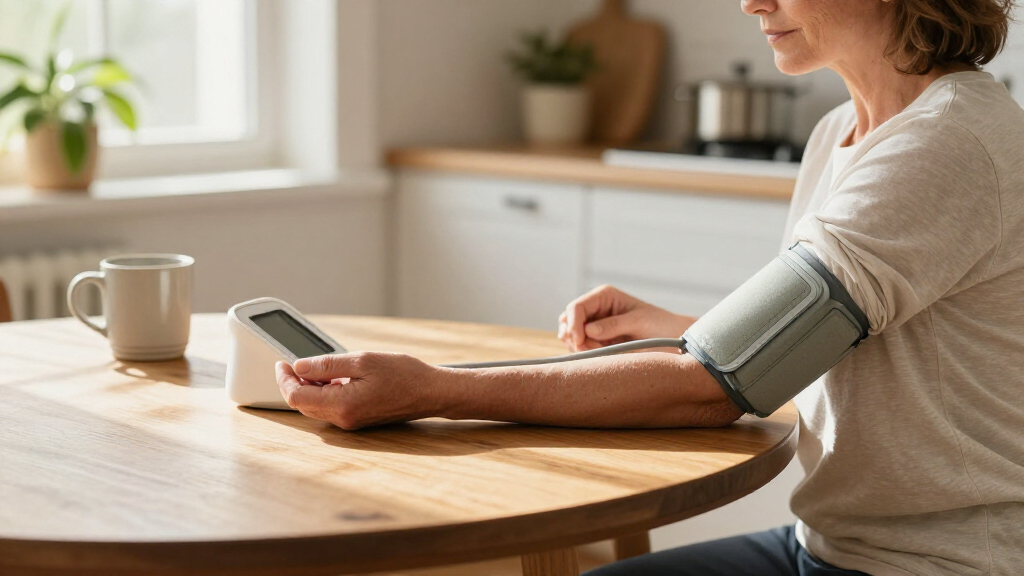
I compared these monitors on the factors that shape repeatable home use: upper-arm or wrist placement, cuff range, display legibility, control simplicity, stored readings, connectivity, power options and included storage. I gave more weight to a suitable cuff and an easy routine than to a long feature list, since a monitor that is hard to position or read can be difficult to use consistently. I also considered whether the design supports a specific need, such as portability, app-based tracking or a large display. The ranking puts balanced everyday usability first, then elevates models that solve a distinct buyer problem. That places the OMRON Silver ahead as the general-purpose pick, while the iHealth Track ranks highly for connected tracking and wide cuff fit. The OMRON Bronze and Iron appeal to buyers seeking simpler setups; rechargeable wrist and large-display models earn narrower roles because convenience in one area comes with positioning or feature tradeoffs. Product names alone do not establish clinical accuracy, so buyers should check validation information and follow their clinician’s advice when readings guide care.Factors to Consider When Choosing Digital Blood Pressure Monitors
The right monitor is the one that fits your arm and works with the way you take and share readings. These broader checks can help you avoid choosing by screen size or feature count alone.Choose a cuff that fits your measured arm
Measure around your upper arm where the cuff instructions specify, then compare that number with the monitor’s stated cuff range. A cuff that is too small or too large can affect readings, even when the monitor is easy to operate. Wide-range cuffs can suit more people, but the label does not tell you whether your own measurement falls within range. If upper-arm cuffs do not fit, ask a clinician about an appropriate alternative before switching to a wrist device. Do not assume that an adjustable cuff fits every arm.Match the monitor style to your routine
Upper-arm monitors are generally the more practical starting point for routine home tracking, while wrist models can be easier to pack or use when an upper-arm cuff is unsuitable. Wrist readings depend on holding the device at heart level, so positioning becomes part of the measurement routine. Think about where readings will happen: a dedicated table and chair favor an upper-arm setup, while frequent travel may make compact storage more appealing. Ask a clinician which style is appropriate if you have a medical or mobility reason to avoid an upper-arm cuff. Portability does not remove the need for consistent positioning.Decide how you will track readings
A built-in memory can be enough if you only need to review readings on the device or share a written log. App connectivity may help when you want a longer history or need to send records to a care team, but it adds phone setup and account steps. Before choosing a connected model, check whether its app works with your phone and whether more than one user can keep separate records. Also decide who will maintain the log: the person taking readings, a family member, or a clinician reviewing summaries. The simplest system you will use consistently can be more useful than extra data features.Prioritize a display you can read at a glance
Large numerals and backlighting can make readings easier to see, particularly in dim rooms or for people with limited vision. Check that the display shows the measurement labels clearly, since a prominent number is less useful if it is hard to tell which value it represents. A bright screen may require more battery power, while an adapter or rechargeable design changes how you manage charging. Consider where the monitor will sit and whether you can read it while seated in your usual position. If multiple people will use it, clear controls and memory selection may matter as much as screen size.Check validation, power and ongoing upkeep
Look for independent validation for the specific monitor model and cuff combination, and check with a health professional if readings will inform treatment decisions. Keep the cuff, tubing and monitor in good condition, and follow the manual’s cleaning and storage directions. Battery-powered models are easy to place anywhere but can leave you without power at an inconvenient moment; rechargeable models avoid disposable batteries but need charging. An included bag can protect a monitor in storage, though it does not replace careful handling. Keep the model instructions accessible so every user follows the same measurement steps.Frequently Asked Questions
Should I choose an upper-arm monitor or a wrist monitor?
For routine home use, an upper-arm monitor is usually the easier place to start because you do not have to hold your wrist at heart level during the reading. A wrist model such as the rechargeable Oklar can suit travel or a situation where an upper-arm cuff is difficult to use. Its convenience depends on careful positioning, so an inconsistent wrist angle can undermine the benefit. Ask your clinician which type is appropriate if you have a reason to avoid an upper-arm cuff. Whichever style you choose, use the same arm and follow the device instructions.How do I know whether a wide-range cuff will fit me?
Measure your arm and compare the result with the exact circumference range listed for the cuff. Terms such as adjustable or wide range do not establish that a cuff fits every person. The iHealth Track, Runstar and other wide-cuff models may cover broader measurements, but their listed ranges still need to include yours. If you are near the edge of a range, check with the manufacturer or a clinician before buying. A secure, correctly sized cuff is more useful than extra display or app features.Is Bluetooth or app tracking worth choosing?
App tracking can help when you need a history of readings that is easier to share than a screen or paper log. It adds setup, phone compatibility and sometimes separate user-profile steps, so it may be unnecessary if you only need occasional checks. The iHealth Track and Neo are the connected options in this group, with the Track also emphasizing a wide-range cuff. Decide in advance whether you or someone else will maintain the digital record. If app use feels like a barrier, choose a monitor with memory you can review directly.What should I do if my readings at home differ from a clinic reading?
First check that you are using the right cuff size and following the monitor’s positioning and timing instructions. Bring the device to a medical appointment and ask a clinician to compare its readings with the clinic equipment. A difference can reflect setup, timing or measurement conditions, so one isolated result should not drive a change to medication. Keep a record of readings as directed by your care team, including when they were taken. Ask a clinician how to respond to readings that concern you.Do I need multiple user profiles or stored readings?
Separate profiles help when two people share a monitor and want to avoid mixing their histories. If only one person uses it, a simple memory function or written log may be enough. Check how many readings the device stores and how easily you can tell which user or date each belongs to; memory capacity is only useful when records remain clear. App models can make longer histories easier to review, while basic models may take less setup. Follow any record-keeping instructions from your clinician.Conclusion
For most people building a home routine, I recommend the OMRON Silver as the best overall balance in this lineup. The best connected choice is the iHealth Track for buyers who want app-based records and a wide-range cuff; for best value in a simpler setup, compare the OMRON Bronze and straightforward upper-arm models by cuff fit and memory needs. Beginners may prefer the OMRON Bronze or Silver for a familiar upper-arm approach with fewer decisions than a connected system. For travel, the rechargeable Oklar wrist monitor is the compact pick, provided you can position it carefully; for easier reading, look at the Guaever’s large screen or Invaxe’s backlit display. Before choosing, confirm the cuff range and check whether the specific model is validated for your intended use.Fall Picks
fall essentials
As an affiliate, we earn on qualifying purchases.