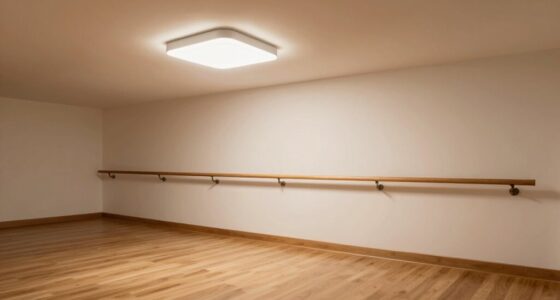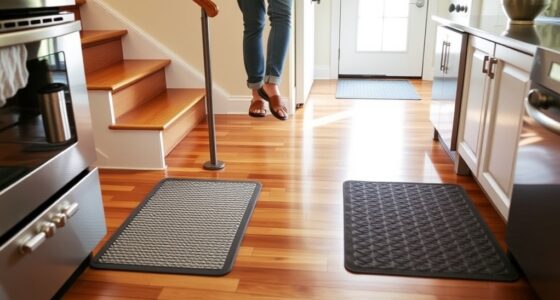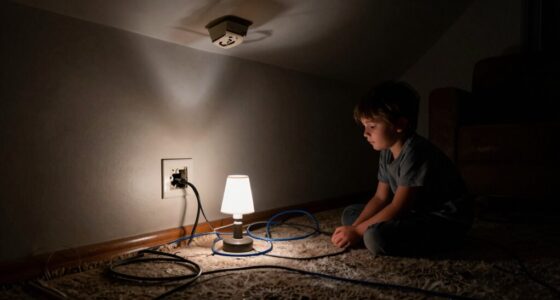
To stay safe on stairs and thresholds, make certain your lighting is bright and well-placed to improve visibility. Wear proper footwear with non-slip soles and good support to prevent slipping or tripping. Always pay attention to your surroundings, use handrails, and clear clutter from pathways. Regularly check your floors and stairs for hazards and fix issues promptly. Paying attention to these tips can greatly reduce your risk of falls—continue for more helpful safety strategies.

Get health and wellness essentials delivered free with Prime
- Fast, free delivery on millions of items
- Prime Video, Amazon Music and more included
- Member-only deals all year
Key Takeaways
- Ensure proper lighting in stairwells, hallways, and entryways to improve visibility and prevent trips.
- Wear shoes with non-slip soles and good ankle support when navigating stairs and uneven surfaces.
- Always use handrails, take your time, and avoid rushing on stairs or when crossing thresholds.
- Keep stairs, walkways, and thresholds clear of clutter, loose rugs, or debris to prevent tripping hazards.
- Regularly inspect and maintain flooring to fix uneven surfaces, secure carpets, and address moisture issues.
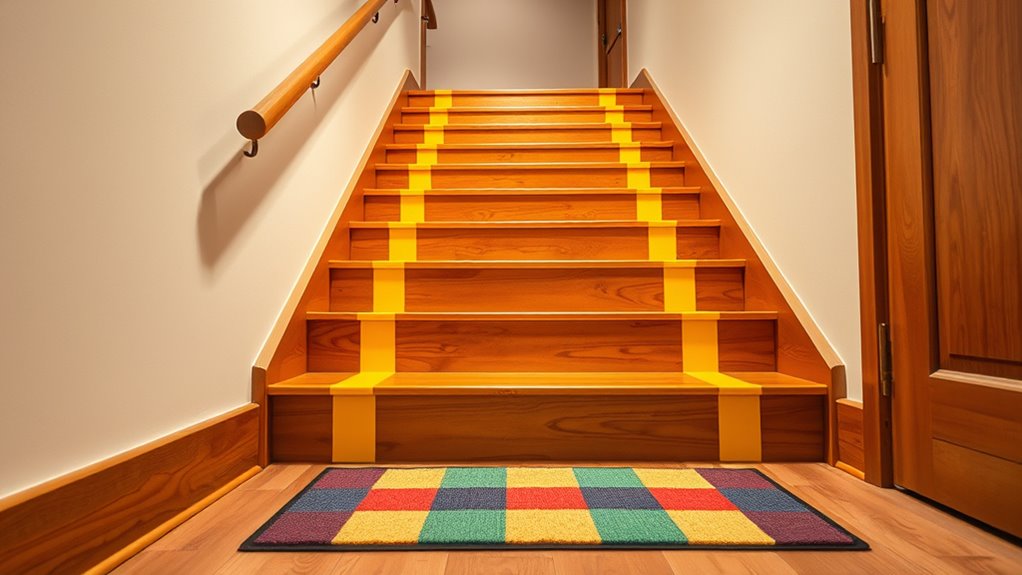
Trips, falls on stairs, and missteps at thresholds are common accidents that can cause serious injuries. These hazards are often preventable if you pay close attention to your environment and take simple precautions. One of the biggest factors contributing to these accidents is poor lighting. Insufficient lighting can make it difficult to see steps, uneven surfaces, or obstacles, increasing your risk of tripping. To reduce this danger, ensure that stairwells, hallways, and entryways are well-lit. Use bright, energy-efficient bulbs and consider installing motion-sensor lighting in areas that aren’t used frequently. Proper illumination helps you see where you’re going and highlights any potential hazards, especially at night or in low-light conditions.
Good lighting prevents trips and falls by illuminating hazards on stairs and thresholds effectively.
Footwear also plays a vital role in preventing trips and falls. Wearing the right shoes can provide better grip and stability, especially on stairs or uneven surfaces. Avoid shoes with slick soles, high heels, or loose-fitting footwear that can cause you to stumble. Instead, opt for shoes with sturdy, non-slip soles and good ankle support. When moving through stairs or thresholds, your footwear should help you maintain balance and prevent slips. If you’re aware of potential hazards like loose rugs or uneven pavement, choose footwear that offers extra traction, and always double-check your shoes before heading out. Proper footwear recommendations are especially important if you’re elderly or have mobility issues, as they markedly reduce the likelihood of accidents.
Beyond lighting and footwear, paying attention to your surroundings is key. Always look where you’re stepping, especially at thresholds where uneven surfaces or changes in flooring can catch you off guard. Take your time when ascending or descending stairs, and use handrails whenever possible. Keep stairs clear of clutter and ensure that carpets or rugs are securely fastened to prevent tripping hazards. At thresholds, make sure there are no objects or debris that could cause you to stumble. If you’re carrying items, be cautious and avoid overloading yourself, which can impair your balance. Additionally, waterproofing and maintenance of your flooring can significantly reduce slipping hazards, especially in areas prone to moisture.
Making small adjustments in your environment and habits can make a meaningful difference in preventing trips and falls. Good lighting, appropriate footwear, and mindful walking are simple yet effective strategies. Staying alert and taking your time ensures you navigate stairs and thresholds safely, reducing the risk of injuries. Remember, most accidents are preventable when you pay attention to these details and take proactive steps to create a safer living or working space.
As an affiliate, we earn on qualifying purchases.
Frequently Asked Questions
How Can I Identify Hidden Hazards on Stairs and Thresholds?
You can identify hidden hazards on stairs and thresholds by performing visual hazard identification regularly. Look for signs of wear, loose handrails, or uneven steps that might not be obvious at first glance. Additionally, assess the structural integrity of the stairs and thresholds, checking for cracks or wobbling that could pose risks. Staying vigilant and maintaining these areas helps prevent accidents caused by unseen hazards.
Are There Specific Footwear Recommendations for Stair Safety?
You should wear sturdy footwear with non-slip shoes to improve stair safety. These shoes provide better grip and stability, reducing your risk of slipping or falling. Avoid heels or shoes with worn-out soles, which can compromise your footing. Always choose footwear that fits well and offers good traction. Wearing the right shoes helps you stay balanced and safe when orchestrating stairs and thresholds, preventing potential accidents.
How Often Should Stair and Threshold Lighting Be Maintained?
You should perform lighting maintenance and safety inspections regularly, ideally every three to six months. This guarantees that stair and threshold lighting remains bright and functional, reducing the risk of trips and falls. Keep an eye out for flickering bulbs, damaged fixtures, or any dirt that might dim the light. Consistent maintenance helps you identify issues early, maintaining a safe environment and preventing accidents before they happen.
What Are the Best Materials for Slip-Resistant Stair Surfaces?
Ever wondered what makes stairs safer? You should choose non-slip coatings or textured surfaces for stair treads. These materials provide better grip, especially in wet or icy conditions. Rubber, abrasive treads, and textured vinyl are excellent options because they increase traction and reduce slipping hazards. By selecting these slip-resistant materials, you enhance safety, giving you peace of mind and reducing the risk of accidents on stairs.
How Can I Modify My Home for Elderly or Disabled Safety?
To improve home accessibility for the elderly or disabled, you should install grab bars in key areas like bathrooms and hallways. Consider widening doorways and removing rugs or clutter to prevent falls. Adding ramps instead of stairs can make entrances more accessible. Make certain lighting is bright and even, and consider non-slip flooring. These modifications create a safer environment, promoting independence and reducing fall risks.
As an affiliate, we earn on qualifying purchases.
Conclusion
Stay alert as you navigate your daily steps—those small moments can hide unexpected dangers. A simple trip or misstep might seem minor, but it could lead to unexpected injuries or surprises. Keep your environment safe and pay attention to every detail. Remember, the true safety isn’t just about avoiding falls; it’s about being prepared for what might happen when you least expect it. Are you ready to take control and stay one step ahead?
As an affiliate, we earn on qualifying purchases.
As an affiliate, we earn on qualifying purchases.
Halloween Picks
halloween
As an affiliate, we earn on qualifying purchases.