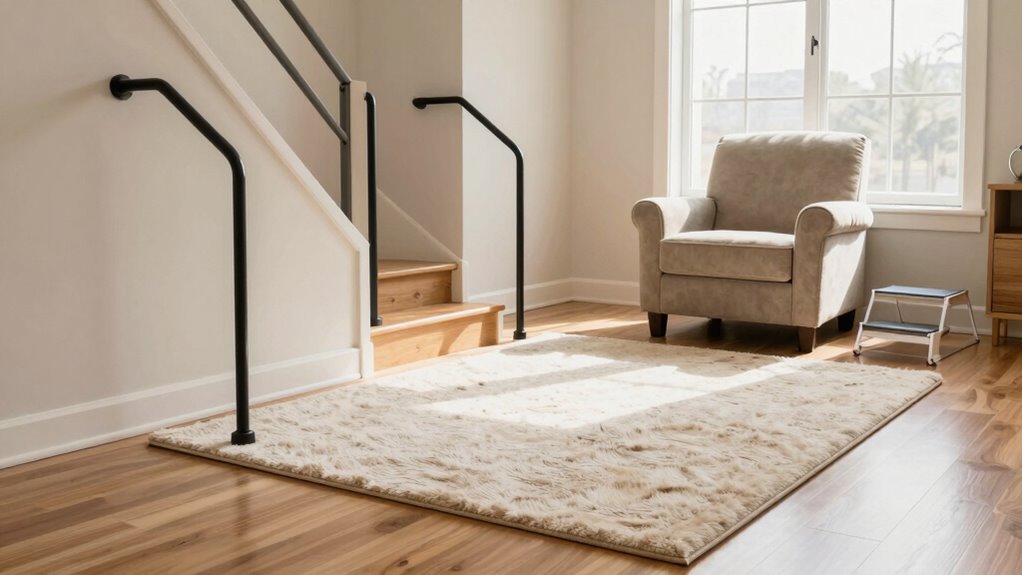

To prevent repeat falls at home, you should regularly assess and fix hazards, like loose rugs or clutter. Install sturdy handrails, grab bars, and good lighting to boost safety. Manage your medications carefully to avoid side effects that cause dizziness. Keep your personal health, including nail care, in check to prevent injuries. Developing these habits helps create a safer environment, and discovering more strategies can further protect your well-being.

Get health and wellness essentials delivered free with Prime
- Fast, free delivery on millions of items
- Prime Video, Amazon Music and more included
- Member-only deals all year
Key Takeaways
- Regularly assess and remove environmental hazards to prevent tripping and falling.
- Use and maintain assistive devices like handrails, grab bars, and walkers consistently.
- Ensure proper lighting throughout the home to improve visibility and reduce accidents.
- Manage medications carefully to avoid side effects like dizziness or drowsiness that increase fall risk.
- Develop and stick to daily routines for personal health, including nail care and regular safety checks.

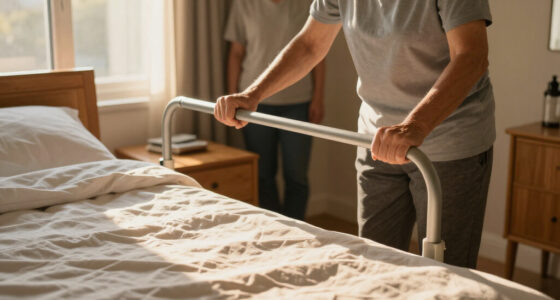
Falls at home can be be a serious hazard, especially if you’ve already experienced one. Once you’ve taken the first step toward prevention, you need to build habits that keep you safe and reduce the risk of falling again. One of the most effective ways to do this is by using assistive devices. These tools, like handrails, grab bars, and walkers, are designed to provide extra support where you need it most. Installing grab bars in your bathroom, particularly near the shower and toilet, can give you stability when you’re most vulnerable. Likewise, a sturdy handrail along staircases helps you maintain balance with every step. Using assistive devices consistently transforms your environment into a safer space, giving you confidence and reducing the chance of slipping or losing your footing.
Along with environmental changes, managing your medications carefully is essential. Many medications can cause dizziness, drowsiness, or lowered blood pressure, all of which increase fall risk. Establishing a routine for medication management guarantees you take the right doses at the right times. Regularly reviewing your medications with your healthcare provider can help identify any drugs that might contribute to balance issues. Never adjust or stop medications without medical advice. Keeping a medication schedule and using pill organizers can prevent missed doses or accidental overdoses that might lead to adverse effects. When you’re aware of how your medications affect you, you can work with your doctor to make adjustments that minimize side effects and improve your overall safety. Additionally, understanding nail biology and care can prevent issues like brittle or damaged nails that might cause discomfort or injury, especially if you need to use assistive devices or balance on your feet more carefully. Being mindful of your living space organization and how it impacts mobility can further help in avoiding hazards. Regularly inspecting your environment for home safety assessments can also identify other potential risks before they cause harm. Incorporating preventative measures into your routine ensures ongoing safety and reduces the chance of future falls.
Furthermore, paying attention to lighting conditions and ensuring they are adequate can significantly decrease the risk of accidents, as poor lighting is a common cause of falls.
As an affiliate, we earn on qualifying purchases.
Frequently Asked Questions
How Can I Improve Lighting to Reduce Fall Risks?
You can improve lighting by making lighting upgrades throughout your home, especially in tricky areas like stairs and hallways. Use brighter bulbs with higher lumen output to increase visibility, and consider installing motion sensors or dimmer switches for better control. Ensuring all spaces are well-lit reduces shadows and dark spots, helping you see hazards clearly. Regularly check and replace bulbs to maintain peak brightness, lowering your risk of falls.
Are There Specific Exercises to Strengthen Balance at Home?
You can improve your balance at home by doing specific strengthening exercises and balance routines regularly. Try simple activities like standing on one leg, heel-to-toe walks, or gentle yoga poses to enhance stability. Incorporate these exercises into your daily routine, gradually increasing difficulty as your balance improves. Consistent practice helps strengthen muscles that support your stability, reducing fall risks and keeping you safer around your home.
How Often Should Safety Equipment Be Checked or Replaced?
You should routinely tend to your safety gear, ensuring it’s in tip-top shape. Follow a consistent maintenance schedule—at least every few months or after any impact—to check for wear and tear. Replace items promptly when they show signs of aging or damage. This proactive approach keeps your home secure, like a vigilant guardian, reducing the risk of falls and offering peace of mind every day.
What Are Common Hidden Hazards in the Bathroom?
You should watch out for hidden hazards like bathroom clutter, which can cause trips, and slippery surfaces that increase fall risk. Always keep the bathroom tidy, removing unnecessary items from walkways. Use non-slip mats in the shower and near the sink, and clean up spills immediately. Regularly check for loose tiles or loose grab bars, ensuring everything is secure and safe. These habits help prevent accidental falls in your bathroom.
How Can I Encourage Elderly Family Members to Stay Safe?
Encouraging your elderly family members to stay safe is like tending a delicate garden—you need patience and care. Talk openly about safety, emphasizing how it supports their independence. Encourage mental health and social engagement, which boost confidence and reduce isolation. Offer help with home modifications and regular check-ins. By showing your support, you create a safe space where they feel empowered to prioritize their well-being confidently.
As an affiliate, we earn on qualifying purchases.
Conclusion
By adopting these habits, you’re planting sturdy roots that keep you steady and safe at home. Each small step, like clearing clutter or installing grab bars, acts as a sturdy anchor against the storm of falls. Remember, prevention isn’t a one-time act but a continuous dance—like a well-choreographed routine that keeps you balanced and confident. Keep these habits close, and you’ll build a fortress of safety, turning your home into a sanctuary where falls are just a distant echo.
As an affiliate, we earn on qualifying purchases.
medication organizer with daily compartments
As an affiliate, we earn on qualifying purchases.
As an affiliate, we earn on qualifying purchases.
Cold & flu season Picks
humidifiers
As an affiliate, we earn on qualifying purchases.