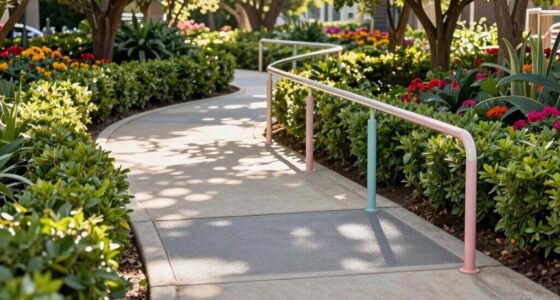
To make bathrooms, hallways, and bedrooms safer fast, start by installing grab bars near toilets, showers, and bathtubs to prevent falls. Secure loose rugs or use slip-proof mats to reduce tripping hazards. Keep walkways clear of clutter and add nightlights for better visibility at night. Maintain a clean, organized space and check safety devices like smoke detectors regularly. Continuing on will show you more quick tips to enhance your home safety effectively.

Get health and wellness essentials delivered free — and shop member deals
- Fast, free delivery on millions of items
- Access to Prime Big Deal Days deals on October 6–7
- Prime Video, Amazon Music and more included
Key Takeaways
- Install slip-proof mats and grab bars in bathrooms to prevent falls and provide support.
- Keep pathways clear of clutter, cords, and obstacles for unobstructed escape routes.
- Use nightlights in hallways and bedrooms to improve visibility at night.
- Ensure windows and doors are easily accessible and can be opened quickly in emergencies.
- Regularly check and maintain smoke detectors and fire extinguishers in all areas.
Have you ever considered how small safety improvements in your home can prevent accidents in bathrooms, hallways, and bedrooms? Making quick adjustments can considerably reduce risks and keep everyone safe. One essential step is focusing on fire prevention. Install smoke detectors in all key areas, including bedrooms, hallways, and near bathrooms where electrical appliances are often used. Test these detectors monthly and change the batteries twice a year. Keep fire extinguishers accessible in the kitchen, hallways, and near exits, and make sure you know how to use them. Avoid clutter that could block escape routes during a fire, and never leave candles unattended or overload electrical outlets. These simple measures create a safer environment and give you peace of mind. Regularly checking home safety features can help identify potential hazards before emergencies occur. Additionally, understanding home safety statistics can motivate you to implement crucial safety measures and stay alert to common household risks. Proper wiring practices are also essential, as poor electrical wiring can lead to heat buildup and electrical fires, especially in areas with high moisture levels like bathrooms.
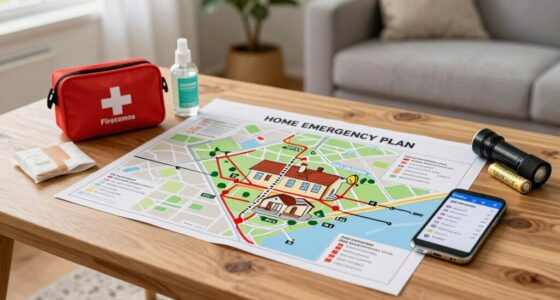
Emergency exits are another important aspect of home safety. In every room, guarantee there’s a clear, unobstructed path to an emergency exit or safe area. You should have at least two ways out of each room if possible, especially in bedrooms and hallways. Keep these exits free of toys, furniture, or other obstacles. Mark them clearly if they aren’t obvious, and practice emergency evacuation plans with everyone in your household regularly. Knowing exactly how to get out quickly can make all the difference in a real emergency. Also, consider installing window bars or security grilles that can be easily opened from the inside, so they don’t block escape routes during a fire or other crisis.
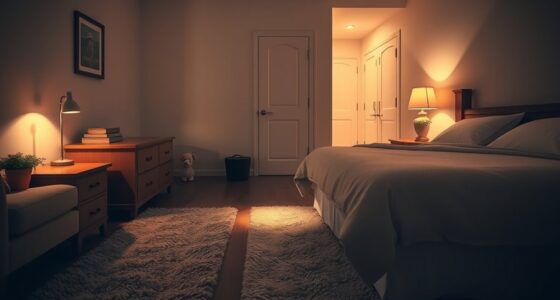
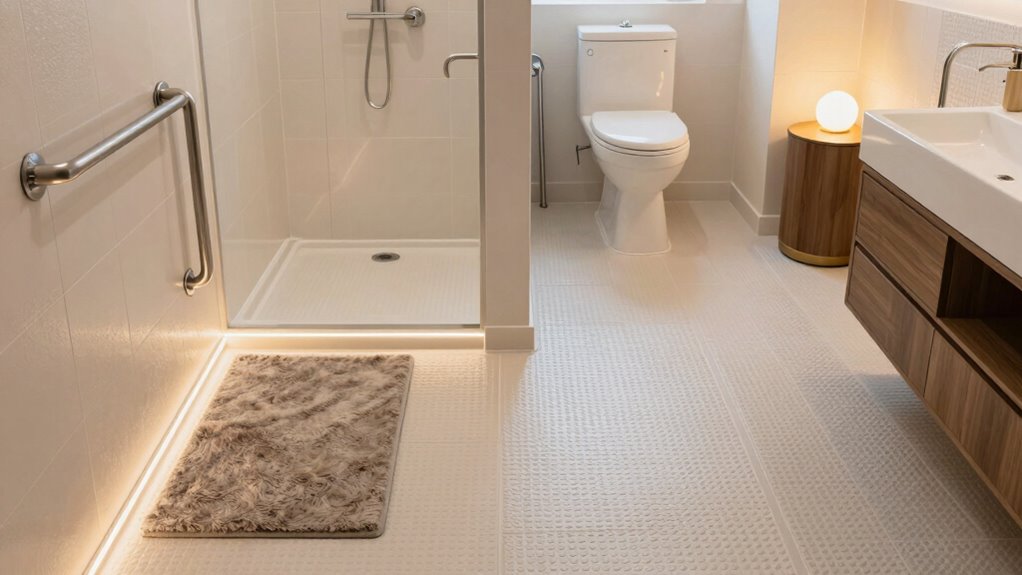
In bathrooms and bedrooms, slip-proof mats are a quick fix to prevent falls, especially on tile floors or in wet areas. Install grab bars near the toilet and in the shower or bathtub to provide support. Use nightlights in hallways and bedrooms to improve visibility at night, reducing the risk of trips and falls. Keep floors tidy and free of loose rugs that can cause tripping hazards. For bedrooms, especially those used by children or elderly individuals, ensure that furniture is sturdy and positioned to prevent accidents. When it comes to electrical safety, unplug appliances when not in use, and avoid running cords under rugs or across walkways.
As an affiliate, we earn on qualifying purchases.
Frequently Asked Questions
How Often Should Safety Checks Be Performed in These Areas?
You should perform safety checks in bathrooms, hallways, and bedrooms at least once a month. During these checks, guarantee emergency preparedness by inspecting safety equipment like smoke detectors, carbon monoxide alarms, and fire extinguishers. Look for hazards such as loose rugs or clutter. Regular inspections help catch potential dangers early, keeping your space safe and ensuring safety equipment functions properly when needed.
What Are Budget-Friendly Safety Improvement Options?
You can improve safety on a budget by upgrading lighting to brighten dark areas, reducing fall risks. Consider installing brighter bulbs or motion-activated lights in bathrooms, hallways, and bedrooms. Rearrange furniture to eliminate tripping hazards, keeping pathways clear. Use affordable non-slip mats and grab bars where necessary. These simple steps make your spaces safer without breaking the bank, making it easier to prevent accidents quickly and effectively.
Are There Specific Safety Tips for Children or Elderly?
You should child-proof every inch of your home and equip it with elderly assistive devices—think of it as turning your space into a fortress of safety! Use outlet covers, cabinet locks, and corner protectors for children, while grab bars, non-slip mats, and raised toilet seats help your elderly loved ones. These simple, budget-friendly child proofing measures and assistive devices can dramatically reduce accidents and keep everyone safe.
How Do I Choose the Best Non-Slip Flooring?
To choose the best non-slip flooring, look for options with textured surfaces that provide grip, especially in high-moisture areas like bathrooms. You should also consider flooring with anti-slip coatings, which add an extra layer of safety. Test the surface’s traction and durability, ensuring it’s suitable for your space. Opt for materials like textured tiles or vinyl with anti-slip properties to reduce the risk of slips and falls.
Can DIY Safety Modifications Be Effective Long-Term?
DIY safety modifications can be effective long-term if you focus on aesthetic enhancements and smart technology. Installing non-slip rugs and grab bars not only improves safety but also enhances your space’s look. Using smart tech like motion-activated lighting and sensor alarms helps prevent accidents and keeps your home secure. Regular maintenance and updates guarantee these modifications remain effective over time, allowing you to enjoy a safer, more stylish environment without ongoing professional intervention.
As an affiliate, we earn on qualifying purchases.
Conclusion
Making your bathrooms, hallways, and bedrooms safer doesn’t have to take forever. Simple changes, like adding non-slip mats or securing loose rugs, can greatly reduce accidents. Did you know falls in the home are the leading cause of injury among older adults? By taking quick steps now, you can protect yourself and loved ones from preventable harm. Safety is just a few smart adjustments away—start today and enjoy peace of mind tomorrow.
As an affiliate, we earn on qualifying purchases.
As an affiliate, we earn on qualifying purchases.
Cold & flu season Picks
humidifiers
As an affiliate, we earn on qualifying purchases.