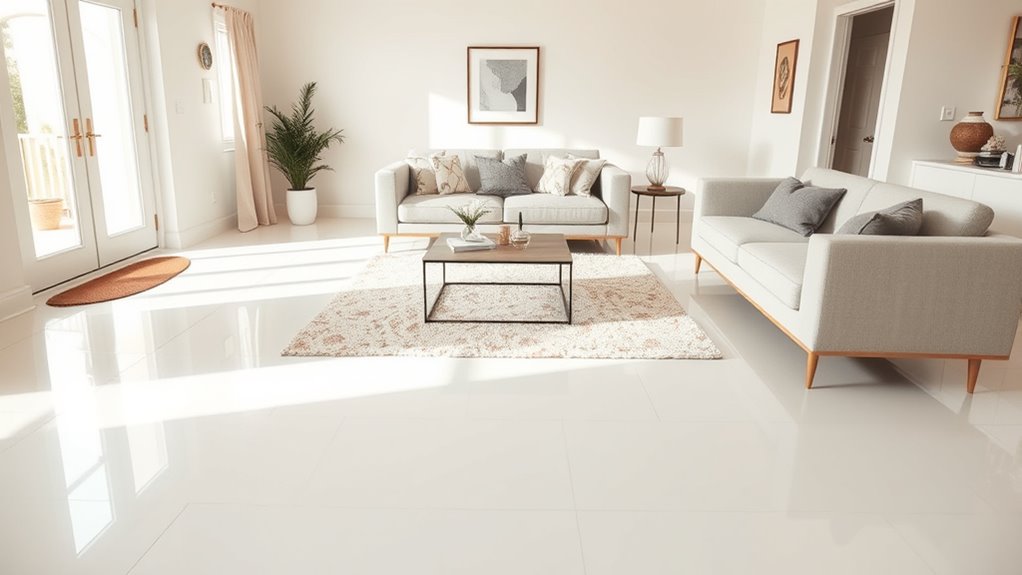

To avoid clutter and trip hazards in your living space, keep items organized using baskets, shelves, and clear containers. Regularly tidy up and put things back in their designated spots. Improve lighting to make obstacles more visible, and guarantee pathways are clear of cords and stacked objects. Regular maintenance, like fixing uneven flooring or replacing flickering bulbs, also helps prevent accidents. Continuing to explore these strategies can help you create a safer, more accessible home environment.
Key Takeaways
- Implement organized storage solutions like bins and shelves to keep items off floors and prevent clutter buildup.
- Improve lighting with brighter bulbs and task lighting to enhance visibility of obstacles and hazards.
- Regularly declutter and reassess spaces to eliminate unnecessary items and maintain a hazard-free environment.
- Secure cords and cables out of walkways to reduce trip risks and ensure clear pathways.
- Maintain ongoing safety practices, such as fixing uneven flooring and removing obstacles promptly.
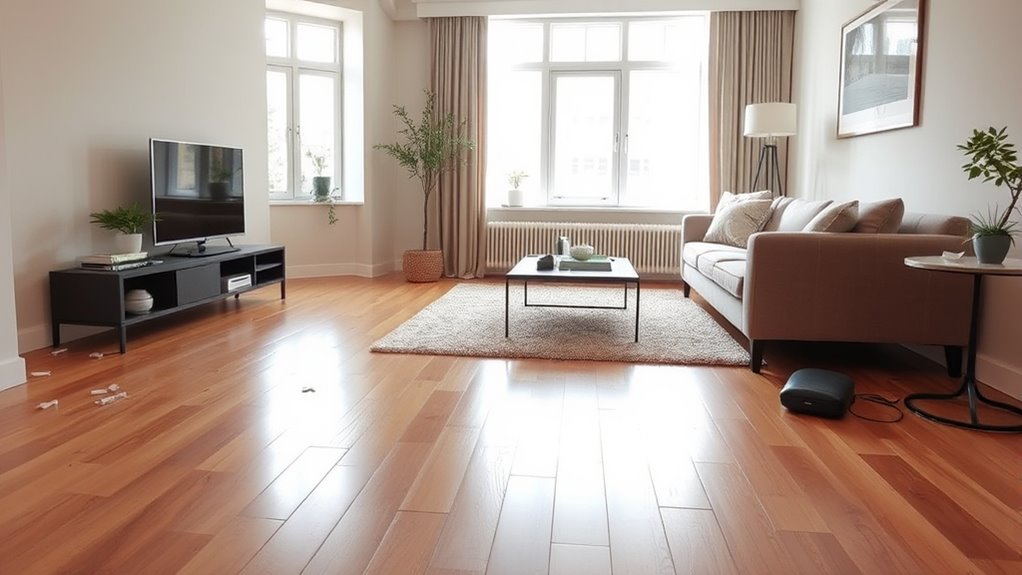
Clutter and trip hazards can quickly turn your home or workspace into a dangerous environment if you’re not careful. The key to maintaining a safe and organized space lies in implementing effective storage solutions and improving lighting. When clutter accumulates, it becomes easier to trip over loose items, misplaced objects, or furniture that’s not properly arranged. Taking proactive steps to organize your belongings not only makes your space look neater but also reduces the risk of accidents. Utilizing storage solutions such as baskets, bins, shelves, and multi-purpose furniture helps keep items off the floor and out of walkways. You can assign specific places for everything, making it easier to find what you need without creating clutter in the process. Clear storage containers, in particular, enable you to see contents at a glance, preventing unnecessary rummaging that can lead to accidents. Regular assessment and rotation of stored items can also help prevent accumulation of unnecessary clutter and keep pathways clear.
Lighting improvements play a fundamental role in avoiding trip hazards. Dimly lit areas make it difficult to see obstacles, cords, or uneven flooring, especially during nighttime or in poorly lit rooms. Installing brighter bulbs, adding task lighting, or using motion-activated fixtures can considerably enhance visibility. Well-lit spaces allow you to notice and navigate around potential hazards before they cause trouble. Keep pathways and stairwells illuminated, and consider adding nightlights in hallways or bathrooms to prevent trips during late hours. Proper lighting also highlights clutter, motivating you to tidy up and keep walkways clear. When combined with effective storage solutions, lighting ensures that everything is visible and accessible, reducing the likelihood of tripping over hidden hazards. Staying aware of hazardous conditions and addressing them promptly is also crucial in maintaining a safe environment.
Regular maintenance and organization are essential to sustain a clutter-free and hazard-free environment. Set aside time each week to declutter, reorganize, and check lighting fixtures. Addressing small issues early, such as replacing flickering bulbs or fixing uneven flooring, prevents them from becoming larger safety concerns. Remember, the goal isn’t just to create a visually appealing space but to make it safer for everyone. Be mindful of cords and cables, ensuring they’re secured and out of walkways, and avoid stacking items in pathways that could fall or cause stumbles. Combining strategic storage solutions with thoughtful lighting improvements makes your living or working space safer, more functional, and more inviting. Staying proactive about these habits will help you maintain a clutter-free environment where trip hazards are minimized, and safety is prioritized.
Frequently Asked Questions
How Often Should I Declutter My Living Space?
You should declutter your living space at least once every three to six months, depending on your household activity. Incorporate seasonal organization to stay on top of clutter, especially after holidays or major events. Regular decluttering helps prevent trip hazards and keeps your space tidy. By maintaining this routine, you’ll create a safer, more organized environment and reduce the risk of accidents caused by clutter buildup.
What Are the Best Storage Solutions for Small Areas?
If space feels tight, opt for multi-functional furniture like ottomans with hidden storage or fold-away beds. Vertical storage solutions, such as wall-mounted shelves and hanging organizers, maximize your wall space and keep clutter off the floor. These options help you create more room, making your small area feel spacious and safe. Using these smart storage ideas, you’ll reduce trip hazards and enjoy a tidy, functional living space.
How Can I Identify Hidden Trip Hazards?
You can identify hidden hazards by closely inspecting your living space for visual cues like uneven flooring, loose rugs, or cords running across walkways. Pay attention to areas with poor lighting or clutter that may obscure hazards. Regularly walk through your space, looking for anything that could cause a trip, and remove or secure these hidden hazards to keep your environment safe and accident-free.
Are There Safety Tips for Elderly or Disabled Individuals?
Did you know that falls are the leading cause of injury among seniors? To keep them safe, consider home modifications like installing grab bars and better lighting. Assistive technology, such as stairlifts or sensor alerts, can also help prevent accidents. Keep walkways clear and secure rugs. These simple steps create a safer environment, reducing trip hazards and giving elderly or disabled individuals more independence and peace of mind in their homes.
What Cleaning Routines Help Prevent Clutter Buildup?
You can prevent clutter buildup by establishing regular cleaning schedules, such as daily tidying and weekly deep cleans. Use organizing techniques like designated storage bins and clear surfaces to keep items in order. Consistently following your routines helps you maintain a clutter-free space, reducing trip hazards. Set reminders to stick to your cleaning schedule, and involve family members to share responsibilities, ensuring your living area stays safe and organized.
Conclusion
By keeping your living space tidy, you create a safe, inviting haven where clutter no longer lurks like shadows and trip hazards vanish like morning mist. Imagine walking barefoot on a smooth, clear floor, feeling relaxed and secure with every step. Your home becomes a sanctuary of peace, free from chaos and danger. Take a moment to tidy up today—your safety and comfort are worth it, transforming your space into a true refuge you can trust.