
To make oral care easier for seniors with limited mobility, choose ergonomic tools like toothbrushes with larger, non-slip handles and electric options for easy control. Keep supplies organized and within reach, using mirrors or proper lighting to improve visibility. Incorporate adaptive devices such as suction cups or enlarged handles for dentures and brushes. Developing a simple, consistent routine helps maintain hygiene without stress. Continue exploring practical tips to support comfortable, effective oral care.

Get health and wellness essentials delivered free with Prime
- Fast, free delivery on millions of items
- Prime Video, Amazon Music and more included
- Member-only deals all year
Key Takeaways
- Use toothbrushes with larger, non-slip handles or ergonomic grips to improve control and reduce strain.
- Incorporate electric toothbrushes and denture cleaners to minimize manual effort during oral care.
- Organize dental supplies at eye level and within easy reach to streamline routine and reduce bending or stretching.
- Utilize adaptive tools like suction cup holders and gentle lighting for better visibility and stability.
- Establish a consistent, gentle cleaning routine with visual aids to promote effective and stress-free oral hygiene.
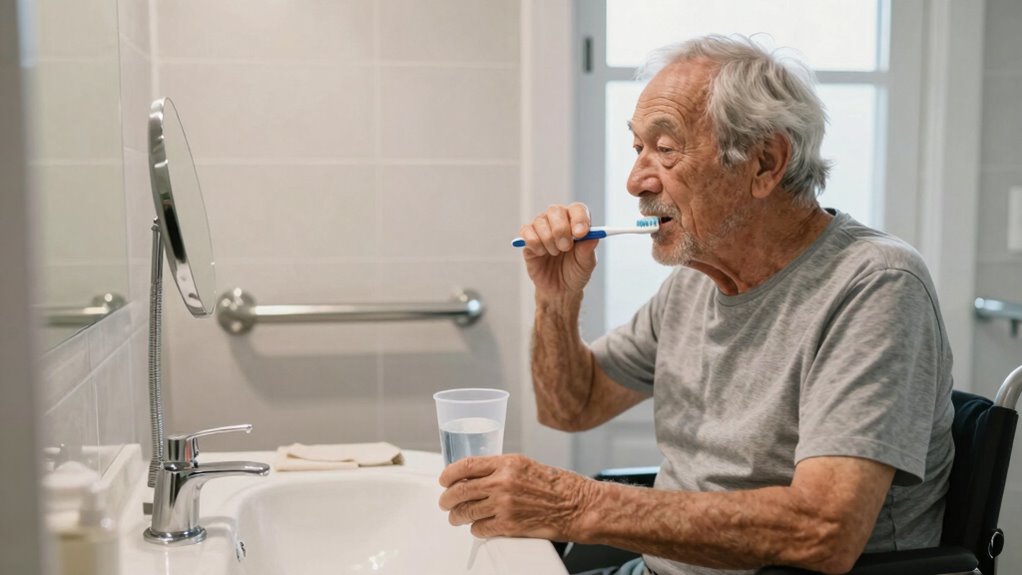
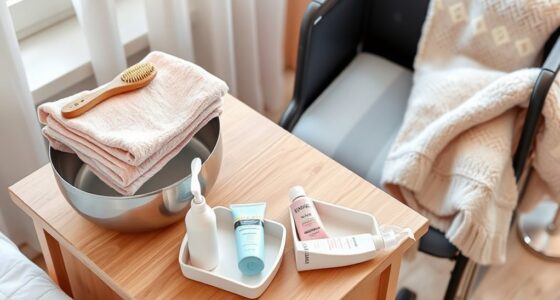
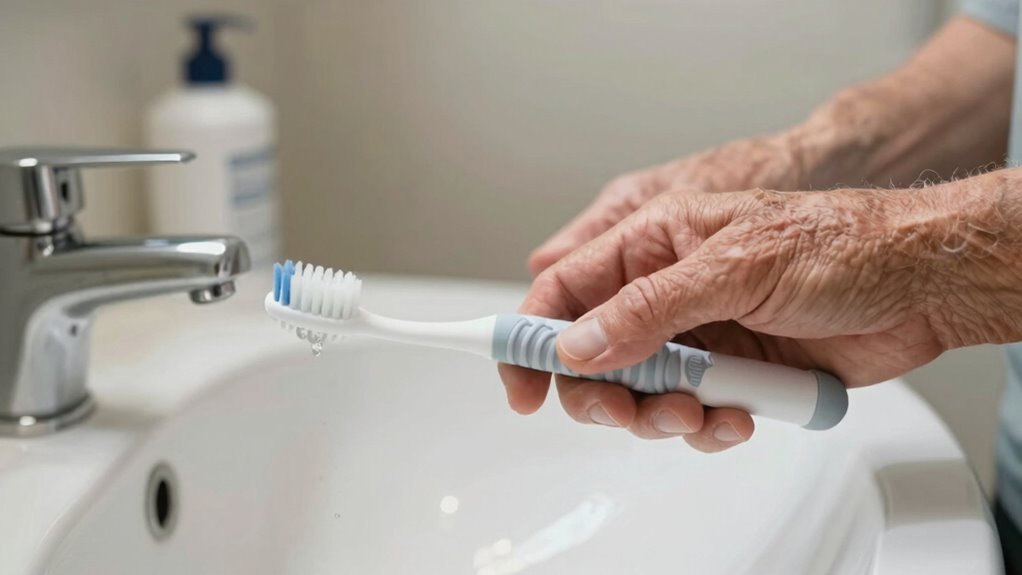
As we age, maintaining good oral health becomes increasingly vital, yet it often gets overlooked. If you or a loved one have limited mobility, brushing teeth and caring for dentures can feel overwhelming. But with a few adjustments, you can make daily oral care easier and more effective. One key area to focus on is toothbrush ergonomics. Traditional toothbrushes can be difficult to grip tightly or maneuver, especially if you have arthritis or tremors. Look for toothbrushes with larger, non-slip handles or consider electric toothbrushes with ergonomic grips. These tools reduce the effort needed to clean your teeth thoroughly and give you better control. Choosing a toothbrush with soft bristles can also prevent gum irritation, making the process more comfortable. When it comes to denture maintenance, convenience is essential. Dentures require regular cleaning to prevent infections and maintain their fit. If handling denture brushes feels challenging, opt for electric denture cleaners or denture cleaning tablets that simplify the process. These methods eliminate the need for scrubbing and make it easier to keep your dentures clean without excessive effort. Additionally, setting up a consistent routine helps you stay on track. Keep your denture cleaning supplies within easy reach to avoid unnecessary stretching or bending. Using a mirror at eye level can assist in inspecting your dentures for any buildup or damage, making maintenance more straightforward. For those with limited hand strength, consider tools like denture brushes with enlarged handles or suction cups that help stabilize the dentures during cleaning. It’s also helpful to develop habits that reduce strain, such as soaking dentures overnight in cleaning solution, which minimizes the need for vigorous scrubbing. When brushing your natural teeth, a gentle, circular motion is best, and an electric toothbrush can do much of the work for you. Remember to replace your toothbrush or brush head regularly—every three months or sooner if bristles fray—to guarantee effective cleaning. Keeping dental supplies organized and accessible removes barriers to daily care. Overall, small adjustments—like choosing the right tools, creating a routine, and arranging supplies thoughtfully—can dramatically improve your oral health routine. Making these changes empowers you to maintain your oral hygiene with less frustration and effort. Regular oral care not only protects your teeth and gums but also contributes to your overall health and comfort. By prioritizing ergonomics and denture maintenance, you guarantee that your smile stays healthy and bright, even as mobility challenges increase. Incorporating proper lighting and visual aids can further enhance your ability to perform effective oral care. Additionally, exploring natural or eco-friendly products may help reduce chemical exposure and support sustainable practices in your routine. Moreover, understanding regional cultural influences can motivate you to incorporate traditional or locally preferred products into your daily routine for added comfort and familiarity. Being aware of adaptive tools and techniques can also open up new ways to make oral care more manageable. And utilizing portable power solutions can ensure your electric toothbrushes and other devices stay charged, especially when access to electrical outlets is limited.
ergonomic toothbrush with large non-slip handle
As an affiliate, we earn on qualifying purchases.
As an affiliate, we earn on qualifying purchases.
Frequently Asked Questions
How Often Should Seniors Replace Their Toothbrushes?
You should replace your toothbrush every three to four months, as toothbrush durability decreases over time. Regular replacement helps maintain effective cleaning and prevents bacteria buildup. Keep an eye on the bristles—if they become frayed or splayed, it’s time for a new one. Consistent replacement frequency guarantees your oral care remains ideal, especially if mobility issues make thorough brushing more challenging. Don’t wait too long to switch out your toothbrush for better dental health.
Are Electric Toothbrushes Suitable for Seniors With Limited Mobility?
Electric toothbrushes are quite suitable for seniors with limited mobility, offering a gentle, effective clean that reduces strain. As senior oral hygiene tools, they simplify brushing, making it easier to maintain good oral health. With easy-to-hold handles and automatic cleaning motions, electric toothbrushes help seniors stay consistent, even if their dexterity is limited. Investing in one can boost confidence in daily oral care and support overall well-being.
What Are Alternative Oral Cleaning Tools for Those With Severe Arthritis?
For seniors with severe arthritis, adaptive handles make brushing easier by providing a better grip. You can also try gentle flossing tools with wider, textured handles to reduce strain. Electric flossers with ergonomic designs are helpful too. These tools support easier oral hygiene routines, ensuring thorough cleaning without causing discomfort. Using adaptive handles and gentle flossing methods helps maintain oral health when manual dexterity is limited.
How Can Caregivers Assist With Brushing Without Causing Discomfort?
You can assist with brushing by choosing a toothbrush with good ergonomics, making it easier for your loved one to hold. Use gentle brushing techniques, applying light pressure to avoid discomfort. Position yourself to support their movements without forcing or causing pain. Encourage a calm, steady routine, and be patient. Your supportive presence and attention to their comfort guarantee effective oral care while respecting their limits.
Are There Specific Mouthwashes Recommended for Seniors With Mobility Issues?
You might think all mouthwashes are equal, but some contain harsh ingredients that aren’t ideal for seniors with mobility issues. Look for alcohol-free options with gentle, natural ingredients like aloe or chamomile. Remember, oral hygiene myths often suggest rinsing with any mouthwash is enough—yet, a proper, gentle rinse tailored for seniors guarantees healthier teeth and gums. Always check labels and consult dental professionals for the best choice.
As an affiliate, we earn on qualifying purchases.
Conclusion
Incorporating these simple tips can make oral care less intimidating for seniors with limited mobility. Remember, even small adjustments—like using a toothbrush with a larger grip or an electric toothbrush—can make a big difference. Some might worry it takes extra time, but with patience and the right tools, you’ll find it becomes quicker and easier. Ultimately, maintaining good oral hygiene is essential for overall health, and your efforts guarantee your loved ones stay comfortable and confident.
As an affiliate, we earn on qualifying purchases.
denture brush with enlarged handle
As an affiliate, we earn on qualifying purchases.
As an affiliate, we earn on qualifying purchases.
Halloween Picks
halloween
As an affiliate, we earn on qualifying purchases.