
After an illness or hospital stay, you should practice thorough hand hygiene by washing with soap and water often, especially after touching surfaces or objects. Keep your skin clean and dry by bathing regularly with gentle soap, focusing on moist areas. Disinfect frequently touched surfaces and wash clothes, bedding, and towels in hot water. Maintain good ventilation and avoid sharing personal items. These habits help prevent reinfection and support your recovery—continue for more tips to stay protected.

Get health and wellness essentials delivered free with Prime
- Fast, free delivery on millions of items
- Prime Video, Amazon Music and more included
- Member-only deals all year
Key Takeaways
- Practice thorough handwashing with soap and water, especially after touching surfaces or leaving the hospital.
- Shower regularly with gentle soap, focusing on areas prone to moisture, and dry completely.
- Disinfect frequently touched surfaces and personal items daily to prevent germ spread.
- Wash bedding, towels, and clothes in hot water with detergent, adding disinfectants if recommended.
- Maintain good ventilation and keep the living space clean to reduce indoor contaminants and promote recovery.
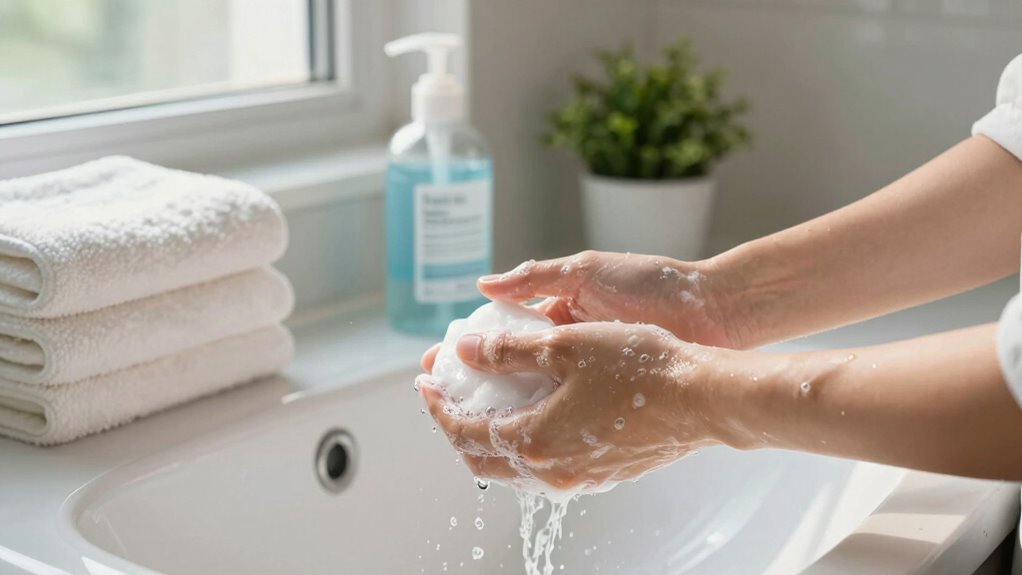
Recovering from an illness or hospital stay often requires extra attention to hygiene to prevent reinfection and protect your health. During this time, maintaining good personal hygiene becomes essential. You need to be diligent about washing your hands regularly with soap and water, especially after touching surfaces or objects that might carry germs. Hand hygiene is your first line of defense against catching or spreading infections. Make sure to scrub all parts of your hands, including under your nails, and dry them thoroughly. If soap and water aren’t available, use a disinfectant hand sanitizer containing at least 60% alcohol to keep your hands clean.
Your personal hygiene routine should also include bathing regularly. Showering helps remove dirt, sweat, and any residual germs that could linger on your skin. Pay special attention to areas prone to moisture, like your armpits and groin, as these spots can harbor bacteria. Use a gentle soap suited to your skin type, and dry off thoroughly afterward. Keeping your skin clean and dry reduces the risk of infections and promotes overall comfort. Additionally, choosing appropriate hygiene products can support your skin’s health and help prevent irritation or infections.
Disinfectant use plays an indispensable role in creating a safe environment. Surfaces that you frequently touch—doorknobs, light switches, cell phones, and remote controls—should be disinfected daily. Use a suitable disinfectant solution or wipes to wipe down these objects. Remember, not all disinfectants are created equal; opt for products that are proven effective against a broad spectrum of bacteria and viruses. When cleaning surfaces, follow the instructions on the label for proper contact time, ensuring germs are thoroughly killed.
Laundry needs extra attention too. Wash your clothes, bedding, and towels regularly with hot water and detergent. Use a disinfectant additive if recommended, especially if someone in your household is still recovering from illness. Proper laundry practices prevent germs from lingering on fabrics and spreading back onto your skin. Regular laundering of textiles is a crucial step in reducing potential sources of infection within your living space.
Finally, be mindful of your environment. Keep your living space tidy and well-ventilated. Open windows when possible and wash bedding and curtains frequently to reduce airborne germs and dust. Wearing clean clothes every day and avoiding sharing personal items like towels or razors also help prevent reinfection. Additionally, microplastics in dust can be a hidden source of indoor pollutants, so maintaining clean surfaces and good ventilation can help reduce your exposure.
In essence, after an illness or hospital stay, your focus should be on thorough personal hygiene and consistent disinfectant use. These practices will help protect your health, prevent the spread of germs, and support a smooth recovery process. Staying vigilant with hygiene routines isn’t just about feeling fresh; it’s about safeguarding your well-being at every step.
As an affiliate, we earn on qualifying purchases.
Frequently Asked Questions
How Long Should I Wait Before Resuming Normal Hygiene Routines?
You should wait until your healthcare provider gives you medical advice before resuming normal personal hygiene routines. Typically, once you’re feeling better and no longer contagious, you can gradually return to your usual hygiene practices. Listen to your body and follow medical guidance to prevent infection or complications. Maintaining good personal hygiene is essential, but make certain you’re fully ready and cleared by your doctor for a safe shift back to your normal routine.
Are There Specific Products Recommended for Post-Hospital Hygiene?
You should choose gentle, fragrance-free products for your personal hygiene and skincare routines after hospital stays. Look for mild cleansers, moisturizers, and barrier creams that support skin healing without irritation. Avoid harsh soaps or alcohol-based products, which can dry out or irritate your skin. Instead, opt for products formulated for sensitive skin, ensuring your hygiene routine promotes comfort, healing, and overall well-being during recovery.
How Can I Prevent Infections During Recovery at Home?
To prevent infections during your recovery at home, prioritize personal hygiene by washing your hands regularly with soap and water, especially before touching wounds or medical devices. Keep your environment clean, disinfect surfaces frequently, and avoid sharing personal items. Wearing clean, breathable clothing and changing linens often also help. These steps support infection prevention and promote healing, reducing your risk of complications during this critical recovery period.
Is It Safe to Use Public Showers After Hospitalization?
Public shower safety after hospitalization isn’t a risk worth taking lightly—imagine inviting germs to throw a welcome party in your recovery! You should be cautious, as hospital hygiene practices often include thorough disinfection, which public showers lack. If possible, avoid them until your immune system is stronger. If you must use a public shower, wear waterproof covers and thoroughly disinfect yourself afterward to protect your health.
What Signs Indicate Hygiene-Related Complications After Illness?
You should watch for signs like persistent redness, swelling, unusual discharge, or a foul smell, which can indicate hygiene-related complications. If you notice fever, chills, or increased pain, it could signal an infection. Maintaining good personal hygiene is essential for infection prevention. Regularly wash your hands, keep wounds clean and dry, and monitor your skin for any changes. Seek medical advice promptly if symptoms worsen or don’t improve.
As an affiliate, we earn on qualifying purchases.
Conclusion
Taking care of your hygiene after illness or a hospital stay is all about staying clean, staying cautious, and staying consistent. Wash your hands regularly, shower daily, and keep your environment tidy. Prioritize your health, protect those around you, and listen to your body’s signals. By maintaining these habits, you’ll support your recovery, boost your well-being, and make certain you’re always on the path to better health. Stay vigilant, stay healthy, and stay confident in your care.
As an affiliate, we earn on qualifying purchases.
personal hygiene products for recovery
As an affiliate, we earn on qualifying purchases.
As an affiliate, we earn on qualifying purchases.
Fall Picks
fall essentials
As an affiliate, we earn on qualifying purchases.