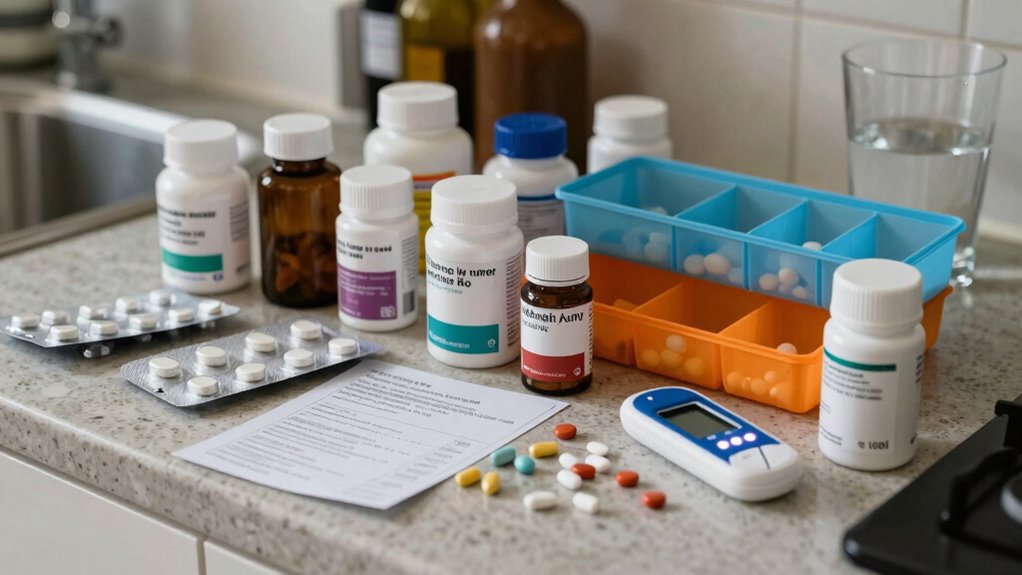

If your loved one takes multiple medications, you need to be aware of polypharmacy risks. It’s common among seniors and those with chronic conditions, but it can lead to dangerous interactions and side effects. Always review medications regularly with healthcare providers and follow proper administration instructions. Watch for symptoms like dizziness or confusion, and report any concerns promptly. Staying organized and informed helps protect your loved one, and there’s more to learn about keeping them safe at home.

Get health and wellness essentials delivered free with Prime
- Fast, free delivery on millions of items
- Prime Video, Amazon Music and more included
- Member-only deals all year
Key Takeaways
- Regularly review all medications with healthcare providers to prevent harmful drug interactions.
- Use pill organizers or management apps to ensure correct dosing and adherence.
- Monitor for side effects like dizziness or confusion and report them promptly.
- Keep an updated list of all medications, including supplements and herbal remedies.
- Caregivers should ensure proper administration, adherence, and communication with healthcare teams.
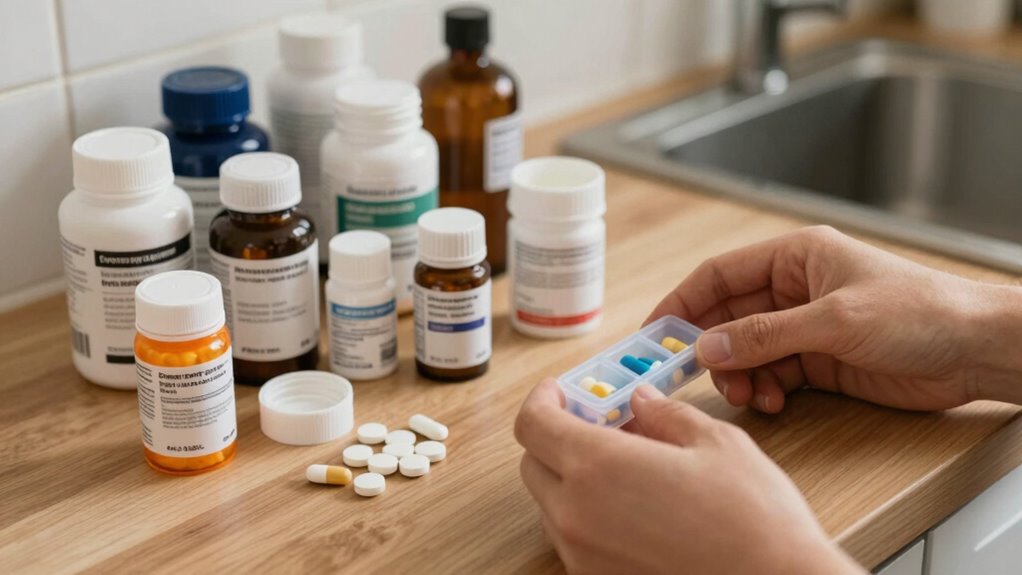
Polypharmacy, the use of multiple medications by a single individual, is increasingly common among seniors and those managing chronic conditions at home. While taking several medicines can be necessary to control health issues, it also raises the risk of medication interactions that could lead to adverse effects or diminished treatment effectiveness. As a family member or caregiver, understanding how to manage these medications is essential to ensuring your loved one’s safety and well-being.
One of your primary responsibilities is to stay vigilant about medication interactions. Different drugs can sometimes react negatively when taken together, causing side effects, reducing medication efficacy, or even creating dangerous health situations. For example, certain blood pressure medications may interact with over-the-counter pain relievers, leading to increased blood pressure or kidney problems. To prevent such issues, you should keep a detailed list of all medications, supplements, and herbal remedies your loved one takes. Regularly review this list with their healthcare providers to identify potential interactions and adjust prescriptions as needed. Being aware of potential drug interactions is crucial for preventing medication-related complications. Additionally, understanding the importance of systematic testing processes in medication management can help ensure that all prescribed treatments are working as intended.
Stay vigilant about medication interactions; review all drugs with healthcare providers regularly.
Managing multiple medications also means you need to be diligent about proper administration. This involves understanding when and how to give each medication, ensuring doses are correct, and adhering to prescribed schedules. Using pill organizers or medication management apps can help reduce errors and keep track of doses, especially if your loved one has cognitive challenges. Clear instructions from healthcare providers should always be followed, and if there’s any confusion, don’t hesitate to contact the pharmacist or doctor for clarification.
As a caregiver, your responsibilities extend beyond just medication management. You need to monitor for side effects or signs of adverse reactions, such as dizziness, confusion, or unusual fatigue, which could signal medication issues. Promptly reporting these symptoms to healthcare professionals can prevent serious complications. Additionally, it’s essential to keep open communication lines with your loved one’s medical team, ensuring they’re aware of any new symptoms or concerns. Regular medication reviews can help identify any unnecessary medications and streamline their treatment plan.
Lastly, medication safety involves organizing and reviewing prescriptions regularly. Medications can change over time, and some drugs may no longer be needed or might require dosage adjustments. Regular medication reviews with healthcare providers help prevent unnecessary polypharmacy and minimize risks. Incorporating medication reconciliation practices can also significantly reduce errors and ensure that your loved one’s medication list remains accurate and up-to-date. Staying informed about emerging trends in medication management and polypharmacy can also help you stay proactive in safeguarding your loved one’s health. Being proactive in managing your loved one’s medications, understanding potential interactions, and fulfilling your caregiver responsibilities can greatly reduce the dangers associated with polypharmacy at home. Your attentiveness and organization make a real difference in maintaining their health and safety.
As an affiliate, we earn on qualifying purchases.
Frequently Asked Questions
How Can I Safely Store Multiple Medications at Home?
To safely store multiple medications at home, focus on medication organization and storage safety. Keep medicines in a cool, dry place away from sunlight, moisture, and heat. Use a pill organizer to differentiate doses and avoid mix-ups. Store medications out of children’s reach and never share prescriptions. Regularly check expiration dates and discard expired drugs properly. Proper organization and storage safety help prevent accidental misuse and guarantee your medications remain effective.
What Are the Signs of Adverse Drug Interactions?
You might notice some subtle signs of adverse drug interactions, like feeling unusually tired, dizzy, or experiencing nausea. Keep an eye out for unexpected medication side effects or changes in your loved one’s mood or behavior. If you observe any of these drug interaction symptoms, it’s wise to consult their healthcare provider promptly. Staying attentive guarantees their safety and helps prevent more serious complications from medication mix-ups.
How Often Should Medication Lists Be Updated?
You should update medication lists every time there’s a new prescription, a change in dosage, or a discontinued medication. Regular updates help you maintain medication adherence and spot potential drug side effects early. It’s also wise to review the list at least every three to six months, especially if your loved one experiences new symptoms. Keeping accurate, current records minimizes the risk of adverse drug interactions and guarantees safe, effective medication management at home.
Are There Specific Tools to Manage Multiple Prescriptions?
Yes, there are specific tools to manage multiple prescriptions. You can use medication reconciliation forms to compare current medications with new prescriptions, guaranteeing accuracy. Prescription tracking apps help you monitor refills, dosages, and timing, reducing the risk of errors. These tools streamline medication management, enhance communication with healthcare providers, and promote safety. By consistently utilizing medication reconciliation and prescription tracking, you actively prevent medication errors and ensure proper adherence for your loved ones.
How Can I Ensure Proper Medication Disposal?
To guarantee proper medication disposal, regularly check for drug expiration dates and dispose of expired medications promptly. Use recommended disposal methods like take-back programs or authorized drug disposal sites. If these aren’t available, mix medications with unappealing substances like dirt or used coffee grounds, then seal them in a bag before discarding in the trash. Never flush medications unless specified, as it can harm the environment.
As an affiliate, we earn on qualifying purchases.
Conclusion
Managing multiple medications at home can be tricky, but staying informed makes a big difference. For example, imagine Sarah, who started feeling dizzy after adding a new prescription. By checking with her doctor and reviewing her meds, she caught a potential interaction early. Always keep an up-to-date list, ask questions, and communicate with healthcare providers. Staying proactive helps protect your loved ones from medication mishaps and guarantees they get the most benefit safely.
As an affiliate, we earn on qualifying purchases.
As an affiliate, we earn on qualifying purchases.
Cold & flu season Picks
humidifiers
As an affiliate, we earn on qualifying purchases.