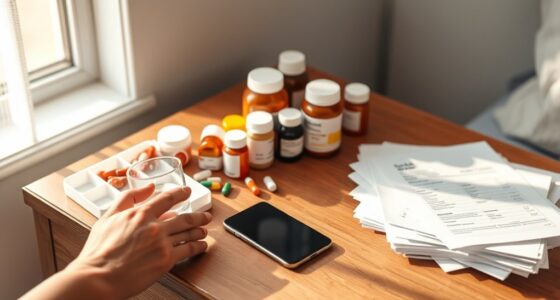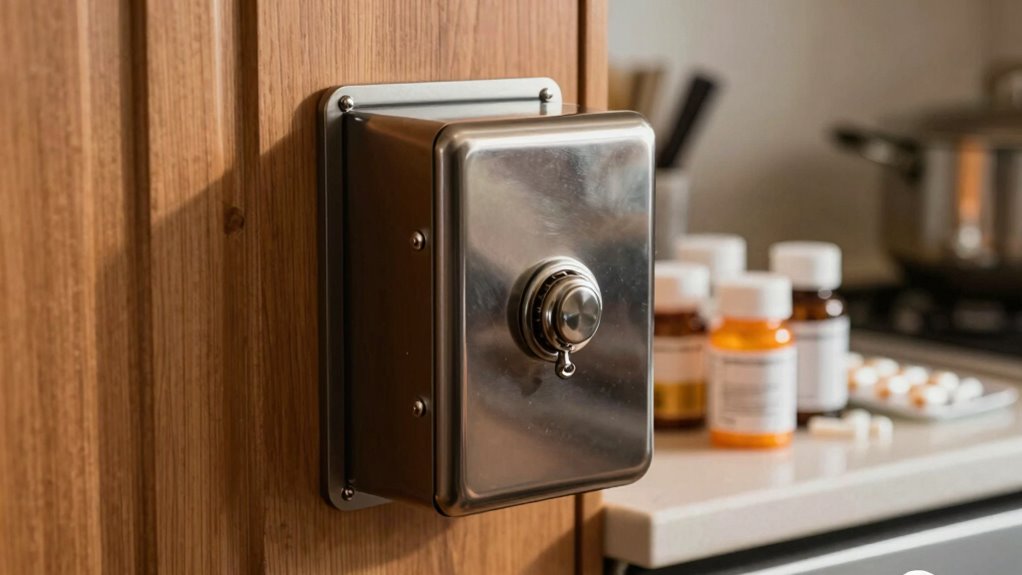
Locked medication storage is essential in households to prevent children or pets from accidental ingestion, which can lead to serious health issues. It helps you control who has access and promotes responsible medication management, reducing risks of misuse, overdose, or dangerous interactions. Using proper storage solutions and designated areas also keeps your home organized and safe. If you want to know more about how locking your medications can protect your loved ones, keep exploring these safety tips.
Key Takeaways
- Prevents accidental ingestion by children and pets, reducing health emergencies.
- Ensures medications are accessed only by authorized family members.
- Helps organize and manage medications efficiently, avoiding misuse or overdose.
- Protects vulnerable individuals, like children and the elderly, from accidental poisoning.
- Promotes responsible medication use and enhances overall home safety.
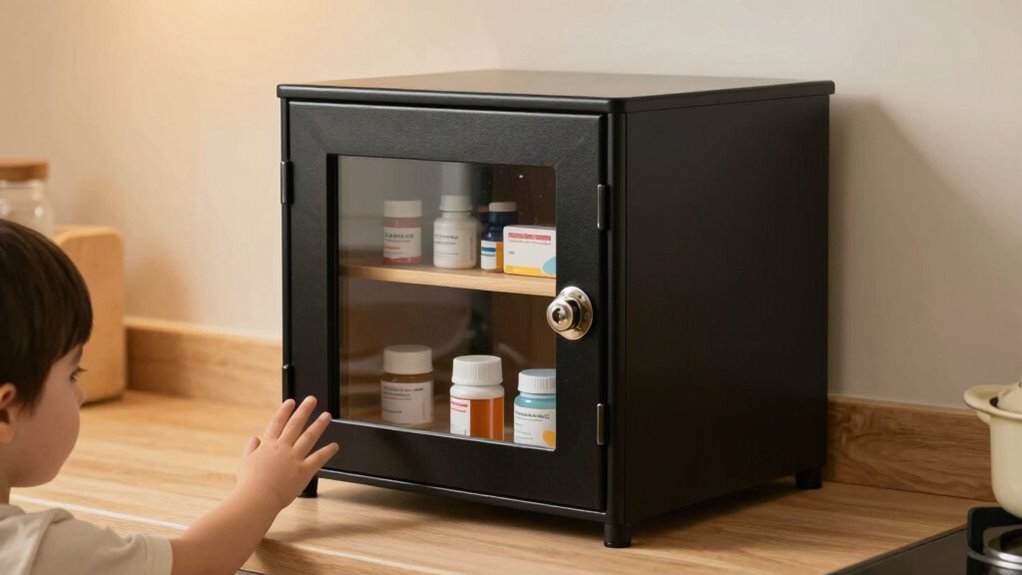
Have you ever wondered why locked medication storage is so essential in healthcare settings? The same principles apply just as strongly in some households, especially when medication safety is a top priority. When medications are stored securely, you reduce the risk of accidental ingestion by children or pets, which can lead to serious health emergencies. Keeping medications locked away ensures that only authorized family members have access, giving you peace of mind that your loved ones are protected from unintended harm. It’s a simple step that can prevent tragic incidents and promote responsible medication management within your home.
Secure medication storage protects loved ones and prevents accidental ingestion in your home.
In households where someone is managing chronic conditions or taking multiple medications, locked storage becomes even more critical. It helps organize and control access, preventing misuse or overuse. When medications are stored openly, it’s easy for family members to forget dosage instructions or, worse, to accidentally take someone else’s medication. Locking them up creates a clear boundary, making it easier to follow medical guidelines and avoid dangerous interactions or overdose. This is especially important when children are present, as they are naturally curious and may not understand the dangers of swallowing pills or liquids. Additionally, medication safety is enhanced when proper storage solutions are used, further reducing risks. Properly organizing your medications with secure storage can also help prevent clutter, which is often overlooked but can contribute to accidental misuse. Implementing secure storage solutions can also help in maintaining an organized and clutter-free environment, reducing confusion.
Creating a designated medication storage area can further improve safety and efficiency, making it easier for everyone to access medications responsibly. Medication safety is not just about preventing accidents; it’s also about ensuring that medications are used correctly. When medications are stored securely, it fosters a routine of proper handling and accountability. Family access is limited to those who need it, and you can keep track of inventory easily. This reduces the likelihood of expired or unused medications cluttering your home, which can sometimes lead to accidental ingestion or misuse. Additionally, locking your medications discourages impulsive or recreational use among teenagers or other family members, supporting healthier decision-making. Implementing a consistent storage method can also help in medication management, ensuring everyone in the household understands and adheres to safety protocols.
Ultimately, locking medication storage in your home reflects a responsible and proactive approach to health and safety. It shows your commitment to protecting everyone in your family, especially vulnerable members like children and the elderly. By controlling who can access medications, you help prevent accidental poisonings and ensure that medications are only used as prescribed. This small but effective measure promotes medication safety and family access in a controlled manner, making your home a safer environment. It’s a straightforward step, but one that can make a significant difference in safeguarding your loved ones’ health and well-being.
locked medication storage cabinet
As an affiliate, we earn on qualifying purchases.
As an affiliate, we earn on qualifying purchases.
Frequently Asked Questions
How Do I Choose the Right Lock for Medication Storage?
To choose the right lock for medication storage, consider how you want to balance medication accessibility and security. Opt for a lock that offers ease of use for trusted individuals while keeping others out, ensuring the lock’s durability to withstand daily wear. A combination or key lock with sturdy materials is ideal, providing reliable security without compromising quick access for those who need it.
Are There Legal Requirements for Locking Medication Cabinets?
Yes, there are legal requirements for locking medication cabinets, especially for controlled substances, to guarantee storage safety and prevent misuse. Regulations often mandate that medications are stored securely, and locking cabinets help with medication disposal by keeping drugs out of reach of children or others. By following these rules, you reduce risks and maintain compliance, protecting your household and ensuring safe medication management.
How Often Should I Review Stored Medications for Safety?
Think of your medication stash as a garden that needs regular tending. You should review your stored medications every three to six months, checking for expiration dates and ensuring storage temperature stays consistent, like a cozy, climate-controlled greenhouse. Expired meds can become unsafe or ineffective, so staying vigilant helps protect your health. Keep a schedule, prune away outdated pills, and maintain proper storage to keep your health flourishing.
What Are Common Mistakes in Home Medication Storage?
A common mistake in home medication storage is neglecting proper organization, which can compromise medication safety. You might store medicines in places with fluctuating temperatures, like the bathroom or kitchen, risking degradation. Another error is mixing medicines together, making it hard to identify them quickly. To avoid these mistakes, keep medications in a designated, secure location, check expiration dates regularly, and guarantee storage conditions are ideal for safety and effectiveness.
Can Children Access Locked Medication Storage Easily?
Children generally can’t access locked medication storage easily if you use childproof locks, which are designed to prevent accidental ingestion. These locks create a barrier between curious kids and potentially harmful medications, enhancing storage safety. While some children may try to open unsecured cabinets, secure locks make it much harder, giving you peace of mind. Proper storage safety is essential to protect little ones from accidental poisoning.
As an affiliate, we earn on qualifying purchases.
Conclusion
Think of your medication storage as a fortress guarding treasure. When you lock it up, you’re not just securing pills—you’re protecting loved ones from unintended harm. Just as a castle shields its inhabitants from invaders, a locked cabinet keeps danger at bay, ensuring safety inside your home. Remember, safeguarding medication isn’t just a choice; it’s a duty, turning your household into a vigilant castle where health and security reign supreme.
As an affiliate, we earn on qualifying purchases.
As an affiliate, we earn on qualifying purchases.