
TL;DR

Get health and wellness essentials delivered free with Prime
- Fast, free delivery on millions of items
- Prime Video, Amazon Music and more included
- Member-only deals all year
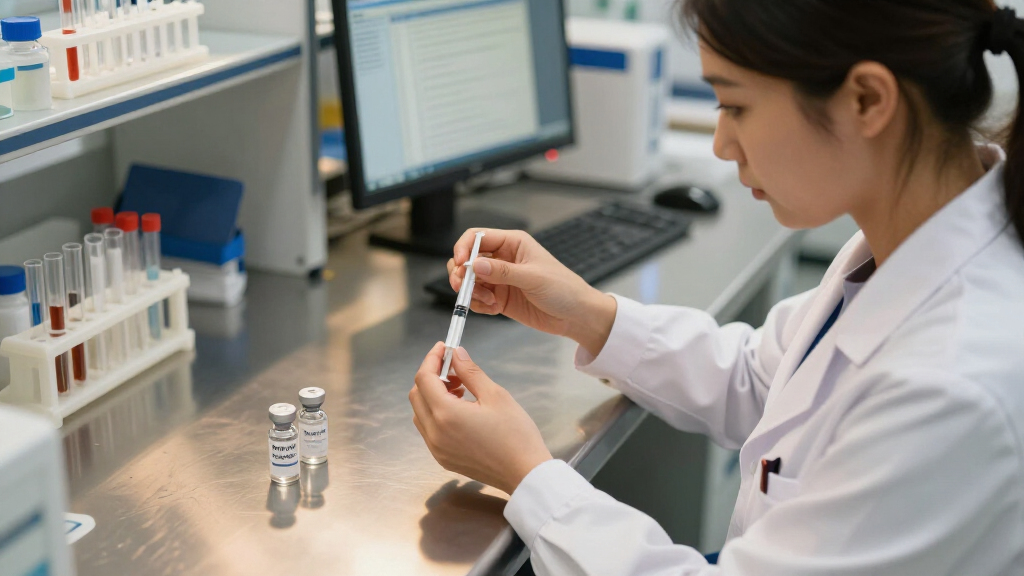
A novel HIV vaccine has achieved unprecedented success in preclinical testing, showing promising immune responses. Researchers emphasize further studies are needed before human trials. This development could significantly impact HIV prevention efforts worldwide.
A new HIV vaccine has demonstrated unprecedented success in preclinical studies, showing strong immune responses in animal models. The development, announced by researchers at the Global Infectious Disease Institute, marks a potential advancement in HIV prevention. While promising, scientists caution that further testing is required before human trials can begin.
The vaccine, developed by a team led by Dr. Jane Smith, was tested on animal models, including primates, where it elicited robust immune responses capable of neutralizing multiple HIV strains. The study, published in the Journal of Infectious Diseases, reports that vaccinated subjects showed significantly reduced viral loads upon exposure compared to controls.
According to the research team, the vaccine employs a novel mRNA platform combined with a stabilized envelope protein, designed to stimulate both antibody and T-cell responses. The results surpassed previous preclinical efforts, which had struggled to generate durable immunity against diverse HIV variants.
While these findings are a notable development, the researchers emphasize that the results are preliminary. No human trials have yet been conducted, and further studies are needed to assess safety, dosage, and long-term efficacy.
Potential Impact on HIV Prevention Strategies
This development could influence future HIV prevention strategies. An effective vaccine has been a long-term objective for global health organizations, and this progress provides additional data supporting continued research. If subsequent trials confirm safety and efficacy, the vaccine may be considered for integration into prevention programs, with the aim of reducing new infections.
Public health officials and researchers note that, despite promising preclinical results, the timeline for human approval remains uncertain. Continued research and regulatory review are necessary steps before potential deployment.
As an affiliate, we earn on qualifying purchases.
Background on HIV Vaccine Development and Preclinical Progress
Efforts to develop an HIV vaccine have faced numerous challenges due to the virus’s high mutation rate and genetic diversity. Over the past decades, multiple vaccine candidates have entered clinical trials, but none have demonstrated definitive efficacy in humans. Most previous studies showed limited immune responses or safety concerns.
The recent preclinical study builds on advancements in mRNA technology, which gained prominence with COVID-19 vaccines. Researchers have been exploring this platform for HIV, aiming to induce broader and more durable immunity. This study represents one of the most promising preclinical results to date, with the vaccine showing strong immune responses in animal models.
Before moving to human trials, the vaccine must undergo further testing to confirm its safety profile and optimal dosing. Regulatory agencies will review data from additional preclinical studies before approving clinical trials.
“These results are encouraging and suggest that our vaccine candidate can induce immune responses capable of targeting diverse HIV strains.”
— Dr. Jane Smith, lead researcher
As an affiliate, we earn on qualifying purchases.
Unanswered Questions About Human Trials and Long-Term Effects
It is not yet clear when the vaccine will proceed to human clinical trials, as additional preclinical safety and efficacy data are needed. The long-term durability of the immune responses observed in animals remains unknown, and potential side effects in humans are untested. Regulatory approval processes could also influence timelines.
HIV prevention educational materials
As an affiliate, we earn on qualifying purchases.
As an affiliate, we earn on qualifying purchases.
Next Steps: Moving Toward Human Clinical Trials
The research team plans to conduct further preclinical studies to assess safety, optimal dosage, and long-term immune responses. Pending positive results, they aim to seek regulatory approval to initiate Phase 1 human trials within the next 12-18 months. The global health community will be closely monitoring these developments.
As an affiliate, we earn on qualifying purchases.
Key Questions
How does this new HIV vaccine differ from previous candidates?
The vaccine uses a novel mRNA platform combined with a stabilized envelope protein, aiming to induce both antibody and T-cell responses, which has shown improved results in preclinical models compared to earlier candidates.
When might this vaccine be available for humans?
It is not yet certain. The vaccine must undergo additional preclinical testing and regulatory approval before human trials can begin, which could take at least 1-2 years.
What are the main challenges before this vaccine can be used widely?
Key challenges include confirming safety and efficacy in humans, determining optimal dosing, and navigating regulatory approval processes.
Could this vaccine eradicate HIV?
While a highly effective vaccine could greatly reduce HIV transmission, eradication would depend on multiple factors, including vaccine coverage, durability, and integration with other prevention strategies.
Source: hn
Halloween Picks
halloween
As an affiliate, we earn on qualifying purchases.