TL;DR

Get health and wellness essentials delivered free with Prime
- Fast, free delivery on millions of items
- Prime Video, Amazon Music and more included
- Member-only deals all year
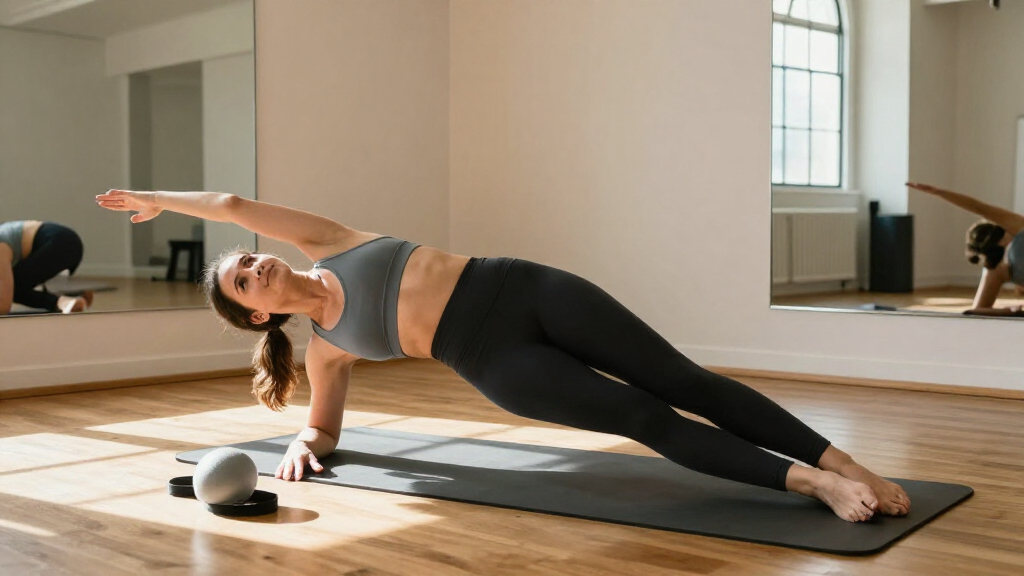
Pilates instructor Sammy Taylor recommends five low-impact moves for beginners: a glute bridge, dead bug, side-lying leg lift, bird dog and roll down. Her suggested routine takes about 10 minutes for one round, with easier options for each exercise; the report presents this as instructor guidance, not a clinical assessment of effectiveness.
Pilates instructor Sammy Taylor has outlined five exercises for people new to the practice, in a roughly 10-minute routine intended to work core and glute strength, mobility and body awareness. Published by Fit&Well, the routine includes modifications for each move and advises beginners to work at their own pace.
The five moves are a Pilates glute bridge, dead bug, side-lying leg lift, bird dog and Pilates roll down. Taylor’s suggested starting point is one round of all five, resting for 15 to 20 seconds between exercises. The routine can be built up to two rounds if a person feels comfortable, according to the report.
The exercise guidance calls for 8–10 glute bridges, 6–8 dead bugs per side, 8–10 side-lying leg lifts per side, 6–8 bird dogs per side and 4–5 roll downs. The movements are performed on the floor or standing, with controlled motions and attention to posture. For example, the dead bug pairs an arm reach with an opposite-leg extension while keeping the lower back pressed into the mat; the bird dog asks the participant to extend opposite limbs without twisting the hips.
Each exercise has a simpler option. Beginners can lift their hips only slightly in a bridge, slide a heel rather than extend a leg during the dead bug, or shorten the range of a side-lying leg lift. For the bird dog, the report suggests moving one limb at a time or trying an arm reach while seated if kneeling is uncomfortable. A roll down can be made smaller by sliding the hands along the thighs, or practiced seated.
A Scaled Starting Point for Pilates
The routine gives newcomers a specific sequence, repetition ranges and rest periods, rather than asking them to assemble exercises themselves. Its modifications also offer ways to reduce range of motion or change position, which may make the movements more approachable for people with limited mobility or discomfort with particular positions.
Taylor specializes in working with people with neurological conditions and limited mobility, according to Fit&Well. That experience informs the adaptation-focused approach described in the report. Still, the source offers instructor guidance, not research showing that this specific sequence produces particular outcomes. The stated benefits—strength, mobility and body awareness—are the routine’s aims, not guaranteed results.
Products Worth Considering

Philips Sonicare 5950 Rechargeable Electric Toothbrush with 2 Brush Heads, Pink

Bowflex SelectTech 840 Adjustable Kettlebell

Oral-B iO5 Rechargeable Electric Toothbrush with 5 Cleaning Modes and Travel Case, White
As an affiliate, we earn on qualifying purchases.
How the Five-Move Routine Works
Fit&Well presents Pilates as a low-impact activity that can be done with bodyweight and adapted for different abilities. The published sequence alternates exercises performed lying on the back, side-lying and on hands and knees, then finishes with a standing or seated spinal curl. This provides a short sample routine rather than a full Pilates program.
Taylor advises practicing two to three times a week, moving at an individual pace and using easier variations when needed. That frequency is the instructor’s recommendation as reported by Fit&Well; the article does not set out a personalized plan or establish that the same schedule suits everyone.
“Practice it two to three times a week, moving at your own pace and using the easier options whenever needed.”
— Sammy Taylor, Pilates instructor, as quoted by Fit&Well
Limits of the Published Guidance
The source does not give a publication date, cite research testing this exact routine or report measured results from people who followed it. The exercises and suggested schedule should be understood as Taylor’s general instruction, not proof that every beginner will gain strength or mobility in the same way.
The report says Pilates can be adapted to accommodate injuries, but it does not specify which injuries the moves suit or provide individualized medical guidance. It is unclear whether a particular exercise is appropriate for someone with an existing condition or pain. People unsure about exercise choices should consult a qualified health professional; this routine is not a diagnosis or treatment plan.
How Beginners Can Progress
The routine’s stated progression is to start with one round and 15–20 seconds of rest between exercises, then consider a second round only if comfortable. Taylor’s advice also calls for using easier options as needed and practicing two to three times weekly. The report does not set a timeline for progressing or specify when a participant should move to more difficult versions.
For now, the next step described by the source is simply to try the movements within a comfortable range and follow the listed modifications. Any further progression depends on the individual; the article does not provide follow-up outcomes or a separate advanced routine.
Key Questions
Which five Pilates moves are in the routine?
It includes a glute bridge, dead bug, side-lying leg lift, bird dog and roll down, with suggested repetitions for each.
How long does one round take?
Fit&Well describes one round as taking about 10 minutes, including 15 to 20 seconds of rest between movements.
How often does Taylor recommend practicing?
Taylor advises practicing two to three times a week, at an individual pace and using easier variations when needed.
Can the exercises be modified?
Yes. The report gives simpler options for all five moves, including shorter ranges of motion, moving one limb at a time and seated alternatives for some movements.
Does the report show that the routine works for everyone?
No. It presents an instructor’s suggested routine and does not cite a study or measured results for this sequence. Suitability can vary, particularly for people with injuries or health conditions.
Source: fitandwell.com