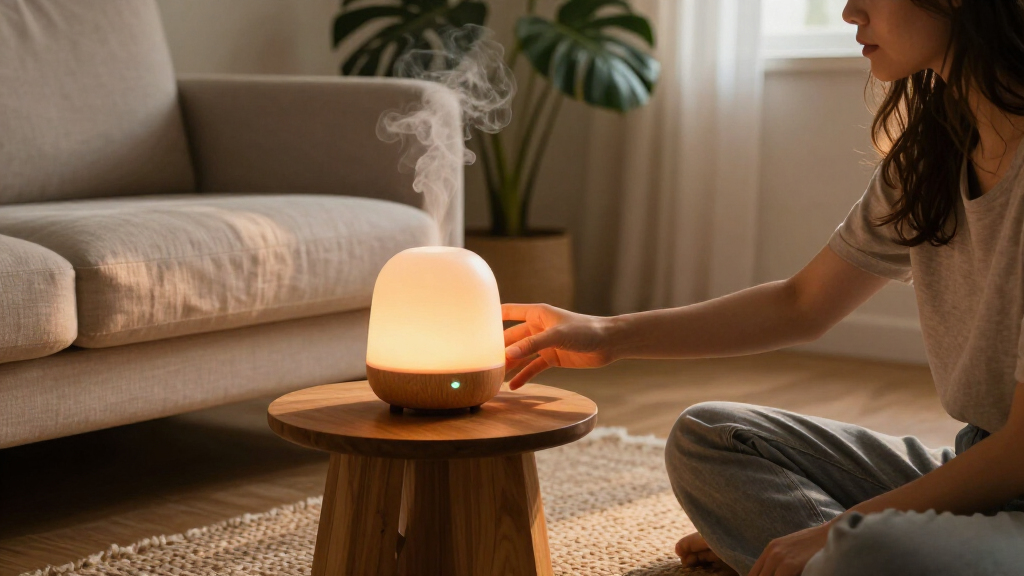

This guide shows beginners how to prepare an aromatherapy diffuser, add a suitable essential oil, and run it safely for a relaxing atmosphere at home. You will learn how much water and oil to use, where to place the unit, how long to run it, and how to tell whether the setup is working as intended. Allow about 10-15 minutes for setup, then choose a diffusion period that suits your room and the device instructions.

Get health and wellness essentials delivered free with Prime
- Fast, free delivery on millions of items
- Prime Video, Amazon Music and more included
- Member-only deals all year

ASAKUKI 500 mL Essential Oil Diffuser with Remote Control
- ✔ Capacity: 500 mL
- ✔ Noise level: Less than 23 dB
- ✔ Timer settings: 60, 120, and 180 minutes; steady ON

InnoGear Essential Oil Diffuser, Ultrasonic, Basic White
- ✔ Material: Polypropylene (PP)
- ✔ Coverage area: 100–250 square feet
- ✔ Noise level: Less than 23 dB

Pure Daily Care Aromatherapy Diffuser with 10 Essential Oils
- ✔ Diffuser type: Ultrasonic
- ✔ Timer settings: 1, 3, or 6 hours
- ✔ Auto shutoff: Yes, when water is low
Difficulty: Beginner | Time: 10-15 minutes to set up; 20-60 minutes to diffuse
What You’ll Need
Tools & Materials:
- A clean essential-oil diffuser, preferably an ultrasonic water-based model
- Clean room-temperature water, if required by the diffuser
- One diffuser-compatible essential oil
- A measuring cup or dropper, if the diffuser does not include one
- A stable, water-resistant surface near a suitable power outlet
Knowledge:
- Basic ability to follow the diffuser’s fill line and operating instructions
- Awareness of household sensitivities, including asthma, allergies, and fragrance sensitivity
Read the diffuser manual before adding water or oil. Models differ: some use water, while nebulizing and other designs may take oil without water. Use only products and operating methods approved for your particular unit. Essential oils may irritate skin, eyes, or airways and can be unsafe around some people and animals. If anyone in the home has a respiratory condition, is pregnant, is an infant, or is sensitive to fragrance, seek relevant professional advice before diffusing. Keep oils and the device out of reach of children and pets.
ASAKUKI 500 mL Essential Oil Diffuser with Remote Control
The ASAKUKI is our top pick for relaxation because it combines the most useful routine-setting features in this group. Its 500 mL tank means less frequent refilling than a smaller-capacity setup would require, while the 60-, 120-, and 180-minute timers make it easier to decide how long diffusion should continue. A remote control with a stated range of up to 16.5 feet adds a small but meaningful convenience: we can adjust settings without getting up once we have settled in.Like the InnoGear, it is listed as operating below 23 dB and has seven LED colors, so those shared features do not set it apart. The difference is control. InnoGear offers two mist modes but no separate timer, while ASAKUKI allows a timed session and remote adjustments. Pure Daily Care also has explicit timers, but its main advantage is the included oils rather than a remote and large tank. For buyers who already have essential oils and want to manage a longer, low-fuss session, ASAKUKI is the more adaptable choice.There are limits to that convenience. The remote and timer cannot make this a cordless device; battery-powered operation is not specified, and it still requires water and essential oils. Its multiple settings may also be unnecessary for someone who only wants a basic on-and-off diffuser. We rank it first because it balances session control and capacity better than the other two, not because every buyer needs its extra controls.
Pros:
- 500 mL tank reduces the need for frequent refilling.
- Remote control works from up to 16.5 feet.
- 60-, 120-, and 180-minute timer options plus steady-on operation.
- Quiet operation listed below 23 dB with low-water automatic shutoff.
Cons:
- Essential oils and water are required and are not listed as included.
- Battery-powered operation is not specified, so it should not be treated as a cordless option.
- Its extra controls may be unnecessary for buyers who prefer a basic diffuser.
Best for: People who want a quiet diffuser with a larger tank, remote adjustments, and defined timer options for regular evening use.
Not ideal for: Buyers seeking a cordless model, an included oil collection, or the simplest possible controls.
Bottom line: For a relaxation routine that benefits from a large tank and remote timer control, ASAKUKI is the most flexible all-around choice in this lineup.
“For a relaxation routine that benefits from a large tank and remote timer control, ASAKUKI is the most flexible all-around choice in this lineup.”
InnoGear Essential Oil Diffuser, Ultrasonic, Basic White
InnoGear is the best fit for buyers who want a calm atmosphere without learning a control-heavy device. Its below-23 dB operation is a useful attribute for a bedroom or reading space where mechanical noise could distract from relaxing. The diffuser is listed for rooms from 100 to 250 square feet, giving it a broader stated coverage range than a strictly personal-space option. Two modes let us choose intermittent diffusion for a longer, gentler session or continuous mist for a shorter stretch.Compared with ASAKUKI, InnoGear gives up remote control, a large specified tank, and explicit timer choices. That makes it less convenient when we want to end a session automatically at a chosen interval. But fewer controls can be a benefit when we want an easy routine: select a mist mode, set the lighting as desired, and rely on auto shutoff when the water runs out. Pure Daily Care offers more defined timer intervals and bundled oils, so it may be a better starting point for someone still exploring scents. InnoGear is more appealing when we already have oils and value basic operation.The seven-color LED with adjustable brightness can contribute ambient light, but it is not a substitute for a dedicated timer or a dark-room setting unless its lighting controls suit our needs. The main drawback is clear: the two mist modes do not provide a separate timed shutoff schedule. We rank it below ASAKUKI for control, while its quiet operation and straightforward mode choices make it the stronger pick for simplicity.
Pros:
- Listed noise level below 23 dB supports use in quiet spaces.
- Coverage is specified for rooms from 100 to 250 square feet.
- Intermittent and continuous mist modes offer two session styles.
- Seven-color lighting has adjustable brightness, with automatic shutoff when water runs out.
Cons:
- No separate timer beyond the two mist modes.
- Essential oils are not listed as included.
- Provides less remote and session control than the ASAKUKI.
Best for: People who already own essential oils and want a quiet, uncomplicated diffuser for a bedroom or medium-sized room.
Not ideal for: Anyone who wants remote operation, a specific countdown timer, or included oils to start with.
Bottom line: InnoGear is a sensible choice when quiet, uncomplicated diffusion matters more than remote control or a precise session timer.
“InnoGear is a sensible choice when quiet, uncomplicated diffusion matters more than remote control or a precise session timer.”
Pure Daily Care Aromatherapy Diffuser with 10 Essential Oils
Pure Daily Care is the easiest way into aromatherapy in this comparison because the package includes a diffuser and ten 10 mL essential oils. That saves a beginner from having to choose oils separately before trying a scent-based relaxation routine. The listed assortment includes lavender, eucalyptus, tea tree, orange, peppermint, lemongrass, jasmine, nutmeg, clove, and spearmint, offering several directions to explore. Its ultrasonic, heat-free dispersion is described as quiet, and the one-, three-, and six-hour timers provide more explicit session boundaries than InnoGear’s two mist modes.Compared with ASAKUKI, this is the more complete first purchase if we do not already own oils, but it does not list a remote or a large 500 mL tank. ASAKUKI is the better fit for someone who already knows which oils they want and values a larger reservoir and remote adjustment. InnoGear, meanwhile, offers stated coverage up to 250 square feet, whereas no coverage figure is supplied here. We should not assume the same room reach from the information available.The light ring can cycle through colors or stay on one, and it can operate independently as a night light, which offers a separate ambient-light use. Still, plastic construction is a tradeoff for buyers who prioritize a different material feel, and the included oil variety may be less useful to anyone with established favorites. We place it third overall because its strongest advantage is the starter bundle rather than the broadest diffuser control. For a newcomer, that bundle can matter more than its lower position suggests.
Pros:
- Includes ten 10 mL oils across a varied listed selection.
- Ultrasonic, heat-free dispersion is described as quiet.
- One-, three-, and six-hour timers help define a relaxation session.
- LED light can cycle, hold a single color, or operate independently as a night light.
Cons:
- Diffuser body is plastic.
- No remote control or coverage-area figure is specified.
- The oil bundle may add little value for buyers with established favorites.
Best for: First-time aromatherapy buyers who want a diffuser, several oils to explore, and timed sessions in one package.
Not ideal for: People who already own preferred oils, need remote control or a stated large-room coverage figure, or prioritize a non-plastic body.
Bottom line: For newcomers who want oils included and clear timer choices, Pure Daily Care is the most approachable starter set, though not the most flexible diffuser.
“For newcomers who want oils included and clear timer choices, Pure Daily Care is the most approachable starter set, though not the most flexible diffuser.”
As an Amazon Associate we earn from qualifying purchases.
Before You Start
Choose a small, ventilated room where you can switch the diffuser off easily. Do not use scent to replace medical care or as a treatment for anxiety, insomnia, or another health condition. Diffusion creates fragrance; it does not guarantee relaxation, and strong or prolonged exposure can cause discomfort.
Check the oil label and diffuser manual for restrictions. Do not ingest essential oils, apply undiluted oil to skin, or put oil directly into a water-based reservoir unless the manufacturer specifically directs you to. Keep the device away from open flames, heat sources, electronics that could be damaged by moisture, and surfaces that may be marked by water.
Step-by-Step Instructions
Step 1: Choose a suitable room and time
Select a room with enough airflow for the scent to disperse, and decide when you want to use the diffuser—for example, during quiet reading or before a wind-down routine. Start in a smaller area rather than trying to scent an entire home. Make sure you can leave the room or turn the unit off if the scent feels too strong.
Tip: Avoid running a diffuser in a closed room for a long period. People and animals should be able to leave the area freely.
Check: You have a comfortable place to sit, a way to ventilate the room, and a clear path to the diffuser’s power switch.
Step 2: Select one scent to start
Choose one diffuser-approved essential oil with a smell you personally find pleasant. Lavender is often used in relaxing routines, but scent preferences vary. If you are unsure how you respond, begin with a single oil rather than blending several. Check the product label for safe-use instructions and any warnings relevant to your household.
Tip: A familiar scent you enjoy is a better starting point than choosing an oil based on a promised health effect.
Check: You have one clearly labeled oil that is suitable for your device and does not conflict with the manufacturer’s directions.
Step 3: Prepare the diffuser
Place the diffuser on a level, dry, water-resistant surface. Keep it away from the edge of the table, direct sunlight, vents, and anything that could be damaged by moisture. Check that the power cord and reservoir are clean and undamaged. If the unit has been used, clean it as directed in the manual before refilling it.
Tip: Unplug the unit before cleaning, moving it, or handling its reservoir. Do not immerse the electrical base in water.
Check: The device is stable, the cord is in good condition, and the area around it is clear of objects that could be wet or knocked over.
Step 4: Add water if your model requires it
Check the manual to see whether your diffuser uses water. For a water-based model, remove the cover and pour clean water into the reservoir up to, but not above, its fill line. Use room-temperature water unless the manufacturer specifies another type. Wipe up spills before connecting power. If your model is waterless, follow its oil-loading instructions instead of adding water.
Tip: Do not guess the fill amount or run a water-based diffuser without the required water. Overfilling can cause leaks or prevent proper operation.
Check: The water level is within the marked range, or you have followed the waterless model’s instructions exactly.
Step 5: Add a small amount of oil
For a water-based diffuser, add the number of drops specified in the manual or on the oil product directions. If the manual gives a range, begin at the low end; a few drops may be sufficient in a small room. Do not pour oil into the reservoir if your device requires oil in a separate cup or cartridge. Replace the cover and wipe any oil from the exterior.
Tip: More oil does not necessarily make the experience better. A strong scent can irritate the eyes or airways and may be difficult to clear from the room.
Check: The oil is in the correct compartment, the amount follows the instructions, and no oil or water remains on the outside of the unit.
Step 6: Position and start the diffuser
Plug in the diffuser with dry hands and select a short timer or intermittent setting if available. Point the mist outlet into open space, not at your face, bedding, walls, or electronics. Start the unit and remain nearby for the first few minutes to check that it is operating normally.
Tip: Do not cover the outlet or move the unit while it is running. Follow the manual’s directions for automatic shutoff and operating time.
Check: The diffuser starts without unusual noise, leaking, or overheating. A water-based model may produce a visible mist, though some output can be hard to see in certain lighting.
Step 7: Check your comfort and adjust exposure
After a few minutes, notice whether the scent feels mild and pleasant. If it is too strong, switch the diffuser off, open a window, or leave the room until the smell fades. If it feels comfortable, continue with a limited session—often around 20-60 minutes, unless the manual specifies a shorter period. Use the built-in timer or switch the unit off yourself; do not leave it running unattended or while sleeping unless the manufacturer explicitly permits that use.
Tip: Stop diffusion and get fresh air if you develop a headache, coughing, breathing irritation, nausea, or other discomfort. Seek medical help for severe or persistent symptoms.
Check: The fragrance stays subtle enough that you can breathe comfortably, and the diffuser is off when the planned session ends.
Step 8: Turn off, empty, and clean the unit
Switch off and unplug the diffuser. Follow the manual to empty remaining water and clean the reservoir; do not leave stagnant water or oil residue inside between uses. Dry the parts as directed before storing or refilling. Keep the essential-oil bottle capped and stored away from children, pets, heat, and sunlight.
Tip: Use only the cleaning method recommended for your model. Some materials can be damaged by abrasive tools or strong cleaners.
Check: The device is unplugged, clean, dry, and stored safely, with no standing water or oil residue left in the reservoir.
Common Mistakes to Avoid
- Adding too much oil because the fragrance seems faint at first. — Begin with the lowest amount recommended by the manual, wait several minutes for the scent to spread, and add more only if the product and device directions allow it.
- Putting water or oil into the wrong part of the diffuser. — Identify whether the model is water-based or waterless and follow its manual before filling. Do not assume all diffusers work the same way.
- Running the diffuser for hours in a closed room. — Use a short session or timer, allow airflow, and stop if anyone experiences irritation. Follow the device’s maximum run time.
- Using a scent around a sensitive person or animal without checking safety. — Review product warnings and obtain appropriate professional guidance when needed. Keep the area ventilated and allow everyone, including pets, to leave.
Troubleshooting
Problem: The diffuser does not start.
Solution: Switch it off and unplug it. Check that the outlet works, the power connection is secure, the reservoir is filled within its marked range if required, and the cover is seated correctly. Consult the manual for reset or cleaning instructions; do not open the electrical base.
Problem: The scent is too strong or causes discomfort.
Solution: Turn off the diffuser and ventilate the room. Leave the area until you feel comfortable. At the next use, reduce the oil amount, shorten the session, or choose another activity that does not involve fragrance. Stop using it if symptoms persist.
Problem: The diffuser runs but little or no mist appears.
Solution: Check the water level, outlet, and cleaning requirements in the manual. Clean the unit as directed and try again with the recommended water and oil amount. Some models produce a fine mist that is difficult to see, so check whether the unit is operating rather than judging by visibility alone.
Problem: Water leaks or collects around the diffuser.
Solution: Switch off and unplug the unit, then dry the surface. Check for overfilling, a loose cover, or incorrect assembly. Refill only to the marked line and restart once the unit and surrounding area are dry. Stop using it and contact the manufacturer if leaking continues.
What Success Looks Like
The diffuser is operating according to its manual, the scent is mild and comfortable, and the session ends within the device’s recommended run time. You can switch it off easily, ventilate the space, and leave without irritation. Afterward, the unit is unplugged, emptied and cleaned as directed, with no leaks or standing water.
Next Steps
For future sessions, repeat the same small amount and short duration if the scent felt comfortable. Change only one variable at a time—such as oil amount, room size, or run time—so you can identify what suits you. Clean the diffuser at the intervals in its manual and whenever oil residue builds up. Stop using it if it leaks, smells burnt, becomes unusually hot, or triggers symptoms; follow the manufacturer’s support guidance for device faults.
Frequently Asked Questions
Which essential oil should I use for relaxation?
Choose a diffuser-compatible oil whose scent you enjoy. Lavender is a common choice for a relaxing routine, but no scent works the same way for everyone, and fragrance should not be treated as medical care.
How many drops should I add?
Use the amount specified by the diffuser manual and oil label. If the manual gives a range, start at its low end. Reservoir size, room size, and oil concentration vary, so a general drop count may not suit every setup.
How long should I run an aromatherapy diffuser?
Follow the manufacturer’s limit and use a timer or short session. Many people start with 20-60 minutes, but the right duration depends on the model, room, scent strength, and individual comfort. Do not leave it running unattended or during sleep unless the manufacturer permits that use.
Can I mix two oils?
You can blend oils only if both are approved for your diffuser and the product directions allow it. Start with a small amount of each and avoid making the overall scent stronger than the device directions recommend. Use one oil first if you are new to diffusion or sensitive to fragrance.
Can I use a diffuser around children or pets?
Do not assume an oil is safe for every child or animal. Check product warnings and ask a qualified health or veterinary professional about your specific household. Keep the device and oils inaccessible, ventilate the room, and let people and animals leave the area freely.
Cold & flu season Picks
humidifiers
As an affiliate, we earn on qualifying purchases.