
TL;DR

Get health and wellness essentials delivered free with Prime
- Fast, free delivery on millions of items
- Prime Video, Amazon Music and more included
- Member-only deals all year
A Sixty and Me guide describes five low-equipment functional exercises intended to support everyday movements, including standing from a chair, pushing and balancing. It recommends starting with short sessions and consulting a health professional when health conditions, pain, dizziness or mobility concerns may affect exercise.
Sixty and Me has published a beginner’s guide to functional fitness for women over 60, describing five exercises that can be done at home with little or no equipment. The guide focuses on movements used in daily life, such as rising from a chair, reaching and maintaining balance, and advises readers to build activity gradually and seek professional guidance when health concerns may affect exercise.
The guide defines functional fitness as building strength and ability for everyday tasks. Its examples include lifting groceries, reaching for an item on a shelf, and squatting to pick something up. Rather than focusing only on general strength, the exercises are framed around practicing movements people use in day-to-day activities.
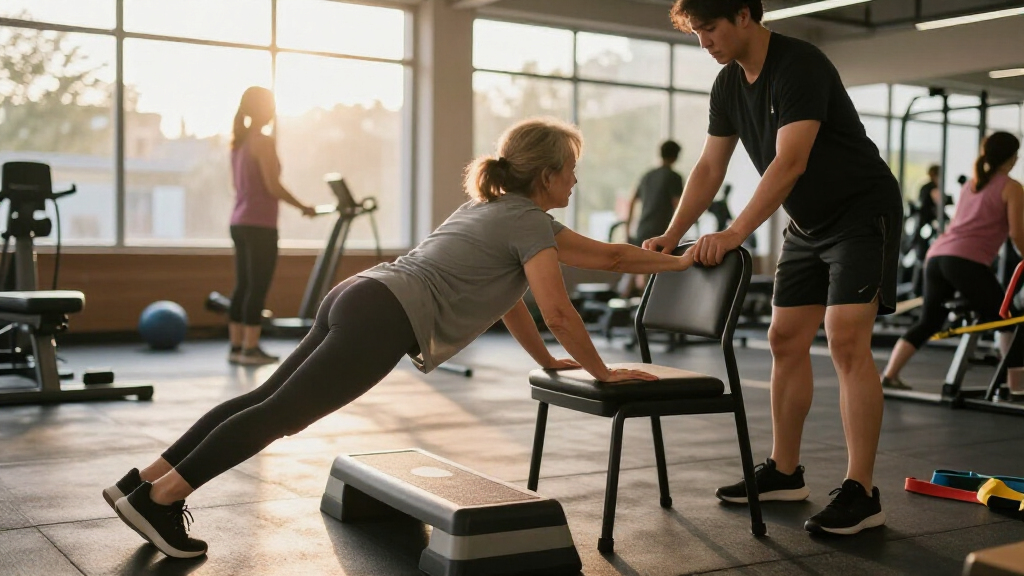
The five suggested exercises are sit-to-stands, wall push-ups, supported heel raises, supported side steps and supported balance practice. The guide gives a target of five to 12 repetitions for the first three. For side steps, it recommends moving in both directions and using a chair or counter for support if needed. For balance practice, it advises standing near a sturdy surface and holding on when necessary.
To begin, the article suggests adding 10 to 15 minutes of exercise on two or three days during the week. It says readers can increase the time or repetitions, or add a resistance band, as the movements become easier. It also recommends stopping if something does not feel right and speaking with a health care professional about exercise limitations related to a condition, pain, dizziness or other concerns.
Practicing Movements Used Every Day
The guide’s practical focus is on the physical tasks that help people manage daily routines, including standing up, moving objects and walking safely. Practicing these movements may be useful for readers who find such tasks more difficult, though individual needs and abilities vary. The article presents functional exercise as one way to work on strength, mobility and balance, not as a guarantee of independence or a substitute for individualized care.
The source cites a 2025 meta-analysis reporting that functional task training improved balance, mobility and walking ability among adults aged 60 and older. It also refers to a review of studies suggesting that combined balance and functional training may help prevent falls and improve physical well-being in older adults. The supplied material does not provide study titles, authors, sample sizes or effect estimates, so the findings cannot be independently evaluated from the guide alone.
The article also points readers to public-health activity recommendations. It says the CDC advises adults aged 65 and older to do muscle-strengthening activities at least twice a week, alongside activities supporting cardiovascular and pulmonary health and balance. Such recommendations offer broad guidance; they do not establish that every exercise or repetition target in this particular guide is right for every person.
at-home resistance bands for seniors
As an affiliate, we earn on qualifying purchases.
As an affiliate, we earn on qualifying purchases.
Five Exercises With Home Support
The suggested movements use familiar supports rather than specialized equipment. For sit-to-stands, the reader sits near the front of a chair, leans slightly forward and pushes through the legs to stand before lowering back down. Wall push-ups involve standing about an arm’s length from a wall, bending the elbows toward it, then pushing back. The guide lists five to 12 repetitions for each.
For supported heel raises, the article describes holding a chair and lifting the heels before lowering them. Its wording also refers to bending the legs so the heels are lower than the hips; readers uncertain about the setup should seek qualified instruction rather than guess. Side steps are done along a counter or chair, while balance practice involves shifting weight between legs and, if comfortable, lifting the leg farther from the support.
The source says the World Health Organization recommends muscle-strengthening activities two days a week for adults aged 65 and older. It also says people with mobility difficulties are advised to do balance and fall-prevention activities on three or more days weekly, increasing activity gradually if needed. These recommendations concern people aged 65 and older, while the guide’s audience includes women over 60.
““The goal of functional fitness is to help you maintain your quality of life and your independence.””
— Sixty and Me guide
As an affiliate, we earn on qualifying purchases.
Individual Needs and Evidence Details
The supplied source material does not identify the 2025 meta-analysis or the studies in the review by title, authors or journal, nor does it give numerical results. The size and limits of the reported benefits therefore remain unclear from this material. The guide also does not establish that its exercise sequence or repetition range has been tested specifically for women over 60.
People differ in balance, mobility, strength and health conditions. The article does not assess readers individually or specify modifications for every limitation. Its safety advice is to consult a health care professional when a condition, pain, dizziness or other concern could affect exercise, and to stop an activity if something feels wrong.
As an affiliate, we earn on qualifying purchases.
Build a Routine at Your Own Pace
The guide recommends beginning with short sessions two or three days a week, choosing activities that are manageable, then increasing duration or repetitions as the exercises feel easier. It also suggests adding movement to ordinary routines, such as walking regularly, using stairs when appropriate, or practicing balance beside a wall or sturdy support.
No follow-up study, program launch or additional update is identified in the source material. Readers considering the exercises should match activity to their abilities and ask a qualified health professional for guidance if health limitations, pain, dizziness or safety concerns apply.
elderly balance training equipment
As an affiliate, we earn on qualifying purchases.
As an affiliate, we earn on qualifying purchases.
Key Questions
What does functional fitness mean in this guide?
It means practicing strength and movement used in daily tasks, such as standing from a chair, carrying items or reaching. The guide presents it as a way to work on everyday physical abilities.
Which exercises does the article suggest?
It lists sit-to-stands, wall push-ups, supported heel raises, side steps and supported balance practice. A chair, counter or wall can provide support for some movements.
How often does the guide suggest starting?
It suggests trying 10 to 15 minutes on two or three days in a week, then gradually increasing time or repetitions as the exercises become easier. Individual ability and health needs may differ.
When should someone seek professional guidance?
The guide advises speaking with a health care professional if a health condition, pain, dizziness, mobility limitation or other concern may affect exercise. It also says to stop an activity if something does not feel right.
Source: rss
Fall Picks
fall essentials
As an affiliate, we earn on qualifying purchases.