
TL;DR

Get health and wellness essentials delivered free with Prime
- Fast, free delivery on millions of items
- Prime Video, Amazon Music and more included
- Member-only deals all year
A good ergonomic office chair for home should be adjustable, supportive, and suit your space. Investing in quality can reduce discomfort and boost productivity over time.
Ever feel like your back is protesting after hours at your home desk? You’re not alone. Many of us spend hours in chairs that weren’t designed for comfort—until now.
In this guide, you’ll learn how to spot a truly ergonomic office chair for home use. From adjustable features to latest innovations, discover what makes a chair supportive and worth your investment.
Look for adjustable features—seat height, lumbar support, armrests—to personalize your comfort.
Smart chairs with sensors can improve posture habits and reduce stiffness over time.
Eco-friendly materials are increasingly common—choose sustainable options when possible.
Size and space matter: opt for compact, versatile designs if your home office is small.
Investing in a quality ergonomic chair can prevent long-term health issues and boost productivity.
What Makes a Home Office Chair Truly Ergonomic?
An ergonomic chair isn’t just about looking sleek. It’s about how it supports your body during those long work marathons. Think of it as a partner that adapts to you, not the other way around.
Key features include adjustability—like seat height, back tilt, and armrest position. Proper lumbar support reduces lower back pain, especially if you sit for hours. The seat should be cushioned, breathable, and just the right size to avoid pressure points.
Imagine sitting in a chair that molds perfectly to your lower back, with armrests that support your elbows without causing shoulder tension. That’s the goal of a well-designed ergonomic chair.
Understanding these features helps you recognize that not all chairs labeled as ergonomic deliver the same level of support. For example, some chairs might have adjustable lumbar support but lack sufficient tilt options, which can limit your ability to find a comfortable position during long hours. The tradeoff often lies between cost and customization—more adjustable features typically come at a higher price, but they offer better long-term comfort and health benefits.
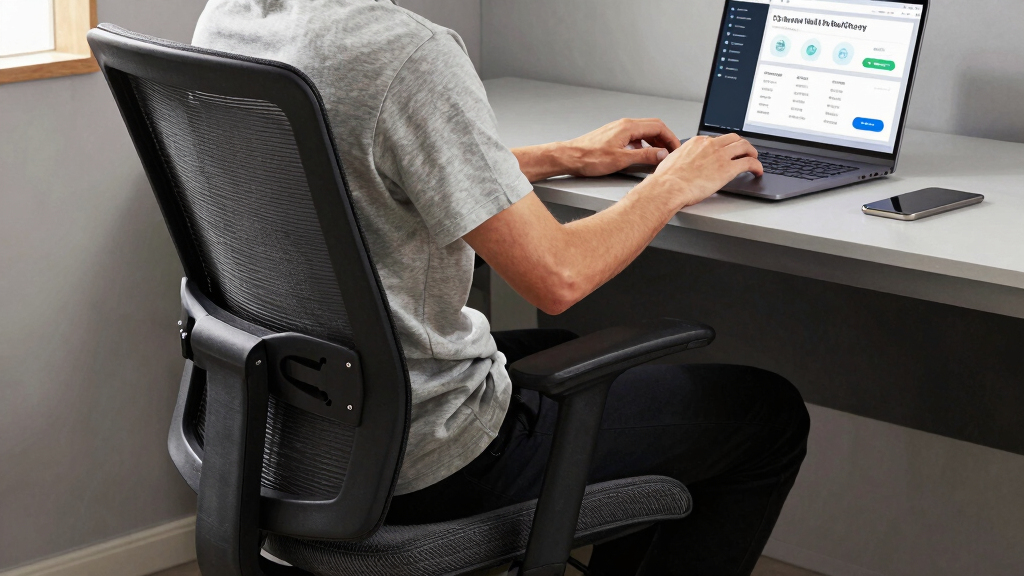
ergonomic office chair with adjustable lumbar support
As an affiliate, we earn on qualifying purchases.
As an affiliate, we earn on qualifying purchases.
The Top 5 Features Your Home Office Chair Must Have
- Adjustable seat height—so your feet rest flat on the floor, knees at 90 degrees. This prevents undue pressure on your thighs and promotes healthy circulation. An improperly adjusted height can lead to poor posture, back strain, and fatigue.
- Lumbar support—to keep your lower back aligned with the spine’s natural curve, reducing strain and fatigue that can lead to chronic pain if neglected. Without adequate lumbar support, you may develop slouching habits that exacerbate back problems over time.
- Breathable mesh or fabric—for airflow, especially in warm rooms or during long sitting sessions, helping prevent overheating and discomfort. Materials that trap heat can cause sweating and skin irritation, which distracts from productivity and comfort.
- Swivel and casters—to facilitate smooth movement and reduce the need for awkward reaching or twisting, which can strain your neck and shoulders. These features also promote dynamic sitting, which has been shown to reduce stiffness and improve circulation.
- Adjustable armrests—to support your arms at a comfortable height, reducing tension in your shoulders and neck, and preventing hunching. Proper armrest positioning allows your shoulders to relax and prevents strain during typing or mouse use.
For example, a chair with a seat height range of 16-21 inches easily accommodates different users, making it versatile for multiple home setups. The ability to fine-tune these features ensures the chair supports your unique body shape and work habits, which is crucial for preventing discomfort and long-term musculoskeletal issues.
mesh ergonomic desk chair for home office
As an affiliate, we earn on qualifying purchases.
As an affiliate, we earn on qualifying purchases.
Smart and Sustainable: The Latest in Ergonomic Chair Tech
Modern ergonomic chairs are smarter and greener than ever. Some now include sensors that monitor your posture and gently remind you to move every 30-60 minutes. This technology encourages healthier sitting habits by providing real-time feedback, which can help prevent stiffness, muscle fatigue, and poor posture habits that develop over time.
Eco-friendly materials, like recycled plastics and organic fabrics, are increasingly common. Using sustainable materials not only supports environmental conservation but also often results in healthier indoor air quality, as these materials tend to emit fewer volatile organic compounds (VOCs). These innovations reflect a growing awareness that ergonomic design should benefit both user health and the planet.
Imagine a chair that adjusts itself slightly throughout the day, encouraging movement and reducing stiffness. This kind of adaptive design can help break the cycle of prolonged static sitting, which is linked to various health issues like cardiovascular disease and metabolic problems. The integration of smart tech with sustainable materials embodies the future of ergonomic seating, making comfort, health, and environmental responsibility interconnected priorities.
compact ergonomic office chair for small spaces
As an affiliate, we earn on qualifying purchases.
As an affiliate, we earn on qualifying purchases.
How to Choose the Best Ergonomic Chair for Your Small Space
Living in a cozy apartment or home office corner? You need a chair that fits without sacrificing comfort. Measure your space first—look for compact, multi-functional designs.
Consider chairs with foldable arms, slim profiles, or modular components that can be tucked away when not in use. For example, a chair with a small footprint, around 20 inches wide, can slide under a desk easily.
Also, opt for versatile colors and styles that blend with your decor. Comfort shouldn’t come at the expense of style or space.
Choosing the right small-space ergonomic chair involves balancing size with support. Compact designs often have fewer adjustable features, so it’s important to prioritize those that matter most to your comfort—such as lumbar support or seat depth. Some chairs offer fold-away or stackable options, but these may compromise on padding or adjustability. Therefore, assessing your specific needs and tradeoffs ensures you get a chair that supports your health without cluttering your space.
smart ergonomic office chair with posture sensors
As an affiliate, we earn on qualifying purchases.
As an affiliate, we earn on qualifying purchases.
Comparison Table: Budget vs. Premium Ergonomic Chairs
| Feature | Budget-Friendly Chairs | Premium Chairs |
|---|---|---|
| Adjustability | Basic height and tilt | Full range—headrest, armrests, lumbar, seat depth |
| Materials | Mesh or fabric, less breathable | High-quality mesh, leather, or eco fabrics |
| Durability | Good for 1-3 years | 5+ years with proper care |
| Smart features | Rare or none | Posture sensors, app connectivity |
| Price range | $150–$300 | $400–$1500 |
This table helps compare options at different budgets, highlighting what you get for your money.
Frequently Asked Questions
What features should I prioritize in an ergonomic office chair?
Focus on adjustable seat height, lumbar support, breathable materials, and adjustable armrests. These features help customize the chair to your body, reducing discomfort during long sitting periods.
Are expensive ergonomic chairs worth the cost?
High-quality chairs often last longer, offer better support, and include extra features like smart sensors. While they cost more upfront, they can save money on health issues and discomfort down the line.
How do I adjust my chair for maximum comfort?
Set the seat height so your feet are flat on the floor, knees at 90 degrees. Adjust lumbar support to fit the curve of your lower back, and position armrests so your shoulders stay relaxed. Experiment until it feels natural.
Can ergonomic chairs help with back pain?
Yes, when properly adjusted, ergonomic chairs support your spine’s natural curve and reduce pressure points. They can significantly alleviate or prevent back pain caused by prolonged sitting.
What maintenance does an ergonomic chair need?
Regularly clean the fabric or mesh, tighten any loose screws, and check casters for debris. Proper care prolongs the life of your chair and keeps it functioning smoothly.
Conclusion
Choosing the right ergonomic office chair for home isn’t just about comfort—it’s about protecting your health and making work easier. Think of your chair as an investment in your well-being, not just a piece of furniture.
Remember, a truly supportive chair adapts to you. Your back, neck, and shoulders will thank you—and your productivity will likely improve too. So, pick smart and sit well.
Halloween Picks
halloween
As an affiliate, we earn on qualifying purchases.