
To create a safe home layout for mobility, prioritize clear, wide pathways of at least 36 inches, and arrange furniture to avoid tight corners and obstacles. Install assistive devices like grab bars and stairlifts where needed, ensuring they are secure and accessible. Keep frequently used items within easy reach, and use non-slip mats in wet areas. Good lighting and clear emergency routes are essential. Keep safety in mind at all times—there’s more to learn for a truly accessible space.
Key Takeaways
- Ensure walkways are at least 36 inches wide and free of obstacles for easy wheelchair or walker access.
- Install assistive devices like grab bars and stairlifts in strategic locations to support safe movement.
- Maintain good lighting throughout the home, especially on stairs, hallways, and entry points, with motion sensors or night lights.
- Keep frequently used items within easy reach to minimize stretching, climbing, or bending risks.
- Regularly assess and modify the layout to accommodate changing mobility needs and prevent hazards.
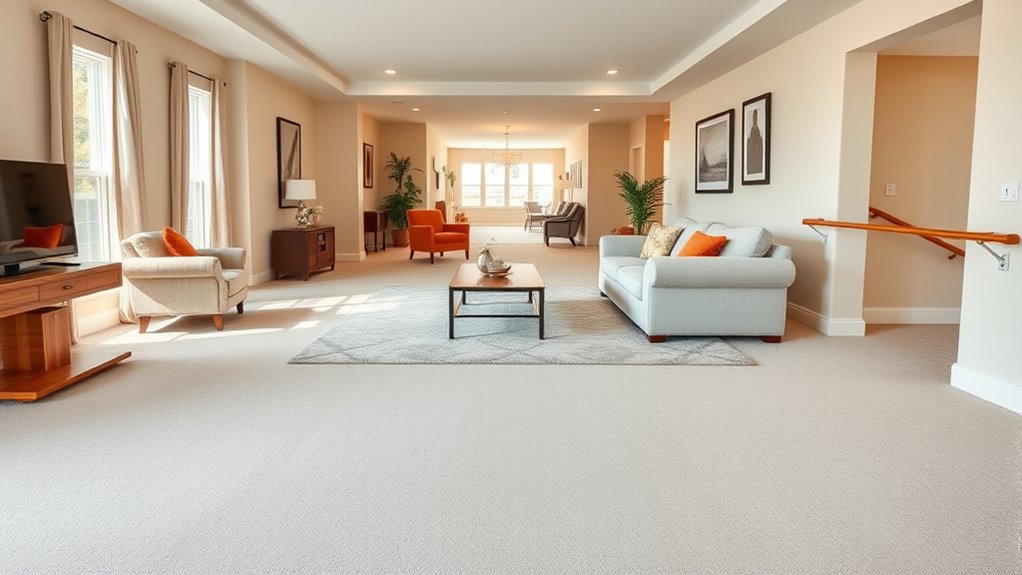
Designing a safe home layout for mobility is essential to prevent accidents and promote independence. When you rethink your space, consider how assistive devices can work seamlessly within your environment. These devices—such as grab bars, walkers, and stairlifts—are indispensable tools that support your movement and safety. To maximize their effectiveness, ensure they are positioned where you need them most, like beside the toilet, in the shower, or along frequently used hallways. Proper placement minimizes the risk of falls and makes it easier for you to navigate your home confidently. Keep in mind that assistive devices should complement your home’s layout, not hinder it. Regularly check that they’re securely installed and in good condition to prevent any accidents.
Properly placed assistive devices enhance safety and independence at home.
In addition to assistive devices, planning for accessible emergency exits is vital. You want to be prepared in case of a fire, power outage, or any other emergency. Identify multiple routes to exit your home safely, ensuring they are clear of obstacles at all times. Doors should be wide enough for mobility aids, and pathways should be free of clutter, cords, or furniture that could cause tripping. Mark emergency exits clearly and consider installing emergency lighting or alarms to guide you during a blackout or in stressful situations. Having a plan and the physical space to execute it can make a life-saving difference during an emergency.
Creating a home layout that prioritizes safety also involves thoughtful spatial arrangements. Keep walking paths wide—at least 36 inches—to allow easy movement of wheelchairs or walkers. Avoid tight corners and narrow hallways, which can become hazardous. Place frequently used items within easy reach to prevent unnecessary stretching or climbing, reducing fall risks. Use non-slip mats in bathrooms and kitchens, where slick surfaces are common. Good lighting is essential; ensure all areas are well-lit, especially staircases, hallways, and entry points. Installing motion sensors or night lights can help you see clearly at night and prevent trips. Additionally, electrical safety measures, such as avoiding overloading outlets and inspecting cords regularly, can significantly reduce fire hazards in the home.
Finally, remember that your home should grow with your needs. Regularly reassess your layout as your mobility changes, and don’t hesitate to add or adjust assistive devices or safety features. Your safety and independence depend on a thoughtful, proactive approach to designing your environment. By prioritizing accessible emergency exits, integrating assistive devices smartly, and maintaining clear, clutter-free pathways, you set yourself up for a safer, more comfortable living space that supports your mobility and confidence every day.
Frequently Asked Questions
How Can Smart Technology Enhance Home Safety for Mobility?
Smart technology enhances your home safety for mobility by using smart sensors to detect obstacles and alert you promptly, preventing falls or accidents. Voice assistants allow you to control lights, locks, and other devices hands-free, making navigation easier and safer. These tools work together to create a responsive, accessible environment, giving you more independence while reducing risks and providing peace of mind in your daily routines.
What Are Cost-Effective Ways to Improve Home Safety?
To improve home safety on a budget, start with simple modifications like removing tripping hazards, adding grab bars, and securing loose rugs. Use DIY safety tips such as installing night lights and organizing clutter to prevent falls. Consider budget modifications like affordable handrails or non-slip mats. These cost-effective steps make your home safer without breaking the bank, giving you peace of mind and enhanced mobility.
How Do I Involve Family Members in Home Safety Planning?
You involve family members in home safety planning by encouraging open family communication and actively including everyone in safety discussions. Hold regular safety meetings where you share safety training and listen to concerns. Assign specific safety tasks to each person, making them feel responsible and engaged. This collaborative approach guarantees everyone understands safety measures, promotes teamwork, and creates a safer, more supportive home environment for all members.
Are There Specific Safety Considerations for Multi-Story Homes?
You might find yourself unexpectedly maneuvering a multi-story home, so prioritize stairs safety by installing sturdy railings on both sides. Always check that stairs are well-lit and free of clutter to prevent falls. Consider adding non-slip treads and ensuring railing height complies with safety standards. These small but crucial steps help protect everyone, especially if mobility is limited, making your home safer and more accessible on every level.
How Often Should Safety Assessments Be Conducted?
You should conduct safety assessments at least once a year to identify new home hazards and update your risk evaluation. Regular checks help catch potential issues early, ensuring your home remains safe for mobility. If you notice changes in your mobility or new hazards, do assessments more frequently. Staying proactive helps prevent accidents and creates a secure environment tailored to your evolving needs.
Conclusion
By designing your home with clear pathways and accessible features, you create a safer environment for mobility. For example, you might remove rugs that cause trips or install grab bars in the bathroom. Imagine Sarah, who struggled with balance; after rearranging furniture and adding handrails, she now moves confidently and independently. Small changes make a big difference in preventing falls and enhancing safety, helping you enjoy your space with peace of mind and confidence.