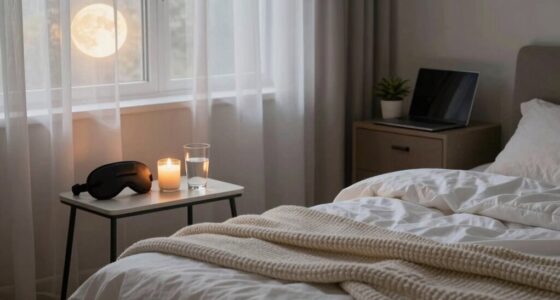

To create a sleep-friendly room when you’re on call at night, focus on controlling light by using blackout curtains, dimmable lamps, and red nightlights, and keep noise down with earplugs or white noise machines. Keep your room cool, ventilated, and well-sealed against external sounds. Turn off or silence electronics, and guarantee safety with proper electrical precautions. Small adjustments can make a big difference, and below, you’ll find even more tips to help you rest peacefully, no matter your schedule.

Get health and wellness essentials delivered free with Prime
- Fast, free delivery on millions of items
- Prime Video, Amazon Music and more included
- Member-only deals all year
Key Takeaways
- Use blackout curtains and low, warm lighting to minimize disruptions and promote relaxation before sleep.
- Employ white noise machines or earplugs to block external sounds during calls or rest periods.
- Maintain a cool, well-ventilated room to enhance comfort and support quality sleep.
- Silence notifications and turn off unnecessary electronics to prevent interruptions during rest.
- Communicate quiet hours with colleagues or family to ensure a disturbance-free sleep environment.
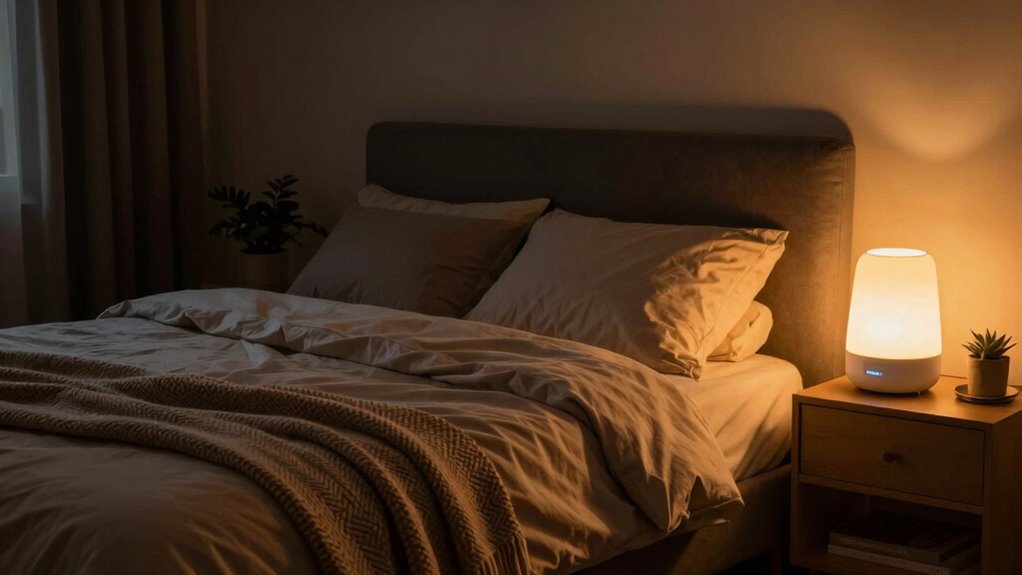
When you’re on call at night, creating a sleep-friendly environment becomes essential to guarantee you get the rest you need. Your goal is to minimize disruptions and make your space as calming as possible. Start by focusing on lighting control. You want to create a dark environment that signals your body it’s time to wind down. Use blackout curtains or shades to block out streetlights or passing headlights, and consider installing dimmable lights or using a bedside lamp with a soft, warm bulb. Avoid bright overhead lighting, which can interfere with your melatonin production. Instead, opt for low, warm-toned lighting that can be easily turned down when you’re ready for sleep. Having a nightlight with a red or amber hue can be helpful if you need to move around during the night without disturbing your sleep cycle.
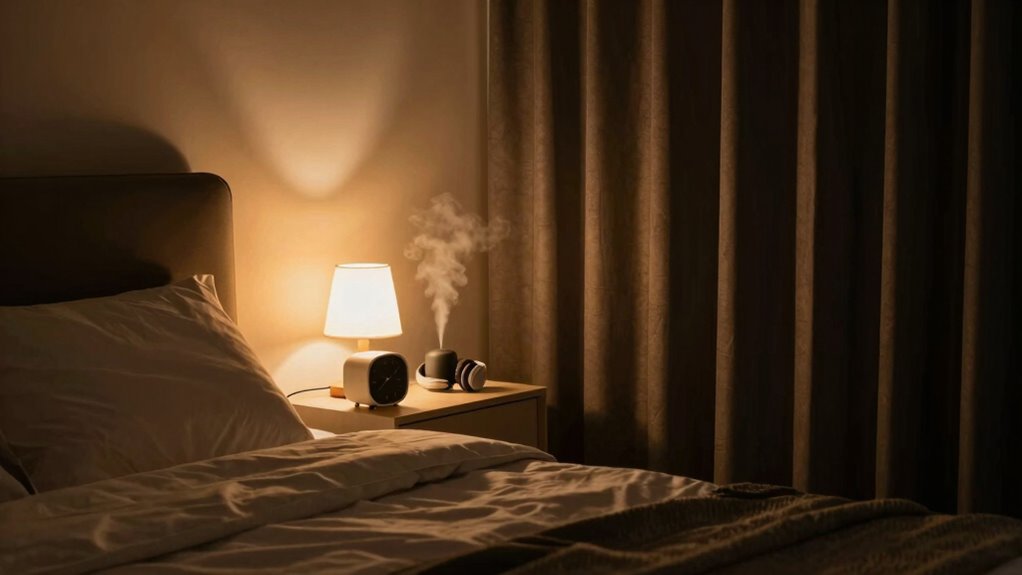
Noise reduction is equally crucial. When you’re on call, you need to be able to fall asleep quickly and stay asleep through interruptions. Invest in a good pair of earplugs or noise-canceling headphones to block out external sounds like sirens, traffic, or neighbors. If you prefer, a white noise machine or a fan can create a consistent sound environment that masks sudden noises, making it easier for you to drift off. Make sure your room is as quiet as possible—close windows, seal gaps around doors, and use heavy curtains or rugs to absorb sound. If you’re sharing your space, communicate your need for quiet during certain hours, especially if you’re on call and might need to wake up suddenly. Incorporating soundproofing techniques can further enhance your sleep environment and improve overall sleep quality. Additionally, selecting soundproofing materials with effective sound absorption qualities can significantly reduce ambient noise. Having an awareness of soundproofing options can help you choose the right solutions for your specific space.
Temperature also affects sleep quality, so keep your room cool and well-ventilated. A comfortable, slightly cooler environment helps you fall asleep faster and stay asleep longer. Combine this with your noise reduction efforts and proper lighting control to create an environment that promotes deep rest. Keep electronics out of the bedroom or turn off notifications to prevent interruptions. If you have to keep a device nearby, silence notifications and keep the screen brightness low. These small adjustments make a big difference in how quickly and soundly you sleep, especially when your schedule demands flexibility and alertness at odd hours. By controlling lighting and noise, you’re setting yourself up for better rest, so you’re ready to respond when called upon during the night. Additionally, understanding power safety measures can help prevent disruptions caused by electrical issues or technical failures during your rest periods.
As an affiliate, we earn on qualifying purchases.
Frequently Asked Questions
How Can I Block Out Noise During Night Shifts?
You can block out noise during night shifts by using white noise machines or fans to drown out disruptive sounds. Soundproofing techniques like sealing gaps around doors and windows, adding heavy curtains, or installing acoustic panels also help. Wearing earplugs offers immediate relief, while combining these methods guarantees a quieter environment, allowing you to rest better even when on call.
What Are the Best Blackout Curtains for Shift Workers?
The best blackout curtains for shift workers offer excellent light control and are made from thick, opaque materials like polyester or triple-weave fabrics. Look for curtains with a tight weave or thermal lining to block out sunlight and streetlights effectively. These materials help create a dark environment, making it easier for you to sleep during daylight hours. Choose a size that covers your window completely for maximum blackout benefits.
How Does Room Temperature Affect Sleep Quality on Call Nights?
Temperature trumps for restful nights on call. When your room’s too hot or cold, your sleep environment suffers, causing interruptions and restless nights. Maintaining a moderate, consistent temperature promotes proper temperature regulation, helping you drift into deeper sleep. A comfortable climate encourages relaxation, reduces wakefulness, and enhances overall sleep quality. Keep your room cool but cozy, and you’ll find it easier to recover and recharge during those challenging, call-filled nights.
Are Sleep Masks Effective for Daytime Napping?
Sleep masks are highly effective for daytime napping because they block out light, helping you fall asleep faster and enjoy deeper rest. The benefits of a sleep mask include improved sleep quality and increased relaxation. For the best napping tips, use a comfortable sleep mask and create a quiet, cool environment. This way, you optimize your nap, recharge efficiently, and wake up feeling refreshed, even during daylight hours.
How Can I Minimize Light Exposure Before Sleeping?
Think of your sleep environment as a dimming sunset, gradually easing you into rest. To minimize light exposure before sleeping, use lighting controls like blackout curtains and dimmer switches, and turn off screens at least an hour before bed. These simple steps help signal to your body that it’s time to wind down, making your sleep environment more conducive to quality rest and reducing disruptions caused by unwanted light.
As an affiliate, we earn on qualifying purchases.
Conclusion
Creating a sleep-friendly room isn’t just about setting the right environment—it’s about giving yourself the chance to truly rest, even when your nights are unpredictable. Sometimes, the smallest adjustments can make a big difference, like blocking out noise or dimming the lights. After all, when you prioritize your sleep, you’re not just preparing for tomorrow—you’re investing in yourself, quietly reminding you that even in chaos, there’s always a moment to find peace and recharge.
As an affiliate, we earn on qualifying purchases.
As an affiliate, we earn on qualifying purchases.
Halloween Picks
halloween
As an affiliate, we earn on qualifying purchases.