
TL;DR
Medecins Sans Frontieres (MSF) reports that community-led tuberculosis initiatives in Manila have significantly improved detection and treatment. The effort has built a lasting legacy, but challenges remain. This highlights the importance of local engagement in disease control.
Medecins Sans Frontieres (MSF) has confirmed that community-led tuberculosis (TB) response initiatives in Manila have created a lasting legacy, improving detection and treatment rates over the past several years. This development underscores the effectiveness of local community engagement in combating TB, a persistent public health challenge in the Philippines.
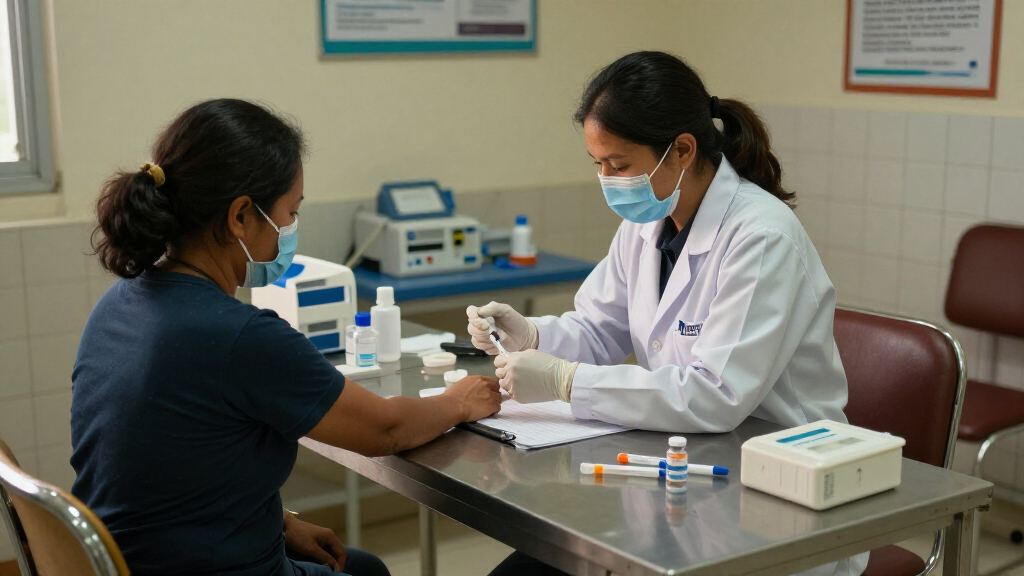
MSF’s recent report highlights that community-based TB programs in Manila, launched over the past decade, have led to increased case detection and improved treatment adherence among vulnerable populations. These programs involve local leaders and volunteers who facilitate outreach, education, and support for TB patients, especially in underserved districts.
According to MSF, these efforts have contributed to a measurable decline in TB incidence in targeted communities, with some areas reporting up to a 30% reduction in new cases over five years. The programs also emphasize contact tracing and community education, which have been key to early diagnosis and reducing transmission.
MSF’s Field Coordinator in Manila, Dr. Ana Reyes, stated, “The community-led approach has proven to be sustainable and effective, fostering trust and ensuring patients complete their treatment.” While these successes are notable, MSF warns that TB remains a significant health threat in Manila, especially with the emergence of drug-resistant strains and ongoing social determinants that hinder access to healthcare.
Why Community-Led TB Initiatives in Manila Matter
This legacy demonstrates that local, community-driven efforts can significantly improve TB control, especially in densely populated urban areas with limited healthcare access. The success in Manila offers a model for other cities facing similar challenges. It also highlights the importance of sustained investment in community health programs, which can lead to long-term reductions in disease burden.
Furthermore, these initiatives help address social determinants of health, such as poverty and stigma, which are often barriers to effective TB management. The ongoing challenges, including drug resistance and social inequities, underscore the need for continued support and adaptation of these community-led strategies.
As an affiliate, we earn on qualifying purchases.
Background of TB Challenges and Community Engagement in Manila
Philippines remains among the countries with the highest TB burden globally, with an estimated 600,000 new cases annually. Manila, as the capital, faces especially high transmission rates due to population density, poverty, and limited healthcare infrastructure in certain districts.
Historically, TB control efforts in Manila have focused on hospital-based treatment, which often failed to reach marginalized populations. Over the last decade, MSF and local health authorities have collaborated to implement community-led programs, leveraging local volunteers and leaders to improve outreach, diagnosis, and adherence to treatment.
These programs have been supported by international agencies and the Philippine government, emphasizing the importance of community participation in disease control. The approach aligns with global strategies that recognize community engagement as vital to ending TB.
“Our collaboration with MSF and local communities has helped us reach more patients and reduce transmission, but challenges like drug resistance remain.”
— Dr. Maria Santos, Philippine Department of Health
community health education materials
As an affiliate, we earn on qualifying purchases.
As an affiliate, we earn on qualifying purchases.
Unresolved Challenges and Future Risks in TB Control
While MSF reports positive impacts, it is still unclear how sustainable these community-led programs will be long-term without continued funding and political support. The emergence of drug-resistant TB strains poses a significant threat, and social barriers such as poverty, stigma, and healthcare access gaps persist.
Additionally, the extent to which these programs can be scaled up across all districts in Manila remains uncertain, and data on long-term health outcomes is still being collected.
TB treatment adherence reminder devices
As an affiliate, we earn on qualifying purchases.
As an affiliate, we earn on qualifying purchases.
Next Steps for Sustaining and Expanding Community TB Efforts
MSF and local health authorities plan to evaluate the long-term impact of current programs and explore ways to secure ongoing funding. Efforts will likely focus on expanding community engagement models, integrating TB services into broader health and social programs, and addressing drug resistance through improved diagnostics and treatment protocols.
Monitoring and research will continue to assess the effectiveness of these strategies, with a view to informing national policies and potentially replicating successful models in other urban settings.
As an affiliate, we earn on qualifying purchases.
Key Questions
How effective have community-led TB programs been in Manila?
According to MSF, these programs have increased TB detection, improved treatment adherence, and contributed to a 30% reduction in new cases in some districts over five years.
What are the main challenges facing TB control in Manila today?
Key issues include drug-resistant TB strains, social determinants like poverty and stigma, and gaps in healthcare access that hinder long-term disease management.
Can community-led TB programs be scaled up across the Philippines?
While promising, scaling up depends on sustained funding, political will, and adapting models to different local contexts. Ongoing evaluation will inform expansion efforts.
What role does MSF play in TB response in Manila?
MSF supports community engagement, provides technical assistance, and collaborates with local health authorities to implement and evaluate TB programs.
Source: local