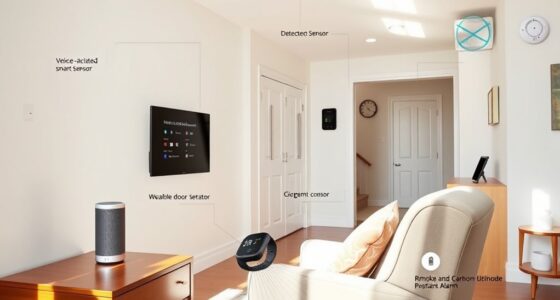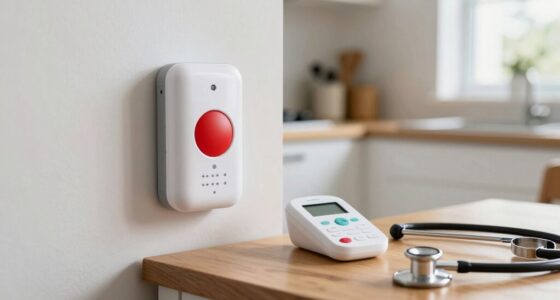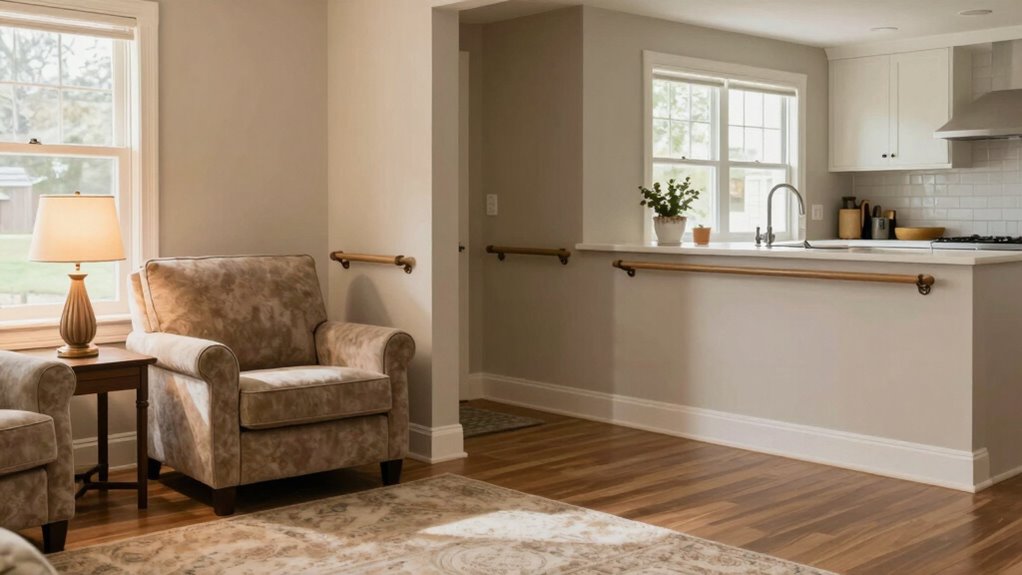

To make your home safer for aging in place, start by clearing clutter and securing rugs to prevent trips in common areas. Install grab bars and non-slip mats in bathrooms, and guarantee staircases have sturdy handrails and good lighting. Use smart sensors and voice-activated devices to monitor movements and alert help if needed. Proper lighting, especially at night, along with furniture with rounded edges, boosts safety and comfort. Keep exploring for more tips to create a fully secure space.

Get health and wellness essentials delivered free — and shop member deals
- Fast, free delivery on millions of items
- Access to Prime Big Deal Days deals on October 6–7
- Prime Video, Amazon Music and more included
Key Takeaways
- Install smart sensors and alert systems throughout the home to detect falls and unusual movements, ensuring timely assistance.
- Keep pathways clear, add non-slip rugs, and improve lighting in all rooms to prevent trips and falls.
- Equip bathrooms with grab bars, non-slip mats, and adequate lighting for safer hygiene routines.
- Ensure staircases have secure handrails, proper lighting, and clutter-free steps for safe navigation.
- Use rounded furniture edges and arrange furniture to allow easy, obstacle-free movement in every room.
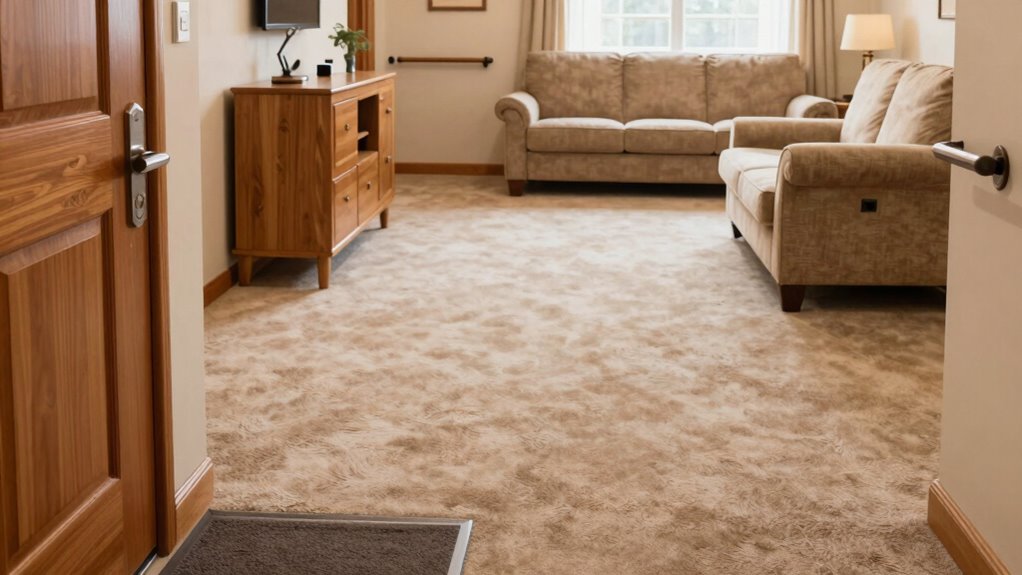
As you plan for aging in place, making your home safer becomes essential to maintaining independence and preventing accidents. One of the most effective ways to do this is by integrating smart technology designed specifically for fall prevention. These devices can alert you or a caregiver if you’ve fallen, monitor your movements, and even control lighting or appliances remotely. Smart sensors placed in key areas like hallways, bathrooms, and staircases can detect unusual movements or lack of activity, providing an extra layer of safety. Installing voice-activated assistants allows you to turn on lights, adjust thermostats, or call for help without needing to reach for switches or phones, reducing the risk of falls. By incorporating these smart technologies, you create a safer environment that responds proactively to potential hazards. Additionally, understanding home safety technology can help you select the most effective devices tailored to your needs.
When it comes to your living room or common areas, focus on removing clutter that could trip you up. Keep pathways clear and ensure rugs are secured with non-slip pads to prevent slips. Adding well-placed lighting, especially night lights, will help you navigate safely during evening hours. You might also consider installing motion-activated lighting that turns on automatically when you enter a room, reducing the chances of tripping over obstacles in the dark. Furniture should be arranged to allow easy movement and avoid sharp corners that could cause injury if bumped into. For added safety, consider furniture with rounded edges and sturdy armrests to help you sit and stand safely. Additionally, understanding nail biology and care can help maintain healthy nails, preventing issues like splits or infections that could hinder your ability to perform daily activities comfortably. Incorporating smart lighting solutions can further enhance safety by providing consistent illumination and reducing hazards in poorly lit areas. Using outdoor lighting that is solar-powered not only adds to your home’s safety but also offers an eco-friendly lighting option that requires minimal maintenance.
As an affiliate, we earn on qualifying purchases.
Frequently Asked Questions
What Is the Average Cost of Aging-In-Place Home Modifications?
The average cost of aging-in-place home modifications ranges from $2,000 to $10,000, depending on the scope. You’ll likely spend less on simple upgrades like adding grab bars and ramps, which improve accessibility features and home security. More extensive renovations, such as bathroom remodels or stair lifts, can push costs higher. Planning for these modifications guarantees your home stays safe and accessible as you age, fitting your budget and needs.
How Long Do Aging-In-Place Modifications Typically Last?
Aging-in-place modifications can last a good long while, often 10 to 15 years, if you keep up with maintenance. Think of it as a well-oiled machine—regular checks on fall prevention features and mobility aids guarantee they stay effective. Proper upkeep extends their lifespan, so your home remains safe and functional. With careful care, these modifications can serve you well through many years, giving you peace of mind.
Are There Government Grants or Financial Assistance Options Available?
Yes, there are government grants and financial assistance options available to help you make your home safer for aging in place. Programs like the U.S. Department of Housing and Urban Development (HUD) often offer grants for home modifications. You can also explore local or state assistance programs that provide financial help for accessibility improvements. Check with agencies in your area to find grants designed specifically to support aging-in-place modifications.
How Do I Choose the Right Contractor for Home Modifications?
Imagine walking into a warm, inviting space where every detail feels secure. To choose the right contractor, check their credentials—licenses, insurance, and reviews—to guarantee they’re qualified. Discuss your project timeline clearly, so both sides stay aligned. Trust your instincts; a reliable contractor communicates openly, respects your needs, and demonstrates experience in aging-in-place modifications. This way, your home transforms into a safe haven tailored perfectly for you.
What Are the Best Emergency Response Systems for Seniors?
You should consider emergency response systems that include emergency alerts and fall detection features. These systems automatically notify loved ones or emergency services if you need help, providing peace of mind. Look for options with quick response times, reliable connections, and easy-to-use devices. Some systems also offer GPS tracking, which can be essential if you’re away from home. Choose one tailored to your specific needs for maximum safety.
As an affiliate, we earn on qualifying purchases.
Conclusion
By making these small changes, you’re planting seeds of safety and reassurance throughout your home. Each upgrade becomes a steady anchor, guiding you softly through your days, like a gentle lighthouse in a storm. As you nurture these adjustments, they grow into a sturdy foundation of independence, illuminating your path with confidence. With each step, your home transforms into a haven—where comfort and security blossom together, ensuring you thrive in the place you love for years to come.
As an affiliate, we earn on qualifying purchases.
As an affiliate, we earn on qualifying purchases.
Fall Picks
fall essentials
As an affiliate, we earn on qualifying purchases.