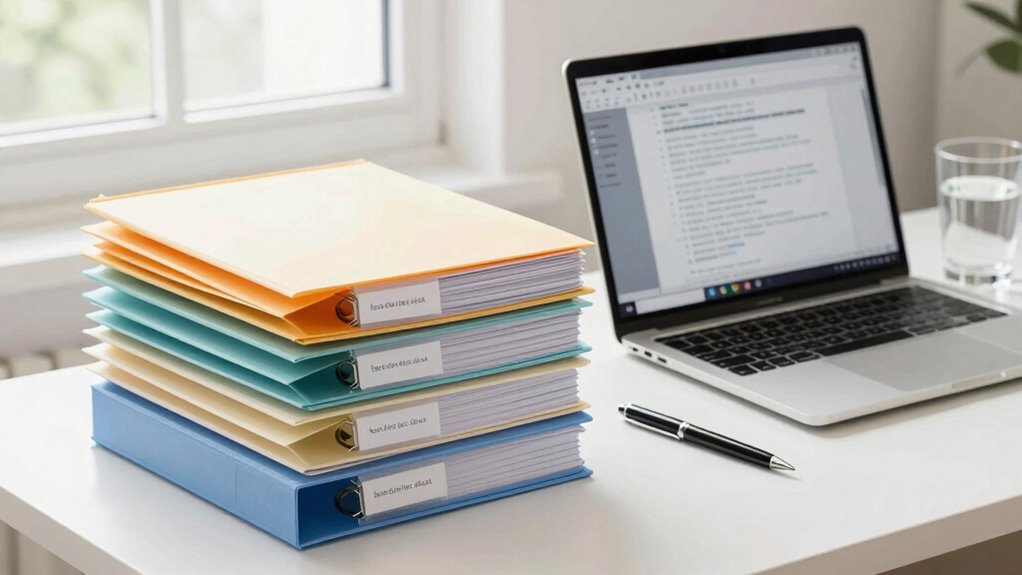

The best way to keep caregiving documents in one place is to use a secure digital storage system, like protected folders or cloud services, and organize physical papers in labeled, high-quality files or safes. Regularly update your master list of documents and restrict access to trusted individuals. Backup digital files off-site and use strong security measures. If you want to master quick access and security, there’s more you can do.
Key Takeaways
- Use a dedicated, labeled physical filing system or secure digital folders for organized storage.
- Scan and back up all documents to cloud storage for easy access and safety.
- Categorize documents by type (medical, legal, insurance) for quick retrieval.
- Limit access to trusted individuals and implement security measures like passwords and safes.
- Regularly review, update, and share a master list of documents with trusted caregivers.
Managing caregiving responsibilities can be overwhelming, especially when important documents are scattered across different locations. You might find yourself searching through piles of papers, trying to locate medical records or legal paperwork during urgent moments. Having everything organized and in one accessible place isn’t just convenient; it’s essential for providing the best care and ensuring legal and medical needs are met efficiently. Using proper storage solutions can significantly reduce stress and improve access to vital information.
Organizing caregiving documents in one accessible place ensures efficient care and quick access during urgent moments.
The first step is creating a dedicated, secure storage system for all your caregiving documents. A high-quality filing cabinet or a locked digital folder can work well, depending on whether you prefer physical or electronic copies. For physical documents, use labeled folders for categories like medical records, legal paperwork, insurance info, and emergency contacts. If you opt for digital storage, scan documents and organize them into folders on your computer or in a secure cloud service. This way, you can access critical information anytime, anywhere, without digging through stacks of paper. Ensuring that files are organized logically makes retrieval faster and more efficient. Additionally, understanding data security best practices can help protect sensitive information from unauthorized access. Incorporating digital organization tools can further streamline the management process and reduce the risk of misplaced documents. Staying informed about cybersecurity is crucial in safeguarding your digital files.
When it comes to medical records, guarantee these are up-to-date and easy to retrieve. Regularly request copies from healthcare providers and keep a detailed record of diagnoses, medications, treatment plans, and hospital visits. Having these details at your fingertips helps you communicate effectively with medical professionals and guarantees continuity of care. For legal paperwork, include documents such as power of attorney, living wills, insurance policies, and any guardianship papers. Keep these in a separate, clearly labeled section so you can quickly access them in emergencies.
It’s also wise to keep a master list of all your caregiving documents. This list should include the locations of each file or folder, as well as a brief description of what’s inside. Review and update this list periodically to reflect any new documents or changes in your caregiving situation. Consider sharing this master list with trusted family members or caregivers, so they can assist or step in if needed.
Secure storage is essential. Use password-protected digital folders or safes for physical documents that contain sensitive information. Make sure only trusted individuals have access to these files, especially when it involves legal paperwork or health information. Additionally, keep backup copies of critical documents in a separate location, such as a safe deposit box or an off-site digital storage service. This extra step guarantees that your important records are protected against loss, theft, or damage.

ENGPOW Accordion File Organizer, Fireproof Expanding File Folder with 13 Pockets Document Organizer with Handle & Labels, Portable Home Travel Safe Storage for Letter A4 Files and More, Black
High-Quality Materials: Protect your files with ENGPOW fireproof accordion file organizer.It is made of 3-layered non-itchy silicone-coated fiberglass…
As an affiliate, we earn on qualifying purchases.
As an affiliate, we earn on qualifying purchases.
Frequently Asked Questions
How Often Should I Update My Caregiving Document Folder?
You should update your caregiving document folder at least every six months or whenever there’s a major change in the care recipient’s condition. Regular updates help reduce caregiver stress by ensuring you have current info and legal documents ready. Keeping everything organized also provides emotional support, giving you confidence in managing emergencies. Review and refresh your documents often so you stay prepared and avoid unnecessary stress during unexpected situations.
What Digital Tools Are Best for Organizing Caregiving Documents?
You should consider using digital tools like secure cloud storage services, such as Google Drive or Dropbox, for organizing caregiving documents. These platforms offer easy access and sharing while maintaining digital security through encryption and password protection. Regularly update your files and guarantee your devices have strong security measures. Cloud storage keeps everything in one place, making it simple to access critical documents anytime, anywhere, with peace of mind about their safety.
How Can I Securely Share Documents With Family Members?
Sharing caregiving documents securely is like passing a delicate baton in a relay race. You should use secure cloud storage with password protection to keep files safe. Share access through encrypted links or invite family members directly, ensuring they have the right permissions. Always update passwords regularly and avoid sharing them over unsecured channels. This way, you keep everyone in the loop without risking sensitive information falling into the wrong hands.
What Legal Documents Should I Include in Caregiving Files?
You should include legal documents like a living will, power of attorney, and healthcare directives in your caregiving files. These documents use legal terminology that clarifies your loved one’s wishes and estate planning preferences. Having them organized guarantees you can easily access important instructions during emergencies. Be sure to keep copies of estate planning documents, such as wills and trusts, so you’re prepared to manage legal and medical decisions effectively.
How Do I Organize Documents for Different Care Providers?
You can’t afford to lose track of vital info—organizing documents for different care providers is essential. Use labeled binders or digital folders for each provider, making caregiver communication seamless and emergency preparedness straightforward. Keep a master list of contacts and documents for quick access. Regularly update files to reflect changes, ensuring everyone’s on the same page and prepared for anything. This keeps your caregiving efforts efficient and stress-free.

KYODOLED Safe Box with Digital Keypad Lock, Lock Box with Code for Personal Items, Metal Security Box for Cash, Passport, Jewelry, Ideal for Home, Office, Garage Sale, 11.8'' x 9.4'' x 3.5'', Black
Robust security: Made of heavy-duty steel, the Security box with code provides rock-solid security for your personal items,…
As an affiliate, we earn on qualifying purchases.
As an affiliate, we earn on qualifying purchases.
Conclusion
Now that you’ve gathered all your caregiving documents in one place, imagine the peace of mind you’ll have during the unexpected. But what if that one vital paper suddenly goes missing? Stay vigilant, keep your files secure, and regularly update your records. The key to seamless caregiving isn’t just organization—it’s anticipation. Are you ready to take the final step and guarantee everything is truly in place? The next move could change everything.

50-Pack Assorted Hanging File Folders, Letter Size with 55 Transparent Label Cards, 60 Sticker Labels,1/5-Cut Tabs–Home Office & Filing Cabinets
COLOR-CODED FILING MADE SIMPLE: Organize documents quickly using 10 coordinated colors with 5 folders per color. Ideal for…
As an affiliate, we earn on qualifying purchases.
As an affiliate, we earn on qualifying purchases.
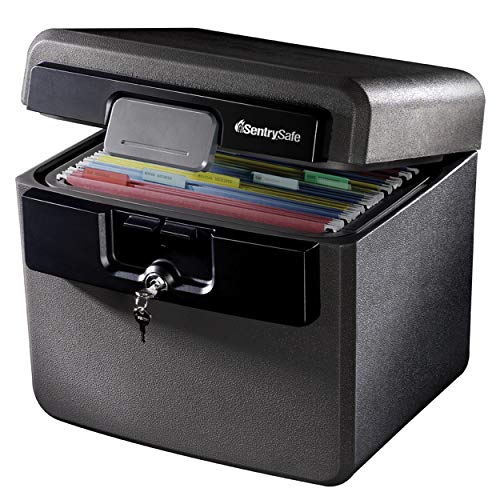
SentrySafe Black Fireproof and Waterproof Safe, File Folder and Document Box with Key Lock, 14.3 x 15.5 x 13.5 inches, HD4100
FIRE AND FLOOD PROTECTION FOR ESSENTIAL PAPERS: UL Classified to withstand high temperatures for up to thirty minutes…
As an affiliate, we earn on qualifying purchases.
As an affiliate, we earn on qualifying purchases.