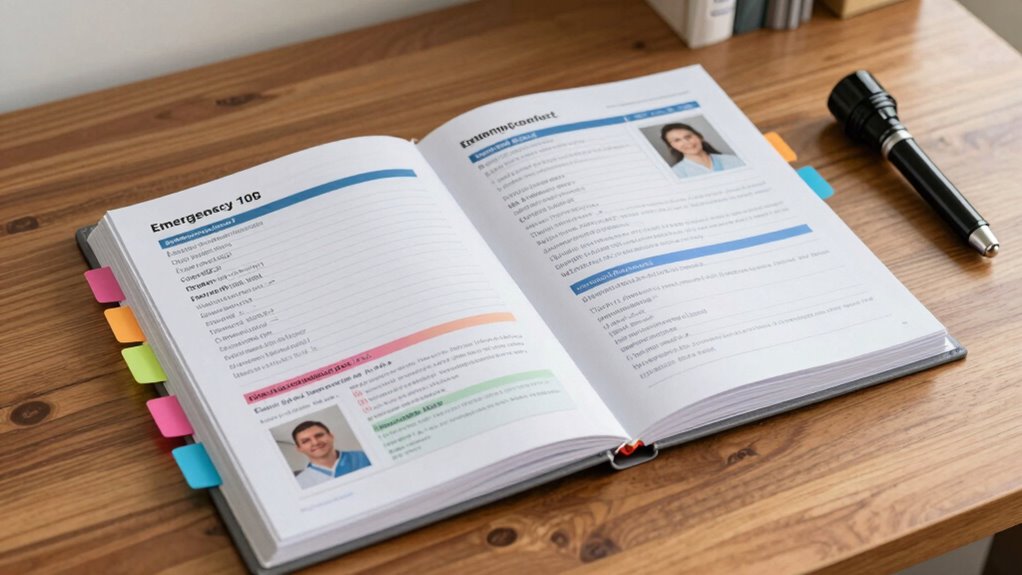

In your emergency information binder, include essential medical details like doctor contacts, health conditions, allergies, and current medications, along with copies of insurance cards and legal directives. Add pet care info such as vet contacts and medical history, and household contacts like family and neighbors, with emergency services details nearby. Keep personal IDs and vehicle info handy, and organize it for quick access. Staying prepared is crucial—keep exploring to learn more ways to be ready for any crisis.

Get health and wellness essentials delivered free — and shop member deals
- Fast, free delivery on millions of items
- Access to Prime Big Deal Days deals on October 6–7
- Prime Video, Amazon Music and more included
Key Takeaways
- Include medical information: health conditions, allergies, medications, insurance, and emergency directives.
- List contact details for family, friends, healthcare providers, and local emergency services.
- Store copies of important legal documents like power of attorney, living wills, and IDs.
- Document pet care info: veterinarian contacts, medical history, and feeding instructions.
- Keep updated and accessible in a designated location, reviewing regularly for accuracy.
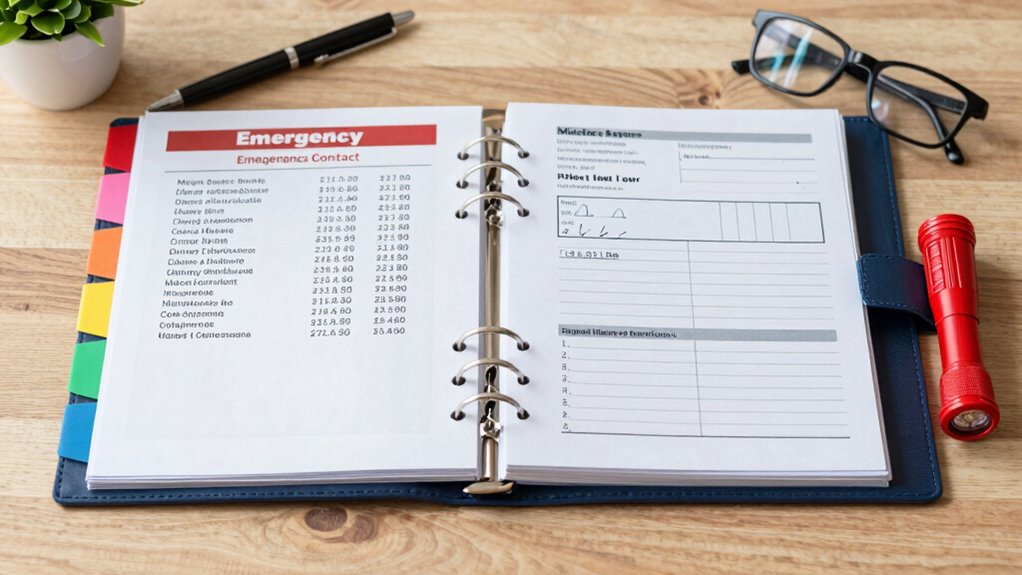
Have you ever considered how prepared you are for unexpected emergencies? Creating an emergency information binder is a simple but powerful step toward peace of mind. This binder acts as your go-to resource when chaos strikes, guaranteeing you have quick access to critical information. When assembling it, start by including your medical contacts—your primary care physician, specialists, pharmacies, and any healthcare providers you trust. Make certain to update this section regularly, especially if you change doctors or medications. Having this information at your fingertips can save precious time if you or a loved one needs urgent medical attention.
Preparing an emergency binder ensures quick access to vital medical contacts and information when it matters most.
Don’t forget to include details about your health conditions, allergies, and current medications. These are essential for emergency responders or medical personnel who may not be familiar with your medical history. Additionally, include copies of insurance cards and any necessary medical directives, like power of attorney or living wills. These documents help guarantee that your healthcare preferences are respected and that billing processes go smoothly if needed. Incorporating natural features into your emergency planning, such as knowing the location of nearby shelters or safe zones, can further enhance your preparedness.
If you have pets, your pet care information should also be part of your binder. Include contact details for your veterinarian, pet sitter, or kennel. List your pet’s medical history, vaccination records, and any medications your pet needs. This way, if you’re unable to care for your animals during an emergency, someone else can step in with the necessary information. Also, keep recent photos of your pets in case they get lost, along with any special instructions for their care or feeding routines. Understanding self-sufficiency and resourcefulness can be crucial during extended emergencies, especially if access to supplies is limited.
Other important items to include are emergency contacts—family members, friends, neighbors, or coworkers who can assist or relay messages. Add a list of your allergies, medications, and any special health needs for everyone in your household. For added security, include a copy of your driver’s license or ID, and if relevant, your vehicle’s registration and insurance details. Being aware of US tax implications in emergencies, such as tax deadlines or legal considerations, could also be beneficial if your circumstances change unexpectedly.
Finally, consider including a list of local emergency services, such as hospitals, fire departments, and police stations. Keep the binder in a handy location, like near your front door or in a designated emergency kit. Remember to review and update it periodically, especially after medical appointments or changes in your circumstances. Having an organized emergency information binder guarantees that, in moments of crisis, you or your loved ones won’t waste valuable time searching for essential details. It’s a simple step that can make a big difference when it matters most.
emergency information binder organizer
As an affiliate, we earn on qualifying purchases.
As an affiliate, we earn on qualifying purchases.
Frequently Asked Questions
How Often Should I Update My Emergency Information Binder?
You should update your emergency information binder at least once a year or whenever there’s a significant change, like a new medication or contact. Incorporate a maintenance schedule to remind yourself. Also, create a digital backup so you can access critical info anytime, even if the physical binder is lost or damaged. Regular updates guarantee your information stays current, making it more reliable in emergencies.
What Should I Include if I Don’t Have Certain Documents?
If you’re missing paperwork, don’t panic—digital copies are your best backup. Include scanned or photographed versions of essential documents like IDs, insurance cards, and medical info. If some documents aren’t available, note that they’re missing and plan to obtain replacements. Keep these digital copies in a secure cloud or USB drive, so you can access them quickly in an emergency. This way, even if you’re in the wild west, you’re prepared.
Where Is the Best Place to Store My Emergency Binder?
You should store your emergency information binder in a secure, easily accessible location, like a designated cabinet or a high shelf near an exit. Keep it where family members know to find it quickly, but avoid places prone to flooding or extreme heat. Accessibility tips include labeling the spot clearly and ensuring everyone knows its location. Consider also keeping a digital copy stored securely online for added safety.
Should I Share My Emergency Binder With Family Members?
Yes, sharing your emergency binder with family members is crucial for effective family communication during emergencies. It guarantees everyone has access to essential information, like medical details and emergency contacts. However, consider privacy concerns and only share sensitive info with trusted relatives. You can also create a version with limited details for broader family use. Openly discuss the binder’s contents to keep everyone prepared and informed.
How Can I Make My Emergency Binder Accessible During a Disaster?
Think of your emergency binder as a lighthouse guiding you through chaos. To guarantee disaster preparedness, keep a digital copy on a secure cloud service and print a waterproof, portable version. Store it in a designated, easily accessible spot, like near your front door or in a fireproof safe. Follow accessibility tips by labeling sections clearly, using large fonts, and sharing copies with trusted family members, so everyone’s prepared when it matters most.
As an affiliate, we earn on qualifying purchases.
Conclusion
Think of your emergency information binder as a trusty compass in stormy seas—your guiding star when chaos surrounds you. By keeping it up-to-date and easily accessible, you’re planting a safety net that catches you before you fall. It’s the secret map that leads you through uncertainty with confidence and calm. So, fill it with essential details today, and let it be your steady anchor in life’s unpredictable waves.
As an affiliate, we earn on qualifying purchases.
As an affiliate, we earn on qualifying purchases.
Fall Picks
fall essentials
As an affiliate, we earn on qualifying purchases.