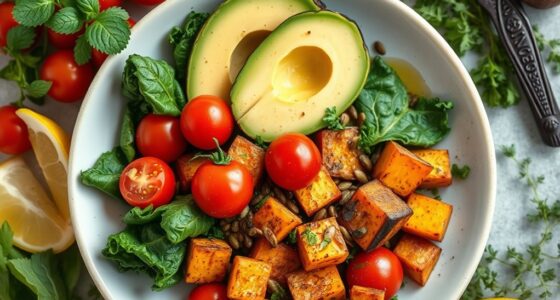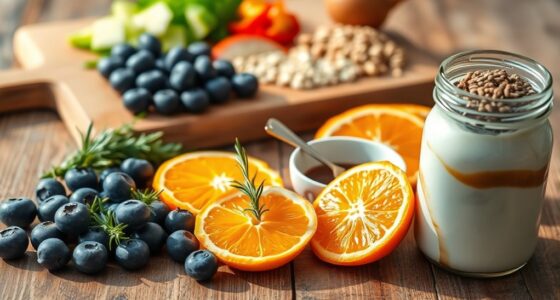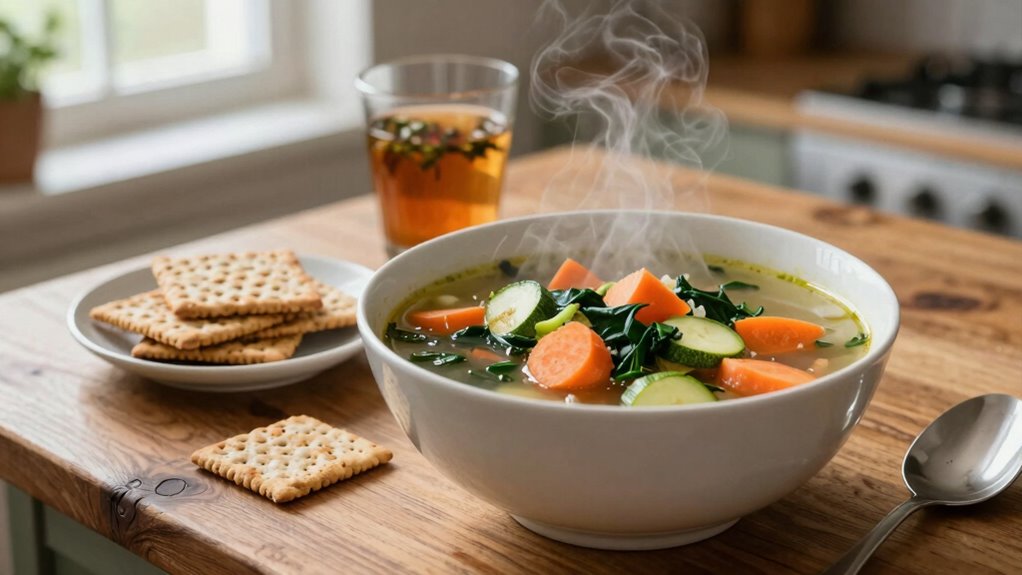

When you seek low-sodium comfort food, focus on flavorful herbs like rosemary, thyme, and oregano to add aroma and depth. Incorporate garlic, onion powders, and a splash of citrus to brighten dishes naturally. Use nutrient-packed ingredients like roasted vegetables, beans, or whole grains to boost satisfaction. Enhance flavors with umami-rich ingredients and layered spice combinations, all without adding salt. Keep exploring for more ideas to create satisfying, flavorful meals that feel indulgent without the sodium.
Key Takeaways
- Prepare hearty vegetable soups with homemade, salt-free broth and flavor layers from herbs, garlic, and citrus.
- Use tender roasted vegetables and beans for satisfying textures and nutrient density.
- Season lean proteins like chicken or fish with herbs, citrus, and spice blends instead of salt.
- Incorporate umami-rich ingredients like sun-dried tomatoes or dried mushrooms to boost flavor naturally.
- Enhance dishes with vinegar and spice combinations to add brightness and warmth without extra sodium.
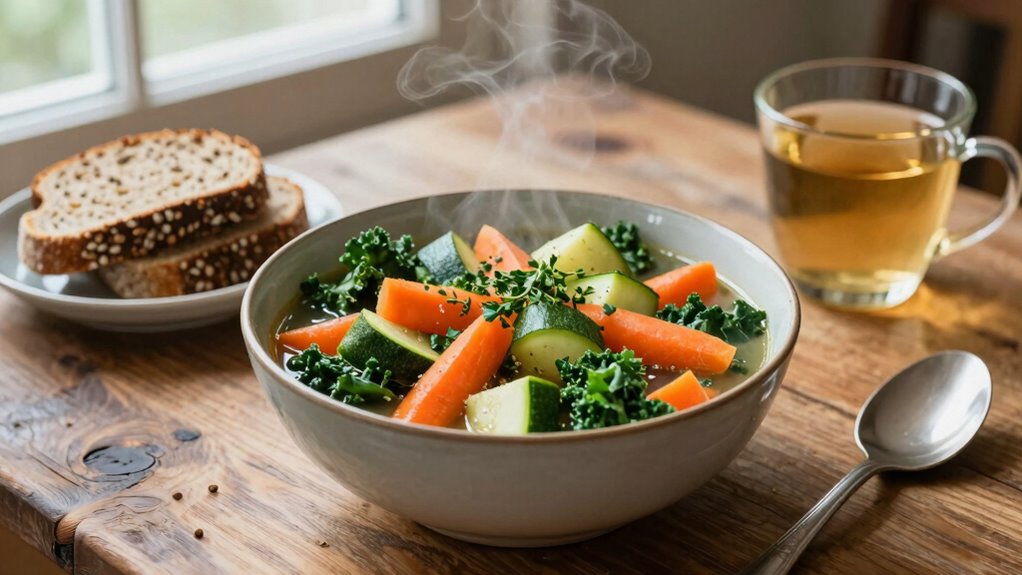
Are you craving comforting dishes without the extra salt? It’s entirely possible to enjoy hearty, satisfying meals that are low in sodium but still full of flavor. The key is using flavorful substitutions that enhance taste without relying on salt. For example, swap out salt for herbs like rosemary, thyme, or oregano to add depth and aroma. Fresh garlic or onion powders can boost flavor without the need for additional salt, and a splash of citrus—like lemon or lime—brightens dishes naturally. Incorporating nutrient-rich ingredients also helps make your meals more satisfying and nourishing. Think about adding vegetables like spinach, bell peppers, or tomatoes, which bring vibrant flavors and essential vitamins to your plate.
When cooking low-sodium comfort food, focus on building layers of flavor through natural ingredients. Instead of salt, you can use spices such as paprika, cumin, or turmeric, which impart warmth and richness. Using vinegars—apple cider or balsamic—can add a tangy kick that mimics the brightness of salted dishes. Stock or broth can be replaced with homemade versions that contain no added salt, allowing you to control sodium levels while still creating flavorful bases for soups and stews. Incorporating nutrient-rich ingredients like beans, lentils, or whole grains, which naturally enhance flavor, also add texture and heartiness while boosting the nutritional profile of your meal. Additionally, focusing on hormesis—the beneficial stress that enhances flavor and nutrient absorption—can elevate even simple dishes. Incorporating umami-rich ingredients like dried mushrooms or sun-dried tomatoes can also deepen the overall flavor profile without added salt.
For protein, lean poultry, fish, or plant-based options like tofu can be seasoned with herbs and citrus to bring out their natural flavors. Marinades made with olive oil, garlic, and herbs are excellent for infusing flavor without salt. When preparing dishes like casseroles or pasta, consider incorporating roasted vegetables to add sweetness and complexity. These ingredients naturally enhance the overall taste of the dish, making it satisfying even without high salt content. Additionally, understanding flavor layering can help you create more complex and satisfying dishes that taste rich without the need for extra salt.
As an affiliate, we earn on qualifying purchases.
Frequently Asked Questions
Are Low-Sodium Foods Suitable for All Dietary Restrictions?
Low-sodium foods can suit many dietary restrictions, but it depends on individual needs. You should explore low sodium alternatives to salt and processed ingredients, which help maintain flavor without excess sodium. By focusing on natural herbs, spices, and flavor enhancement techniques, you can enjoy tasty meals that align with your restrictions. Always check labels and consult healthcare providers to verify the options meet your specific dietary requirements.
How Can I Enhance Flavor Without Salt?
You can boost flavor without salt by experimenting with herbs, spices, and citrus. Notably, umami enhancement often makes dishes taste richer without sodium. Use ingredients like garlic, onion, mushrooms, or tomato paste to intensify flavors naturally. Incorporate vinegar or lemon juice for brightness. Flavor boosting with these elements creates depth and complexity, making your meals satisfying and comforting without relying on added salt.
Which Herbs and Spices Are Best for Low-Sodium Cooking?
You should try herb combinations like basil, oregano, and thyme, which boost flavor without added salt. Spice blends such as garlic powder, paprika, and cumin also work well. Mix these to create your own flavorful seasoning, and experiment with different herb and spice combinations to find what you enjoy most. These options add depth and aroma to your dishes while keeping sodium levels low, making your comfort food delicious and healthy.
Can I Use Salt Substitutes Safely in Low-Sodium Recipes?
Yes, you can use salt substitutes safely in low-sodium recipes, but do so cautiously. Salt substitutes often contain potassium chloride, which can enhance flavor without adding sodium. They help with flavor enhancement, making your dishes taste savory without the salt. However, if you have kidney issues or are on medication, check with your doctor first, as high potassium intake from substitutes may cause health concerns.
How Long Do Low-Sodium Meals Stay Fresh?
Your low-sodium meals can stay fresh for about 3 to 4 days when stored properly. To keep them at their best, follow storage tips like using airtight containers and refrigerating promptly. Think of it as giving your food a little time to rest before enjoying it again. For longer freshness, consider freezing leftovers and labeling them with dates to preserve flavor and quality.
As an affiliate, we earn on qualifying purchases.
Conclusion
Now, you’re armed with a treasure chest of low-sodium comfort recipes, ready to warm your soul without tipping the sodium scales. Think of these dishes as a gentle hug in a bowl, wrapping you in cozy flavors that nurture your body and spirit. So, go ahead—embrace these wholesome creations, and let your taste buds dance to a symphony of savory goodness. After all, comfort food can be both nourishing and heartwarming, even with a dash less salt.
umami flavor enhancer dried mushrooms
As an affiliate, we earn on qualifying purchases.
As an affiliate, we earn on qualifying purchases.
As an affiliate, we earn on qualifying purchases.