
This checklist is for households putting together practical supplies for routine wellness checks and everyday first aid. Use it to think through what you may want available at home, and choose items that fit the people who will use them. Household needs and comfort with each item are good places to start.

Get health and wellness essentials delivered free with Prime
- Fast, free delivery on millions of items
- Prime Video, Amazon Music and more included
- Member-only deals all year
The sections follow the six picks provided: temperature checking, first aid, blood pressure monitoring, oxygen tracking, hot or cold application, and medication organization. Each section explains why the category earns a spot, what to consider while shopping, and who the listed pick may suit. Category by category, the checklist keeps the focus on fit and intended use.
Before buying, check the product details and instructions for dimensions, included components, care, and any compatibility requirements. Consider who will use the item and whether they can operate it comfortably. These supplies support preparedness and organization; for health concerns, follow guidance from a qualified clinician. Read the instructions and keep supplies accessible to the people who need them.
Digital Thermometer
A thermometer is a useful household tool for checking temperature when someone feels unwell. The listed pick is named a digital candy thermometer, with a pot clip and a 10-inch stainless steel probe. That wording points to a cooking-oriented design, so the key shopping mistake here would be assuming that the product is intended or suitable for body-temperature readings. Confirm the intended use in the product information before choosing it for health checks.
For a thermometer meant for personal use, compare the measurement method, display readability, cleaning instructions, and whether the device is designed for the intended age group. Check how the probe or sensor is used and whether the instructions explain placement clearly. Consider whether the people who may need it can read and operate it comfortably. The product name alone does not establish clinical suitability or compatibility with a particular use. Match the device to the task, and ask a clinician or pharmacist if you are unsure which type is appropriate.
What to look for:
- Product information stating it is intended for body-temperature readings
- A measurement method suited to the intended user
- Clear display and operating instructions
- Cleaning guidance appropriate to the intended use
- Age-group guidance, if relevant
Digital Candy Thermometer with Pot Clip and 10-Inch Stainless Steel Probe

This digital thermometer has a pot clip, a large LCD display, and a 10-inch stainless steel probe for cooking, baking, frying, and candy making. It reads temperatures in 3–5 seconds across a range of -58°F to 572°F, and its IP65-rated design can be rinsed under running water.
Pros:
- Pot clip attaches to the cookware and leaves hands free.
- Large digital display presents readings in clear digits.
- Long stainless steel probe is durable and avoids the breakage and leakage risk of glass.
- IP65-rated design can be rinsed under running water.
Cons:
- Product care instructions say not to soak it.
- Requires an LR44 battery.
Best for: Shoppers who have confirmed the thermometer suits their intended use
Not ideal for: Anyone seeking a body thermometer without confirming suitability
Bottom line: The listed pick is described as a candy thermometer, so verify its intended use before considering it for health checks.
First Aid Kit
A first aid kit can keep useful supplies together so they are easier to find when a minor mishap happens. The listed pick is named a large pro first aid and emergency kit for five to six people. Use that description as a starting point, then inspect the contents list: the product name does not specify which supplies are inside, how they are arranged, or whether they match your household’s needs. Review the contents rather than relying on the headline alone.
Consider who may use the kit, where it will be stored, and whether the container can be reached quickly. Check whether the listed supplies make sense for your household and whether any personal items need to be kept separately. A common buying mistake is choosing a kit by its size label without checking what is included or how you will keep it organized. Look for clear restocking guidance and instructions, and make sure the kit is accessible to the people expected to use it. Plan for access as well as contents.
What to look for:
- A full contents list before purchase
- Supplies appropriate to your household’s needs
- A container that can be stored and accessed conveniently
- Clear instructions and restocking information
- Room to keep any separately needed personal items
SurviveX Large Pro First Aid Kit, Emergency Kit for 5-6 People

The SurviveX Large Pro First Aid Kit is designed for outdoor adventures, travel, and emergencies, providing comprehensive supplies to treat injuries for 5-6 people. It features innovative wound closure methods, organized compartments, and mounting options for versatility and quick access.
Pros:
- Suitable for large groups and outdoor activities
- Innovative wound closure reduces scarring and speeds healing
- Organized compartments for quick access in emergencies
- Mountable and MOLLE compatible for versatile attachment
Cons:
- May be larger and heavier to carry
- Specific contents not detailed, may need customization
- Price not specified
Best for: Households looking for a kit labeled for five to six people
Not ideal for: Shoppers who need specific supplies not confirmed in the contents list
Bottom line: Check the included supplies and storage details to see whether this kit fits your household.
Blood Pressure Monitor
A blood pressure monitor can help someone keep readings organized when home monitoring is part of their care routine. The listed pick is an upper-arm monitor with a no-wrap auto-fit design. Before choosing it, check the manufacturer’s instructions and confirm how the cuff or fitting system works; the product name alone does not explain its sizing range or whether it will suit every user. Fit is essential for comfortable, consistent use.
Review the stated arm-size range, setup steps, display, and any storage or tracking features you plan to use. Consider whether the person taking readings can position the device and operate it independently, or whether they will need help. A common mistake is buying based only on the phrase “auto-fit” without confirming the fit range and instructions. If readings are being used to guide care, follow a clinician’s advice on how and when to measure, and how to share results. Use the instructions consistently and ask a clinician about questions specific to your situation.
What to look for:
- A stated arm-size range and clear fitting instructions
- An upper-arm design suited to the intended user
- A display that is easy for the user to read
- Setup and measurement guidance
- Tracking or storage features that match your routine
Saker Upper Arm Blood Pressure Monitor with No-Wrap Auto-Fit Design

This automatic blood pressure monitor uses a slide-in design for arms measuring 8.5–15.7 inches and displays systolic, diastolic, and pulse readings. It stores up to 199 readings for each of four users and includes a pulse irregularity reminder.
Pros:
- Slide-in, no-wrap design simplifies fitting
- Stores readings for four users
- Large display and one-touch operation
- Can run from USB power
Cons:
- Fits arm circumferences only from 8.5 to 15.7 inches
- USB cable is recommended for steady power
Best for: People seeking an upper-arm monitor with an auto-fit design
Not ideal for: Users whose arm size or needs fall outside the stated fit guidance
Bottom line: Check the fitting range and instructions before deciding whether this monitor suits its intended user.
Pulse Oximeter
A fingertip pulse oximeter is a compact category of device for people who want to track readings at home. The listed pick is named as a fingertip model with Bluetooth app blood oxygen tracking. Before buying, check how the app connects, which devices or operating systems it supports, and whether you are comfortable using an app as part of the routine. Check compatibility before relying on a connected feature.
Look at the operating instructions, display readability, and how the device is placed on the finger. Confirm any stated user guidance and whether the product information explains limitations or conditions for taking a reading. A common mistake is treating a displayed number as a diagnosis or assuming the app replaces medical advice. If monitoring is part of a care plan, ask a clinician how to use and interpret the device and when to seek help. Follow clinical guidance for decisions about symptoms or readings.
What to look for:
- Supported phones and operating systems for the app
- Clear placement and operating instructions
- A readable display for the intended user
- Information about use and stated limitations
- A tracking approach that fits your routine
Fingertip Pulse Oximeter with Bluetooth App Blood Oxygen Tracking
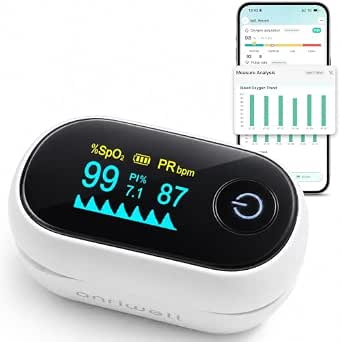
The Anriwell Fingertip Pulse Oximeter syncs SpO₂, pulse rate and perfusion index data to a free Bluetooth app, allowing long‑term trend tracking and multi‑user health records. It provides FDA 510(k) cleared accuracy of ±2% SpO₂ and ±2 bpm with an 8‑second measurement time on a large HD LCD display.
Pros:
- Bluetooth app syncs SpO₂, pulse rate and PI data for easy trend tracking.
- FDA 510(k) cleared with ±2% SpO₂ accuracy and fast 8‑second readings.
- Large HD LCD display with backlight provides clear readings in any lighting.
- Lightweight (38 g) and portable design suitable for travel, sports and aviation.
Cons:
- Intended for wellness monitoring only; not a substitute for medical diagnosis.
- Requires AAA batteries and manual Bluetooth pairing steps.
Best for: Shoppers who want fingertip readings with app tracking
Not ideal for: Anyone who does not want app-based tracking or cannot confirm compatibility
Bottom line: Verify phone compatibility and follow appropriate guidance for using and interpreting readings.
Reusable Hot and Cold Pack
A reusable hot and cold item can be useful to have on hand when someone wants an option for temperature-based comfort. The listed pick is called a hot and cold massage ice roller ball. Check the product details to understand how it is prepared, whether it is intended for hot use, cold use, or both, and how it should contact the skin. Understand the use method before adding it to your routine.
Consider the shape and size, how it is held or rolled, and whether the intended user can handle it comfortably. Read any guidance about preparation, contact time, cleaning, and storage. A common mistake is assuming that a reusable roller works like every other hot or cold pack; the name does not establish how it should be used or for whom. Check the instructions for cautions, and seek professional advice when applying heat or cold may be inappropriate for a person’s circumstances. Comfort and handling matter as much as convenience.
What to look for:
- Instructions for preparing it for hot or cold use
- Guidance on skin contact and duration
- A shape and size the intended user can handle
- Cleaning and storage information
- Cautions relevant to the intended use
Hot and Cold Massage Ice Roller Ball

This reusable gel-filled massage roller can be chilled for about 2 hours or warmed in water for 15 to 20 minutes. Its 70 mm ball rolls in every direction to provide adjustable pressure for muscle massage at home, after workouts, or while traveling.
Pros:
- Can be used cold or warm
- 360-degree rolling motion reaches multiple body areas
- Weighted ball and textured grip support controlled pressure
- Compact and includes a drawstring pouch for travel
Cons:
- Requires advance chilling or warming before use
- The 7.4 oz weight may feel heavy for some users
Best for: People seeking a reusable roller for hot or cold application
Not ideal for: Anyone needing a larger wrap-style pack or unclear on safe use
Bottom line: Check preparation, contact, and care instructions to confirm this roller suits your intended use.
Pill Organizer
A pill organizer can make it easier to keep medications arranged as part of a personal routine. The listed pick is a waterproof organizer set with a removable pouch system. Check the product details for its compartments, layout, and how the pouch attaches or separates; the name does not specify capacity or how the organizer is divided. Choose a layout that matches the person’s routine and is easy to understand.
Think about who will fill and use the organizer, whether labels are readable, and how it will be carried or stored. Confirm what “waterproof” means in the product information and whether the removable pouches stay secure during everyday handling. A common mistake is selecting an organizer based on portability alone while overlooking whether its compartments suit the schedule. Keep medications in their original packaging when required by their instructions, and ask a pharmacist if transferring a particular medication raises questions. Follow medication guidance and keep the organizer clearly associated with its intended user.
What to look for:
- Compartment count and arrangement
- Readable labels and a layout the user can follow
- Details on removable pouch attachment and use
- Specific explanation of the waterproof claim
- Medication handling guidance for the items being organized
Waterproof Pill Organizer Set with Removable Pouch System

This waterproof travel pill organizer features a durable, leather-look exterior with a removable binder-style system containing 14 sealed pill pouches. It offers flexible storage for pills, vitamins, and small first-aid items, with color-coded labels and mesh pockets for easy organization and portability.
Pros:
- Waterproof and durable design keeps medications secure and discreet
- Removable binder system allows flexible organization for up to 14 days
- Color-coded labels and writable pouches enhance sorting and identification
- Includes mesh pockets for additional storage of small items
Cons:
- May be bulky for minimalists or those with limited space
- Relies on manual labeling, which may require extra effort
- Not suitable for large pill quantities or bulk medication storage
Best for: People who want an organizer with removable pouches
Not ideal for: Users whose schedules or medication instructions require a different arrangement
Bottom line: Confirm the compartment layout and medication handling guidance before choosing this organizer.
Build your checklist in the order that addresses your household’s most immediate needs: first confirm the thermometer is intended for the kind of reading you need, then review first aid contents and any monitoring tools that are part of a care routine. Add comfort and medication organization items after checking their instructions and fit. Start with intended use, then compare the details that affect daily handling.
You do not need every category at once; a thoughtful selection that household members can use and maintain is a practical start. Keep instructions accessible, review supplies periodically, and ask a qualified professional about questions tied to health decisions or medication handling. Choose what fits your home and the people who will rely on it.