

If you want stunning Milky Way shots in 2025, I recommend trying a mix of wide-angle lenses with great low-light performance. The Sony E 16mm F2.8 is super portable and sharp, perfect for broad skies. The VILTROX 75mm f/1.2 lenses excel in low light and offer excellent detail. The AstrHori 6mm F2.8 fisheye captures immersive star scenes. And the 78 D Double Aspheric gives clarity for clinical views. Keep exploring, and you’ll find the best fit for your night sky adventures.
Key Takeaways
- Look for lenses with wide focal lengths (14-24mm) to capture expansive night sky scenes and the Milky Way’s full structure.
- Prioritize lenses with large apertures (f/1.2–f/2.8) for better light-gathering and reduced star trailing.
- Choose lightweight, weather-sealed lenses built with durable materials for outdoor astrophotography in various conditions.
- Opt for high-quality optical elements that minimize aberrations and flare, ensuring sharp, clear Milky Way images.
- Consider compatibility with your camera system and portability to facilitate easy setup and multi-night astrophotography sessions.
78 D Double Aspheric Lens
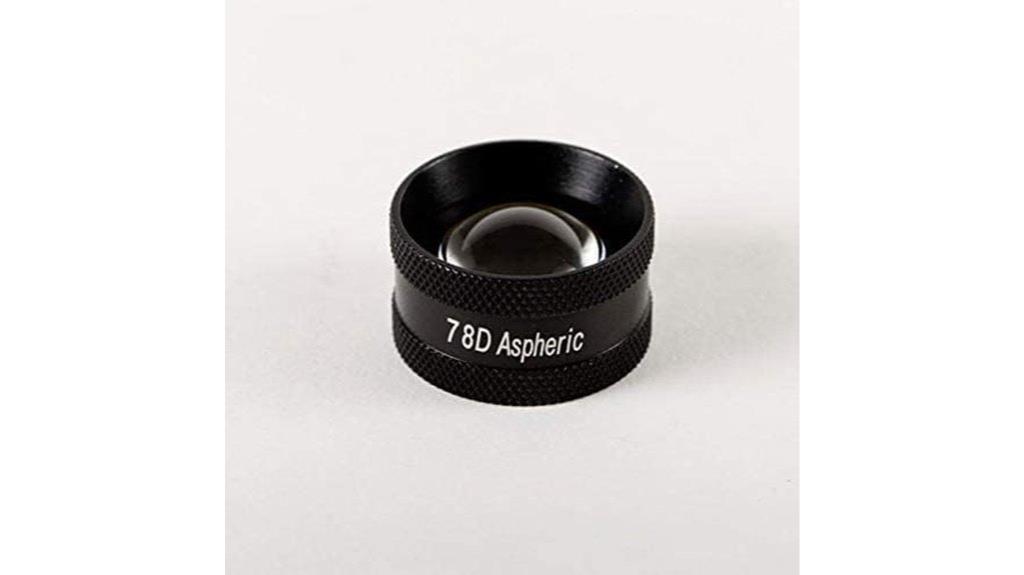
The 78 D Double Aspheric Lens is ideal for clinicians who need both a wide field of view and precise magnification during eye examinations. I appreciate how it balances these features, offering an extended working distance from the cornea that enhances comfort. Its design improves clinical accuracy, making detailed examinations easier. Weighing just 5 ounces, it’s lightweight and easy to handle, while its compact size fits comfortably in my kit. Since its release in October 2020, it’s become a best-seller, earning positive reviews for performance. Overall, this lens provides reliable, sharp visuals, helping me deliver better patient care with confidence.
Best For: clinicians and eye care professionals seeking a high-performance slit lamp lens with a wide field of view and precise magnification for detailed eye examinations.
Pros:
- Balances field of view and magnification for comprehensive examinations
- Extended working distance enhances clinician comfort and accuracy
- Lightweight (5 ounces) and compact for easy handling and portability
Cons:
- Specifications may vary due to ongoing research and development
- Limited customer reviews (9 ratings) may affect confidence for some users
- Price details are not fixed and may fluctuate across different stores
Sony E 16mm F2.8 Wide-Angle Prime Lens (SEL16F28)
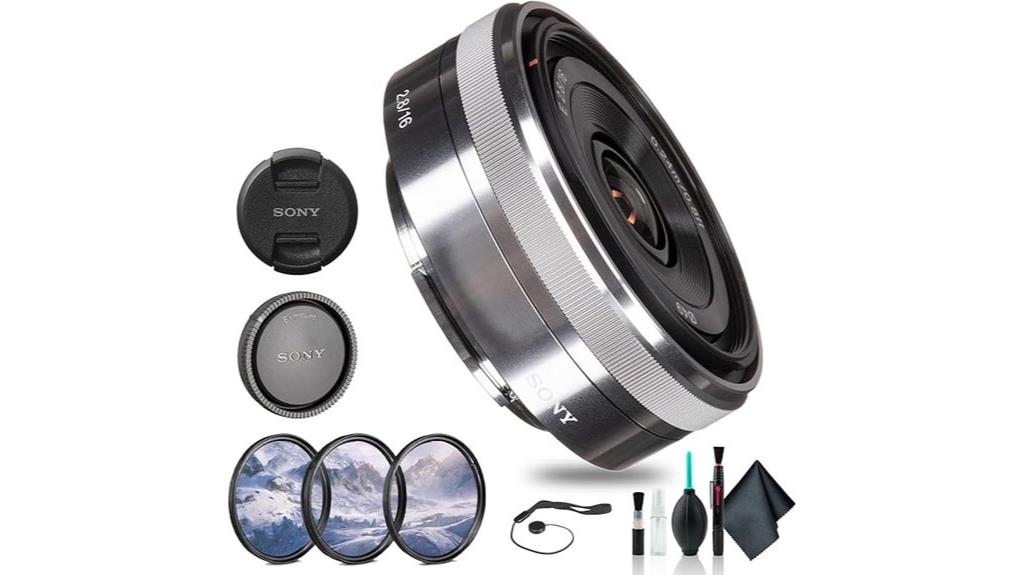
Looking for a lightweight lens that captures the vastness of the night sky without adding bulk to your gear? The Sony E 16mm F2.8 (SEL16F28) is perfect. Weighing just 67 grams and measuring only 22.5 mm long, it’s incredibly portable. Its 24mm equivalent focal length offers a wide field of view, ideal for Milky Way shots. The lens features aspherical elements to reduce distortion and deliver sharp images. Plus, its quiet autofocus and close-focus ability at 0.24 meters make it versatile for both landscape and astrophotography. With optional conversion lenses, you can expand your creative options without sacrificing portability or quality.
Best For: photographers and videographers seeking a lightweight, wide-angle lens for landscape, street, interior, or astrophotography without adding bulk to their gear.
Pros:
- Ultra-lightweight and compact design (67 g, 22.5 mm length) for excellent portability
- Sharp optics with aspherical elements to minimize distortion and aberrations
- Quiet autofocus with a close-focus distance of 0.24 meters, suitable for creative wide-angle shots and videos
Cons:
- Fixed focal length at 16mm limits zoom versatility
- No optical image stabilization, which may affect handheld astrophotography or low-light shooting
- Compatibility with conversion lenses may slightly impact image quality or ease of use
VILTROX 75mm f/1.2 XF PRO APS-C Lens for Fuji Cameras

If you’re shooting in low-light conditions or capturing stunning astrophotography, the VILTROX 75mm f/1.2 XF PRO APS-C lens is an excellent choice for Fuji camera users. Its large f/1.2 aperture lets in plenty of light, perfect for night skies and starry landscapes. With 16 lens elements in 11 groups, including high-refractive index elements, it delivers sharp, high-resolution images. The fast, quiet autofocus and manual override make it versatile for both stills and video. Compact yet durable, this lens fits smoothly with Fuji’s X-mount cameras and offers reliable performance in diverse lighting conditions, making it ideal for astrophotography.
Best For: photographers and videographers using Fuji APS-C cameras who want a versatile lens capable of capturing sharp portraits, landscapes, indoor shots, low-light scenes, and astrophotography with excellent light intake and autofocus performance.
Pros:
- Large f/1.2 aperture for superb low-light and depth-of-field effects
- Fast, quiet autofocus with manual override suitable for both stills and video
- High-resolution images with 16 lens elements, including high-refractive index elements
Cons:
- Heavier and larger compared to standard prime lenses, which may affect portability
- Premium price point may be a consideration for budget-conscious buyers
- Compatibility limited to Fuji X-mount APS-C cameras, not full-frame models
VILTROX 75mm f/1.2 PRO E Lens for Sony APS-C Cameras
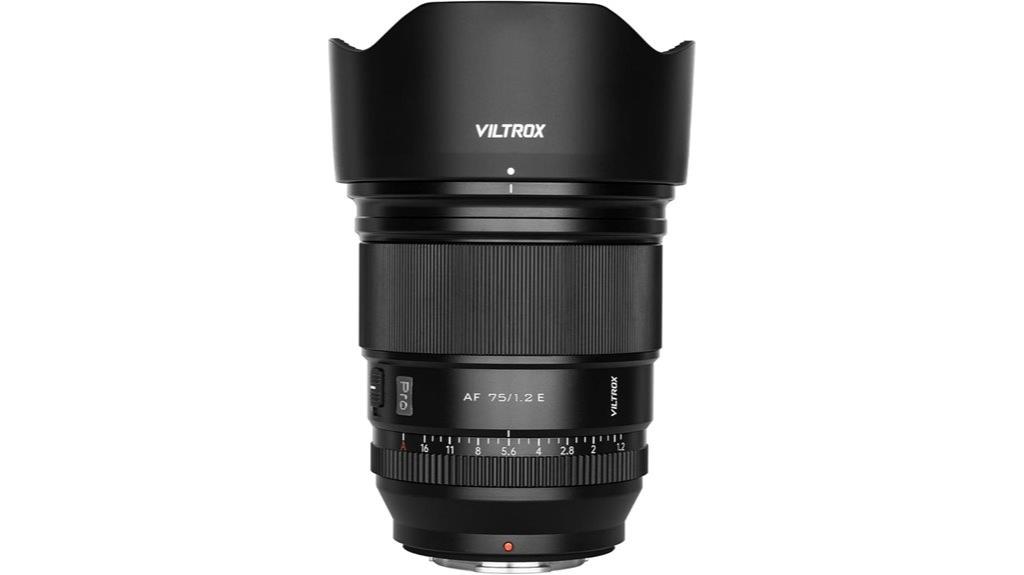
For astrophotographers shooting with Sony APS-C cameras, the VILTROX 75mm f/1.2 PRO E Lens stands out as an excellent choice thanks to its bright f/1.2 aperture. This allows for exceptional low-light performance, capturing the Milky Way with stunning detail and minimal noise. Its optical design includes 16 elements in 11 groups, delivering sharp images even at wide open. The lens supports both autofocus and manual focus, with a quick switch for ease of use. Weighing 2.79 pounds, it’s a robust option that combines versatility, excellent resolution, and reliable video performance, making it perfect for astrophotography in 2025.
Best For: astrophotographers and low-light imaging enthusiasts using Sony APS-C mirrorless cameras who want a bright, sharp lens for capturing detailed night sky images and videos.
Pros:
- Ultra-bright f/1.2 aperture ideal for low-light and astrophotography
- Optical design with 16 elements in 11 groups ensures sharp images at wide apertures
- Supports both autofocus and manual focus with quick switching, enhancing versatility
Cons:
- Relatively heavy at 2.79 pounds, which may affect portability during long shoots
- Higher price point compared to standard lenses, potentially limiting accessibility
- Larger physical size might be less convenient for compact camera setups
AstrHori 6mm F2.8 Circular Fisheye Lens for Nikon Z Mount

The AstrHori 6mm F2.8 Circular Fisheye Lens for Nikon Z Mount stands out as an ideal choice for astrophotographers aiming to capture the Milky Way’s full splendor. Its 220° ultra-wide field of view creates immersive, spherical images perfect for night sky scenes. The F2.8 aperture ensures excellent low-light performance, making it easy to capture star fields and the Milky Way in detail. Its compact, all-metal design is built for outdoor use, while manual focus offers precise control for sharp, artistic compositions. Whether for landscape, VR, or creative projects, this lens delivers bold, dramatic visuals that truly showcase the night sky’s grandeur.
Best For: astrophotographers and creative artists seeking immersive, full-frame circular images and dramatic spherical visuals in low-light conditions.
Pros:
- Ultra-wide 220° field of view captures expansive, immersive scenes.
- F2.8 aperture provides excellent low-light performance for night sky photography.
- Compact, all-metal construction ensures durability and portability for outdoor use.
Cons:
- Manual focus may require extra skill and time for precise adjustments.
- Dimensions listed as 61 x 64.8 x 64.8 inches, which seems unusually large for a lens; may need clarification.
- Compatibility requires setting the lens to release without lens mode before use, potentially complicating setup.
Factors to Consider When Choosing Wide-Field Lenses for Milky Way Photography

When choosing a wide-field lens for Milky Way photography, I focus on several key factors to get the best results. The lens’s aperture size, focal length, and low-light performance directly impact my ability to capture clear, bright images in dark skies. I also consider compatibility, durability, and build quality to make certain my gear holds up in outdoor conditions.
Aperture Size Importance
Have you ever wondered why a wide aperture is so vital for capturing the Milky Way? It’s because a larger aperture (smaller f-number) lets in more light, which is essential in low-light conditions. Lenses with apertures of f/2.8 or faster allow you to use shorter exposure times, helping to prevent star trails caused by Earth’s rotation. Plus, a broad aperture results in brighter images with less noise, especially at higher ISO settings. It also creates a shallower depth of field, emphasizing the Milky Way’s structure and producing beautiful background blur. Overall, a wide aperture gives you greater flexibility to adapt to different night sky conditions, making it easier to capture stunning, detailed Milky Way images.
Focal Length Selection
Choosing the right focal length is essential for capturing stunning Milky Way images, as it directly affects your composition and the amount of sky included. Wide-field lenses typically range from 14mm to 24mm, offering different perspectives. A shorter focal length, like 14mm or 16mm, provides a broader field of view, letting you include more sky and landscape, which is great for emphasizing the Milky Way’s vastness. Longer focal lengths, such as 24mm, capture more detail and narrow your view, helping isolate specific celestial features. Your choice depends on your desired framing, available space, and how much of the scene you want to include. Balancing these factors guarantees you get a shot that matches your creative vision.
Low-Light Performance
A wide-field lens with a large maximum aperture, such as f/1.2 or f/2.8, makes a significant difference in low-light conditions by allowing more light to reach the sensor. This enables brighter images of the night sky without relying on high ISO settings, which can introduce noise. Fast lenses also allow for shorter exposure times, reducing the risk of star trails caused by Earth’s rotation. Additionally, high-quality optical elements minimize aberrations and flare that are common in low-light environments, ensuring sharper star images. The ability to open the aperture wide not only enhances faint details of the Milky Way but also improves overall image quality. When choosing a lens, prioritizing low-light performance helps you capture stunning, clear nightscapes with minimal effort.
Lens Compatibility Factors
Selecting the right wide-field lens for Milky Way photography requires careful attention to compatibility with your camera. First, check that the lens mount matches your camera body, whether it’s Nikon Z, Sony E-mount, or Fuji X-mount, to guarantee proper attachment. Make sure the lens supports manual focus, as this provides precise control when focusing on distant stars. An aperture of f/2.8 or larger is ideal for gathering enough light in dark skies. Confirm that the focal length falls between 14mm and 35mm to achieve a wide enough field of view. Finally, consider whether the lens operates manually or autofocus, and whether any adapters are needed for compatibility. These factors guarantee seamless use and ideal results in your astrophotography sessions.
Durability and Build Quality
Since you’ll often shoot in outdoor conditions, prioritizing durability and build quality in your wide-field lens is essential. I look for lenses made with robust materials like metal or high-quality composites that can withstand rougher environments. Weather-sealed designs are a must, protecting internal components from dust, moisture, and other elements during late-night astrophotography sessions. Reinforced lens mounts and rubber gaskets add to the overall integrity, ensuring the lens holds up over time. High-quality optical coatings not only improve image clarity but also guard against scratches and corrosion. Well-built lenses also feature sturdy focusing and aperture rings that stay precise despite frequent use or travel. Investing in a durable lens means fewer worries about damage and more focus on capturing stunning Milky Way shots.
Price and Budget
When considering wide-field lenses for Milky Way photography, your budget plays a key role in narrowing down options. Lens prices vary widely, from budget-friendly models around $100 to premium options over $1,000. Setting a clear budget helps you focus on the best value within your financial means. Cheaper lenses may have narrower apertures or lower optical quality, which can limit low-light performance and sharpness. Investing in a higher-priced lens often provides larger apertures like f/1.2 or f/2.8, essential for capturing faint Milky Way details. Comparing prices across online and offline stores, and watching for sales or discounts, can help you find a quality lens that fits your budget. Balancing cost and performance is key to making a smart choice.
Frequently Asked Questions
What Is the Best Aperture for Capturing the Milky Way?
The best aperture for capturing the Milky Way is f/2.8 or wider if possible. A wide aperture lets in more light, which is essential for night sky photography. I always aim for the lowest f-number I can find on my lens to maximize light intake, reducing exposure time and capturing more detail. Remember, a wider aperture helps you achieve those stunning, clear shots of the galaxy.
How Does Lens Distortion Affect Astrophotography Results?
Lens distortion can totally mess with your astrophotography by warping the stars into strange shapes and curves, making your night sky look unnatural. It’s like trying to fit a square peg in a round hole — everything looks off and weird. If you ignore distortion, your stunning Milky Way shots might end up looking warped, distracting, or just plain wrong. That’s why choosing a lens with minimal distortion is a game-changer!
Are Manual Focus Lenses Better for Night Sky Photography?
I find manual focus lenses are generally better for night sky photography because they give me precise control over focus, which is vital in low light conditions. Autofocus often struggles in darkness, making manual focus more reliable. I recommend using a lens with a focus ring that’s easy to turn smoothly, so you can fine-tune your focus on distant stars or the Milky Way without frustration.
What Focal Length Is Ideal for Wide-Field Milky Way Shots?
Think of the Milky Way as a vast cosmic canvas, and your lens as the brush. I find that a focal length of around 14-24mm on a full-frame camera strikes the perfect balance. It captures enough sky to showcase the galaxy’s grandeur while keeping stars sharp and clear. Shorter focal lengths, like 14mm, give a more immersive view, making your night sky photos truly epic and awe-inspiring.
How Important Is Lens Flare Control in Astrophotography?
Lens flare control is vital in astrophotography because it can greatly reduce the clarity of your Milky Way shots. I always look for lenses with good anti-reflective coatings and avoid shooting directly into bright lights. Managing flare helps me preserve contrast and detail, making my images cleaner and more stunning. So, yes, controlling lens flare truly makes a difference in capturing those crisp, breathtaking night sky photographs.
Conclusion
Choosing the right wide-field lens is like finding the perfect brush to paint the night sky’s masterpiece. Each lens on this list offers a unique way to capture the Milky Way’s dance across the cosmos. Trust your instincts and pick the one that speaks to your vision. With the right gear, you’ll turn your night sky dreams into a stunning, star-studded reality that’ll leave viewers gazing in awe.