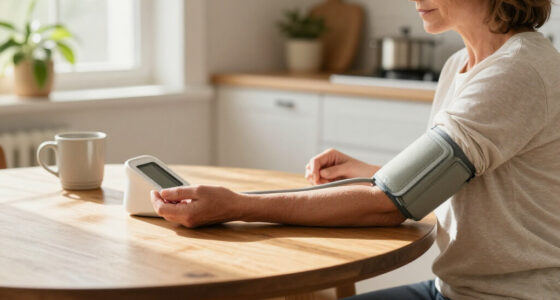
For anyone tracking heart health, a personal EKG device that works seamlessly with a smartphone offers convenience and real-time insights. The EMAY 6L Portable ECG Monitor stands out as the best overall choice, thanks to its multi-channel recording and compatibility with both smartphones and PCs. The KardiaMobile 6L Max impresses with its comprehensive features and included KardiaCare membership, making it a strong premium pick. Meanwhile, the KardiaMobile 1-Lead offers a simple, compact design perfect for quick checks. The main tradeoffs involve balancing features against ease of use, price, and subscription requirements. Continue reading for a detailed breakdown of each option to find the best fit for your needs.

Get health and wellness essentials delivered free with Prime
- Fast, free delivery on millions of items
- Prime Video, Amazon Music and more included
- Member-only deals all year
Key Takeaways
- Multi-channel recordings, like those from the EMAY 6L, provide more detailed heart data for serious users.
- Subscription models, such as KardiaMax, add ongoing value but increase long-term costs.
- Compact devices like KardiaMobile Card excel for portability but may lack advanced features.
- Ease of use and app stability are critical for beginners, making simpler models more attractive for new users.
- Price varies widely; balancing features and budget is essential for getting the best value.
| EMAY 6L Portable ECG Monitor – Record ECG and Heart Rate in 6 Channels, Compatible with Smartphone and PC, No Subscription Required |  | Best Overall for Versatility and Compatibility | Compatible Devices: Smartphones (iOS & Android), PC (Windows & Mac) | Sensor Type: ECG | Battery Description: Lithium | VIEW ON AMAZON | See Our Full Breakdown |
| KardiaMobile 6L Max EKG Monitor with One-Year KardiaCare Membership |  | Best for Medical-Grade Results with Professional Support | Leads: 6 | Includes: One-year KardiaCare membership | Compatibility: Smartphones and tablets via Bluetooth | VIEW ON AMAZON | See Our Full Breakdown |
| EKG Monitor Device, Portable Personal Heart Rate Monitor with LCD Screen and Storage |  | Best for Multi-Mode Versatility and On-the-Go Monitoring | Weight: 60g | Dimensions: 4.45 x 2.8 x 1.65 inches | Battery: Not specified | VIEW ON AMAZON | See Our Full Breakdown |
| EMAY Portable ECG Monitor – Record Heart Rate and ECG Data |  | Best for Basic Home ECG Monitoring | Connectivity: Bluetooth, USB | Power: Rechargeable lithium battery | Intended Use: Home health care | VIEW ON AMAZON | See Our Full Breakdown |
| KardiaMobile 1-Lead EKG Monitor |  | Best for Compact, On-the-Go Monitoring | Type: Personal Heart Monitor | Lead Count: 1 lead | Connectivity: Works with smartphones via app | VIEW ON AMAZON | See Our Full Breakdown |
| KardiaMobile Card Credit-Card Sized EKG Personal Heart Monitor |  | Best for Portability and On-the-Go Monitoring | Size: Credit card-sized | Connectivity: Bluetooth | Battery Life: Minimum of 2,000 EKGs | VIEW ON AMAZON | See Our Full Breakdown |
| personal ekg device smartphone compatible | Compatibility | Connectivity |
|---|---|---|
| EMAY 6L Portable ECG Monitor | — | — |
| KardiaMobile 6L Max EKG Monito | Smartphones and tablets via Bluetooth | — |
| EKG Monitor Device | Mobile phones and computers via Bluetooth or cable | — |
| EMAY Portable ECG Monitor | Smartphone and PC | Bluetooth, USB |
| KardiaMobile 1-Lead EKG Monito | — | Works with smartphones via app |
| KardiaMobile Card Credit-Card | Most smartphones and tablets | Bluetooth |
More Details on Our Top Picks
EMAY 6L Portable ECG Monitor – Record ECG and Heart Rate in 6 Channels, Compatible with Smartphone and PC, No Subscription Required
This EMAY 6L stands out because it offers a comprehensive 6-channel ECG recording with compatibility across both smartphones and PCs via Bluetooth or USB. Unlike the KardiaMobile 6L Max, which provides detailed analysis but requires a subscription, the EMAY 6L offers a subscription-free experience, making it ideal for regular home use without ongoing costs. Its portability and lightweight design mean it can be used almost anywhere, but it’s not designed for medical-grade diagnostics or for those with implanted pacemakers. The device’s dual connectivity options make it flexible, although its simplified display and OTC focus mean it lacks the advanced features of clinical tools.
Pros:- No subscription or hidden costs required
- Compatible with both smartphones and PCs via Bluetooth and USB
- Portable and lightweight for easy use on the go
Cons:- Not suitable for use with implanted pacemakers
- Limited to OTC use, not intended for clinical diagnosis
Best for: Individuals seeking a versatile, no-cost ECG device compatible with both smartphones and computers for basic heart monitoring at home
Not ideal for: Users needing hospital-grade diagnostics or with implanted pacemakers, as it’s intended for OTC use only
- Compatible Devices:Smartphones (iOS & Android), PC (Windows & Mac)
- Sensor Type:ECG
- Battery Description:Lithium
- Measurements Display Size:2.4 Inches
- Item Dimensions:4.7″L x 2.2″W x 0.7″H
- Item Weight:85 Grams
Our verdict“This pick is best for users who want a flexible, cost-free ECG device for basic heart monitoring at home without professional-grade features.”
KardiaMobile 6L Max EKG Monitor with One-Year KardiaCare Membership
This device is ideal for those who want quick, clinically validated results and detailed analysis, with the added benefit of a one-year membership that includes review by a cardiologist. Compared with the EMAY 6L, the KardiaMobile 6L Max offers more precise detection of common arrhythmias like AFib, Tachycardia, and Bradycardia, making it suitable for users with known heart conditions. However, it requires a recurring membership fee and a compatible smartphone or tablet for operation, which might be a barrier for some. Its focus on healthcare professionals and patients needing regular monitoring makes it less suitable for casual or infrequent use, but it provides a higher level of medical insight.
Pros:- Provides quick, medical-grade ECG results in 30 seconds
- Detects multiple arrhythmias with detailed analysis
- Includes one-year KardiaCare membership with cardiologist reviews
Cons:- Requires yearly renewal fee for membership
- Additional charges for cardiologist reviews
Best for: Patients with known or suspected arrhythmias who want quick, professional-grade results and ongoing support
Not ideal for: Casual users or those unwilling to pay for a subscription or membership renewal, as well as users without compatible tablets or smartphones
- Leads:6
- Includes:One-year KardiaCare membership
- Compatibility:Smartphones and tablets via Bluetooth
- Measurement Time:30 seconds
- Detects:AFib, Bradycardia, Tachycardia, PVCs, SVE, Wide QRS
Our verdict“This device makes the most sense for users who need reliable, professional-level ECG monitoring with ongoing support, and are comfortable with subscription costs.”
EKG Monitor Device, Portable Personal Heart Rate Monitor with LCD Screen and Storage
This monitor offers a unique combination of features with multiple monitoring modes—Hand to Hand, Hand to Chest, Hand to Leg—making it suitable for users wanting comprehensive heart data in a portable form. Compared to the EMAY 6L or KardiaMobile, it incorporates an LCD display and local storage, which can be useful for those who prefer immediate visual feedback without relying solely on apps. Its compatibility with smartphones and computers via Bluetooth or cable broadens use cases, but limited details about battery life and app functionalities suggest it’s more of a basic tool rather than a professional device. Its versatility makes it appealing, but it’s less specialized than dedicated ECG monitors.
Pros:- Multiple monitoring modes for comprehensive assessment
- Compatible with smartphones and computers for data transfer
- Lightweight and portable for on-the-go use
Cons:- Limited info on battery life and app features
- No indication of clinical accuracy or detailed analysis
Best for: Active individuals seeking a multi-mode portable device for quick, on-the-spot heart assessments and data storage
Not ideal for: Users needing detailed professional analysis or long-term medical monitoring, as it lacks advanced diagnostic features
- Weight:60g
- Dimensions:4.45 x 2.8 x 1.65 inches
- Battery:Not specified
- Monitoring Modes:Hand to Hand, Hand to Chest, Hand to Leg
- Compatibility:Mobile phones and computers via Bluetooth or cable
Our verdict“Best suited for active users who want versatile, immediate heart data with visual feedback and portability for casual monitoring.”
EMAY Portable ECG Monitor – Record Heart Rate and ECG Data
This EMAY model closely resembles the B0C88W44M2 but focuses on recording Lead I ECG signals and heart rate, emphasizing simplicity and portability. It provides wireless connectivity via Bluetooth and USB, similar to the first EMAY device, but with less emphasis on multi-lead recording. Compared to the KardiaMobile 1-Lead, it offers a straightforward solution for users who want to track heart rate and ECG data at home without complex features or subscriptions. Its OTC focus makes it accessible, though it’s not suitable for diagnostic purposes or for users who need detailed arrhythmia detection.
Pros:- Wireless connectivity with smartphones and PCs
- Portable and easy to operate at home
- Rechargeable battery adds convenience
Cons:- Not suitable for use with implanted pacemakers
- Limited to basic ECG and heart rate recording
Best for: Home users wanting an easy, no-fuss device for basic ECG and heart rate tracking without additional costs or professional features
Not ideal for: Users seeking detailed analysis, clinical-grade diagnostics, or compatibility with advanced health apps, as it’s designed for simple monitoring
- Connectivity:Bluetooth, USB
- Power:Rechargeable lithium battery
- Intended Use:Home health care
- Compatibility:Smartphone and PC
Our verdict“Ideal for home users who want a straightforward, wireless ECG device for basic heart monitoring without extra features or subscriptions.”
KardiaMobile 1-Lead EKG Monitor
This ultra-portable device excels for users who want quick, reliable ECG readings in a pocket-sized form. It’s less feature-rich than the 6L models but offers FDA clearance and straightforward operation with no subscription needed for basic results. Compared to the larger KardiaMobile 6L Max, it’s more compact and simple to use, making it perfect for outdoor or travel use. However, it only offers a single lead, limiting its diagnostic scope, and additional features or detailed analysis require extra subscriptions. It’s a solid choice for those prioritizing portability over multi-channel data or in-depth analysis.
Pros:- Pocket-sized and lightweight for portability
- No cords or Bluetooth required for operation
- Detects multiple conditions quickly
Cons:- Limited to a single-lead ECG, less diagnostic detail
- Additional subscription needed for advanced features
Best for: Active individuals needing a tiny, easy-to-use device for quick heart rhythm checks on the go
Not ideal for: Users requiring detailed multi-lead data or those with complex heart conditions needing more comprehensive diagnostics
- Type:Personal Heart Monitor
- Lead Count:1 lead
- Connectivity:Works with smartphones via app
- Battery:Replaceable CR2016, lasts up to 2 years
- FDA Clearance:Yes
Our verdict“Best suited for users who want a simple, portable device for quick, everyday ECG checks without extra complexity or bulk.”
KardiaMobile Card Credit-Card Sized EKG Personal Heart Monitor
The KardiaMobile Card stands out for its ultra-slim, credit-card size, making it ideal for carrying in a wallet and performing quick checks anywhere. Compared with larger devices like the EMAY Portable ECG Monitor, this model sacrifices some detailed data for extreme convenience, focusing on heart rhythm detection rather than comprehensive ECG recording. Its Bluetooth connectivity seamlessly pairs with most smartphones, delivering results in just 30 seconds—faster than bulkier options—without subscription fees for basic features. However, this compact design limits its use for those with pacemakers or implantable defibrillators, and it cannot detect heart attacks or replace a physician’s assessment. The device’s long battery life and FDA clearance add to its reliability, but optional memberships unlock extra features, which may be a turnoff for some users seeking all-in-one functionality.
Pros:- Extremely compact, fits in a wallet for constant access
- Delivers quick, medical-grade results in 30 seconds
- No ongoing subscription fees for basic use
Cons:- Limited to heart rhythm detection, not comprehensive ECG or heart attack diagnosis
- Not suitable for use with pacemakers or ICDs
- Additional features require optional membership, which could increase costs
Best for: Individuals who want a discreet, portable way to monitor their heart rhythm during daily activities, especially those already comfortable with smartphone apps.
Not ideal for: Patients with pacemakers or those seeking detailed ECG recordings for medical diagnostics—this device isn’t designed for comprehensive analysis or medical emergencies.
- Size:Credit card-sized
- Connectivity:Bluetooth
- Battery Life:Minimum of 2,000 EKGs
- Compatibility:Most smartphones and tablets
- FDA Clearance:Yes
- FSA/HSA Eligible:Yes
Our verdict“This pick is best suited for users needing a portable, easy-to-use device for basic heart rhythm checks on their smartphone, but it’s not for those requiring detailed diagnostics or medical device compatibility.”
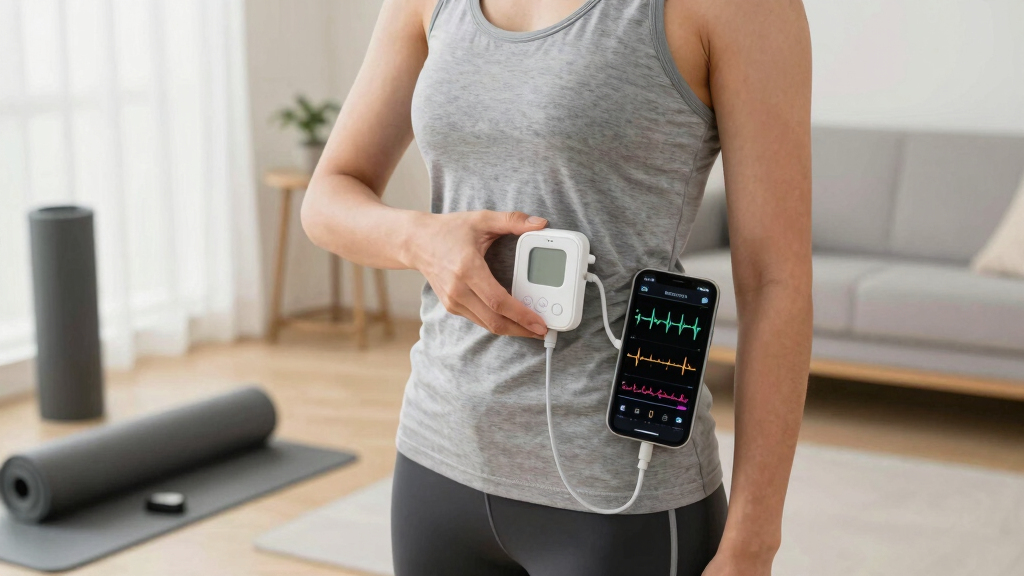
How We Picked
I evaluated these personal EKG devices based on several key criteria: accuracy of ECG readings, smartphone compatibility and app usability, build quality, data storage options, and overall value for the price. Devices with multi-channel recording capabilities were prioritized for their detailed insights, while ease of setup and user interface were critical for usability. Subscription requirements and ongoing costs were also considered, as they significantly impact long-term affordability. The ranking reflects a combination of performance, convenience, and value, aiming to guide different types of buyers from beginners to more advanced users.| personal ekg device smartphone compatible | Compatibility | Connectivity |
|---|---|---|
| EMAY 6L Portable ECG Monitor | — | — |
| KardiaMobile 6L Max EKG Monito | Smartphones and tablets via Bluetooth | — |
| EKG Monitor Device | Mobile phones and computers via Bluetooth or cable | — |
| EMAY Portable ECG Monitor | Smartphone and PC | Bluetooth, USB |
| KardiaMobile 1-Lead EKG Monito | — | Works with smartphones via app |
| KardiaMobile Card Credit-Card | Most smartphones and tablets | Bluetooth |
Factors to Consider When Choosing Personal Ekg Device Smartphone Compatible
Choosing a personal EKG device compatible with your smartphone involves balancing several factors. It’s important to consider the device’s recording capabilities, ease of use, and how well it integrates with your existing health routines. Additionally, understanding the costs involved beyond the initial purchase, such as subscriptions or app features, can prevent surprises. Here are some key considerations to help you select the right device for your specific needs.Accuracy and Recording Capabilities
Look for devices that offer multi-channel recordings if you need detailed data, especially for medical consultation. Single-lead monitors are more portable and simpler but may miss some nuances. Devices with proven accuracy and clinical validation can give you confidence in the readings, which is essential if you rely on this data for health decisions.
Ease of Use and App Compatibility
An intuitive app interface and straightforward setup can make a big difference, particularly for first-time users. Compatibility with both iOS and Android broadens accessibility, while reliable Bluetooth or Wi-Fi connectivity ensures seamless data transfer. Consider whether the device offers clear instructions and user-friendly features like automatic data syncing.
Build Quality and Portability
Since these devices are meant to be used regularly, durability matters. Compact, lightweight designs are ideal for on-the-go use, but they should still feel sturdy. Check for water resistance or protective cases if you plan to carry the device frequently or use it outdoors.
Subscription Costs and Data Storage
Some models include free use, while others require subscriptions for advanced features or longer data storage. Understand what is included upfront and consider whether ongoing fees align with your budget. Devices with free apps and local data storage may be more cost-effective in the long run.
Price and Overall Value
Pricing varies widely, often reflecting feature sets and build quality. Decide whether a basic, budget-friendly device meets your needs or if investing in a feature-rich, premium model is justified. Sometimes, paying more upfront can save money later if it reduces the need for additional accessories or subscriptions.
Frequently Asked Questions
Can I rely on a personal EKG device for medical diagnosis?
While personal EKG devices are increasingly accurate and useful for tracking heart health, they should not replace professional medical diagnosis. These devices can alert you to irregularities and help you communicate better with your healthcare provider, but definitive diagnosis still requires a clinical ECG and professional evaluation.
Which device is best for someone who wants quick, on-the-go heart checks?
For quick checks, a compact and easy-to-use device like the KardiaMobile 1-Lead or KardiaMobile Card offers portability and simple operation. These models are designed for fast, reliable readings and are ideal if you need to monitor your heart periodically without fuss.
Are subscription plans necessary for using these devices effectively?
Not all devices require subscriptions, but many advanced models include app features or data storage options that do. If you want comprehensive history tracking or advanced analysis, a subscription might be worthwhile. However, basic models often provide sufficient functionality without ongoing costs.
How accurate are smartphone-compatible personal EKG devices compared to clinical equipment?
These devices are generally quite accurate for personal monitoring and can detect common irregularities. Nonetheless, they are not substitutes for clinical-grade ECG machines used in hospitals. Always consult a healthcare professional for interpretation of results or if you notice concerning patterns.
What features should I prioritize if I’m new to using personal EKG devices?
Beginners should look for devices with simple operation, clear app instructions, and reliable connectivity. Devices with fewer setup steps and automatic data syncing are less intimidating and more likely to provide consistent results. Consider models with good customer support and straightforward interfaces to ease your learning curve.
Conclusion
The best overall pick for most users remains the EMAY 6L Portable ECG Monitor due to its comprehensive 6-channel recording and compatibility with smartphones and PCs. Those seeking high-end features and ongoing support will find the KardiaMobile 6L Max worth the investment. For portability and quick checks, the KardiaMobile 1-Lead and KardiaMobile Card excel. Beginners or occasional users should prioritize ease of use, while more advanced users might benefit from devices with multi-channel data and subscription options. Your ideal choice depends on your specific health needs, budget, and how you plan to incorporate the device into your daily routine.
Cold & flu season Picks
humidifiers
As an affiliate, we earn on qualifying purchases.