
If you’re setting up a home studio, choosing the right studio monitors is essential for accurate sound reproduction. The JBL 305P MkII stands out as the overall best for its balanced performance and affordability. For those on a tighter budget, the M-AUDIO BX3 offers surprisingly clear sound in a compact form, while the Yamaha HS5 provides a professional-grade experience at a mid-range price. The challenge lies in balancing sound quality, size, and budget—larger monitors tend to deliver better accuracy but require more space, while smaller models are more convenient but may sacrifice some fidelity. Continue reading for a full breakdown of these options and how to pick the best monitors for your specific needs.

Get health and wellness essentials delivered free — and shop member deals
- Fast, free delivery on millions of items
- Access to Prime Big Deal Days deals on October 6–7
- Prime Video, Amazon Music and more included
Key Takeaways
- Larger monitors like the JBL 305P MkII provide better frequency response and accuracy, ideal for detailed mixing.
- Budget models such as the Mackie CR3.5 are suitable for small spaces but may lack the depth and clarity of higher-end options.
- Size and placement are critical; smaller monitors are more forgiving in tight spaces but may compromise on sound fidelity.
- Sound quality often correlates with price, but features like room correction can enhance even budget-friendly monitors.
- Your choice should reflect your room size, workflow, and whether you prioritize mixing accuracy or casual listening.
| JBL 305P MkII 5″ 2-Way Active Studio Monitors (Pair) |  | Best Overall for Professional-Grade Home Studio Monitoring | Size: 5-inch woofer | Amplifiers: Dual 41-Watt Class-D | Inputs: XLR/TRS | VIEW ON AMAZON | See Our Full Breakdown |
| Pioneer DJ DM-40D 4-inch Active Desktop Monitor Speakers, Pair, Black |  | Best Compact for Desktop DJ and Production Use | Speaker Type: Monitor | Woofer Diameter: 4 inches | Tweeter Diameter: 19 mm | VIEW ON AMAZON | See Our Full Breakdown |
| Yamaha HS4 Powered Studio Monitor, Pair, Black |  | Best for Space-Constrained, Accurate Monitoring | Packaging: Pair | Speaker Type: Monitor | Speaker Size: 4.5 inches | VIEW ON AMAZON | See Our Full Breakdown |
| Yamaha HS5 Powered Studio Monitor |  | Best for High-Resolution, Nearfield Monitoring | Frequency Response: 54Hz-30kHz | Woofer Diameter: 5 inches | Tweeter Diameter: 1 inches | VIEW ON AMAZON | See Our Full Breakdown |
| PreSonus Eris E5 Pair 2-Way 5.25” Near Field Studio Monitors |  | Best for Accurate, Balanced Mixing in Home Studios | Speaker Size: 5.25 inches | Woofer Diameter: 5.25 inches | Maximum Output Power: 80 watts | VIEW ON AMAZON | See Our Full Breakdown |
| Mackie CR3.5 Studio Monitors (Pair), 3.5″ Woofers, Tone Knob, Black | 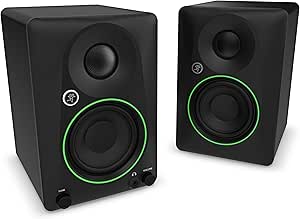 | Best for Compact Desktop Use and Versatile Connectivity | Speaker Size: 3.5 inches | Woofer Diameter: 3.5 inches | Tweeter Diameter: 1 inches | VIEW ON AMAZON | See Our Full Breakdown |
| Yamaha HS3 Powered Studio Monitor (Pair, Black) |  | Best for Accurate Sound and Professional Studio Use | Frequency Response: 70 Hz – 22 kHz | Woofer Diameter: 3.5 inches | Tweeter Diameter: 0.75 inches | VIEW ON AMAZON | See Our Full Breakdown |
| M-AUDIO BX3 3.5-inch Wired Studio Monitors Pair |  | Best for High-Quality Studio-Grade Sound and Customizable EQ | Driver Size: 3.5 inches | Woofer Material: Kevlar | Tweeter Type: Silk Dome | VIEW ON AMAZON | See Our Full Breakdown |
| PreSonus Eris 3.5 Powered Desktop Studio Monitors, Pair – 50W, White |  | Best for Balanced Sound and Versatile Home Use | Power: 50W | Woofer Size: 3.5 inches | Tweeter Type: Silk-dome | VIEW ON AMAZON | See Our Full Breakdown |
| PreSonus Eris 3.5 Powered Studio Monitors (Pair) |  | Best for Compact, Power-Filled Monitoring with Private Listening | Speaker Size: 3.5 inches | Power: 50 watts | Frequency Response: 80 Hz–20 kHz | VIEW ON AMAZON | See Our Full Breakdown |
| studio monitors for home studio | Inputs | Woofer Diameter | Frequency Response |
|---|---|---|---|
| JBL 305P MkII 5" 2-Way Active | XLR/TRS | — | — |
| Pioneer DJ DM-40D 4-inch Activ | — | 4 inches | — |
| Yamaha HS4 Powered Studio Moni | — | — | 60 Hz – 22 kHz |
| Yamaha HS5 Powered Studio Moni | — | 5 inches | 54Hz-30kHz |
| PreSonus Eris E5 Pair 2-Way 5. | — | 5.25 inches | — |
| Mackie CR3.5 Studio Monitors | — | 3.5 inches | — |
| Yamaha HS3 Powered Studio Moni | XLR, TRS, RCA, Stereo Mini | 3.5 inches | 70 Hz – 22 kHz |
| M-AUDIO BX3 3.5-inch Wired Stu | 1/4-inch, 1/8-inch, RCA | — | — |
| PreSonus Eris 3.5 Powered Desk | TRS, RCA, aux | — | 80 Hz–20 kHz |
| PreSonus Eris 3.5 Powered Stud | TRS, RCA, Aux | — | 80 Hz–20 kHz |
More Details on Our Top Picks
JBL 305P MkII 5″ 2-Way Active Studio Monitors (Pair)
The JBL 305P MkII stands out for delivering exceptional clarity and imaging precision, making it ideal for serious music producers and sound designers. Compared with the Yamaha HS5, the JBL offers a wider sweet spot and more room customization options through its boundary EQ and high trim controls, which can significantly improve mixing accuracy in variable environments. However, this advanced feature set comes with a higher price tag, which might be a barrier for casual users. Its dual 41-Watt amplifiers and durable MDF enclosure ensure reliable, consistent performance over long sessions, but it requires ample space for proper placement to avoid sound distortions. This monitor is best suited for professionals or hobbyists who prioritize sound accuracy and room flexibility over budget constraints.
Pros:- Exceptional sound clarity with precise imaging
- Customizable room controls improve mixing accuracy
- Durable construction with reliable power testing
- Wide sweet spot for flexible listening positions
Cons:- Higher cost compared to entry-level monitors
- Requires adequate space for optimal setup
- Limited to professional or semi-professional use
Best for: Audiophiles and professional home studio owners seeking high precision and room customization.
Not ideal for: Beginners or those with limited space, as the JBL 305P MkII demands careful placement and a bigger budget.
- Size:5-inch woofer
- Amplifiers:Dual 41-Watt Class-D
- Inputs:XLR/TRS
- Enclosure Material:MDF
- Power Test Duration:100 hours
Our verdict“This monitor is perfect for users who need accurate, reliable sound reproduction and are willing to invest in room tuning capabilities.”
Pioneer DJ DM-40D 4-inch Active Desktop Monitor Speakers, Pair, Black
The Pioneer DJ DM-40D offers a compact, versatile solution for DJs and home producers who need a space-saving monitor. Its 4-inch drivers produce punchy bass and clear highs, making it suitable for small setups where space is limited. Unlike the JBL 305P MkII, the DM-40D’s DSP tuning and switchable modes provide tailored sound profiles for DJing or production, which is a plus for multi-purpose use. However, its smaller drivers limit deep bass reproduction, so it may fall short in larger or bass-heavy mixes. The straightforward auxiliary and RCA connectivity make it easy to integrate with various gear, but the lack of wireless features restricts flexibility. This pick makes sense for users who prioritize a compact footprint with decent sound quality for DJ or home studio tasks.
Pros:- Compact size fits easily on desktop
- Balanced sound with punchy bass and clear highs
- DSP tuning and switchable modes for versatility
- Easy connection options
Cons:- Limited deep bass due to small drivers
- No wireless or Bluetooth connectivity
- Battery life only around 1 hour if portable
Best for: Home DJs and producers needing a space-efficient monitor with mode switching.
Not ideal for: Music producers requiring deep bass or large-room sound coverage, as the 4-inch drivers are limited in low-end extension.
- Speaker Type:Monitor
- Woofer Diameter:4 inches
- Tweeter Diameter:19 mm
- Color:Black
- Additional Features:DSP tuning, switchable modes
Our verdict“This monitor is best suited for DJs or producers who need a compact, versatile speaker for small spaces and on-the-fly mode adjustments.”
Yamaha HS4 Powered Studio Monitor, Pair, Black
The Yamaha HS4 offers reliable, accurate sound in a compact form, making it a solid choice for small studios or editing suites. Its 4.5-inch woofer and 1-inch dome tweeter deliver a balanced frequency response suitable for detailed mixing, similar to the PreSonus Eris E5 but with Yamaha’s renowned clarity. While the HS4’s 26W output power limits its performance in larger rooms or loud environments, its multiple input options—XLR, TRS, RCA—add versatility. Unlike the JBL 305P MkII, the Yamaha lacks advanced room tuning controls, which could be a drawback in acoustically challenging environments. This monitor suits users who prioritize accuracy and space efficiency over extensive customization or high volume.
Pros:- Accurate, detailed sound reproduction
- Multiple input options for flexible connectivity
- Compact design fits in limited spaces
- Trusted Yamaha quality
Cons:- Limited to 26W output, not for large rooms
- No advanced acoustic tuning controls
- No waterproof features
Best for: Home studio owners focused on precise editing and mixing in small spaces.
Not ideal for: Large-room producers or those needing high-volume monitoring, as the power output might be insufficient.
- Packaging:Pair
- Speaker Type:Monitor
- Speaker Size:4.5 inches
- Frequency Response:60 Hz – 22 kHz
- Power Output:26 watts
- Connectivity:XLR, TRS, RCA
Our verdict“This monitor is ideal for small, dedicated workspaces requiring accurate sound without complex setup features.”
Yamaha HS5 Powered Studio Monitor
The Yamaha HS5 provides a step up in power and clarity for nearfield monitoring, especially suitable for professional setups where detail is critical. Its 5-inch cone woofer and 1-inch tweeter cover a broad frequency range of 54Hz-30kHz, ensuring accurate reproduction from bass to treble. With 70W total power split between low and high frequencies, it surpasses the Yamaha HS4 in volume and headroom, making it better suited for larger or more demanding spaces. However, the increased size and power require careful placement to avoid room-induced distortions. The HS5’s ability to handle larger volumes without distortion makes it a good choice for serious mixing, but it might be overkill for tiny home setups where space is tight, or for casual listening.
Pros:- High-quality, accurate sound with wide frequency range
- Powerful enough for larger rooms or louder sessions
- Room control and high trim features for tuning
- Reliable Yamaha brand reputation
Cons:- Requires external power and proper setup
- Larger footprint not suited for tiny spaces
- Designed primarily for studio use, not casual listening
Best for: Advanced home producers or mixing engineers needing high-volume, high-resolution sound.
Not ideal for: Casual hobbyists or small-space users who don’t require high power or broad frequency response.
- Frequency Response:54Hz-30kHz
- Woofer Diameter:5 inches
- Tweeter Diameter:1 inches
- Power Output:70W
- Input Types:XLR and TRS
- Control Features:Room Control and High TRIM
Our verdict“This monitor is best for serious professionals who need detailed, high-volume monitoring in larger or acoustically treated spaces.”
PreSonus Eris E5 Pair 2-Way 5.25” Near Field Studio Monitors
The PreSonus Eris E5 offers a balanced, professional-grade sound with its 5.25-inch woven composite woofer and silk-dome tweeter. It excels at delivering transparent audio suitable for mixing and mastering, comparable to the Yamaha HS4 but with added acoustic tuning controls that allow for tailored frequency response in challenging environments. Its front-firing port enhances bass response without requiring extra space behind the monitors. While the 80W output is sufficient for most home studios, it may struggle in very large or loud environments. The inclusion of protective features and a solid 2-year warranty make it a durable choice. However, it lacks wireless connectivity, so remote control options are limited, and placement is key to achieving the best sound.
Pros:- Highly accurate sound reproduction for mixing
- Acoustic tuning controls for environment-specific adjustments
- Front-firing port enhances bass response
- Durable build with protective features
Cons:- Requires proper placement for best sound
- Limited to 80W output, not ideal for large rooms
- No built-in wireless or remote control features
Best for: Home studio owners who need accurate, customizable monitors for mixing and production.
Not ideal for: Users seeking wireless features or planning to use monitors in large, open spaces.
- Speaker Size:5.25 inches
- Woofer Diameter:5.25 inches
- Maximum Output Power:80 watts
- Dimensions:7.7″D x 7″W x 10.2″H
- Color:Black
- Control Method:Push Button
Our verdict“This monitor is ideal for home producers who prioritize sound accuracy and room tuning capabilities in their mixing process.”
Mackie CR3.5 Studio Monitors (Pair), 3.5″ Woofers, Tone Knob, Black
The Mackie CR3.5 stands out for its compact size, making it ideal for small desks and desktop setups where space is limited. Unlike larger monitors such as the Yamaha HS3, it sacrifices some low-end depth due to its 3.5-inch drivers, but offers adjustable tone controls that let you tailor sound for casual listening or basic mixing. Its multiple input options, including RCA and TRS, provide flexible connectivity, while the included isolation pads help improve sound clarity. However, the limited driver size means bass can feel underwhelming for critical audio work, and it requires an external power source. This monitor makes the most sense for those needing a versatile, space-saving option for casual listening or light production tasks.
Pros:- Compact size suitable for desks and small studios
- Adjustable tone knob for personalized sound
- Multiple input options for flexible connectivity
- Includes isolation pads and all necessary cables
Cons:- Limited to 3.5-inch drivers, which restricts deep bass reproduction
- No waterproof feature, limiting outdoor or moist environments
Best for: Beginners or professionals with very limited space who want a budget-friendly, versatile desktop monitor
Not ideal for: Audiophiles or serious producers needing deep bass and high-fidelity sound for critical mixing
- Speaker Size:3.5 inches
- Woofer Diameter:3.5 inches
- Tweeter Diameter:1 inches
- Connectivity:RCA, TRS
- Mounting Type:Tabletop
- Control Method:Touch
Our verdict“This monitor is perfect for space-constrained setups needing flexible, casual listening capabilities.”
Yamaha HS3 Powered Studio Monitor (Pair, Black)
The Yamaha HS3 offers a slightly more refined, accurate audio reproduction compared to the Mackie CR3.5, especially suited for small studios where precise monitoring matters. Its 3.5-inch woofer combined with a 0.75-inch dome tweeter ensures a flat frequency response, making it a reliable choice for mixing and editing. The addition of room control and high trim response adjustments allows fine-tuning to your environment, a feature absent in the Mackie CR3.5. However, its small driver size limits bass response, similar to the Mackie, but Yamaha’s build quality and reputation for clear, neutral sound distinguish it. It requires an external power source and is best for users prioritizing accuracy over bass depth, like experienced producers working in confined spaces.
Pros:- Trusted Yamaha quality for accurate sound reproduction
- Room control and high trim response adjustments
- Compact size fits small studio environments
Cons:- Limited bass response due to small woofer size
- No wireless connectivity options
Best for: Intermediate to advanced home producers seeking accurate, neutral sound with room tuning features
Not ideal for: Casual listeners or those needing deep bass for music enjoyment outside of mixing tasks
- Frequency Response:70 Hz – 22 kHz
- Woofer Diameter:3.5 inches
- Tweeter Diameter:0.75 inches
- Power Output:26 W
- Inputs:XLR, TRS, RCA, Stereo Mini
- Additional Features:Room control and high trim response controls
Our verdict“This monitor excels for detailed editing and mixing in small spaces where accuracy is more important than bass depth.”
M-AUDIO BX3 3.5-inch Wired Studio Monitors Pair
The M-AUDIO BX3 is designed for those who prioritize studio-grade sound in a compact form, offering bi-amplified, high-quality audio with Kevlar woofers and silk dome tweeters. Its versatile input options, including 1/4-inch, 1/8-inch, and RCA, provide flexibility for various setups, unlike the Yamaha or Mackie models. The included accessories and customizable EQ controls make it easy to dial in the sound, but this level of customization requires some calibration effort. The 3.5-inch drivers mean bass may not be as deep as larger monitors, and setup takes some time to optimize performance. This pick suits dedicated producers or streamers seeking professional sound quality in a small workspace with room for calibration.
Pros:- High-quality, studio-grade sound with clear highs and punchy bass
- Multiple versatile input options
- Includes accessories for easy setup
- Customizable EQ controls for tailored sound
Cons:- Requires calibration for optimal performance
- Limited bass due to small drivers
Best for: Experienced producers or streamers who want precise, studio-grade sound with flexible input and tuning options
Not ideal for: Beginners or casual users who do not want to calibrate or fine-tune their monitors
- Driver Size:3.5 inches
- Woofer Material:Kevlar
- Tweeter Type:Silk Dome
- Inputs:1/4-inch, 1/8-inch, RCA
- Included Accessories:foam feet, interconnect cables, software
- Cabinet Material:Acoustically-Inert MDF
Our verdict“This monitor is ideal for users who need detailed, professional sound with flexible input and tuning capabilities in a compact form.”
PreSonus Eris 3.5 Powered Desktop Studio Monitors, Pair – 50W, White
The PreSonus Eris 3.5 delivers reliable, balanced sound tailored for home studios, gaming, or streaming, with 50W of power that can fill smaller rooms without distortion. Its 3.5-inch woofer and 1-inch silk-dome tweeter produce a smooth, accurate response similar to the Yamaha HS3, but with a more user-friendly interface. The adjustable high and low-frequency controls help adapt the sound to different room acoustics, providing a practical advantage over less flexible models like the Mackie CR3. Still, the small driver size means bass depth is limited, and it lacks wireless features, so it’s not ideal for casual music listening outside a controlled environment. This monitor is well-suited for users who want balanced, studio-quality sound in versatile applications.
Pros:- Balanced, studio-quality sound
- Adjustable high and low-frequency controls
- Multiple input options including TRS, RCA, and aux
- Powerful enough for small rooms
Cons:- Limited bass response due to small driver size
- No wireless or Bluetooth connectivity
Best for: Home producers, streamers, or gamers needing accurate sound with room tuning in a small setup
Not ideal for: Audiophiles or users who prioritize deep bass for critical listening or music enjoyment
- Power:50W
- Woofer Size:3.5 inches
- Tweeter Type:Silk-dome
- Frequency Response:80 Hz–20 kHz
- Inputs:TRS, RCA, aux
- Color:White
Our verdict“This monitor offers reliable, balanced sound with tunable features suitable for versatile home studio setups.”
PreSonus Eris 3.5 Powered Studio Monitors (Pair)
The PreSonus Eris 3.5 is similar to its white sibling but available in a classic black finish, offering the same high-quality, balanced sound in a compact, active monitor. With 50W of power and adjustable tuning controls, it provides clear, distortion-free output suited for music production, streaming, or gaming. Its built-in headphone jack and multiple input options add convenience absent in some competitors like the Mackie CR3. The small 3.5-inch drivers restrict deep bass, so it’s not ideal for those needing heavy low-end response. This model is best for users who want a professional-grade monitor that fits neatly on a desk and offers flexible connectivity for various devices.
Pros:- Powerful, distortion-free sound
- Multiple input options including headphone output
- Adjustable tuning controls for room adaptation
- Compact size perfect for desk placement
Cons:- Limited bass due to small driver
- No wireless features
Best for: Content creators or small studio users seeking reliable, balanced sound with easy connectivity
Not ideal for: Producers requiring deep bass or high SPL levels for large-room mixing
- Speaker Size:3.5 inches
- Power:50 watts
- Frequency Response:80 Hz–20 kHz
- Inputs:TRS, RCA, Aux
- Features:Built-in headphone jack, high- and low-frequency tuning
- Mounting Type:Desktop, Bookshelf
Our verdict“This monitor offers a balanced, professional sound with user-friendly features ideal for compact home studios and content creation.”

How We Picked
These monitors were selected based on a combination of sound performance, build quality, value for money, and user feedback. I prioritized models that are widely praised for accurate sound reproduction, which is crucial for mixing and mastering in a home studio environment. Considerations such as size, connectivity, and additional features like room correction or EQ were also evaluated to provide options for different user needs and budgets. The ranking balances performance with affordability, ensuring that both entry-level and more advanced users find suitable options. Ultimately, these picks represent a well-rounded selection of the best studio monitors for various home studio setups in 2026.Factors to Consider When Choosing Studio Monitors For Home Studio
Choosing the right studio monitors involves more than just picking the most expensive or popular model. Factors like room size, acoustic treatment, and your workflow influence what will work best. Making the wrong choice can lead to inaccurate mixes that sound good on your monitors but poorly elsewhere. Here are key considerations to keep in mind:Size and Power Output
Monitor size and wattage determine how well your speakers fill your space and reveal detail. Larger monitors with higher wattage are better suited for bigger rooms and can handle more dynamic range, but they also require more room for proper placement. Smaller monitors are easier to fit in compact spaces but might lack low-end response and volume headroom. Match the monitor size to your room dimensions and typical listening volume to avoid overstating or under-representing your mix.
Frequency Response and Accuracy
Look for monitors with flat frequency response—meaning they reproduce sound faithfully across the spectrum. This trait is vital for mixing and mastering, where you need an honest representation of your audio. Budget monitors often color the sound to make it more appealing, which can mislead your mixing decisions. Investing in monitors with a neutral sound profile pays off by providing more reliable feedback on your mixes, especially in acoustically untreated rooms.
Connectivity and Compatibility
Ensure your monitors feature compatible inputs for your audio interface, whether XLR, TRS, or RCA. Some models offer multiple connection options, adding flexibility as your setup evolves. Consider the ease of connecting and whether the monitors have features like volume control or room calibration. Having straightforward, reliable connectivity reduces hassle and ensures consistent performance during long sessions.
Room Acoustics and Placement
Room treatment plays a significant role in how monitors sound. Even high-end speakers can sound muddled if placed poorly or in untreated spaces. Position monitors at ear level, equidistant from your listening position, and away from walls or corners to minimize reflections. Small or near-field monitors help focus sound in tight spaces, but proper placement remains critical for accurate monitoring. Investing in acoustic treatment can make a noticeable difference, complementing your monitor choice.
Budget and Future-proofing
While budget constraints are real, consider how your needs might evolve. Spending a bit more upfront on quality monitors can save money and frustration later, especially if you plan to upgrade your setup. Think about features like additional inputs, room correction, or more balanced sound for future projects. Avoid the trap of choosing very cheap monitors that may require replacing sooner, as this can cost more over time and compromise your mixes.
Frequently Asked Questions
How do I choose the right size for my home studio?
Monitor size depends largely on your room dimensions and the level of detail you need. Larger monitors, typically 6 inches or more, provide fuller bass response and are suitable for larger rooms, but they can overwhelm small spaces or cause placement issues. Smaller monitors, like 3 or 4 inches, are easier to position and fit well in tight spaces, though they might lack depth in low frequencies. For most home studios, near-field monitors in the 4 to 5-inch range strike a good balance between size and performance, especially in rooms under 150 square feet.
Is it worth investing in room correction features?
Room correction technology can significantly improve monitor performance by compensating for acoustic issues in your space. If your room is untreated or irregularly shaped, these features help produce a flatter, more accurate sound. However, they should complement proper placement and acoustic treatment, not replace them. For budget models without room correction, careful positioning and some basic treatment can achieve similar results. Ultimately, room correction adds value if your space isn’t acoustically ideal.
Should I prioritize power or clarity when choosing monitors?
Both are important, but clarity and flat response generally matter more for accurate mixing. Adequate power ensures the monitors can reach your desired volume without distortion, which is essential for critical listening. However, a loud but colorized or distorted sound won’t help produce accurate mixes. Look for monitors that balance sufficient wattage with a transparent, uncolored sound. If your room is small, lower wattage models may suffice, but larger spaces demand more power.
Can I use bookshelf speakers as studio monitors?
While some bookshelf speakers can serve as budget-friendly options, true studio monitors are designed specifically for accurate, flat sound reproduction. Bookshelf speakers often have colorized sound profiles or limited frequency response, which can mislead your mixing process. If you choose to use bookshelf speakers, consider models with near-field capabilities and flat response curves. Keep in mind that dedicated studio monitors usually provide a more reliable and consistent reference for mixing and mastering.
When should I upgrade my monitors?
You should consider upgrading when your current monitors no longer meet your needs for clarity, detail, or volume. Signs include inconsistent sound across different listening levels, difficulty hearing low frequencies, or if you find yourself compensating with EQ or other tools. Upgrading makes sense if you’re moving to more complex projects, professional work, or your room setup changes significantly. Investing in higher-quality monitors can improve your workflow and the quality of your mixes over time.
Conclusion
For those just starting out or working in small spaces, the Yamaha HS3 or M-AUDIO BX3 offer affordable, compact options that still deliver decent accuracy. The Yamaha HS5 strikes a balance between price and performance for serious hobbyists and semi-professionals. If you need the best overall, the JBL 305P MkII provides a reliable, well-rounded sound. For premium setups, consider investing in monitors with advanced features like room correction and higher wattage. Your ideal choice depends on your space, budget, and whether you prioritize casual listening or professional-quality mixing.
Fall Picks
fall essentials
As an affiliate, we earn on qualifying purchases.