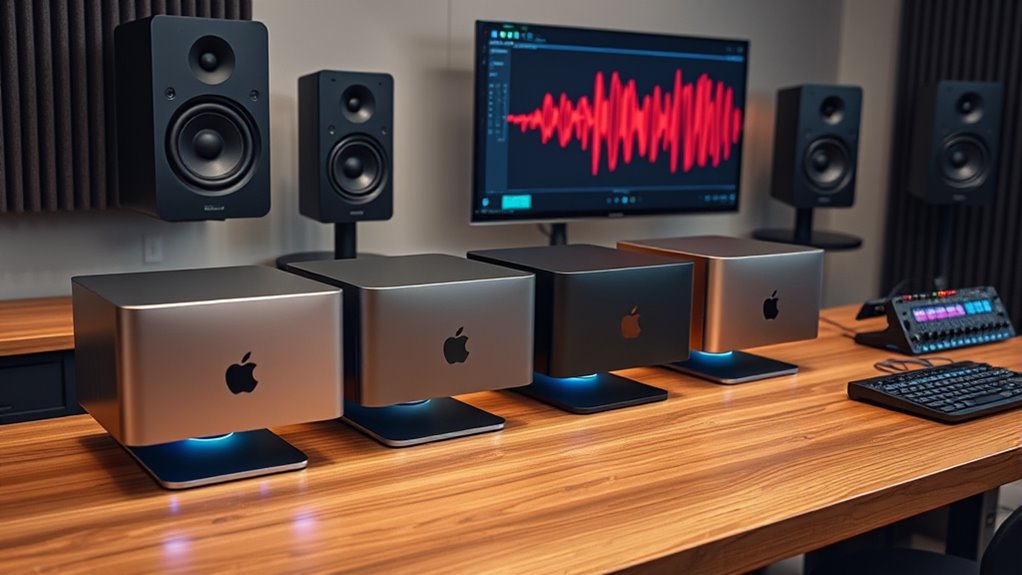

Choosing the right Mac Studio for audio production depends heavily on your workflow, budget, and future-proofing needs. The Apple Mac Studio with M4 Max stands out for demanding professionals needing exceptional power, but it comes at a high price. For those focused on recording and streaming, compact interfaces like the PIYONE 2×2 and USB Audio Interface offer great value, though they lack the raw processing muscle. Meanwhile, the M100 Podcast Equipment Bundle provides a complete setup for multi-person recordings. In this roundup, I’ll walk through these options, highlighting their strengths, tradeoffs, and who will benefit most from each.

Get health and wellness essentials delivered free — and shop member deals
- Fast, free delivery on millions of items
- Access to Prime Big Deal Days deals on October 6–7
- Prime Video, Amazon Music and more included
Key Takeaways
- The Mac Studio with M4 Max offers unparalleled power for intensive audio workflows but at a premium price.
- External audio interfaces provide high-quality sound and flexibility for recording but may limit multi-channel expansion.
- Complete podcast bundles simplify multi-mic setups, ideal for content creators but might be too feature-heavy for casual users.
- Compatibility and connectivity options are critical; select interfaces with USB-C or Thunderbolt for seamless integration.
- Budget considerations vary widely—entry-level interfaces are affordable but lack advanced features, while high-end Macs deliver top performance for demanding tasks.
| Apple Mac Studio with M4 Max, 16-Core CPU, 40-Core GPU, 128GB Unified Memory, 2TB SSD |  | Best Overall Powerhouse for Demanding Audio Workflows | Processor: M4 Max, 16-Core CPU, 40-Core GPU | Memory: 128GB Unified Memory | Storage: 2TB SSD | VIEW ON AMAZON | See Our Full Breakdown |
| PIYONE 2×2 24-bit/192kHz USB C Audio Interface for PC/Mac/iOS |  | Best Compact Interface for Versatile Recording | Compatibility: Mac, PC, iOS | Connectivity: USB-C | Channels: 2 | VIEW ON AMAZON | See Our Full Breakdown |
| M100 Podcast Equipment Bundle for 4, Audio Interface with 4 Dynamic Mics |  | Best Multi-Mic Podcast Setup | Channels: 4 | Connectivity: USB | Power: Battery Powered | VIEW ON AMAZON | See Our Full Breakdown |
| USB Audio Interface for PC and Mac, 24Bit/192kHz Recording, 2 In/2 Out, Phantom Power, for Music, Podcasting, Streaming |  | Best Mid-Range Interface for Versatile Recording | Resolution: 24-bit/192kHz | Inputs: 2 XLR/Line combo | Outputs: 2 balanced TRS + stereo headphone | VIEW ON AMAZON | See Our Full Breakdown |
| PIYONE 2×2 24-bit/192kHz USB C Audio Interface for PC/Mac/iOS | | Best Sleek, High-Fidelity USB-C Interface | Compatibility: Guitar, PC, Mac, iOS | Connectivity: USB | Channels: 2 | VIEW ON AMAZON | See Our Full Breakdown |
| mac studio for audio production | Connectivity | Channels | Phantom Power |
|---|---|---|---|
| Apple Mac Studio with M4 Max | Thunderbolt 5 | — | — |
| PIYONE 2×2 24-bit/192kHz USB C | USB-C | 2 | +48V |
| M100 Podcast Equipment Bundle | USB | 4 | — |
| USB Audio Interface for PC and | — | — | 48V |
| PIYONE 2×2 24-bit/192kHz USB C | USB | 2 | 48V |
More Details on Our Top Picks
Apple Mac Studio with M4 Max, 16-Core CPU, 40-Core GPU, 128GB Unified Memory, 2TB SSD
This Mac Studio stands out for its exceptional processing power and massive memory capacity, making it ideal for complex projects like virtual instruments, high-res mixing, and AI-driven audio tasks. Its M4 Max chip with 16-core CPU and 40-core GPU ensures smooth handling of intensive workflows, while 128GB of unified memory keeps everything running seamlessly. However, its high price and fixed internal components mean it’s less suitable for users who need flexibility or are on a tight budget. Compared with smaller Mac models, this option is best for professionals who demand the utmost performance without compromise.
Pros:- Unmatched performance for demanding tasks
- Large memory and storage capacity
- Compact, desk-friendly design
- Thunderbolt 5 connectivity for fast peripherals
Cons:- High cost limits accessibility
- Limited upgrade options due to integrated design
Best for: Professional audio producers working on large, resource-intensive projects
Not ideal for: Budget-conscious users or those needing upgradeability
- Processor:M4 Max, 16-Core CPU, 40-Core GPU
- Memory:128GB Unified Memory
- Storage:2TB SSD
- Connectivity:Thunderbolt 5
Our verdict“A top-tier choice for professionals who need maximum power without considering upgrade flexibility.”
PIYONE 2×2 24-bit/192kHz USB C Audio Interface for PC/Mac/iOS
This interface offers studio-grade fidelity in a sleek, portable package, making it perfect for home studios and mobile setups. Its dual combo inputs support microphones and instruments, with phantom power included for condenser mics. While it’s ideal for recording vocals, podcasts, and small sessions, it’s limited to just 2 channels, which might restrict multi-instrument or multi-mic recordings. Compared to more complex interfaces, its simplicity is a strength for beginners but a drawback for expanding multi-track projects.
Pros:- Excellent audio quality at 24-bit/192kHz
- Plug-and-play with Mac, PC, and iOS
- Compact and portable design
- Includes multiple adapters
Cons:- Limited to 2 channels
- No bundled recording software
- Requires USB-C port
Best for: Home producers, podcasters, and mobile musicians
Not ideal for: Larger multi-track recording setups
- Compatibility:Mac, PC, iOS
- Connectivity:USB-C
- Channels:2
- Sample Rate:192kHz
- Phantom Power:+48V
Our verdict“A highly portable, high-quality interface suited for solo artists and content creators on the go.”
M100 Podcast Equipment Bundle for 4, Audio Interface with 4 Dynamic Mics
This bundle is tailored for multi-person podcasting and streaming. It includes an upgraded dual USB interface and four dynamic microphones, making it easy for groups to record simultaneously. The kit’s plug-and-play nature simplifies setup, and its included accessories support a professional sound. However, the sound quality of the microphones isn’t specified in detail, and the array of features might overwhelm beginners. Compared to standalone interfaces, this offers everything needed for a complete podcast setup but may be overkill for single-mic users.
Pros:- Easy setup with plug-and-play design
- Includes four dynamic microphones and accessories
- Supports multiple sound effects and sound modes
- Ideal for group recordings
Cons:- Sound quality specifics unclear
- Can be complex for beginners
- Price and detailed specs not listed
Best for: Content creators producing multi-person podcasts or streaming teams
Not ideal for: Solo recording or users seeking high-fidelity music production
- Channels:4
- Connectivity:USB
- Power:Battery Powered
- Microphones:4 Dynamic Mics
Our verdict“A comprehensive starter kit for multi-person podcasting, though better suited to content creators than audiophiles.”
USB Audio Interface for PC and Mac, 24Bit/192kHz Recording, 2 In/2 Out, Phantom Power, for Music, Podcasting, Streaming
This interface balances quality and simplicity, offering professional sound at an accessible price. Its 2 combo inputs support both microphones and instruments, with 48V phantom power for condenser mics. Designed for ease of use, it’s perfect for musicians, podcasters, and streamers who need reliable, high-quality recording without the complexity of larger setups. Still, its two-channel limit means it’s not suitable for multi-instrument recording or complex live sessions compared to higher-end options.
Pros:- High-quality 24-bit/192kHz audio
- Plug-and-play with Mac and Windows
- Includes phantom power
- Simple, ergonomic design
Cons:- Limited to 2 inputs and outputs
- No bundled software
- Requires external power supply
Best for: Musicians, podcasters, and streamers needing reliable, high-quality sound
Not ideal for: Multi-instrument or multi-mic recording setups
- Resolution:24-bit/192kHz
- Inputs:2 XLR/Line combo
- Outputs:2 balanced TRS + stereo headphone
- Phantom Power:48V
Our verdict“A versatile, budget-friendly interface for single-mic or instrument recording with professional quality.”
PIYONE 2×2 24-bit/192kHz USB C Audio Interface for PC/Mac/iOS
The PIYONE 2×2 offers studio-quality sound fidelity with a minimalistic, elegant design. Its plug-and-play USB-C connection makes it easy to use with Mac, PC, or even iOS devices. With dual combo inputs and phantom power, it suits professional and home recording needs alike, especially for those valuing style and simplicity. However, its limited channel count and minimal controls may not satisfy users with larger or more complex recording requirements. Its design favors straightforward, high-quality recording over extensive features.
Pros:- High-fidelity 24-bit/192kHz recording
- USB-C plug-and-play compatibility
- Elegant, illuminated design
- Supports phantom power for mics
Cons:- Limited to 2 channels
- Requires USB-C port or adapters
- Minimal controls for advanced routing
Best for: Professional and home recordists seeking high fidelity in a sleek package
Not ideal for: Multi-instrument, multi-mic setups or users needing extensive control
- Compatibility:Guitar, PC, Mac, iOS
- Connectivity:USB
- Channels:2
- Sample Rate:192kHz
- Phantom Power:48V
Our verdict“A stylish, high-performance interface suited for serious solo recording and streaming.”

How We Picked
In selecting these products, I prioritized how well each device supports professional audio production on a Mac Studio, considering processing power, connectivity, expandability, and value. I compared high-performance Macs with different specs to see which best match intensive workflows, while also including interfaces that complement the Mac Studio’s capabilities. I looked at features that matter for audio quality, ease of use, and future scalability, ensuring options cater to a range of user needs from beginners to seasoned professionals. Price and user flexibility also weighed heavily, ensuring all picks are realistic choices for their target audiences.
| mac studio for audio production | Connectivity |
|---|---|
| Apple Mac Studio with M4 Max | Thunderbolt 5 |
| PIYONE 2×2 24-bit/192kHz USB C | USB-C |
| M100 Podcast Equipment Bundle | USB |
| USB Audio Interface for PC and | — |
| PIYONE 2×2 24-bit/192kHz USB C | USB |
Factors to Consider When Choosing Mac Studio For Audio Production
When selecting a Mac Studio setup for audio production, consider how much processing power you need, the number of audio channels, and your workflow scale. High-end Macs like the Mac Studio with M4 Max deliver exceptional performance for large, complex projects but come with a hefty price tag. If your work involves multi-mic recordings, streaming, or podcasting, a dedicated audio interface—either a compact USB-C model or a complete bundle—can provide high-quality sound and flexibility. Balance your budget against your project scope to choose the best combination for your needs.
Processing Power and Performance
If you’re working on resource-intensive projects such as mixing in high-resolution audio, virtual instruments, or AI-driven audio processing, investing in a Mac Studio with the latest M4 Max chip is worthwhile. It handles demanding workflows effortlessly, reducing latency and avoiding bottlenecks. However, for simpler tasks like voice-over or basic editing, a less powerful Mac or a dedicated audio interface may suffice, saving cost without sacrificing quality.
Connectivity and Expandability
Ensuring your audio interface supports USB-C or Thunderbolt 5 connects seamlessly with the Mac Studio, providing high data transfer rates crucial for professional recording. For multi-mic or multi-instrument setups, look for interfaces with multiple inputs; for single-mic or streaming, smaller interfaces like the PIYONE or the USB Audio Interface are enough. Remember, some interfaces lack software bundles or require external power, which might influence your setup preferences.
Budget and Future-Proofing
High-end Macs are a significant investment, but they offer unmatched future-proofing for demanding workflows. Conversely, entry-level interfaces and less expensive Macs are ideal for hobbyists or those just starting out. Consider whether you plan to expand your setup later—buying an interface with more inputs or a Mac with higher specs now can save costs and headaches down the line.
Frequently Asked Questions
What should I consider when choosing a Mac Studio for audio production?
Focus on your processing needs, the number of audio channels you require, and your budget. For large projects with many tracks, a Mac Studio with M4 Max provides the power needed. For simpler setups, a smaller Mac paired with a quality audio interface may be enough. Compatibility and connectivity options are also key, especially for seamless integration with your existing gear.
Are external audio interfaces necessary with a Mac Studio?
While the Mac Studio has high-speed Thunderbolt ports that can support internal audio solutions, external interfaces are typically used to improve sound quality, add more inputs, or provide better microphone preamps. For most professional audio tasks, a dedicated interface is highly recommended to achieve high fidelity and flexibility.
Which audio interface is best for podcasting on a Mac?
The PIYONE 2×2 stands out as an excellent choice due to its high-quality 24-bit/192kHz fidelity, sleek design, and plug-and-play USB-C compatibility. It’s well-suited for single-mic podcasting or streaming, offering reliable performance without overwhelming with features.
Can I upgrade the Mac Studio later if my needs change?
Unfortunately, the Mac Studio has a fixed internal configuration, meaning you cannot upgrade the CPU, GPU, or RAM after purchase. If future expandability is a concern, consider a more modular setup with external peripherals or a Mac model that allows hardware upgrades.
Is a high-end Mac Studio worth it for amateur musicians?
For hobbyists or those just starting, a less expensive Mac or even a Mac Mini paired with a good audio interface can provide excellent results without the hefty price tag. The high-end Mac Studio is better suited for professionals or users with demanding multi-track projects that require maximum processing power.
Conclusion
If you’re a professional working on complex audio projects, the Mac Studio with M4 Max is a clear choice despite its cost. For podcasters, streamers, or solo musicians, a high-quality audio interface like the PIYONE 2×2 or USB Audio Interface offers impressive fidelity and simplicity. Budget-conscious hobbyists should consider more affordable Macs paired with entry-level interfaces, while content creators doing multi-mic recordings will find the M100 Podcast Bundle provides everything needed in one package. Tailor your pick to your workflow, project scope, and future plans, and you’ll find the ideal setup for your audio production needs in 2026.
Fall Picks
fall essentials
As an affiliate, we earn on qualifying purchases.