Choosing the right Mac mini for a media server in 2026 depends on your performance needs, storage preferences, and budget. The Apple 2024 Mac mini with M4 Pro stands out for demanding tasks and future-proofing, thanks to its powerful processor and expanded RAM. Meanwhile, the Apple 2024 Mac mini with M4 offers a more affordable yet still capable option for those who prioritize compactness and seamless Apple integration. Both models excel in connectivity and size but differ in raw power and storage flexibility, making your decision hinge on how much performance you need versus your budget constraints.
Key Takeaways
- The M4 Pro model offers significantly more processing power, ideal for media transcoding and large media libraries.
- Both models are compact and easily fit next to monitors, but the M4 Pro version has a higher starting price.
- Storage capacity is limited to 512GB on both, so consider external storage or network solutions for large media collections.
- Connectivity options include Thunderbolt, HDMI, and Ethernet, ensuring smooth streaming and file sharing.
- Choosing between these depends on whether you prioritize raw performance or budget-friendly efficiency.
| Apple 2024 Mac mini Desktop Computer with M4 Pro Chip, 24GB RAM, 512GB SSD, Gigabit Ethernet |  | Best Overall for Power and Future-Proofing | Processor: M4 Pro chip | CPU: 12-core | GPU: 16-core | VIEW ON AMAZON | See Our Full Breakdown |
| Apple 2024 Mac mini Desktop Computer with M4 Chip, 16GB RAM, 512GB SSD, Gigabit Ethernet | | Best Compact and Budget-Friendly Choice | Processor: M4 chip with 10-core CPU and 10-core GPU | Memory: 16GB Unified Memory | Storage: 512GB SSD | VIEW ON AMAZON | See Our Full Breakdown |
| mac mini as a media server | Processor | Memory | Storage | Ethernet |
|---|---|---|---|---|
| Apple 2024 Mac mini Desktop Co | M4 Pro chip | 24GB Unified Memory | 512GB SSD | Gigabit Ethernet |
| Apple 2024 Mac mini Desktop Co | M4 chip with 10-core CPU and 10-core GPU | 16GB Unified Memory | 512GB SSD | Gigabit Ethernet |
More Details on Our Top Picks
Apple 2024 Mac mini Desktop Computer with M4 Pro Chip, 24GB RAM, 512GB SSD, Gigabit Ethernet
This Mac mini distinguishes itself with the M4 Pro chip, which provides impressive processing and graphics capabilities that are well-suited for media transcoding, streaming, and hosting large libraries. Its 24GB of RAM ensures smooth multitasking, and the multiple ports, including Thunderbolt and HDMI, facilitate versatile media sharing. Compared to the M4 model, it offers a notable boost in raw power, but that comes with a higher price point. The limited storage at 512GB might be a concern for media-heavy users unless supplemented with external drives.
While it excels in demanding tasks, the premium cost and storage limitations mean it may be less attractive for budget-conscious setups. This model is best for users who need serious processing power and plan to run multiple media streams or transcoding tasks simultaneously.
Pros:- Powerful M4 Pro chip with 12-core CPU and 16-core GPU
- Large 24GB unified memory for multitasking
- Multiple high-speed ports including Thunderbolt and HDMI
- Compact design fits easily beside a monitor
Cons:- Limited to 512GB storage without external options
- Premium price may be prohibitive for some
- No dedicated graphics card
Best for: Power users who run multiple media servers or require high-performance transcoding.
Not ideal for: Casual users with modest media needs or those on a tight budget.
- Processor:M4 Pro chip
- CPU:12-core
- GPU:16-core
- Memory:24GB Unified Memory
- Storage:512GB SSD
- Ethernet:Gigabit Ethernet
- Ports:Thunderbolt, HDMI, USB-C, Headphone jack
Our verdict“A powerhouse choice for demanding media server tasks, best suited for power users willing to invest in performance.”
Apple 2024 Mac mini Desktop Computer with M4 Chip, 16GB RAM, 512GB SSD, Gigabit Ethernet
The M4 version offers a compelling blend of performance and affordability. Powered by a 10-core CPU and GPU, it handles media streaming and basic transcoding tasks effectively, making it ideal for smaller media libraries or household media servers. Its compact size, measuring just 5 x 5 inches, ensures it fits neatly next to any monitor or entertainment center. While it lacks the raw power of the M4 Pro, its performance is more than enough for casual media sharing, streaming, and light transcoding. The 16GB of RAM supports multitasking, but may be limiting for very large media libraries or intensive server tasks.
Compared with the Pro model, the M4 version is more affordable and consumes less power, but it’s less future-proof for high-demand tasks. This pick makes the most sense for users seeking a capable media server without the need for extreme processing power.
Pros:- Efficient M4 chip with 10-core CPU and GPU
- Compact and lightweight design
- Multiple ports including Thunderbolt and HDMI
- Affordable for a capable media server
Cons:- Limited to 512GB storage, external solutions needed for large libraries
- Less processing power than the M4 Pro
- No dedicated graphics card
Best for: Home users or small offices with modest media hosting needs.
Not ideal for: Power users running large media libraries or multiple simultaneous streams.
- Processor:M4 chip with 10-core CPU and 10-core GPU
- Memory:16GB Unified Memory
- Storage:512GB SSD
- Ethernet:Gigabit Ethernet
- Ports:Thunderbolt, HDMI, USB-C, headphone jack
Our verdict“A versatile, space-saving option that balances performance and price, fitting for smaller media server setups.”
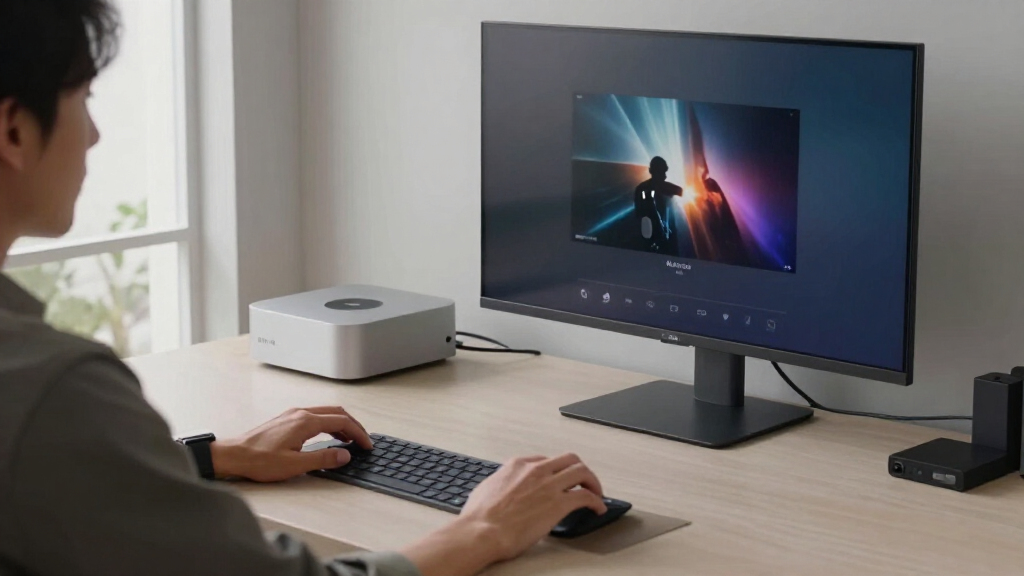
How We Picked
Our selection process focused on the core needs of a media server: processing power, connectivity, storage, and size. We prioritized Apple’s latest chips for performance, assessed port options for media sharing and streaming, and evaluated price against feature set. We excluded models with limited ports or outdated hardware, aiming for options that blend compact design with enough muscle to handle media management tasks efficiently. Both models were chosen for their balance of Apple ecosystem integration and performance potential in a small form factor.
| mac mini as a media server | Processor |
|---|---|
| Apple 2024 Mac mini Desktop Co | M4 Pro chip |
| Apple 2024 Mac mini Desktop Co | M4 chip with 10-core CPU and 10-core GPU |
Factors to Consider When Choosing Mac Mini As A Media Server
Selecting the right Mac mini for a media server hinges on a few key factors: processing power for transcoding and streaming, connectivity options for media sharing, storage flexibility, and overall size. In 2026, Apple’s latest chips offer a significant leap in performance, but your specific needs determine whether you should lean toward the more powerful M4 Pro or the more budget-friendly M4 model. Here, I walk through these considerations to help you identify the best fit.Performance Needs
If you plan to host large media libraries, transcode videos on the fly, or run multiple streams simultaneously, the M4 Pro model will provide the extra horsepower needed. For simple media sharing and streaming, the M4 version offers sufficient performance with less investment. Consider your media volume and future growth when making your choice.
Connectivity and Ports
Both options feature Thunderbolt, HDMI, and Ethernet ports that support high-speed data transfer and media streaming. The choice depends on your existing setup—if you need to connect multiple external drives or a high-end AV receiver, ensure the model has enough ports and bandwidth. The compact size of both models means limited expansion options, so plan accordingly.
Storage and Expandability
With only 512GB SSD included in both, external drives or network storage are advisable for large media collections. Neither model offers internal upgrade options, so consider your storage needs carefully—external NAS or direct-attached storage can supplement your setup without sacrificing the compact design.
Size and Design
The Mac mini’s small footprint makes it a natural fit for media servers placed in entertainment centers or desks. The M4 version’s slightly smaller size enhances this portability, but both are designed to sit quietly and unobtrusively beside your display or AV equipment.
Frequently Asked Questions
Can these Mac minis handle 4K media streaming?
Yes, both the M4 and M4 Pro models are capable of streaming 4K media smoothly thanks to their powerful GPUs and multiple ports. The M4 Pro’s higher processing power can also transcode 4K videos more efficiently if needed for direct streaming or serving multiple devices.
Is the internal storage sufficient for large media libraries?
While 512GB SSD is ample for many users, large media libraries—especially high-resolution videos—may require external storage solutions. For extensive collections, network-attached storage (NAS) or external drives connected via Thunderbolt or USB-C can keep your media accessible without filling up internal space.
How do these Mac minis compare in energy consumption?
The M4 version generally consumes slightly less power due to its less demanding hardware, making it more suitable for continuous operation in energy-conscious environments. The M4 Pro, with its higher performance, may draw more power under load but still remains efficient compared to traditional desktop setups.
Are these models suitable for running media server software like Plex or Kodi?
Both models are well-suited for running media server software such as Plex or Kodi. The M4 Pro’s extra processing power makes it better for transcoding multiple streams simultaneously, while the M4 version handles standard streaming tasks with ease. Compatibility with macOS-based server apps is seamless, ensuring reliable media hosting.
Can I upgrade the RAM or storage later?
No, both Mac mini models have their RAM and storage soldered to the motherboard, which means upgrades are not possible after purchase. It’s important to choose a configuration that will meet your medium and storage needs for the long term—external drives or network solutions will be necessary for expansion.
Conclusion
If your priority is maximum performance and future-proofing for demanding media tasks, the Mac mini with M4 Pro is the best choice, despite its higher cost. For more casual use, smaller media libraries, or tighter budgets, the M4 model delivers solid performance in a compact package. Power users who transcode or handle large collections should lean toward the Pro; casual users or those with limited space will find the standard M4 sufficient.