Choosing the right gimbal stabilizers for videography depends heavily on whether you shoot with a smartphone or a dedicated mirrorless camera. For most creators, the DJI Osmo Mobile 8 stands out as the best overall pick due to its seamless integration with mobile devices and intuitive AI tracking features. If you require heavy-duty stabilization for professional cinema cameras, the DJI RS 4 offers unmatched payload capacity and advanced focus control. The primary tradeoff in this category is between portability and payload capacity; smaller phone gimbals sacrifice camera compatibility, while camera gimbals demand more setup time and physical strength. This guide breaks down the specific strengths and limitations of each model to help you match the tool to your shooting style.

Get health and wellness essentials delivered free with Prime
- Fast, free delivery on millions of items
- Prime Video, Amazon Music and more included
- Member-only deals all year
Key Takeaways
- Phone gimbals have evolved to include native AI tracking that rivals dedicated hardware, making them viable for solo creators.
- Camera gimbals now feature intelligent focus motors that reduce the need for manual follow-focus during dynamic shots.
- Payload capacity is the single most critical spec for camera gimbals, with mini-gimbals struggling against larger lens combinations.
- Battery life on modern gimbals exceeds 10 hours, effectively eliminating mid-shoot charging anxiety for single-day productions.
- App ecosystem compatibility matters more than raw mechanical specs, as software updates frequently add new shooting modes and fixes.
| Hohem iSteady X3 SE 3-Axis Gimbal Stabilizer |  | Best Value for Beginners | Weight: 0.79 lbs | Battery Life: 11 hours | Payload Capacity: 0.66 lbs | VIEW ON AMAZON | See Our Full Breakdown |
| DJI Osmo Mobile 8 Standard Combo |  | Best Overall for Smartphone Videographers | Battery Life: 10 hours | Rotation: 360° Pan | Stabilization: 3-Axis | VIEW ON AMAZON | See Our Full Breakdown |
| DJI Osmo Mobile 7P Gimbal Stabilizer |  | Best for Creative Features & Lighting | Battery Life: Up to 10 hours | Included Module: Multifunctional Module | Stabilization: 3-Axis | VIEW ON AMAZON | See Our Full Breakdown |
| AOCHUAN Smart XE 3-Axis Gimbal Stabilizer |  | Best Compact Travel Option | Weight: 0.78 lbs | Battery Life: Up to 10 hours | Payload Capacity: 250 grams | VIEW ON AMAZON | See Our Full Breakdown |
| Hohem iSteady Pro 4 Action Camera Gimbal |  | Best for Action Cameras | Battery Life: 14 hours | Water Resistance: IPX4 Splashproof | Compatibility: GoPro, DJI Osmo, Insta360 | VIEW ON AMAZON | See Our Full Breakdown |
| Hohem iSteady Pro 4 Action Camera Gimbal Stabilizer |  | Best for Action Camera Shooters | Stabilization Axes: 3-Axis | Battery Life: 14 Hours | Water Resistance: IPX4 | VIEW ON AMAZON | See Our Full Breakdown |
| FeiyuTech SCORP Mini-3-Pro Gimbal Stabilizer for Camera, Smartphone, and Action Cameras | 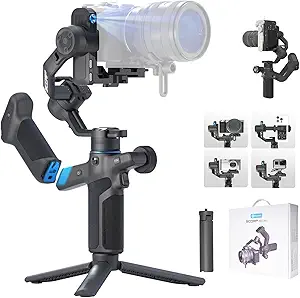 | Best Hybrid Multi-Platform Gimbal | Payload Capacity: 4.4 lbs (2 kg) | Tracking Distance: 18 meters | Response Time: 0.003 seconds | VIEW ON AMAZON | See Our Full Breakdown |
| COMITOK L7C Pro Gimbal Stabilizer for iPhone and Android |  | Best Budget Smartphone Gimbal | Battery Capacity: 2600mAh | Charging Time: 80 minutes | Weight: 0.8 lbs | VIEW ON AMAZON | See Our Full Breakdown |
| DJI Osmo Mobile 8 Gimbal Stabilizer for Phone, 3-Axis Stabilization |  | Best Premium Smartphone Gimbal | Battery Life: 10 hours | Stabilization: 3-Axis | Features: Native tracking, 360° pan, built-in rod/tripod | VIEW ON AMAZON | See Our Full Breakdown |
| DJI Osmo Mobile 7 Gimbal Stabilizer for iPhone & Android, 3-Axis Gimbal |  | Best Balance of Portability and Performance | Weight: 300 grams | Battery Life: 10 hours | ActiveTrack: 7.0 | VIEW ON AMAZON | See Our Full Breakdown |
| DJI Osmo Mobile 7P + Mic Mini TX (Infinity Black), Gimbal Stabilizer |  | Best All-in-One Smartphone Kit | Brand: DJI | Model Name: Osmo Mobile 7P | Item Highlight: For iPhone & Android, Native Tracking, Audio Reception, Lighting | VIEW ON AMAZON | See Our Full Breakdown |
| DJI RS 4 Gimbal Stabilizer for Camera |  | Best Premium Camera Gimbal | Payload Capacity: 3kg (6.6 lbs) | Extended Tilt Axis: Yes, extended by 8.5 mm | Battery Runtime: Up to 29.5 hours with BG70 grip | VIEW ON AMAZON | See Our Full Breakdown |
| DJI RS 3 Mini Camera Gimbal Stabilizer for Canon, Sony, Nikon, Fujifilm |  | Best Lightweight Travel Gimbal | Weight: 795g (1.75 lbs) | Load Capacity: 2 kg (4.4 lbs) | Compatibility: Canon, Sony, Nikon, Fujifilm mirrorless cameras | VIEW ON AMAZON | See Our Full Breakdown |
| DJI RS 4 Mini Gimbal Stabilizer for Camera, Compatible with Canon, Sony, Nikon, Fujifilm |  | Best for Quick Setup and Hybrid Use | Payload Capacity: 2kg / 4.4lbs | Vertical Shooting: Yes | Auto Axis Locks: Yes | VIEW ON AMAZON | See Our Full Breakdown |
| gimbal stabilizers for videography | Battery Life | Compatibility |
|---|---|---|
| Hohem iSteady X3 SE 3-Axis Gim | 11 hours | iPhone & Android |
| DJI Osmo Mobile 8 Standard Com | 10 hours | — |
| DJI Osmo Mobile 7P Gimbal Stab | Up to 10 hours | — |
| AOCHUAN Smart XE 3-Axis Gimbal | Up to 10 hours | — |
| Hohem iSteady Pro 4 Action Cam | 14 hours | GoPro, DJI Osmo, Insta360 |
| Hohem iSteady Pro 4 Action Cam | 14 Hours | GoPro, DJI Osmo Action, Insta360 ONE R |
| FeiyuTech SCORP Mini-3-Pro Gim | — | Mirrorless, Compact, Smartphones, Action Cams |
| COMITOK L7C Pro Gimbal Stabili | — | Smartphones under 7 inches |
| DJI Osmo Mobile 8 Gimbal Stabi | 10 hours | — |
| DJI Osmo Mobile 7 Gimbal Stabi | 10 hours | iPhone & Android |
| DJI Osmo Mobile 7P + Mic Mini | 10 hours | — |
| DJI RS 4 Gimbal Stabilizer for | — | Canon, Sony, Nikon, Fujifilm mirrorless cameras |
| DJI RS 3 Mini Camera Gimbal St | — | Canon, Sony, Nikon, Fujifilm mirrorless cameras |
| DJI RS 4 Mini Gimbal Stabilize | — | — |
More Details on Our Top Picks
Hohem iSteady X3 SE 3-Axis Gimbal Stabilizer
This model stands out for its exceptional battery life of 11 hours, which outlasts many competitors in its class. Compared with the DJI Osmo Mobile 8, it offers a similar stabilization experience but at a lower entry point, making it ideal for those testing the waters. The detachable magnetic remote adds convenience for group shots, a feature often missing in budget options. However, the payload capacity is limited, meaning users with large cases or heavy phones may struggle. While the Hohem Joy app provides good AI tracking, it lacks the ecosystem depth of DJI’s software. This is a solid choice for casual vloggers who prioritize endurance over advanced creative tools.
Pros:- 11-hour battery life supports full-day shooting sessions
- Detachable magnetic remote simplifies group filming
- Lightweight and foldable design enhances portability
- iSteady 8.0 stabilization provides smooth, shake-free footage
Cons:- Limited payload capacity may struggle with bulky phone cases
- Full functionality relies heavily on the proprietary Hohem Joy app
- Lacks built-in accessories like an extension rod or tripod
Best for: Beginner vloggers and casual content creators who need long battery life and basic stabilization without a high price tag.
Not ideal for: Professional creators who need heavy payload support or advanced lighting/audio integration found in premium DJI models.
- Weight:0.79 lbs
- Battery Life:11 hours
- Payload Capacity:0.66 lbs
- Stabilization Tech:iSteady 8.0
- Compatibility:iPhone & Android
- Remote Control:Detachable magnetic
- Charging Port:USB Type-C
Our verdict“This gimbal is the smart buy for beginners who want reliable stabilization and all-day battery without paying for premium extras.”
DJI Osmo Mobile 8 Standard Combo
The Osmo Mobile 8 sets the benchmark for smartphone stabilization, offering 360° pan rotation and robust intelligent subject tracking. Unlike the Hohem iSteady X3 SE, this combo includes a built-in extension rod and tripod, eliminating the need for extra purchases. The DJI Mimo app remains the industry standard for ease of use, though some Android users may face installation hurdles. While the Multifunctional Module is sold separately, the base unit delivers professional-grade smoothness out of the box. It is heavier than budget options but justifies the bulk with superior software integration and accessory compatibility. This is the go-to choice for creators who want a complete, ready-to-shoot package.
Pros:- Includes essential accessories like tripod and extension rod in the box
- 360° pan rotation enables creative cinematic movements
- Industry-leading subject tracking via DJI Mimo app
- 10-hour battery life supports extended shooting days
Cons:- Multifunctional Module for lighting/audio is sold separately
- App installation can be problematic for some Android devices
- Heavier than ultra-compact budget alternatives
Best for: Serious smartphone videographers who want a complete kit with tripod, extension rod, and top-tier tracking software.
Not ideal for: Users on a tight budget who do not need advanced tracking features or bundled accessories.
- Battery Life:10 hours
- Rotation:360° Pan
- Stabilization:3-Axis
- Included Accessories:Tripod, Extension Rod, Pouch
- Brand:DJI
- Model:Osmo Mobile 8
Our verdict“The Osmo Mobile 8 is the most complete smartphone gimbal package, offering the best balance of hardware, software, and included accessories.”
DJI Osmo Mobile 7P Gimbal Stabilizer
This pick makes the most sense for creators who need built-in lighting and audio capabilities. The Multifunctional Module included in the 7P combo allows for front and back lighting, a distinct advantage over the DJI Osmo Mobile 8 Standard Combo, which requires a separate purchase for similar features. The native tracking is highly reliable, and the extension rod enables low-angle shots without crouching. However, the higher price point may deter casual users who do not need on-board lights. The DJI Mimo app integration is seamless, offering one-tap editing tools that speed up post-production. It is a premium tool for those who shoot in variable lighting conditions or need high-quality audio capture on the go.
Pros:- Includes Multifunctional Module with built-in lighting and audio
- Native tracking offers precise subject following
- One-tap editing features in DJI Mimo app streamline workflow
- Compact design with built-in extension rod for versatile angles
Cons:- Higher price point compared to standard combos
- Some advanced features may be limited on Android devices
- App download may require bypassing standard store restrictions
Best for: Content creators who shoot in low light or need integrated audio and lighting solutions without carrying extra gear.
Not ideal for: Budget-conscious users who already own external lights and microphones, as the premium cost may not be justified.
- Battery Life:Up to 10 hours
- Included Module:Multifunctional Module
- Stabilization:3-Axis
- Brand:DJI
- Model:Osmo Mobile 7P
- Cable Included:USB-C to USB-C
Our verdict“Choose the Osmo Mobile 7P if you want an all-in-one solution that handles lighting and audio alongside stabilization.”
AOCHUAN Smart XE 3-Axis Gimbal Stabilizer
The AOCHUAN Smart XE competes directly with the Hohem iSteady X3 SE on weight and portability, both weighing under 0.8 lbs. Its standout feature is the physical focus wheel, which allows for manual control over depth of field or zoom, a tactile advantage over touch-only alternatives. The 7.0 generation anti-shake algorithm provides decent stabilization, though it may not match the buttery smoothness of DJI’s premium models. Gesture control and face tracking are functional but less refined than the DJI Osmo Mobile 8. This gimbal is best suited for travelers who prioritize a small footprint and basic manual controls over advanced AI features. It is a capable, no-frills option for everyday shooting.
Pros:- Physical focus wheel allows for manual zoom and focus control
- Ultra-lightweight 0.78 lbs design is easy to carry
- Foldable form factor fits easily into small bags
- 10-hour battery life supports long travel days
Cons:- App setup process can be complex for new users
- Tracking accuracy lags behind premium DJI and Hohem models
- Payload limits restrict use with heavy phone cases
Best for: Travelers and minimalists who want a lightweight, foldable gimbal with physical manual controls.
Not ideal for: Users who demand the highest level of stabilization smoothness or advanced AI tracking accuracy.
- Weight:0.78 lbs
- Battery Life:Up to 10 hours
- Payload Capacity:250 grams
- Focus Wheel:Yes
- Algorithm:7.0 Generation Anti-Shake
- Battery Capacity:2600mAh
Our verdict“This is a solid, lightweight travel companion for creators who prefer physical controls over automated software features.”
Hohem iSteady Pro 4 Action Camera Gimbal
Unlike the smartphone-focused models in this roundup, the Hohem iSteady Pro 4 is engineered specifically for action cameras like GoPro and DJI Osmo Action. Its IPX4 splashproof rating makes it suitable for rainy or snowy environments, a durability feature absent in the DJI Osmo Mobile 8. The 14-hour battery life is the longest in this group, catering to long outdoor expeditions. Bluetooth control allows for shutter activation, though it does not support all camera functions on every model. This is the definitive choice for adventure videographers who need rugged stability. It is not compatible with smartphones, so it serves a distinct niche separate from phone gimbals.
Pros:- 14-hour battery life is ideal for extended outdoor shoots
- IPX4 splashproof rating withstands rain and snow
- Specific compatibility with GoPro, DJI, and Insta360 cameras
- Bluetooth shutter control simplifies remote recording
Cons:- Incompatible with smartphones or mirrorless cameras
- Bluetooth latency may affect precise shutter timing
- Limited control functions for certain older GoPro models
Best for: Adventure vloggers and action sports enthusiasts using GoPros or similar cameras in harsh weather conditions.
Not ideal for: Smartphone users, as this device is strictly designed for action cameras and lacks phone clamps.
- Battery Life:14 hours
- Water Resistance:IPX4 Splashproof
- Compatibility:GoPro, DJI Osmo, Insta360
- Control:Bluetooth
- Weight Recommendation:160 g
- Stabilization:3-Axis
Our verdict“This is the essential tool for action camera users who need durable, long-lasting stabilization for extreme environments.”
Hohem iSteady Pro 4 Action Camera Gimbal Stabilizer
This model stands out for its specialized design targeting action cameras rather than smartphones or heavy mirrorless rigs. Unlike the COMITOK L7C Pro, which is strictly for phones, the iSteady Pro 4 supports GoPro, DJI Osmo Action, and Insta360 devices. The 14-hour battery life is a significant advantage, especially since it doubles as a power bank to charge your camera mid-shoot. However, the 150g weight limit is a hard constraint; if you add a mic or housing, you may exceed this. It lacks the advanced AI tracking found in the DJI Osmo Mobile 8, relying instead on simpler stabilization modes. IPX4 splash resistance makes it safer for outdoor use than most phone gimbals. This is not a general-purpose tool, but it excels in its specific niche of rugged, high-motion shooting.
Pros:- Extensive 14-hour battery life with built-in power bank functionality
- IPX4 splash resistance suits outdoor and wet environments
- Fast 3-second quick-release mounting for rapid setup
- Dedicated compatibility with major action camera brands
Cons:- Strict 150g payload limit excludes heavier setups
- Bluetooth latency can hinder precise shutter control
- Lacks advanced AI subject tracking features
Best for: Action camera enthusiasts who shoot outdoors and need splash resistance for GoPro or Insta360 devices.
Not ideal for: Videographers using mirrorless cameras or smartphones, as the payload and compatibility are too limited.
- Stabilization Axes:3-Axis
- Battery Life:14 Hours
- Water Resistance:IPX4
- Max Weight Capacity:150 g
- Compatibility:GoPro, DJI Osmo Action, Insta360 ONE R
- Control Method:Bluetooth & Cable
- Included Accessories:Mini Tripod, Carry Case, Charging Cables
Our verdict“The ideal choice for action camera users who prioritize battery endurance and weather resilience over smart tracking features.”
FeiyuTech SCORP Mini-3-Pro Gimbal Stabilizer for Camera, Smartphone, and Action Cameras
The SCORP Mini-3-Pro bridges the gap between phone gimbals and professional camera stabilizers. While the DJI Osmo Mobile 7 is limited to smartphones, this FeiyuTech model supports mirrorless cameras with a 4.4 lbs payload capacity. AI tracking with a 0.003-second response time ensures subjects stay sharp even during fast movement. The detachable remote handle offers flexibility for solo creators who need to control the gimbal from a distance. However, the 4.4 lbs weight makes it tiring for long handheld sessions compared to the lighter COMITOK L7C Pro. Setup complexity is higher, requiring calibration that casual users might find frustrating. It is a versatile tool, but its bulk and price point make it less appealing for simple phone vlogging.
Pros:- High 4.4 lbs payload supports mirrorless cameras and lenses
- Fast AI tracking with 0.003-second response time
- Detachable remote handle for flexible control options
- Versatile compatibility across camera and phone platforms
Cons:- Heavy 4.4 lbs weight causes fatigue during extended use
- Complex setup and calibration process for beginners
- Higher cost compared to dedicated phone-only gimbals
Best for: Creators who need one stabilizer for both mirrorless cameras and smartphones, requiring high payload capacity.
Not ideal for: Casual vloggers or those prioritizing portability, as the unit is heavy and complex to set up.
- Payload Capacity:4.4 lbs (2 kg)
- Tracking Distance:18 meters
- Response Time:0.003 seconds
- Compatibility:Mirrorless, Compact, Smartphones, Action Cams
- Weight:4.4 lbs
- Charging:USB-C
- Warranty:1 year
Our verdict“A powerful hybrid option for pros needing camera-grade stabilization without sacrificing smartphone compatibility.”
COMITOK L7C Pro Gimbal Stabilizer for iPhone and Android
The L7C Pro delivers solid stabilization without the premium price tag of DJI models. Compared to the DJI Osmo Mobile 8, it lacks native audio integration and premium build materials, but it offers 3-axis stabilization and AI tracking at a fraction of the cost. At 0.8 lbs, it is lighter than the FeiyuTech SCORP Mini-3-Pro, making it easier to carry. The foldable design ensures it fits easily into a backpack. However, the reliance on a proprietary app can be a hurdle, and some users report connectivity inconsistencies. It is a strong value pick for beginners, but those needing seamless ecosystem integration might prefer DJI’s more polished software experience.
Pros:- Lightweight 0.8 lbs design ideal for travel and portability
- Includes AI face and object tracking with gesture control
- Quick 80-minute charging time with 2600mAh battery
- Foldable structure minimizes storage footprint
Cons:- Requires third-party app download for full functionality
- Some users report inconsistent Bluetooth connectivity
- Limited to smartphones under 7 inches in size
Best for: Budget-conscious beginners and casual vloggers who want reliable phone stabilization without high costs.
Not ideal for: Professionals needing seamless app integration or users with phones larger than 7 inches.
- Battery Capacity:2600mAh
- Charging Time:80 minutes
- Weight:0.8 lbs
- Folded Dimensions:6 x 4.3 x 1.8 inches
- Max Load:9.92 ounces
- Compatibility:Smartphones under 7 inches
- Model:L7C Pro
Our verdict“An excellent entry-level choice for phone videographers seeking core features without the premium price.”
DJI Osmo Mobile 8 Gimbal Stabilizer for Phone, 3-Axis Stabilization
This model represents the current peak of smartphone gimbal technology. The native tracking with audio and lighting sets it apart from the COMITOK L7C Pro, which lacks such deep system integration. The built-in extension rod and tripod eliminate the need for extra accessories, unlike the DJI Osmo Mobile 7 which may require separate purchases for similar functionality. 360° pan rotation offers creative flexibility for dynamic shots. However, the price point is higher, and some users note app compatibility hurdles that require manual downloads. It is the best choice for those who want a complete, polished kit, but casual users might find the advanced features overkill for simple daily vlogging.
Pros:- Native tracking integrates audio and lighting directly
- Built-in extension rod and tripod enhance filming angles
- 10-hour battery life supports long shooting sessions
- Smooth 3-axis stabilization with 360° pan rotation
Cons:- Higher price compared to budget alternatives
- App installation may require visiting official website
- Some reports of connectivity stability issues
Best for: Professional vloggers and creators who need integrated audio/lighting features and all-in-one portability.
Not ideal for: Budget shoppers or those who find the DJI app ecosystem restrictive or complex.
- Battery Life:10 hours
- Stabilization:3-Axis
- Features:Native tracking, 360° pan, built-in rod/tripod
- Included Accessories:Multifunctional Module, Magnetic Clamp, Cables
- Brand:DJI
- Model:Osmo Mobile 8
Our verdict“The top-tier option for serious smartphone videographers who value integrated features and premium build quality.”
DJI Osmo Mobile 7 Gimbal Stabilizer for iPhone & Android, 3-Axis Gimbal
The Osmo Mobile 7 offers a compelling middle ground between the budget COMITOK L7C Pro and the feature-rich Osmo Mobile 8. ActiveTrack 7.0 provides reliable subject tracking that outperforms many budget competitors. Weighing only 300 grams, it is significantly lighter than the FeiyuTech SCORP Mini-3-Pro, reducing arm fatigue. The foldable design with a built-in tripod makes it highly portable. However, it lacks the native audio and lighting integration found in the newer Osmo Mobile 8. Users must also download the DJI Mimo app from the official site, which adds a step to setup. It remains a solid choice for those who prioritize tracking and portability over the latest ecosystem features.
Pros:- Lightweight 300g design reduces hand fatigue
- ActiveTrack 7.0 delivers smooth subject following
- Foldable with built-in tripod for easy storage
- 10-hour battery life for extended use
Cons:- Requires manual app download from DJI website
- Lacks native audio and lighting integration of newer models
- Some accessories like tracking kits are sold separately
Best for: Content creators who want reliable DJI tracking and portability without paying for the newest premium features.
Not ideal for: Users who need seamless audio/lighting integration or want the absolute latest hardware technology.
- Weight:300 grams
- Battery Life:10 hours
- ActiveTrack:7.0
- Built-in Tripod:Yes
- Charging:USB-C
- Compatibility:iPhone & Android
- Included Accessories:Magnetic Clamp, Power Cable, Pouch
Our verdict“A dependable, lightweight workhorse for vloggers who prioritize proven tracking technology and ease of carry.”
DJI Osmo Mobile 7P + Mic Mini TX (Infinity Black), Gimbal Stabilizer
This bundle stands out by integrating audio capture directly into the gimbal system, solving a common pain point for mobile videographers who struggle with separate mic setups. Compared to the standard DJI Osmo Mobile 8, the 7P includes the DJI Mic Mini Transmitter and a multifunctional module that doubles as a tripod and extension rod, making it a complete production kit rather than just a stabilizer. The built-in lighting adds another layer of utility, allowing for clean footage in low-light scenarios without external lights. However, the tradeoff is complexity; the setup process is more involved than simpler phone gimbals like the Hohem iSteady X3 SE, and the reliance on the DJI Mimo app can be restrictive on certain Android devices. It is best for creators who want to minimize gear clutter.
Pros:- Includes a dedicated wireless microphone transmitter for professional audio
- Multifunctional module serves as a tripod, extension rod, and light source
- Strong 3-axis stabilization with intelligent native tracking
- Long 10-hour battery life supports full-day shooting
Cons:- Setup process is more complex than standalone phone gimbals
- App restrictions on some Android platforms can hinder connectivity
- Heavier than basic phone gimbals due to added accessories
Best for: Mobile content creators who need high-quality audio and lighting integrated into a single portable unit.
Not ideal for: Users who prefer a minimalist setup and do not need built-in microphones or lights.
- Brand:DJI
- Model Name:Osmo Mobile 7P
- Item Highlight:For iPhone & Android, Native Tracking, Audio Reception, Lighting
- Battery Life:10 hours
- Included Accessories:DJI Mic Mini Transmitter, Multifunctional Module, Magnetic Phone Clamp
- Extension Rod:Built-in
- Tripod:Included via Multifunctional Module
Our verdict“This kit is the strongest choice for smartphone videographers who want a complete audio-video-lighting solution in one purchase.”
DJI RS 4 Gimbal Stabilizer for Camera
The DJI RS 4 is engineered for professionals who demand high payload capacity and robust build quality. With a 3kg payload, it handles heavy mirrorless setups that would overwhelm the DJI RS 3 Mini. The extended tilt axis allows for more dramatic angles and easier balancing of larger lenses, a feature missing in compact models. While the DJI Osmo Mobile 7P is better for phones, the RS 4 is strictly for cameras, offering superior control via the RSA port for follow-focus systems. The tradeoff is portability; it is bulkier and requires more setup time. Additionally, achieving the advertised 29.5-hour battery life requires purchasing the BG70 grip separately, adding to the overall cost.
Pros:- High 3kg payload capacity supports professional camera rigs
- Extended tilt axis enables unique shooting angles and easier balancing
- Native vertical mode allows quick switching for social media formats
- Teflon-coated axes provide smoother, quieter balancing adjustments
Cons:- Requires separate purchase of BG70 grip for maximum battery life
- Rebalancing is necessary when switching between horizontal and vertical modes
- Heavier and bulkier than mini-series gimbals
Best for: Professional videographers using heavy mirrorless cameras and large lenses who need advanced control ports.
Not ideal for: Travelers or hobbyists who prioritize lightweight gear and do not need heavy-payload support.
- Payload Capacity:3kg (6.6 lbs)
- Extended Tilt Axis:Yes, extended by 8.5 mm
- Battery Runtime:Up to 29.5 hours with BG70 grip
- Control Ports:RSA communication port
- Compatibility:Canon, Sony, Nikon, Fujifilm mirrorless cameras
- App Compatibility:Requires DJI Ronin app (download from DJI website)
- Vertical Shooting:Native vertical mode supported
Our verdict“This is the definitive choice for professionals who need maximum payload and advanced control features for serious production work.”
DJI RS 3 Mini Camera Gimbal Stabilizer for Canon, Sony, Nikon, Fujifilm
Weighing just 795g, the DJI RS 3 Mini is designed for creators who refuse to compromise on portability. It fits easily into a small bag, unlike the heavier DJI RS 4, making it ideal for travel vloggers. The 1.4-inch touchscreen simplifies menu navigation without needing a phone, though visibility in bright sunlight can be an issue. While it supports cameras up to 2kg, it lacks the extended tilt axis and advanced RSA ports found in the RS 4, limiting its utility for complex rig setups. Compared to the DJI RS 4 Mini, the RS 3 Mini lacks automated axis locks, requiring manual balancing which adds time to the setup process. It is a focused tool for those prioritizing weight over advanced automation.
Pros:- Ultra-lightweight 795g design is perfect for travel
- Supports a wide range of popular mirrorless cameras up to 2kg
- Built-in 1.4-inch touchscreen allows for phone-free operation
- Native vertical shooting mode simplifies social media content creation
Cons:- Touchscreen visibility can be poor in direct sunlight
- Lacks automated axis locks, requiring manual balancing
- Not suitable for larger DSLRs or heavy lens combinations
Best for: Travel vloggers and solo creators who need a camera gimbal that fits in carry-on luggage.
Not ideal for: Users with heavy lens combinations or those who require automated axis locks for fast setup.
- Weight:795g (1.75 lbs)
- Load Capacity:2 kg (4.4 lbs)
- Compatibility:Canon, Sony, Nikon, Fujifilm mirrorless cameras
- Display:1.4-inch full-color touchscreen
- Battery:Included (USB-C charging cable)
- Dimensions:Lightweight and compact for travel
- Vertical Shooting:Native vertical shooting supported
Our verdict“This gimbal is the best option for travelers who want professional stabilization in a package that barely adds to their bag weight.”
DJI RS 4 Mini Gimbal Stabilizer for Camera, Compatible with Canon, Sony, Nikon, Fujifilm
The DJI RS 4 Mini improves upon its predecessor by introducing automated axis locks, which drastically reduce setup time compared to the manual balancing required on the DJI RS 3 Mini. This feature is a game-changer for run-and-gun videographers who need to deploy the gimbal quickly. It also supports smartphones alongside cameras, offering more versatility than the camera-only DJI RS 3 Mini. The 10-second switch between horizontal and vertical modes is faster and smoother. However, the 2kg payload limit remains a constraint for heavier professional setups, similar to the RS 3 Mini. While more capable than the DJI Osmo Mobile 7P for camera work, it lacks the integrated microphone and lighting features of the phone-specific bundle.
Pros:- Automated axis locks enable rapid setup and teardown
- Supports both cameras and smartphones up to 2kg
- Fast 10-second switching between horizontal and vertical modes
- Includes intelligent tracking module for dynamic subject following
Cons:- 2kg payload limit excludes heavier professional camera rigs
- Feature-rich interface may be overwhelming for casual users
- App updates and compatibility require visiting the DJI website
Best for: Hybrid creators who switch between camera and smartphone shooting and value fast deployment.
Not ideal for: Professionals using heavy cinema lenses or those who do not need smartphone compatibility.
- Payload Capacity:2kg / 4.4lbs
- Vertical Shooting:Yes
- Auto Axis Locks:Yes
- Switch Time (Horizontal to Vertical):10 seconds
- Supported Devices:Cameras and smartphones
- Included Accessories:Tripod, tracking module, briefcase handle
- Intelligent Tracking:Supported via included module
Our verdict“This model is the most versatile compact gimbal, ideal for creators who need speed and flexibility across different shooting formats.”

How We Picked
I evaluated these stabilizers by analyzing their mechanical design, payload limits, and software integration. The primary criterion was stabilization accuracy, ensuring that each pick could deliver smooth footage even in handheld scenarios. I prioritized models with robust app ecosystems, recognizing that user experience and feature accessibility often determine long-term satisfaction more than hardware specs alone. Build quality and battery endurance served as secondary filters, eliminating options that felt fragile or required frequent charging during typical shooting days.
The ranking logic separates products by use case rather than a single linear scale. Phone gimbals are judged on portability and ease of setup, while camera gimbals are assessed on payload capacity and control versatility. This distinction ensures that a beginner looking for a lightweight phone solution is not compared against a professional rig designed for cinema cameras. Each product was also evaluated for its value proposition, balancing price against unique features like built-in fill lights, magnetic phone clamps, or dual-axis focus motors.
| gimbal stabilizers for videography | Compatibility |
|---|---|
| Hohem iSteady X3 SE 3-Axis Gim | iPhone & Android |
| DJI Osmo Mobile 8 Standard Com | — |
| DJI Osmo Mobile 7P Gimbal Stab | — |
| AOCHUAN Smart XE 3-Axis Gimbal | — |
| Hohem iSteady Pro 4 Action Cam | GoPro, DJI Osmo, Insta360 |
| Hohem iSteady Pro 4 Action Cam | GoPro, DJI Osmo Action, Insta360 ONE R |
| FeiyuTech SCORP Mini-3-Pro Gim | Mirrorless, Compact, Smartphones, Action Cams |
| COMITOK L7C Pro Gimbal Stabili | Smartphones under 7 inches |
| DJI Osmo Mobile 8 Gimbal Stabi | — |
| DJI Osmo Mobile 7 Gimbal Stabi | iPhone & Android |
| DJI Osmo Mobile 7P + Mic Mini | — |
| DJI RS 4 Gimbal Stabilizer for | Canon, Sony, Nikon, Fujifilm mirrorless cameras |
| DJI RS 3 Mini Camera Gimbal St | Canon, Sony, Nikon, Fujifilm mirrorless cameras |
| DJI RS 4 Mini Gimbal Stabilize | — |
Factors to Consider When Choosing Gimbal Stabilizers For Videography
Selecting a gimbal requires looking beyond marketing claims to understand how the device fits into your specific workflow. The following factors will help you navigate the complex landscape of stabilization technology.
Payload Capacity and Balance
The most common mistake buyers make is underestimating the total weight of their camera rig, including lenses, monitors, and accessories. Payload capacity is not just about lifting the camera; it is about maintaining motor efficiency when the center of gravity shifts during movement. If you plan to use a gimbal with a heavy lens, you must check the maximum payload specification carefully, as exceeding it leads to jittery footage and rapid battery drain. Mini gimbals are excellent for compact setups but often struggle with larger primes or zoom lenses, forcing you to choose between stabilization quality and lens choice. Always weigh your full rig before purchasing, and leave a 20% buffer between your rig’s weight and the gimbal’s stated limit to ensure smooth operation.
Smartphone vs. Dedicated Camera Gimbals
The decision between a phone gimbal and a camera gimbal fundamentally changes your production workflow. Phone gimbals offer unparalleled speed, allowing you to shoot instantly without the complex balancing process required for mirrorless cameras. They are ideal for solo creators, social media content, and run-and-gun documentary work where setup time is a liability. Camera gimbals, conversely, provide superior image quality, dynamic range, and manual control over exposure and focus. If you prioritize cinematic depth of field or low-light performance, a phone gimbal cannot replicate the sensor size advantages of a dedicated camera. Assess whether your audience values convenience and speed or visual fidelity and creative control more highly.
App Integration and AI Features
Hardware stability is only half the equation; software controls how usable the device is in the field. Modern gimbals rely heavily on companion apps to deliver features like AI subject tracking, gesture control, and time-lapse modes. Before buying, verify that the app supports your specific device and camera model, as compatibility gaps can render key features useless. Some manufacturers lock advanced features behind proprietary apps, limiting your ability to use third-party video recording software. A robust app ecosystem also ensures that firmware updates continue to improve performance and fix bugs, extending the lifespan of your investment. Prioritize brands with a track record of consistent software support and intuitive user interfaces.
Portability and Foldable Design
For travel videographers and solo creators, the physical footprint of a gimbal determines how often you will actually bring it along. Foldable designs significantly reduce bulk, allowing the stabilizer to fit into a standard backpack alongside other gear. However, folding mechanisms can introduce points of mechanical failure or reduce rigidity compared to fixed-arm designs. You must balance the convenience of a compact package against the need for a sturdy, vibration-free platform. Some gimbals offer modular arms that can be removed or adjusted, providing a middle ground between portability and stability. Consider your typical travel scenarios: if you hike long distances, weight savings may outweigh the slight stability benefits of a heavier, non-folding model.
Control Versatility and Ergonomics
Handling a gimbal comfortably for extended periods requires thoughtful ergonomic design and accessible controls. Look for models with joystick placement that feels natural to your grip, avoiding awkward thumb strains during long shoots. Dedicated buttons for recording start/stop, mode switching, and zoom control allow you to keep your eyes on the monitor rather than fumbling for touchscreens. Some gimbals feature dual-axis control wheels, enabling smooth zoom and focus adjustments that mimic professional cinema rigs. Check if the handle is detachable, as this feature allows for creative low-angle shots and easier storage. Poor ergonomics lead to shaky footage caused by operator fatigue, so prioritize comfort and intuitive layout over aesthetic minimalism.
Frequently Asked Questions
Do I need a gimbal if my camera has in-body stabilization?
While in-body image stabilization (IBIS) helps reduce micro-jitters, it cannot eliminate the large-scale movements and tilts associated with walking or panning. A gimbal physically isolates the camera from these motions, providing a level of smoothness that IBIS alone cannot achieve. For cinematic walking shots or smooth pans, a gimbal remains necessary even with a stabilized camera. IBIS is best used in conjunction with a gimbal to handle high-frequency vibrations, while the gimbal handles the directional movement.
How important is AI tracking for solo videographers?
AI tracking transforms solo videography by allowing the gimbal to automatically follow your subject, freeing you from manual joystick control. This feature is particularly valuable for creators who film themselves moving around a space, as it maintains consistent framing without an operator. While not perfect, modern tracking algorithms are robust enough for most lifestyle and interview scenarios. If you frequently shoot alone, investing in a gimbal with strong native tracking capabilities saves time and reduces the need for expensive additional crew.
Can I use a phone gimbal for my mirrorless camera?
No, phone gimbals lack the motor power and structural rigidity to support the weight of a mirrorless camera and lens. Attempting to mount a heavy camera on a phone gimbal will result in motor burnout, poor stabilization, and potential damage to your equipment. Phone gimbals are designed for lightweight devices under 300 grams, whereas camera gimbals start at payloads of 1.5 kilograms or more. Always match the gimbal class to your device weight to ensure safe and effective operation.
What is the difference between 3-axis and 2-axis gimbals?
A 3-axis gimbal stabilizes the camera along the pan, tilt, and roll axes, eliminating all rotational movement for a horizon-level shot. 2-axis gimbals only stabilize tilt and roll, leaving horizontal pan movements uncorrected, which can result in jerky lateral motion. For professional videography, 3-axis stabilization is the standard, as it provides the fluid, cinematic look expected by viewers. 2-axis gimbals are generally reserved for specific industrial applications or very low-cost consumer devices where budget constraints outweigh quality requirements.
How does battery life impact actual shooting time?
Manufacturer-stated battery life usually assumes ideal conditions with no accessories attached and minimal motor load. In real-world scenarios, factors like wind resistance, heavy lenses, and attached monitors can reduce runtime by 30-40%. It is advisable to carry spare batteries or a power bank if you plan on shooting for more than four hours continuously. Some gimbals support hot-swapping batteries, which allows you to change power sources without powering down the rig, ensuring uninterrupted shoots during long events.
Conclusion
Selecting the right stabilizer depends entirely on your primary device and shooting environment. For most smartphone creators, the DJI Osmo Mobile 8 offers the best balance of AI tracking, battery life, and ease of use, making it the top recommendation for general videography. If you are a beginner seeking an affordable entry point into mobile stabilization, the Hohem iSteady X3 SE provides essential features at a lower barrier to entry. Professional videographers using mirrorless cameras should look to the DJI RS 4 for its robust payload capacity and advanced focus control, while the DJI RS 3 Mini serves as the best compact option for travel shooters who need to keep their kit light. Ultimately, the best gimbal is the one that matches your specific payload requirements and workflow needs, ensuring you spend more time shooting and less time troubleshooting.
Cold & flu season Picks
humidifiers
As an affiliate, we earn on qualifying purchases.