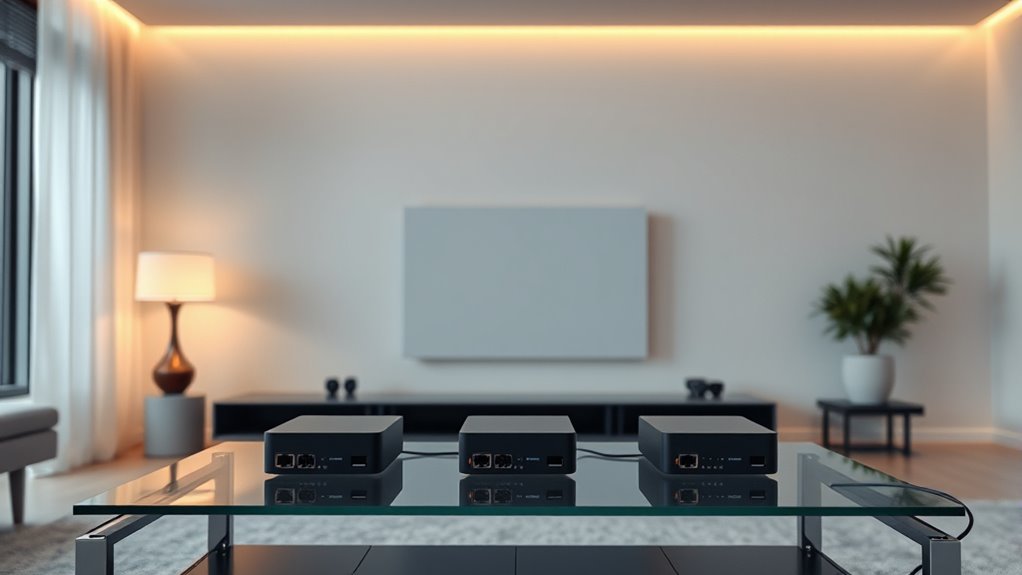

When choosing an ethernet backhaul mesh WiFi kit, the goal is to maximize stability and speed across your entire home. The best options use wired backhaul to reduce interference and boost throughput, especially in larger spaces. The TP-Link Deco X15 stands out as a balanced choice for most users, offering solid performance at a reasonable price. Meanwhile, the TP-Link Deco 7 BE23 provides cutting-edge WiFi 7 connectivity for future-proofing, but comes with a higher cost and complexity. The main tradeoffs involve balancing speed, coverage, ease of setup, and price. Continue reading for a detailed breakdown of the top picks and what makes each one unique.

Get health and wellness essentials delivered free — and shop member deals
- Fast, free delivery on millions of items
- Access to Prime Big Deal Days deals on October 6–7
- Prime Video, Amazon Music and more included
Key Takeaways
- Wired Ethernet backhaul significantly improves network stability and speed, especially in larger or multi-story homes.
- The best overall pick balances performance, ease of setup, and price, avoiding overly complex or expensive systems.
- WiFi 6 and WiFi 7 support are key considerations for future-proofing, but WiFi 7 options tend to come at a premium.
- Coverage and device capacity vary widely; choosing a system aligned with your space and device count is crucial.
- Build quality and firmware features directly influence long-term reliability and ease of maintenance.
| Tenda BE5100 WiFi 7 Mesh WiFi System – Dual-Band Whole-Home Coverage (3-Pack) |  | Best Overall for Future-Proofing and Large Homes | WiFi Standard: WiFi 7 | Coverage Area: 6,600 sq. ft. | Number of Units: 3 | VIEW ON AMAZON | See Our Full Breakdown |
| Cudy AX1500 Wi-Fi 6 3-Port Gigabit Mesh System |  | Best Value for Modern Homes on a Budget | Wi-Fi Standard: Wi-Fi 6 (802.11ax) | Speed: 1201 Mbps (5 GHz), 300 Mbps (2.4 GHz) | Coverage: 860 sq ft per unit | VIEW ON AMAZON | See Our Full Breakdown |
| Tenda AX3000 WiFi 6 Mesh System Nova MX12 – Whole Home Coverage up to 7,000 sq. ft., 3-Pack |  | Best for Large, Speed-Heavy Homes | Wi-Fi Standard: Wi-Fi 6 (802.11ax) | Maximum Speed: 2976 Mbps | Coverage Area: 7,000 sq. ft. | VIEW ON AMAZON | See Our Full Breakdown |
| Tenda Nova Mesh WiFi System MW6 – Covers up to 4-6 Bedroom Houses – AC1200 Whole Home WiFi Mesh System – 3-Pack |  | Best for Moderate Coverage in Smaller Homes | Coverage: up to 3500 sq.ft. | Number of Units: 3 | WiFi Standard: AC1200 | VIEW ON AMAZON | See Our Full Breakdown |
| Tenda Nova Mesh WiFi System MW6 – 2-Pack, AC1200 Whole Home Coverage up to 2400 sq.ft, Dual-Band Mesh Network for 90 Devices |  | Best Compact System for Small to Medium Homes | Coverage: up to 2400 sq.ft | Number of Units: 2 | WiFi Standard: AC1200 | VIEW ON AMAZON | See Our Full Breakdown |
| WAVLINK AX3000 WiFi 6 Mesh System 2 Pack |  | Best Overall for High-Speed, Large Coverage | Speed: Up to 3.0 Gbps | Bands: Dual-band (2.4GHz at 573Mbps, 5GHz at 2402Mbps) | Coverage: Up to 5,000 sq. ft. | VIEW ON AMAZON | See Our Full Breakdown |
| WAVLINK AX3000 WiFi 6 Mesh System 3 Pack |  | Best for Large Homes and Office Spaces | Speed: Up to 3.0 Gbps | Coverage: 7300 sq.ft. | Bands: Dual-band 2.4GHz and 5GHz | VIEW ON AMAZON | See Our Full Breakdown |
| TP-Link Deco X15 Dual-Band AX1500 WiFi 6 Mesh Wi-Fi System 2-Pack |  | Best for Ease of Use and Moderate Coverage | Wi-Fi Standard: WiFi 6 (AX1500) | Max Speed: 1,201 Mbps on 5 GHz and 300 Mbps on 2.4 GHz | Coverage: Up to 3,900 sq. ft. | VIEW ON AMAZON | See Our Full Breakdown |
| Tenda Nova Mesh WiFi System MW5G – Covers up to 3500 sq.ft |  | Best Budget for Reliable Whole-Home Coverage | Coverage: 3500 sq.ft. | WiFi Standard: AC1200 | Number of Units: 3 | VIEW ON AMAZON | See Our Full Breakdown |
| Cudy AX1500 Wi-Fi 6 3-Port Gigabit Mesh System, 1800 sq ft, M1500 2-Pack |  | Best for Wired Flexibility and Gaming | Wi-Fi Standard: Wi-Fi 6 | Speed: 1201 Mbps on 5 GHz | Coverage: 1800 sq. ft. per unit | VIEW ON AMAZON | See Our Full Breakdown |
| Tenda AX5400 Mesh WiFi 6 System Nova MX15 Pro – 2-Pack, 5600 sq.ft Coverage, Dual-Band, Supports 200 Devices |  | Best Overall for Large, High-Performance Homes | WiFi Standard: WiFi 6 (AX5400) | Coverage: 5600 sq.ft. | Bands: Dual-band (2.4GHz and 5GHz) | VIEW ON AMAZON | See Our Full Breakdown |
| TP-Link Deco 7 BE23 Dual-Band WiFi 7 Mesh System (3-Pack) |  | Best for Future-Proof, Ultra-Fast Large Homes | Wi-Fi Standard: Wi-Fi 7 | Coverage: Up to 6,500 sq. ft | Bands: Dual-Band | VIEW ON AMAZON | See Our Full Breakdown |
| TP-Link Deco X55 AX3000 WiFi 6 Mesh System (3-Pack) |  | Best for Reliable Performance and Easy Setup | Wi-Fi Standard: Wi-Fi 6 (AX3000) | Coverage: 6500 sq ft | Device Capacity: 150 devices | VIEW ON AMAZON | See Our Full Breakdown |
| ethernet backhaul mesh wifi kit | Coverage |
|---|---|
| Tenda BE5100 WiFi 7 Mesh WiFi | — |
| Cudy AX1500 Wi-Fi 6 3-Port Gig | 860 sq ft per unit |
| Tenda AX3000 WiFi 6 Mesh Syste | — |
| Tenda Nova Mesh WiFi System MW | up to 3500 sq.ft. |
| Tenda Nova Mesh WiFi System MW | up to 2400 sq.ft |
| WAVLINK AX3000 WiFi 6 Mesh Sys | Up to 5,000 sq. ft. |
| WAVLINK AX3000 WiFi 6 Mesh Sys | 7300 sq.ft. |
| TP-Link Deco X15 Dual-Band AX1 | Up to 3,900 sq. ft. |
| Tenda Nova Mesh WiFi System MW | 3500 sq.ft. |
| Cudy AX1500 Wi-Fi 6 3-Port Gig | 1800 sq. ft. per unit |
| Tenda AX5400 Mesh WiFi 6 Syste | 5600 sq.ft. |
| TP-Link Deco 7 BE23 Dual-Band | Up to 6,500 sq. ft |
| TP-Link Deco X55 AX3000 WiFi 6 | 6500 sq ft |
More Details on Our Top Picks
Tenda BE5100 WiFi 7 Mesh WiFi System – Dual-Band Whole-Home Coverage (3-Pack)
The Tenda BE5100 WiFi 7 Mesh System stands out for its cutting-edge WiFi 7 technology, offering speeds up to 4.3Gbps on the 5GHz band and extensive coverage of 6,600 sq. ft. with just three units. Compared to WiFi 6 options like the Cudy AX1500, it delivers significantly higher throughput, especially beneficial for streaming and gaming across large properties. Its wired Ethernet backhaul and MLO support ensure low latency and stable connections, making it ideal for demanding households. However, the lack of a 6GHz band means it doesn’t fully leverage WiFi 7’s potential, limiting future compatibility as devices evolve. This system is best suited for tech-savvy homeowners seeking to future-proof their network for years to come.
Pros:- Supports WiFi 7 for future-proof high speeds
- Huge coverage up to 6,600 sq. ft. with 3 units
- Supports wired Ethernet backhaul for stability
- Easy app management and Alexa compatibility
Cons:- Does not support the 6GHz band, limiting full WiFi 7 benefits
- Requires compatible WiFi 7 devices to maximize performance
Best for: Homeowners with large properties wanting the latest WiFi 7 technology and wired backhaul options
Not ideal for: Users with smaller homes or budget constraints who won’t benefit from WiFi 7’s advanced features
- WiFi Standard:WiFi 7
- Coverage Area:6,600 sq. ft.
- Number of Units:3
- WiFi Speeds:688Mbps (2.4GHz), 4323Mbps (5GHz)
- Ethernet Ports:1×2.5G, 2×1G Gigabit
- Backhaul Support:Ethernet and MLO
Our verdict“This system is perfect for large homes seeking the latest in WiFi technology and extensive coverage, even if it doesn’t fully exploit WiFi 7’s capabilities yet.”
Cudy AX1500 Wi-Fi 6 3-Port Gigabit Mesh System
The Cudy AX1500 Mesh System offers solid dual-band Wi-Fi 6 speeds up to 1.2Gbps on the 5GHz band, with coverage of 860 sq. ft. per unit. Compared to the Tenda Nova MW6, it provides higher speeds and built-in VPN security, making it a good fit for users needing secure remote access and multiple device support. Its three Ethernet ports allow wired backhaul or device connections, but coverage per unit is limited, so multiple units may be necessary for larger homes. While setup is straightforward via app, it lacks advanced parental controls and has a more limited coverage footprint. This makes it a smart choice for small to medium homes that want reliable Wi-Fi 6 without breaking the bank.
Pros:- Fast Wi-Fi 6 speeds for multiple devices
- Supports wired backhaul with 3 Gigabit Ethernet ports
- Built-in VPN for secure remote access
- Easy app setup and management
Cons:- Limited coverage per unit, may need multiple units
- No advanced parental controls or extensive customization
Best for: Small to medium-sized homes needing reliable Wi-Fi 6 with security features and decent speed
Not ideal for: Larger homes requiring extensive coverage or users wanting WiFi 7 compatibility
- Wi-Fi Standard:Wi-Fi 6 (802.11ax)
- Speed:1201 Mbps (5 GHz), 300 Mbps (2.4 GHz)
- Coverage:860 sq ft per unit
- Number of Ports:3 Gigabit Ethernet
- Security Protocol:WPA3
- Maximum Devices Supported:128
Our verdict“This system is well-suited for smaller homes or apartments seeking secure, fast Wi-Fi 6 without excessive complexity.”
Tenda AX3000 WiFi 6 Mesh System Nova MX12 – Whole Home Coverage up to 7,000 sq. ft., 3-Pack
The Tenda AX3000 Nova MX12 provides extensive Wi-Fi 6 coverage, supporting over 160 devices with speeds up to 2.9Gbps across a sprawling 7,000 sq. ft. area. Compared to smaller systems like the Tenda Nova MW6, it excels in large homes with dense device counts, thanks to MU-MIMO and OFDMA technologies. Its setup is straightforward via app, but firmware updates are manual, which could be inconvenient. The system’s incompatibility with MW series units limits expandability if mixing models is needed. Despite these minor issues, it offers impressive coverage and speed suited for households with heavy streaming and gaming demands requiring a robust, future-ready network.
Pros:- Enormous coverage up to 7,000 sq. ft.
- Supports over 160 devices simultaneously
- High-speed Wi-Fi 6 with MU-MIMO and OFDMA
- Easy management via app or web GUI
Cons:- Firmware updates require manual intervention
- Incompatible with MW series for mesh expansion
Best for: Large households with many devices and high-speed needs
Not ideal for: Small apartments or users who prefer plug-and-play simplicity over manual updates
- Wi-Fi Standard:Wi-Fi 6 (802.11ax)
- Maximum Speed:2976 Mbps
- Coverage Area:7,000 sq. ft.
- Number of Devices Supported:160+
- Technology:MU-MIMO, OFDMA
- Number of Units:3
Our verdict“This system is ideal for large, busy homes that need high-capacity Wi-Fi 6 coverage and are comfortable with some manual maintenance.”
Tenda Nova Mesh WiFi System MW6 – Covers up to 4-6 Bedroom Houses – AC1200 Whole Home WiFi Mesh System – 3-Pack
The Tenda Nova MW6 offers reliable AC1200 Wi-Fi coverage for up to 4-6 bedrooms, making it suitable for moderate-sized homes. Compared to high-speed Wi-Fi 6 systems like the Cudy AX1500, it offers simpler setup and sufficient speeds for everyday browsing, streaming, and light gaming. Its WPA2 security is standard, and setup via the Tenda app is quick, but its maximum throughput limits performance for bandwidth-heavy activities. While coverage is adequate for smaller homes, larger or multi-story residences might experience dead zones or reduced speeds, especially in challenging layouts. This makes it a good choice for those prioritizing simplicity and affordability for typical home use.
Pros:- Seamless coverage for 4-6 bedrooms
- Supports multiple devices with stable Wi-Fi
- Simple setup via app
- Affordable and effective for typical home use
Cons:- Limited to AC1200 speeds, not suitable for heavy bandwidth activities
- Coverage may vary in complex layouts
Best for: Small to medium-sized homes seeking easy, reliable Wi-Fi coverage without advanced features
Not ideal for: Homes requiring gigabit speeds or extensive device support
- Coverage:up to 3500 sq.ft.
- Number of Units:3
- WiFi Standard:AC1200
- Technology:MU-MIMO, Beamforming
- Device Capacity:up to 90 devices
- Security:WPA2-PSK
Our verdict“This system is best for smaller homes needing straightforward, reliable Wi-Fi coverage at an affordable price.”
Tenda Nova Mesh WiFi System MW6 – 2-Pack, AC1200 Whole Home Coverage up to 2400 sq.ft, Dual-Band Mesh Network for 90 Devices
The Tenda Nova MW6 2-Pack provides reliable dual-band AC1200 Wi-Fi coverage for up to 2,400 sq. ft., making it ideal for smaller homes or apartments. Compared to larger 3-pack systems, it offers a more compact setup with similar security and device support, perfect for users who want seamless coverage without excess equipment. Setup is quick through the Tenda app, but coverage can vary depending on home layout and materials. It supports up to 90 devices, which is sufficient for most household needs, yet the limited speed and coverage per unit might not satisfy households with higher bandwidth demands or larger square footage. This model fits those prioritizing simplicity and space efficiency.
Pros:- Seamless Wi-Fi coverage for small to medium homes
- Supports up to 90 devices
- Easy setup and management via app
- Compact design minimizes clutter
Cons:- Limited to 2 units, less coverage than 3-pack options
- Speeds capped at AC1200, not suitable for bandwidth-heavy activities
Best for: Small households or apartments needing easy, reliable Wi-Fi coverage
Not ideal for: Large homes or users demanding gigabit speeds and extensive device capacity
- Coverage:up to 2400 sq.ft
- Number of Units:2
- WiFi Standard:AC1200
- Bands:Dual-Band
- Device Capacity:up to 90 devices
- Security:WPA2-PSK
Our verdict“This system is ideal for small to medium homes that need reliable Wi-Fi without the complexity of larger setups.”
WAVLINK AX3000 WiFi 6 Mesh System 2 Pack
The WAVLINK AX3000 Mesh System stands out for delivering blazing WiFi 6 speeds up to 3.0 Gbps, making it ideal for homes with heavy streaming, gaming, or multiple users. Compared to the TP-Link Deco X15, this system offers broader coverage—up to 5,000 sq. ft.—and supports over 256 devices, which benefits larger households or small offices. Its five high-gain antennas enhance signal strength, but setup relies heavily on the app, which could be a hurdle for less tech-savvy users. The higher price reflects its robust performance and coverage, making it a worthwhile investment for demanding environments.
Pros:- Fast WiFi 6 speeds up to 3.0 Gbps support demanding applications
- Coverage of up to 5,000 sq. ft. suits large homes
- Supports over 256 devices simultaneously, ideal for busy households
- Easy app setup with flexible backhaul options
Cons:- Requires app setup, which may not appeal to all users
- Higher price point compared to entry-level mesh systems
Best for: Large households or small offices needing extensive coverage and high-speed WiFi 6 performance.
Not ideal for: Users seeking a simple, plug-and-play solution without app-based setup or those on a tight budget.
- Speed:Up to 3.0 Gbps
- Bands:Dual-band (2.4GHz at 573Mbps, 5GHz at 2402Mbps)
- Coverage:Up to 5,000 sq. ft.
- Antennas:5 high-gain antennas
- Device Capacity:256+ devices
- Encryption:WPA3
Our verdict“This mesh kit is best suited for tech-savvy users who need extensive coverage and high performance in large spaces.”
WAVLINK AX3000 WiFi 6 Mesh System 3 Pack
Compared with the 2-pack version, the WAVLINK AX3000 3-pack extends coverage to 7,300 sq. ft., making it well-suited for very large homes or small office setups. It maintains the same fast WiFi 6 speeds up to 3.0 Gbps and supports over 256 devices, but the increased coverage and number of units come at a higher cost. While setup remains straightforward via the app, some users might find managing a larger mesh system more complex. Its advanced security and seamless roaming make it a strong choice for users who prioritize reliable, high-speed connectivity across extensive spaces.
Pros:- Extended coverage of up to 7,300 sq. ft. for large properties
- Fast WiFi 6 speeds support demanding tasks
- Supports over 256 devices simultaneously
- Easy setup via mobile app with mesh roaming
Cons:- Higher cost compared to smaller packages
- Requires compatible devices to maximize WiFi 6 benefits
Best for: Homeowners or small businesses needing reliable, high-speed coverage over large areas.
Not ideal for: Small apartments or users with modest internet needs, as the extra coverage and cost might be unnecessary.
- Speed:Up to 3.0 Gbps
- Coverage:7300 sq.ft.
- Bands:Dual-band 2.4GHz and 5GHz
- Antennas:5 high-gain antennas
- Device Capacity:256+ devices
- Encryption:WPA3
Our verdict“This system suits large spaces where maximum coverage and speed are priorities, despite the higher investment.”
TP-Link Deco X15 Dual-Band AX1500 WiFi 6 Mesh Wi-Fi System 2-Pack
The TP-Link Deco X15 2-pack offers a simplified setup with the Deco app and self-optimizing mesh technology, making it a solid choice for users new to mesh WiFi or those seeking a straightforward upgrade. Its coverage of up to 3,900 sq. ft. balances well with its support for up to 120 devices, though it’s limited compared to larger systems like WAVLINK’s offerings. The AX1500 speed tier is suitable for most streaming and browsing needs but falls short for heavy gaming or multiple 4K streams simultaneously. Its security features and compatibility with smart home devices add extra value. Nonetheless, it requires a modem and might need additional units for larger homes.
Pros:- Easy setup and management via the Deco app
- Supports up to 120 devices with stable dual-band WiFi 6
- Self-optimizing mesh technology for seamless coverage
- Strong security features with TP-Link HomeShield
Cons:- Limited coverage of 3,900 sq. ft., may require more units
- Requires a modem for internet access
Best for: Small to medium homes or less tech-savvy users wanting reliable WiFi with minimal fuss.
Not ideal for: Power users or large households needing extensive coverage or maximum device capacity.
- Wi-Fi Standard:WiFi 6 (AX1500)
- Max Speed:1,201 Mbps on 5 GHz and 300 Mbps on 2.4 GHz
- Coverage:Up to 3,900 sq. ft.
- Number of Units:2
- Ethernet Ports:4 Gigabit Ethernet ports (2 per unit)
- Supports Wired Backhaul:Yes
Our verdict“This system is ideal for users seeking a hassle-free WiFi upgrade in smaller to medium-sized homes.”
Tenda Nova Mesh WiFi System MW5G – Covers up to 3500 sq.ft
The Tenda Nova MW5G 3-pack provides dependable whole-home coverage at an affordable price point, supporting up to 80 devices with MU-MIMO and Beamforming technologies. Its AC1200 WiFi standard is more modest than WiFi 6 options, but for smaller homes or less demanding internet activities, it offers solid performance and easy setup via the Tenda app. Compared to the Cudy AX1500, this system is generally easier to manage and more affordable, though it lacks some of the advanced features like WPA3 security. It’s a practical choice for budget-conscious users who want reliable coverage without high-tech bells and whistles.
Pros:- Affordable price for whole-home coverage up to 3500 sq. ft.
- Supports multiple devices with MU-MIMO technology
- Easy to set up and manage via mobile app
- Provides WPA2 security and guest network features
Cons:- Limited to AC1200 WiFi speeds, less future-proof
- No WPA3 or advanced security options
Best for: Small households or apartments needing reliable, straightforward WiFi coverage without a high price tag.
Not ideal for: Users with high-speed internet plans or large homes that require extensive coverage and device support.
- Coverage:3500 sq.ft.
- WiFi Standard:AC1200
- Number of Units:3
- Device Capacity:Up to 80 devices
- Technology:MU-MIMO, Beamforming
- Security:WPA2-PSK
Our verdict“This mesh system works well for budget-conscious users who prioritize simple, reliable WiFi coverage in smaller spaces.”
Cudy AX1500 Wi-Fi 6 3-Port Gigabit Mesh System, 1800 sq ft, M1500 2-Pack
The Cudy AX1500 system offers WiFi 6 speeds up to 1201 Mbps on 5 GHz and supports up to 128 devices, with each unit covering around 1800 sq. ft. It’s distinct for including three Gigabit Ethernet ports per unit, providing stable wired connections for gaming consoles or smart devices. Its easy app setup and seamless mesh networking make it attractive for home entertainment setups, especially when wired connections are preferred. Compared to the WAVLINK 2-pack, it supports fewer total square feet but excels in wired flexibility, which can be critical for latency-sensitive activities. The system’s coverage might fall short for larger homes, and it lacks advanced security features like WPA3.
Pros:- Supports WiFi 6 speeds up to 1201 Mbps
- Includes 3 Gigabit Ethernet ports per unit for wired connections
- Easy app setup with seamless mesh expansion
- Supports up to 128 devices simultaneously
Cons:- Limited to 1800 sq. ft. coverage per unit, requiring more for large homes
- No WPA3 security or advanced security features
Best for: Gamers or home users who want reliable WiFi with wired options for low latency and stable connections.
Not ideal for: Very large homes or users seeking WiFi 6 coverage over extensive areas without additional units.
- Wi-Fi Standard:Wi-Fi 6
- Speed:1201 Mbps on 5 GHz
- Coverage:1800 sq. ft. per unit
- Ports:3 Gigabit RJ45 per unit
- Device Support:128 devices
- Mesh Technology:Seamless
Our verdict“This mesh system is ideal for users prioritizing wired connections and fast WiFi 6 in smaller to medium-sized homes.”
Tenda AX5400 Mesh WiFi 6 System Nova MX15 Pro – 2-Pack, 5600 sq.ft Coverage, Dual-Band, Supports 200 Devices
The Tenda AX5400 Mesh WiFi 6 System Nova MX15 Pro stands out for its combination of high speeds and extensive coverage, making it ideal for large households with demanding bandwidth needs. Compared to the TP-Link Deco X55, it offers faster Wi-Fi 6 performance with support for up to 200 devices, which benefits busy homes with many smart gadgets. Its seamless roaming and straightforward setup via app or web make it accessible for most users. However, to fully leverage Wi-Fi 6 speeds, compatible devices are necessary, and detailed info on parental controls is limited. This pick is perfect for those seeking reliable, high-capacity Wi-Fi in expansive homes, though it might be overkill for smaller spaces.
Pros:- Fast Wi-Fi 6 speeds up to 5378 Mbps for demanding tasks
- Coverage up to 5600 sq. ft. suits large homes
- Supports 200 devices with MU-MIMO and OFDMA technology
- Easy management via app and web interface
Cons:- Requires compatible devices to maximize Wi-Fi 6 benefits
- Limited info on parental controls and guest network features
Best for: Large families or home offices with many connected devices demanding fast, stable Wi-Fi coverage
Not ideal for: Small apartments or users on a tight budget, as the price and scale may be excessive
- WiFi Standard:WiFi 6 (AX5400)
- Coverage:5600 sq.ft.
- Bands:Dual-band (2.4GHz and 5GHz)
- Maximum Speed:5378 Mbps
- Antennas:6 x 3dBi antennas
- Device Support:Up to 200 devices
Our verdict“A solid choice for large households needing speedy, reliable Wi-Fi with extensive coverage.”
TP-Link Deco 7 BE23 Dual-Band WiFi 7 Mesh System (3-Pack)
The TP-Link Deco 7 BE23 offers cutting-edge Wi-Fi 7 technology, making it a compelling choice for users who want the fastest possible speeds and the latest features. With support for speeds up to 3.6 Gbps and advanced features like Multi-Link Operation and AI-Roaming, it surpasses the Wi-Fi 6 systems like the Deco X55 in raw performance. Its 3-pack setup covers up to 6,500 sq. ft, making it suitable for large or multi-story homes that will benefit from multi-Gigabit wired ports and seamless device handoff. The primary tradeoff is that the system requires Wi-Fi 7-compatible devices to fully realize its potential, and the setup may be more complex for less tech-savvy users. This system is best suited for early adopters or tech enthusiasts seeking maximum future-proofing.
Pros:- Supports Wi-Fi 7 speeds up to 3.6 Gbps for high-performance applications
- Large coverage up to 6,500 sq. ft with 3 units
- Includes 2x 2.5 Gbps Ethernet ports per unit for wired connections
- Advanced security with HomeShield and WPA3
Cons:- Requires Wi-Fi 7 devices to utilize maximum speeds
- Setup might be complex for less experienced users
- 3-pack may be more than necessary for smaller homes
Best for: Tech-savvy homeowners planning to upgrade to Wi-Fi 7 devices and needing ultra-fast, large-area coverage
Not ideal for: Users with basic internet needs or those who lack Wi-Fi 7-compatible devices, as they won’t experience the full speed benefits
- Wi-Fi Standard:Wi-Fi 7
- Coverage:Up to 6,500 sq. ft
- Bands:Dual-Band
- Max Speed:3.6 Gbps
- Ethernet Ports:2x 2.5 Gbps WAN/LAN per unit
- Compatibility:Backward compatible with all Wi-Fi generations
Our verdict“Ideal for early adopters seeking a future-proof, high-speed mesh network in large homes, despite setup complexity.”
TP-Link Deco X55 AX3000 WiFi 6 Mesh System (3-Pack)
The TP-Link Deco X55 offers a balanced approach with Wi-Fi 6 technology and extensive coverage, making it suitable for users who prioritize ease of use along with solid performance. It covers up to 6,500 sq. ft and supports 150 devices, comparable in range to the Deco 7 BE23, but without the latest Wi-Fi 7 features. Its multiple Gigabit Ethernet ports facilitate wired connections, and the Deco app simplifies setup and management. The main drawback is the need for a modem, adding an extra step for internet setup, which might be a barrier for some. This system is best for those wanting dependable Wi-Fi 6 performance in large homes with straightforward installation.
Pros:- Extensive coverage up to 6,500 sq. ft.
- Supports 150 devices reliably
- Easy setup with user-friendly app
- Multiple Gigabit Ethernet ports for wired devices
Cons:- Requires a modem, adding setup complexity
- Lacks Wi-Fi 7 support for future-proofing
Best for: Homeowners seeking reliable, high-speed Wi-Fi 6 coverage with simple setup and good device capacity
Not ideal for: Users who want the latest Wi-Fi 7 features or have a small, low-demand network, as this system offers more than needed and lacks Wi-Fi 7 support
- Wi-Fi Standard:Wi-Fi 6 (AX3000)
- Coverage:6500 sq ft
- Device Capacity:150 devices
- Ethernet Ports:3 per unit
- Security:TP-Link HomeShield
- Setup:Deco app
Our verdict“A reliable, easy-to-install mesh system ideal for large homes that prioritize stable Wi-Fi 6 connectivity without the latest frills.”

How We Picked
These products were evaluated based on their networking performance, specifically focusing on wired Ethernet backhaul capabilities that deliver consistent speeds across large areas. We also prioritized ease of installation, build quality, and firmware features that support ongoing maintenance and updates. Value was a key factor, with balanced options favored over those that either cut corners or come with unnecessary complexity. Devices supporting the latest WiFi standards, such as WiFi 6 and WiFi 7, were given preference to future-proof the network. Lastly, coverage area and device capacity helped determine suitability for different home sizes and user demands.Factors to Consider When Choosing Ethernet Backhaul Mesh Wifi Kits
Choosing the right ethernet backhaul mesh WiFi kit involves several considerations that go beyond basic coverage. Understanding these factors can help you avoid common pitfalls and select a system that truly fits your needs. From wired backhaul benefits to future-proofing, each aspect impacts your network’s reliability, speed, and ease of use.Wired Ethernet Backhaul vs. Wireless
Wired Ethernet backhaul provides a dedicated connection between nodes, greatly reducing interference and congestion compared to wireless backhaul. This results in more consistent speeds, especially in larger homes or environments with thick walls. Systems without wired backhaul may rely on wireless links, which can degrade performance under load or in complex layouts. If you prioritize stability and maximum throughput, a wired backhaul setup becomes essential, though it requires running Ethernet cables during installation.
Compatibility With Your Internet Speed and Devices
Ensure the mesh system supports the speed provided by your internet plan. For gigabit or multi-gigabit connections, look for systems with WiFi 6 or WiFi 7, as they handle higher speeds and more devices more efficiently. Additionally, consider your device count and usage patterns—gaming, streaming, and smart home devices all demand different levels of bandwidth. An undersized system will bottleneck your network, while a well-matched one offers smoother performance across all your devices.
Coverage Area and Scalability
Match the system’s coverage specifications with your home’s size and layout to prevent dead zones. Many kits list coverage in square footage, but real-world factors like walls and floors can reduce this. Opt for systems that support adding nodes easily if you plan to expand later. Overly small systems may require multiple units to cover your space, while larger systems with extensive coverage and device capacity help avoid network congestion and ensure consistent connectivity.
Ease of Setup and Management
Simpler systems with intuitive apps and straightforward setup processes reduce frustration, especially for less tech-savvy users. Features like automatic updates, user-friendly dashboards, and integrated troubleshooting tools add value over the long run. Consider whether the system supports mesh management via a single app or requires separate configurations for each node. A seamless setup saves time and minimizes errors, making maintenance easier.
Price and Long-term Value
While premium systems offer cutting-edge features and higher performance, they come with higher costs. Budget options may suffice for smaller homes or moderate use, but could struggle with larger spaces or high device counts. Investing in a system with future-proof features, like WiFi 6/7 and wired backhaul support, often pays off over time by extending the system’s relevance and performance. Balance your budget with your specific needs to find the most cost-effective solution.
Frequently Asked Questions
Is wired Ethernet backhaul really necessary for my home network?
Wired Ethernet backhaul can significantly improve your mesh network’s stability and speed, especially in larger or multi-floor homes where wireless signals may weaken. While some systems work well wirelessly, Ethernet backhaul reduces interference and congestion, allowing your devices to operate at higher speeds and with more reliability. If your home allows for Ethernet cable installation, choosing a system with wired backhaul is often worth the effort for better long-term performance.
Can I add more nodes later if I buy a system without wired backhaul?
Many mesh systems support expansion with additional nodes, but systems without wired backhaul might experience slower speeds and less stability as you add more units. Wireless backhaul systems are easier to expand physically, but performance can degrade if the network becomes congested or if nodes are placed far from each other. If you anticipate expanding your network or need consistent performance, choosing a wired backhaul compatible system from the start can be a smarter move.
Does WiFi 6 or WiFi 7 make a big difference in mesh WiFi kits?
WiFi 6 offers substantial improvements over previous standards, including higher speeds, better device capacity, and improved efficiency, making it suitable for most homes with multiple devices. WiFi 7 is still emerging but promises even faster speeds and lower latency, with support for more devices simultaneously. For future-proofing your network, selecting a WiFi 7 system makes sense if your budget allows, but WiFi 6 remains a highly capable and more affordable choice currently.
How much coverage do I need for a large home?
Coverage needs depend heavily on your home’s size and layout. Most systems specify coverage in square footage, but real-world obstacles like walls, floors, and furniture can reduce effective range. For larger homes, look for systems that support multiple nodes and have high coverage ratings—aim for at least 5,000 sq. ft. or more. Installing nodes strategically—near thick walls or in central locations—can maximize coverage and minimize dead zones.
Are premium mesh systems worth the extra cost?
Premium systems often include features like WiFi 7 support, easier management, more robust hardware, and future-proofing. If your home demands high bandwidth, multiple smart devices, or you want a very simple setup experience, investing in a higher-end system can be justified. However, for smaller homes or average usage, mid-range systems with wired backhaul and WiFi 6 capabilities usually provide excellent value without the hefty price tag.
Conclusion
For most users seeking a reliable, balanced network, the TP-Link Deco X15 offers a strong combination of performance, ease of use, and value, making it the best overall choice. Those with larger homes or demanding setups might consider the TP-Link Deco 7 BE23 for future-proofing with WiFi 7. Budget-conscious buyers will find the Cudy AX1500 or Tenda MW6 models to be effective without breaking the bank. Beginners should prioritize systems with simple setup and management features, while tech-savvy users may prefer systems with advanced options and higher speeds. Ultimately, your choice depends on your home size, device count, and future-proofing needs, but this roundup provides options for every scenario.
Fall Picks
fall essentials
As an affiliate, we earn on qualifying purchases.