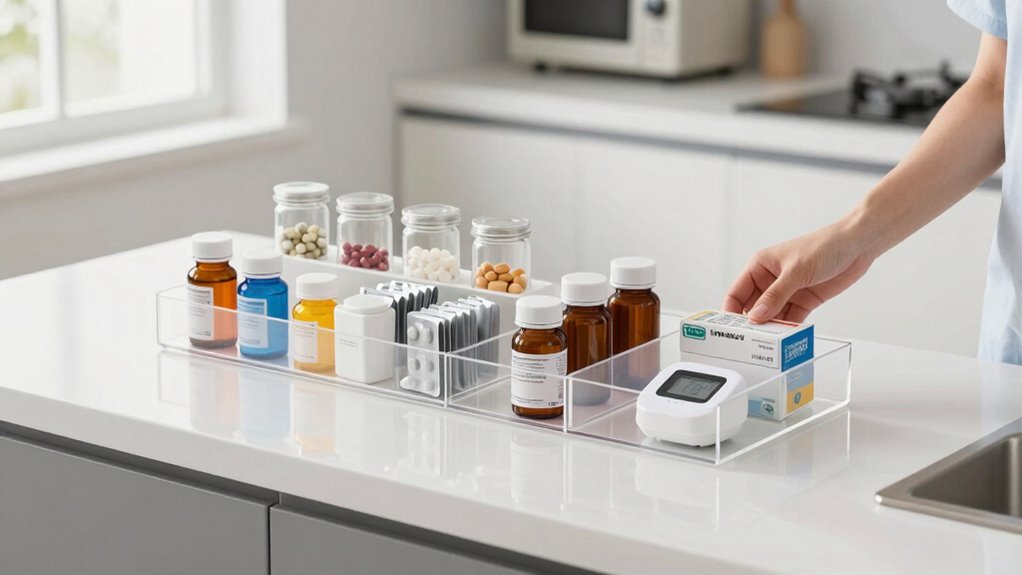

Caregivers choosing a medication station need to decide whether the main problem is secure storage, easier organization, or keeping scheduled doses on track. My top picks split those jobs: the e-Pill MedTime Station Pro is the standout for timed-dose reminders, the Uniclife code-and-key cabinet offers more flexible access control for shared spaces, and the Uniclife key-lock cabinet keeps the setup simpler.

Get health and wellness essentials delivered free with Prime
- Fast, free delivery on millions of items
- Prime Video, Amazon Music and more included
- Member-only deals all year
These products are not direct substitutes. The e-Pill is a medication dispenser with alarms and 28 compartments; both Uniclife options are wall-mounted storage cabinets, not dose-timing devices, and neither is designed to sit on a countertop. The key tradeoff is whether a caregiver needs active dose support or a locked place to store supplies. I would also check the intended installation surface, the person’s ability to use a lock or alarm, and whether the device suits the medication routine before choosing.
Key Takeaways
- Choose the e-Pill MedTime Station Pro when timed doses, alerts, and controlled access matter more than countertop simplicity.
- The Uniclife code-and-key cabinet offers two access methods, but its wall-mounted design still requires a suitable installation spot.
- The Uniclife key-lock cabinet is the simpler storage choice when a physical key is enough and no dose reminders are needed.
- Neither Uniclife cabinet is a countertop station; both are intended for wall mounting, so confirm the location before buying.
- The e-Pill holds 28 doses per cycle, so caregivers should check that its capacity matches the medication schedule.
| e-Pill MedTime Station Pro Automatic Pill Dispenser with Lock and Alerts |  | Best Overall for Scheduled Doses | Capacity: 28 compartments | Alarm settings: Up to 24 alarms with sound and visual alerts | Locking mechanism: Auto-locking door with secure keys | VIEW ON AMAZON | See Our Full Breakdown |
| Uniclife Locking Medicine Cabinet with Code and Keys, Large Wall-Mounted Storage |  | Best for Flexible Access Control | Material: Steel | Dimensions: 12.8 x 5.46 x 14.8 inches | Compartments: 3 shelves | VIEW ON AMAZON | See Our Full Breakdown |
| Uniclife Locking Medicine Cabinet with Keys |  | Best Simple Locked Storage | Material: Metal | Finish and color: Painted, white | Dimensions: 11.8 x 4.8 x 15.7 inches | VIEW ON AMAZON | See Our Full Breakdown |
| countertop medication stations for caregiver | Locking mechanism | Material | Dimensions | Compartments |
|---|---|---|---|---|
| e-Pill MedTime Station Pro Aut | Auto-locking door with secure keys | — | — | — |
| Uniclife Locking Medicine Cabi | — | Steel | 12.8 x 5.46 x 14.8 inches | 3 shelves |
| Uniclife Locking Medicine Cabi | Key lock | Metal | 11.8 x 4.8 x 15.7 inches | 3 shelves |
More Details on Our Top Picks
e-Pill MedTime Station Pro Automatic Pill Dispenser with Lock and Alerts
For caregivers whose main concern is whether a dose is taken at the right time, the e-Pill MedTime Station Pro is the most purpose-built choice in this group. It provides up to 24 alarms with sound and visual alerts, a 28-compartment tray, and an auto-locking door. That combination does more than store pills: it helps structure the routine and limits access to doses outside the intended schedule. The blue tray can also make the pills easier to distinguish during dispensing.
Compared with either Uniclife cabinet, this is the only option with reminders and dose-oriented dispensing. It is the better fit when a caregiver wants the station itself to prompt a routine, while the cabinets simply provide secure storage. Its security keys and tipper base support controlled dispensing, but caregivers should learn the setup and confirm that the person taking medication can respond to its alerts. The device depends on batteries, so battery checks belong in the care routine rather than being an afterthought.
The 28-dose capacity is also a practical limit. It may suit a repeating schedule, but it is not a large general storage cabinet, and the supplied details do not say that it handles every pill shape or prescription routine. I would skip it if the need is primarily to store bottles, first-aid items, or extra supplies. For those jobs, the Uniclife cabinets provide broader compartment storage; for timed-dose support, this is the clear leader.
Pros:- Offers up to 24 sound and visual alarms for dose reminders.
- Auto-locking door and security keys help restrict access to scheduled doses.
- Blue tray and spill-conscious dispensing design aid pill visibility and handling.
- Battery indicator provides a cue to check power status.
Cons:- Electronic setup and alarms may be difficult for users unfamiliar with devices.
- Battery replacement adds an ongoing maintenance task.
- The 28-compartment cycle may not match every medication routine.
Best for: Caregivers supporting someone who benefits from scheduled alerts, controlled access to doses, and a dedicated pill-dispensing routine.
Not ideal for: People who need a simple storage cabinet, dislike electronic devices, or need more than 28 compartments per cycle.
- Capacity:28 compartments
- Alarm settings:Up to 24 alarms with sound and visual alerts
- Locking mechanism:Auto-locking door with secure keys
- Tray color:Blue
- Battery indicator:Yes
- Included accessories:Medication tray, tipper base, stainless-steel medicine cup, and 2 security keys
- Daylight saving adjustment:Automatic
Our verdict“I recommend the e-Pill over both Uniclife cabinets when scheduled-dose prompts and controlled pill dispensing matter more than general storage.”
Uniclife Locking Medicine Cabinet with Code and Keys, Large Wall-Mounted Storage
The Uniclife code-and-key cabinet is my storage pick for households that want more than one way to secure medication. Its 4-digit combination lock reduces dependence on keeping a key close at hand, while the two spare keys offer an alternate way in. Three compartments help separate bottles and supplies, making this a more general storage solution than the e-Pill dispenser, which is organized around a specific pill schedule.
Against the other Uniclife model, the combination lock is the key distinction. The simpler keyed cabinet is easier to understand if one trusted caregiver controls access, but the code option may suit a household where different authorized adults need access. Neither cabinet is a countertop product: both are wall-mounted and require a suitable location and installation. This model’s listed dimensions are 12.8 by 5.46 by 14.8 inches, so check the available wall area and storage needs before choosing.
The tradeoff is that a code does not create dose reminders or prevent missed medication. Its steel construction and three compartments support orderly, locked storage, but caregivers still need their own process for tracking doses. Installation also takes more effort than placing a dispenser on a stable surface, and the unit offers no digital lock. I would choose this cabinet over the key-only version when shared access flexibility matters, but not when medication timing is the central concern.
Pros:- Combination and keyed access give caregivers two ways to open the cabinet.
- Three compartments help separate medication and related supplies.
- Steel construction is suited to a fixed home, office, or clinic storage point.
- Larger listed width than the key-only Uniclife cabinet.
Cons:- Wall mounting limits placement and requires installation work.
- Does not provide dose reminders or automatic dispensing.
- No digital lock option is listed.
Best for: Caregivers who need a wall-mounted medication and supply cabinet with both combination and keyed access.
Not ideal for: Anyone specifically seeking a countertop station, an alarmed pill dispenser, or storage that can be relocated without wall installation.
- Material:Steel
- Dimensions:12.8 x 5.46 x 14.8 inches
- Compartments:3 shelves
- Lock type:4-digit combination and keyed
- Mounting type:Wall mount
- Color:White
- Weight:8.6 lb (3.9 kg)
Our verdict“I would pick this over the key-only Uniclife cabinet when multiple caregivers need flexible access, but choose the e-Pill if dose reminders are the priority.”
Uniclife Locking Medicine Cabinet with Keys
When the goal is a straightforward, secured place for medication bottles and care supplies, the Uniclife key-lock cabinet keeps the choice uncomplicated. It has three compartments, a steel body with a rust-resistant coating, and a key lock with two spare keys. Compared with the e-Pill, it offers more general storage and avoids alarm programming or battery upkeep; compared with the code-and-key cabinet, it skips the combination option in favor of a familiar physical key.
That simplicity may be useful when one caregiver manages access and the household already has a reliable place to store keys. The three compartments offer room to group items, but the supplied description does not give a weight capacity, so I would not assume it can hold unusually heavy containers. Its dimensions are 11.8 by 4.8 by 15.7 inches, and it is designed for wall mounting—not for setting on a countertop. That distinction matters for anyone whose search is specifically for a freestanding station.
The cabinet does not support medication timing, reminders, or dose dispensing. It is the least complicated storage option here, not a substitute for a pill organizer or caregiver dose log. The code-and-key Uniclife cabinet is more adaptable when access has to be shared, while the e-Pill better supports a timed routine. I would choose this model for fixed, basic locked storage, and pass if wall installation is unsuitable or the caregiver needs the station to help manage doses.
Pros:- Key lock and two spare keys provide straightforward access control.
- Three compartments help keep medication and other supplies grouped.
- Steel construction and rust-resistant coating suit fixed household storage.
- Included installation hardware supports wall mounting.
Cons:- Wall mounting makes it unsuitable for countertop use and less portable.
- No weight capacity is specified.
- Does not offer dose alarms or dispensing support.
Best for: Caregivers who want a simple, wall-mounted locked cabinet for bottles and supplies, with access managed by physical keys.
Not ideal for: Buyers who need countertop placement, a combination lock, dose alerts, or a listed weight capacity for heavier supplies.
- Material:Metal
- Finish and color:Painted, white
- Dimensions:11.8 x 4.8 x 15.7 inches
- Compartments:3 shelves
- Mounting type:Wall mount
- Locking mechanism:Key lock
- Included keys:2 spare keys
- Installation:Hardware included
Our verdict“I would choose this cabinet for basic locked storage when a key is enough, but the code model offers more access flexibility and the e-Pill adds dose support.”

How We Picked
I ranked these options by how well they address common caregiver tasks: keeping medication organized, limiting access where needed, and supporting a repeatable dose routine. Because the products serve different functions, I did not treat shelf count or alarms as interchangeable advantages. A locked cabinet can keep supplies together, but it does not remind someone when to take a dose. An automatic dispenser can manage scheduled doses, but it is not a general-purpose cabinet for toiletries and other supplies.
I also weighed installation and day-to-day operation. Both Uniclife models require wall mounting, which can be a poor fit for renters, shared counters, or caregivers who need to move the station. The e-Pill offers alerts and controlled dispensing, yet electronic features and battery upkeep add demands that a plain keyed cabinet avoids. The supplied descriptions do not establish medical suitability for every prescription or user, so my picks focus on storage and routine support rather than treatment claims. I favor the dispenser for dose management, then rank the cabinets by access flexibility and simplicity.
| countertop medication stations for caregiver | Locking mechanism | Material |
|---|---|---|
| e-Pill MedTime Station Pro Aut | Auto-locking door with secure keys | — |
| Uniclife Locking Medicine Cabi | — | Steel |
| Uniclife Locking Medicine Cabi | Key lock | Metal |
Factors to Consider When Choosing Countertop Medication Stations For Caregivers
I would begin by naming the task the station needs to solve. Locked storage and dose management are different needs, and no single option here does both in the same way.
Choose storage or dose support first
The Uniclife cabinets hold medication and related supplies behind a lock, but they do not remind someone when to take a dose. The e-Pill focuses on scheduled pill access with alarms and a 28-compartment tray, rather than broad cabinet storage. If the caregiver mainly needs a safe place to keep bottles, compare the two Uniclife locks. If missed or repeated doses are the concern, the dispenser is the more relevant choice, though it does not replace professional medication guidance or a caregiver’s oversight.
Check the installation style against the space
Despite the countertop phrase in this search, both Uniclife products are wall-mounted cabinets. They need an appropriate mounting surface and a location that remains reachable for the caregiver while controlling access for others. The e-Pill is a countertop-oriented dispenser, but its placement should still provide a stable, accessible area. Measure the intended spot and think about who must reach it before settling on a product; a cabinet that cannot be installed where needed will not improve the routine.
Match the lock to the caregiver arrangement
The key-only Uniclife model is the simpler fit if one caregiver controls a key and the user does not need independent access. The code-and-key cabinet offers another access method, which can be useful when authorized caregivers share responsibility. The e-Pill adds timed access and alarms, but requires comfort with its setup and battery-powered operation. A more involved lock is not automatically better: choose a method that the people responsible can use consistently and that fits the household’s safety needs.
Plan around capacity and maintenance
The cabinets have three compartments, but the listed information does not specify a weight limit. The e-Pill has 28 compartments per cycle, which makes its capacity clear but may not cover every schedule. Consider the number of prescriptions, dose frequency, container sizes, and whether supplies need to stay together. Also account for maintenance: the e-Pill requires battery checks, while either cabinet needs key or code management and, for the Uniclife models, a secure wall installation.
Frequently Asked Questions
Are the Uniclife cabinets countertop medication stations?
No. Both Uniclife options are specified for wall mounting, so they are not freestanding countertop stations. They may suit a caregiver who can install a fixed storage point, but anyone needing a unit that sits on a counter should confirm the product’s intended placement before ordering. The e-Pill is the lineup’s dispenser-style option for a countertop routine.
Which option is best for preventing missed doses?
The e-Pill MedTime Station Pro is the only product here described with customizable alarms and automatic pill dispensing. It can provide up to 24 sound and visual alerts, while the Uniclife cabinets only store items behind locks. The e-Pill still depends on a suitable setup, battery upkeep, and a routine the user can follow; caregivers should confirm that its capacity and operation fit the medication schedule.
What is the practical difference between the two Uniclife cabinets?
The key-lock model uses physical keys, including two spares, and is the more straightforward choice for a household where one caregiver manages access. The larger code-and-key model adds a 4-digit combination lock alongside keyed access, giving caregivers another way to open it. Neither cabinet provides alarms or dose dispensing, and both require wall installation.
Does the e-Pill replace caregiver oversight?
No. Its alarms, locking door, and pill tray can support a medication routine, but caregivers still need to set it up correctly, monitor the user’s response, and check battery status. The supplied details do not establish that the dispenser is suitable for every medicine or schedule. A caregiver should verify its fit with the person’s care plan and consult a qualified professional when medication handling is uncertain.
How should I decide whether the 28-compartment capacity is enough?
Compare the tray capacity with the number of doses that need to be loaded for the person’s routine, including how often medication is taken and how frequently a caregiver can refill it. The product listing gives 28 compartments per cycle, but the number alone does not confirm suitability for every schedule or pill type. If that capacity does not align with the routine, a locked cabinet plus a separate dose-management system may be a better fit.
Conclusion
For a caregiver focused on scheduled doses and reminders, I would start with the e-Pill MedTime Station Pro, provided its 28-compartment capacity and electronic operation suit the user. For a shared household that needs locked general storage with flexible access, the Uniclife code-and-key cabinet is the stronger cabinet choice. If one caregiver controls access and wants basic, fixed storage, the key-lock Uniclife model is the simpler alternative.
My main caution is about fit: neither Uniclife cabinet belongs on a countertop, and neither helps track dose timing. Choose based on the job the station must do, the space available, and who will manage access and upkeep. A clear caregiver routine matters as much as the lock or alarm.
Halloween Picks
halloween
As an affiliate, we earn on qualifying purchases.