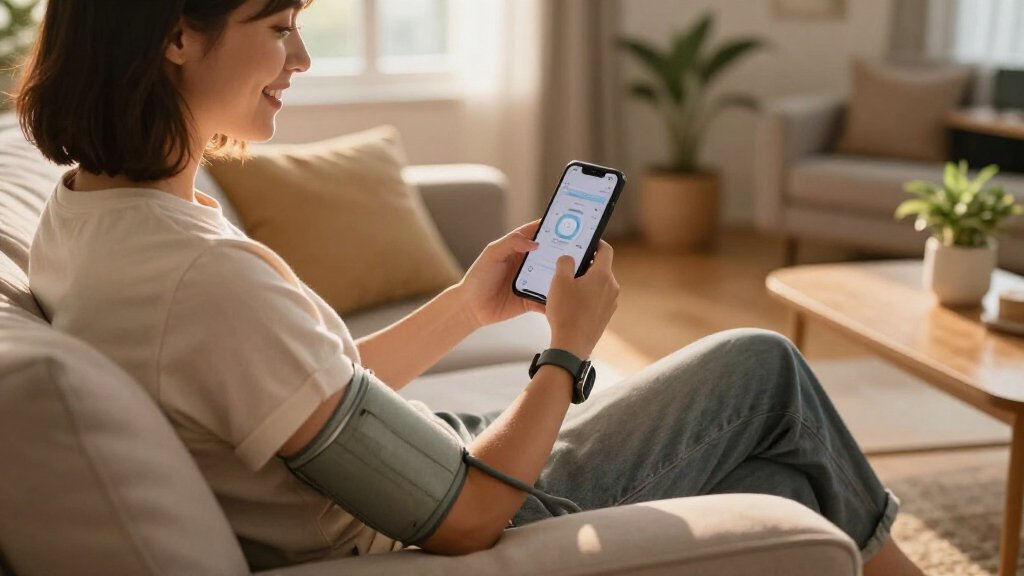

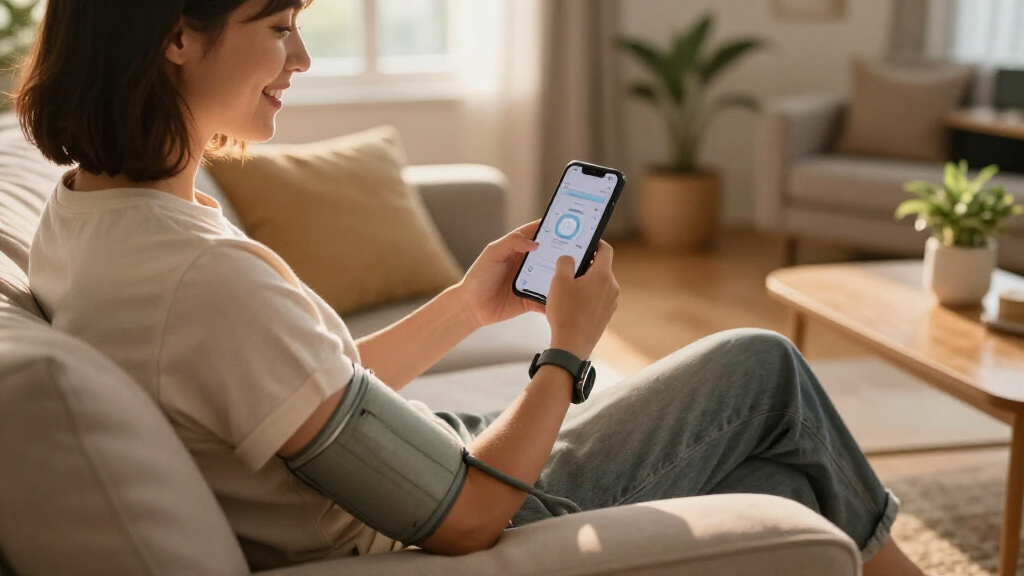
Home health monitoring devices fall into three main camps — heart-rhythm monitors, blood pressure cuffs, and pulse oximeters — and the right pick depends entirely on which measurement your care actually requires. My top overall choice is the KardiaMobile 6L EKG, because its six-lead recordings capture far more diagnostic detail than any single-lead option while staying genuinely easy to use at home. For blood pressure tracking, the iHealth Track Smart Upper Arm Monitor stands out for its wide-range cuff and automatic app syncing, and the Zacurate 500 Series oximeter wins on sheer value for occasional oxygen checks. The main tradeoff to understand before buying: clinical-grade accuracy and data depth usually cost more and demand more from you, while budget devices are simpler but less informative. Keep reading for the full breakdown of all ten devices and who each one suits best.

Get health and wellness essentials delivered free with Prime
- Fast, free delivery on millions of items
- Prime Video, Amazon Music and more included
- Member-only deals all year
Key Takeaways
- Single-lead and six-lead EKG devices serve different purposes: the KardiaMobile 1-Lead handles quick AFib spot checks, while the KardiaMobile 6L and EMAY 6L capture the extra leads many cardiologists want before making treatment decisions.
- Upper arm blood pressure monitors (iHealth Track, Oklar) consistently deliver more reliable readings than wrist models (iHealth Push, Oklar wrist), which matter more for convenience than clinical accuracy.
- Price differences among pulse oximeters are small, so the Innovo iP900BP-B’s Bluetooth data logging — not its readings — is what separates it from the Zacurate 500 Series and generic OLED models.
- FDA clearance appeared on nearly every medical-grade pick here, but subscription costs (notably Kardia’s premium features) can change long-term value more than the sticker price.
- Rechargeable batteries (Oklar wrist monitor) and app ecosystems (both iHealth models) turned out to be the deciding convenience features for people who track readings daily rather than occasionally.
| KardiaMobile 1-Lead EKG Monitor |  | Best Overall for Heart Rhythm Monitoring | Model Number: AC-009 | EKG Lead Configuration: Single-lead | Reading Time: 30 seconds | VIEW LATEST PRICE | See Our Full Breakdown |
| Oklar FDA Cleared Upper Arm Blood Pressure Monitor |  | Best for Two-User Households | Operation: One-button | Display: Large backlit LED | Memory: 240 readings (120 per user) | VIEW LATEST PRICE | See Our Full Breakdown |
| Fingertip Pulse Oximeter with OLED Screen |  | Best Budget Spot-Checker | Display: OLED with large digits | Metrics Shown: SpO2, pulse rate, signal strength | Operation: One-button | VIEW LATEST PRICE | See Our Full Breakdown |
| iHealth Track Smart Upper Arm Blood Pressure Monitor |  | Best Smart Blood Pressure Monitor | Cuff Size: 8.7″ – 16.5″ (22-42 cm) | Display: Large multi-color backlit | Connectivity: Bluetooth 4.0 | VIEW LATEST PRICE | See Our Full Breakdown |
| EMAY 6L Portable ECG Monitor |  | Best Value ECG Monitor | Brand: EMAY | Model: EMG-6L | Channels: 6 | VIEW LATEST PRICE | See Our Full Breakdown |
| Innovo iP900BP-B Fingertip Pulse Oximeter |  | Best Connected Pulse Oximeter | Measurements: SpO2, pulse rate, respiratory rate | Display: Multi-directional, 6 layout options | Connectivity: Bluetooth with ‘Beyond Oximeter’ app | VIEW LATEST PRICE | See Our Full Breakdown |
| iHealth Push Wrist Blood Pressure Monitor |  | Best Portable BP Tracker | Type: Wrist blood pressure monitor | Cuff Size: 5.5″ to 7.75″ | Connectivity: Bluetooth with free iHealth app | VIEW LATEST PRICE | See Our Full Breakdown |
| Oklar Wrist Blood Pressure Monitor |  | Best Budget Wrist BP Monitor | Type: Wrist blood pressure monitor | FDA Cleared: Yes | Measurement Time: 35 seconds | VIEW LATEST PRICE | See Our Full Breakdown |
| KardiaMobile 6L EKG |  | Best Overall Heart Monitor | Leads: 6 | Recording Time: 30 seconds | FDA Cleared: Yes | VIEW LATEST PRICE | See Our Full Breakdown |
| home health monitoring device | Display |
|---|---|
| KardiaMobile 1-Lead EKG Monito | — |
| Oklar FDA Cleared Upper Arm Bl | Large backlit LED |
| Fingertip Pulse Oximeter with | OLED with large digits |
| iHealth Track Smart Upper Arm | Large multi-color backlit |
| EMAY 6L Portable ECG Monitor | — |
| Innovo iP900BP-B Fingertip Pul | Multi-directional, 6 layout options |
| iHealth Push Wrist Blood Press | Color-coded results |
| Oklar Wrist Blood Pressure Mon | — |
| KardiaMobile 6L EKG | — |
More Details on Our Top Picks
KardiaMobile 1-Lead EKG Monitor
The KardiaMobile 1-Lead stands out as the most clinically serious device in this lineup, capturing a medical-grade EKG in 30 seconds and flagging AFib, tachycardia, and bradycardia. While pulse oximeters like the Zacurate 500 Series tell you how well you’re oxygenating, this is the only option here that screens for actual cardiac rhythm disorders — a different and, for many buyers, more urgent question. Its coin cell battery lasting up to two years also beats anything battery-hungry in the roundup. The tradeoffs are real, though: the best features, including clinician EKG reviews, sit behind a subscription paywall, and it’s explicitly off-limits for anyone with a pacemaker or ICD. Compared with the six-channel KardiaMobile 6L, this single-lead version is cheaper and more pocketable but gives your doctor less diagnostic detail.
Pros:- FDA-cleared detection of AFib and other arrhythmias in 30 seconds
- Coin cell battery lasts up to 2 years with regular use
- Works with most smartphones without cords or Bluetooth setup
- Genuinely pocket-sized for use anywhere
Cons:- Core extras like doctor EKG reviews require a paid subscription
- Not safe for use with pacemakers or ICDs
- Cannot detect heart attacks and doesn’t replace medical checkups
Best for: Adults with palpitations or a family history of AFib who want FDA-cleared rhythm screening between doctor visits
Not ideal for: Anyone with a pacemaker or implanted defibrillator, or buyers unwilling to pay a recurring subscription for advanced features
- Model Number:AC-009
- EKG Lead Configuration:Single-lead
- Reading Time:30 seconds
- Clearance:FDA-cleared
- Detected Conditions:AFib, tachycardia, bradycardia
- Battery:Replaceable CR2016, up to 2 years at 2-3 EKGs/day
- Warranty:1 year
Our verdict“If your priority is catching irregular heart rhythms rather than general vitals, this is the device worth paying a subscription for.”
Oklar FDA Cleared Upper Arm Blood Pressure Monitor
The Oklar upper arm monitor earns its spot with something no rival here offers: 240 stored readings split across two user profiles, making it the obvious pick for couples managing blood pressure together. Its one-button operation and backlit display make daily checks nearly foolproof, and the dual battery or Type-C power options add flexibility the iHealth Track lacks — though unlike that model, there’s no app and no smartphone syncing, so trend-tracking means scrolling through stored readings manually. Compared with the Oklar wrist monitor, this version trades portability for the better accuracy upper arm placement generally provides. The cuff spans 8.7 to 15.7 inches, which covers most adults but falls slightly short of the iHealth’s 16.5-inch maximum for larger arms.
Pros:- 240 total readings across two separate user profiles
- Simple one-button operation with backlit display
- Runs on batteries or Type-C cable
- FDA-cleared with an adjustable cuff fitting most adult arms
Cons:- No Bluetooth or app connectivity for tracking trends
- Not rechargeable — Type-C only powers it, batteries drain with use
- Cuff maxes out at 15.7 inches, excluding very large arms
Best for: Couples or caregivers and parents sharing one device while tracking separate blood pressure histories
Not ideal for: Data-driven users who want automatic app syncing and long-term trend charts on their phone
- Operation:One-button
- Display:Large backlit LED
- Memory:240 readings (120 per user)
- Power Supply:3 x AA batteries or Type-C cable
- Cuff Size:8.7 – 15.7 inches (22-40 cm)
- Measurement Type:Upper arm
- Clearance:FDA cleared
Our verdict“The most practical choice for a two-person household that wants reliable readings without app complexity.”
Fingertip Pulse Oximeter with OLED Screen
When the goal is simply a cheap, grab-and-go oxygen reading, this OLED oximeter delivers the essentials without the frills. Its standout against the Zacurate 500 Series is the display: the OLED screen shows SpO2, pulse rate, and a signal-strength bar in large digits, which actually helps — a weak signal tells you to reposition your finger rather than trust a bad number. One-button operation and auto power-off keep battery drain low, and it’s light enough for a hiking pack or gym bag. The compromises are predictable at this price: there’s no app, no memory, and no data storage, so it’s a spot-checker only. Compared with the Bluetooth-equipped Innovo iP900BP-B in this roundup, it’s less capable but costs meaningfully less, which is the entire point.
Pros:- Bright OLED display with signal-strength indicator
- Lightweight and genuinely pocketable
- One-button operation with auto power-off to save battery
- Works out of the box with included batteries and lanyard
Cons:- No memory or connectivity — readings disappear when the screen powers off
- Accuracy depends heavily on correct finger placement
- Limited to basic SpO2 and pulse functions only
Best for: Occasional users, hikers, and high-altitude travelers who want a basic oxygen reading without paying for connectivity
Not ideal for: Anyone who wants to log, store, or share readings with a doctor over time
- Display:OLED with large digits
- Metrics Shown:SpO2, pulse rate, signal strength
- Operation:One-button
- Auto Power-Off:Yes
- Power:2 x AAA batteries
- Included Accessories:Lanyard, instruction manual, batteries
Our verdict“A sensible bare-minimum oximeter for occasional checks, as long as you accept that nothing gets saved.”
iHealth Track Smart Upper Arm Blood Pressure Monitor
The iHealth Track is the choice when blood pressure data needs to reach your doctor, not just your nightstand. Its Bluetooth sync to the iHealth app builds long-term trend charts automatically — something the Oklar upper arm monitor simply can’t do with its local-only memory — and its color-coded display flags whether a reading falls into normal, elevated, or hypertensive range at a glance. It also detects heart rhythm disturbances during measurements, adding a layer of screening the Oklar lacks, and it meets ESH 2010 clinical performance standards. Tradeoffs: it relies on four AAA batteries with no wired power option, its 99-reading onboard memory is far smaller than Oklar’s 240, and the app requires Bluetooth 4.0 or later, which rules out older phones.
Pros:- Bluetooth sync with smartphone app for long-term tracking
- Color-coded display for instant reading interpretation
- Automatic heart rhythm disturbance detection
- Clinically validated to ESH 2010 performance standards
Cons:- Battery-only power with no wired option — four AAAs need replacing
- Only 99 readings stored on-device, versus 240 on the Oklar
- App features depend on having Bluetooth 4.0 or later
Best for: Hypertension patients who share readings with a physician and want automatic app-based trend tracking
Not ideal for: Buyers with older phones lacking Bluetooth 4.0, or those who prefer a device that works fully offline
- Cuff Size:8.7″ – 16.5″ (22-42 cm)
- Display:Large multi-color backlit
- Connectivity:Bluetooth 4.0
- Onboard Memory:Up to 99 readings
- Extra Screening:Automatic heart rhythm disturbance detection
- Power:4 x AAA batteries
- Measurement Type:Upper arm
- Standards:Meets ESH 2010 performance standards
Our verdict“The best pick here for connected blood pressure management, provided your phone and your doctor’s workflow can take advantage of it.”
EMAY 6L Portable ECG Monitor
This option stands out for buyers who want six-channel ECG recording without any recurring fees. Compared with the KardiaMobile 6L, the EMAY gives you PC connectivity via USB and onboard storage, which means you can keep a rolling record of heart activity and hand raw files to your doctor — something Kardia’s app-centric approach doesn’t do as gracefully. The tradeoff is real, though: EMAY lacks automated rhythm analysis, so you get the data but not the instant interpretation. You’re paying less and getting more raw capability, but you have to know what to do with it. Against the Zacurate 500 Series oximeter elsewhere in this roundup, it’s obviously a different job entirely — this is heart-rhythm capture, not oxygen spot-checks.
Pros:- No subscription or hidden costs, unlike some competitors
- Both Bluetooth and USB connectivity for phone and PC workflows
- Six channels of recording with onboard storage
- Rechargeable battery keeps long-term costs down
Cons:- No automated arrhythmia analysis — raw data only
- Not suitable for patients with implanted pacemakers
- Not a substitute for hospital diagnostic ECG equipment
Best for: Budget-conscious users who want detailed ECG data to share with a cardiologist and refuse to pay monthly fees
Not ideal for: Anyone who wants instant, app-generated rhythm interpretations without consulting a clinician
- Brand:EMAY
- Model:EMG-6L
- Channels:6
- Connectivity:Bluetooth, USB
- Power:Built-in rechargeable lithium battery
- Intended Use:Home health care, OTC
- Compatibility:Smartphone, PC
- Subscription:Not required
Our verdict“Choose the EMAY 6L if you want six-channel ECG recording at a low total cost and are willing to have a professional interpret the results.”
Innovo iP900BP-B Fingertip Pulse Oximeter
Among oximeters in this lineup, this model pulls ahead by adding respiratory rate tracking and a plethysmograph display, which the Zacurate 500 Series and the basic OLED fingertip oximeter both lack. The Bluetooth app logging turns spot checks into a trend line — genuinely useful if you’re tracking recovery from illness or altitude exposure over days. Its accuracy at low perfusion is where it justifies the price premium over cheaper fingertip units. The tradeoff: it’s a spot-check device, not a monitor. If you need overnight continuous tracking, this isn’t the tool — you’d need a wrist-worn overnight oximeter instead. And unlike the Zacurate, which works fully standalone, full functionality here leans on your smartphone.
Pros:- Reliable readings even at low perfusion
- Measures respiratory rate in addition to SpO2 and pulse
- Plethysmograph and perfusion index help verify reading quality
- Bluetooth app records and visualizes trends
Cons:- Not designed for continuous overnight monitoring
- Requires a smartphone for full functionality
- Less suited to clinical-grade monitoring needs
Best for: People tracking oxygen and respiratory trends over time — athletes, travelers to altitude, or those recovering from respiratory illness
Not ideal for: Anyone needing continuous overnight monitoring or a fully phone-free standalone device
- Measurements:SpO2, pulse rate, respiratory rate
- Display:Multi-directional, 6 layout options
- Connectivity:Bluetooth with ‘Beyond Oximeter’ app
- Sensor:LED with plethysmograph and perfusion index
- Suitable For:Sports, aviation, home use
Our verdict“Worth the premium over basic oximeters if trend logging and respiratory rate matter to you; skip it if you just need quick standalone spot checks.”
iHealth Push Wrist Blood Pressure Monitor
This pick makes the most sense for travel-first blood pressure tracking. Compared with the iHealth Track Smart Upper Arm monitor, the Push trades some measurement consistency — wrist readings are inherently more position-sensitive than upper arm — for a pocketable form factor that fits in a jacket pocket. The free app with color-coded results is its real advantage over the Oklar wrist monitor: instead of just numbers on a screen, you get historical graphs and immediate visual context for where each reading falls. Against the Oklar, you lose the voice broadcast and rechargeable battery, and AAA batteries are an ongoing cost. But for a frequent traveler who wants data that syncs automatically rather than living on the device, this is the stronger choice.
Pros:- Highly portable and lightweight for on-the-go readings
- Bluetooth app stores and tracks readings over time
- Color-coded results make interpretation intuitive
- Comfortable inflation technology
Cons:- Wrist measurements are less consistent than upper arm cuffs
- Full data features require Bluetooth connection
- Disposable AAA batteries rather than rechargeable
Best for: Frequent travelers and commuters who want discreet BP readings with automatic app-based history
Not ideal for: Users who prioritize maximum measurement accuracy or dislike managing app pairing for full features
- Type:Wrist blood pressure monitor
- Cuff Size:5.5″ to 7.75″
- Connectivity:Bluetooth with free iHealth app
- Display:Color-coded results
- Battery:2 AAA batteries
- Includes:Carrying case, instruction manual
Our verdict“The right pick if blood pressure tracking has to happen away from home and sync seamlessly; the Oklar or iHealth Track are better choices for accuracy-first home use.”
Oklar Wrist Blood Pressure Monitor
This model is better suited to no-frills daily home monitoring than any app-dependent rival in this roundup. Unlike the iHealth Push, the Oklar doesn’t need a phone at all — voice broadcast reads results aloud, a genuine advantage for elderly or visually impaired users who would struggle with the iHealth’s screen-based workflow. The 240-reading dual-user memory plus USB-C rechargeable battery also make it cheaper to own than the AAA-powered iHealth Push. The catch: your data lives only on the device, so there’s no syncing or graphing without manual transcription, and the larger cuff range of 4.92–8.46 inches still can’t escape the fundamental accuracy limits of wrist measurement that the Oklar upper arm model avoids.
Pros:- Fast readings in about 35 seconds
- Voice broadcast aids visually impaired users
- 240 readings of memory across two user profiles
- Rechargeable via USB-C — no disposable batteries
Cons:- No app connectivity or data export
- Wrist-only measurement is less reliable than upper arm
- Charging adapter not included
Best for: Seniors and visually impaired users who want fast, spoken readings with no smartphone required
Not ideal for: Data-driven users who want charts, syncing, and long-term trend analysis without manual logging
- Type:Wrist blood pressure monitor
- FDA Cleared:Yes
- Measurement Time:35 seconds
- User Memory:240 readings, two users
- Cuff Range:4.92 to 8.46 inches
- Battery:Rechargeable, Type-C cable
- Extras:Voice broadcast, backlit display
Our verdict“A sensible, phone-free choice for seniors who value spoken results and shared household use; look elsewhere if trend graphs matter.”
KardiaMobile 6L EKG
This is the strongest heart-health pick in the roundup because it does what no competitor here manages: six-lead recordings plus FDA-cleared automated analysis in 30 seconds. The EMAY 6L records comparable channels for less money, but leaves all interpretation to you and your doctor; Kardia names the rhythm — AFib, bradycardia, tachycardia, or normal sinus — on the spot. Compared with the KardiaMobile 1-Lead, the 6L’s extra leads give cardiologists more diagnostic context, which matters if your goal is catching intermittent arrhythmias. The boundaries are worth stating plainly: it does not detect heart attacks, it isn’t tested for pacemaker or ICD users, and it requires a compatible phone or tablet. Within those limits, it’s the closest thing to a clinician-grade check you can run on yourself at home.
Pros:- Six-lead, medical-grade EKG in 30 seconds
- FDA-cleared automated detection of AFib and other rhythms
- No subscription required for core analysis
- Detailed readings cardiologists can actually use
Cons:- Does not detect heart attacks
- Not tested for use with pacemakers or ICDs
- Requires a compatible smartphone or tablet
Best for: People with known or suspected arrhythmias who want instant, clinically recognized rhythm analysis to share with a cardiologist
Not ideal for: Pacemaker or ICD patients, or anyone expecting heart attack detection
- Leads:6
- Recording Time:30 seconds
- FDA Cleared:Yes
- Detects:AFib, Bradycardia, Tachycardia, Normal Sinus Rhythm
- Subscription:Not required
- Compatibility:Most smartphones and tablets
Our verdict“If catching and classifying arrhythmias at home is the goal, this is the device to buy — the EMAY costs less but makes you do the interpretive work.”
How We Picked
I evaluated each device against four criteria that directly affect what a home user gets out of it. Measurement accuracy and clinical credibility came first: FDA-cleared devices with validated measurement methods ranked above generic alternatives, because a home reading that a doctor can’t trust is worse than no reading at all. Ease of daily use came second — cuff fit, app pairing, and how quickly a reading can be captured determine whether a device gets used past week two. Data value was third, meaning whether readings sync, store, and export in a format you can actually share with a physician. Finally, I weighed total cost of ownership, including subscriptions, batteries, and replacement cuffs.
The ranking order reflects a simple logic: devices that combine medical-grade credibility with the most usable data rise to the top, while inexpensive spot-check tools slot lower not because they are bad, but because they answer narrower questions. Within each device category, I compared directly — the two Kardia units against each other and against the EMAY, the four blood pressure monitors head-to-head, and the three oximeters on features rather than raw accuracy, since readouts are largely comparable across that category.
| home health monitoring device | Display |
|---|---|
| KardiaMobile 1-Lead EKG Monito | — |
| Oklar FDA Cleared Upper Arm Bl | Large backlit LED |
| Fingertip Pulse Oximeter with | OLED with large digits |
| iHealth Track Smart Upper Arm | Large multi-color backlit |
| EMAY 6L Portable ECG Monitor | — |
| Innovo iP900BP-B Fingertip Pul | Multi-directional, 6 layout options |
| iHealth Push Wrist Blood Press | Color-coded results |
| Oklar Wrist Blood Pressure Mon | — |
| KardiaMobile 6L EKG | — |
Factors to Consider When Choosing Home Health Monitoring Devices
Before choosing a home health monitoring device, it helps to understand what separates a genuinely useful tool from an expensive gadget that ends up in a drawer. These are the factors that shaped my rankings and should shape your decision.Match the Device to the Actual Question You’re Asking
The most common mistake buyers make is purchasing a device that measures the wrong thing. An EKG monitor detects rhythm problems like AFib but tells you nothing about blood pressure or oxygen levels; a pulse oximeter flags oxygen issues but says nothing about heart rhythm. Start from a symptom or a doctor’s recommendation, not from what looks impressive. If your physician suspects arrhythmia, a six-lead EKG is the right tool; if you’re managing hypertension, a validated upper arm cuff is non-negotiable. Buying multiple cheap devices for conditions you don’t have wastes money and generates anxiety-inducing data nobody will interpret for you.
Single-Lead vs. Six-Lead EKG: What the Difference Actually Means
A single-lead EKG gives you a one-dimensional view of heart rhythm — enough to detect AFib in most cases, which is why the KardiaMobile 1-Lead remains popular. A six-lead device records from multiple angles, which can catch rhythm patterns and subtle abnormalities a single lead misses, and many cardiologists specifically request multi-lead recordings before adjusting medication. The tradeoff is price: six-lead units cost roughly double. If you’ve already been diagnosed with AFib and just need to confirm episodes, single-lead is usually sufficient. If you’re being worked up for unexplained palpitations or fainting, six-lead recordings give your cardiologist far more to work with, and that extra data is worth every dollar.
Upper Arm vs. Wrist Blood Pressure Monitors
This is where accuracy differences are real, not theoretical. Upper arm monitors position the cuff at heart level and measure the brachial artery, which is the same site used in clinical validation studies — readings are consistently closer to what your doctor gets in the office. Wrist monitors are more portable and easier for people with large or painful upper arms, but they’re sensitive to wrist position, and even a slight tilt can skew a reading by a meaningful margin. My advice: choose upper arm unless portability or arm size genuinely rules it out. If you do buy a wrist model, take readings with your wrist supported at heart level and compare early readings against an upper arm unit or an in-office measurement to check for a consistent offset.
Hidden Costs: Subscriptions, Batteries, and Cuffs
The sticker price rarely tells the whole story. Some EKG platforms gate advanced features — longer recordings, detailed interpretations, cloud storage — behind monthly subscriptions that can exceed the device cost within a year. Blood pressure monitors with proprietary cuffs can turn a cheap unit into an expensive one when the cuff wears out or doesn’t fit. Battery design matters too: a rechargeable device saves money and hassle over years of daily use compared to one eating through coin cells. Before buying, check what features require payment, what consumables cost, and whether your data is held hostage if you cancel. The best value device is the one with predictable costs across its full lifespan.
App Ecosystems and Data Portability
A reading you can’t retrieve is a reading that never happened. Devices that sync to a phone app and export clean PDFs or CSV files let you show a cardiologist a month of trend data instead of describing it from memory — that can change the quality of care you receive. But app quality varies enormously, and abandoned apps with no updates are a red flag for long-term support. Check whether the app works with your phone’s operating system, whether it shares data to Apple Health or Google Fit if that matters to you, and whether readings stay accessible offline. For occasional spot checks, app connectivity is a nice-to-have; for chronic condition management, it’s the whole point.
When FDA Clearance Matters (and When It Doesn’t)
For blood pressure monitors and EKG devices, FDA clearance means the device has been validated against accepted standards — that matters, because treatment decisions get made from these numbers. For pulse oximeters, the picture is murkier: most consumer oximeters produce broadly similar readings, and clearance is common enough that it doesn’t differentiate products. What matters more for oximeters is display readability, fit, and whether you need data logging. Don’t pay a premium solely for a clearance badge on a low-stakes device, and never accept its absence on a high-stakes one. Also remember that home devices supplement clinical care — any consistently abnormal reading deserves a professional follow-up, not just a better device.
Frequently Asked Questions
Do I need a six-lead EKG, or is a single-lead monitor enough?
It depends on what you and your doctor are trying to learn. A single-lead device like the KardiaMobile 1-Lead reliably detects atrial fibrillation during an active episode, which covers the most common home use case: confirming whether palpitations are AFib. A six-lead monitor like the KardiaMobile 6L or EMAY 6L records additional views of the heart’s electrical activity, which can reveal rhythm patterns and conduction issues a single lead cannot. If you’ve been referred for recurrent palpitations, unexplained fainting, or your cardiologist wants richer data before adjusting medication, six leads is worth the extra cost. If you have a known AFib diagnosis and just want to log episodes, single-lead is usually all you need.
Are wrist blood pressure monitors accurate enough to rely on?
Wrist monitors can be accurate, but they are far more sensitive to positioning than upper arm models. Because the wrist artery is smaller and further from the heart, the cuff must sit exactly at heart level with the arm supported — even a few inches of error can shift readings enough to matter clinically. Upper arm monitors like the iHealth Track and Oklar upper arm model avoid most of this sensitivity, which is why they dominate my rankings for people checking blood pressure regularly. A wrist monitor such as the iHealth Push or Oklar wrist model makes sense if you travel constantly, have an upper arm too large for standard cuffs, or find arm cuffs painful. If you use one, validate it early against an upper arm cuff or an in-office reading.
Is a cheap pulse oximeter good enough, or should I pay more for a Bluetooth model?
For occasional spot checks — say, during or after an illness — a basic oximeter like the Zacurate 500 Series gives you the same core information as pricier models: blood oxygen saturation and pulse rate within seconds. The reason to pay more is data, not accuracy. The Innovo iP900BP-B with Bluetooth records every reading to an app, which matters if you’re tracking oxygen trends over time for a chronic respiratory condition and want to share a log with your doctor. Generic OLED oximeters without connectivity sit at the bottom of my rankings because they offer nothing beyond the Zacurate’s proven formula. One caution applies to all of them: consumer oximeters are less reliable on cold hands, poor circulation, or darker nail polish, so warm your hands and remove polish before measuring.
Do KardiaMobile devices require a subscription to work?
No — the core function works without one, but the boundary is worth understanding. Every Kardia device can record an EKG and give you a basic rhythm determination, including AFib detection, with no subscription. The paid tiers add things like longer recording sessions, more detailed interpretations across additional rhythm types, unlimited cloud storage, and the ability to share fuller reports with a physician. For many users tracking confirmed AFib, the free tier is genuinely sufficient year after year. If you want extended recordings or richer analysis, factor the subscription into the total cost — over three years it can exceed the price of the device itself, which is why I weigh subscription models carefully in my value rankings.
Can these devices replace regular doctor visits?
None of them should, and any marketing that implies otherwise deserves skepticism. What these devices actually do is fill the enormous gap between appointments — doctors see you for ten minutes a few times a year, while a home monitor captures what your heart or blood pressure is doing the other 364 days. That continuous record is clinically valuable: a logged AFib episode or a month of morning blood pressure spikes can genuinely change how your physician manages your care. But home devices are screening and tracking tools, not diagnostic instruments, and readings influenced by posture, cuff fit, or device error still need professional interpretation. Treat abnormal or inconsistent readings as a reason to call your doctor promptly, not as a verdict.
Conclusion
Mapping these ten devices to buyer types closes the decision cleanly. For the best overall pick, the KardiaMobile 6L EKG leads the lineup because six-lead recordings deliver the most clinically meaningful data in the group, and heart rhythm is the measurement where home monitoring has the greatest impact. For best value, the Zacurate 500 Series oximeter and Oklar upper arm BP monitor deliver trustworthy readings at prices that leave room in the budget for a second device. On the premium end, the EMAY 6L appeals to data-heavy users who want standalone recording without a phone dependency, though the Kardia 6L’s software ecosystem keeps it ahead for most buyers. For beginners, the iHealth Track Smart is the gentlest entry point — one-button operation, a forgiving wide-range cuff, and automatic app syncing remove every common friction point. For specific needs: travelers and large-arm users should pick a wrist monitor like the Oklar rechargeable wrist model; chronic condition managers who need logged oxygen data should choose the Innovo Bluetooth oximeter; and anyone with confirmed AFib who only needs episode confirmation can save money with the KardiaMobile 1-Lead. Whatever you choose, buy the device that answers your actual health question — not the one with the longest spec sheet.
Cold & flu season Picks
humidifiers
As an affiliate, we earn on qualifying purchases.