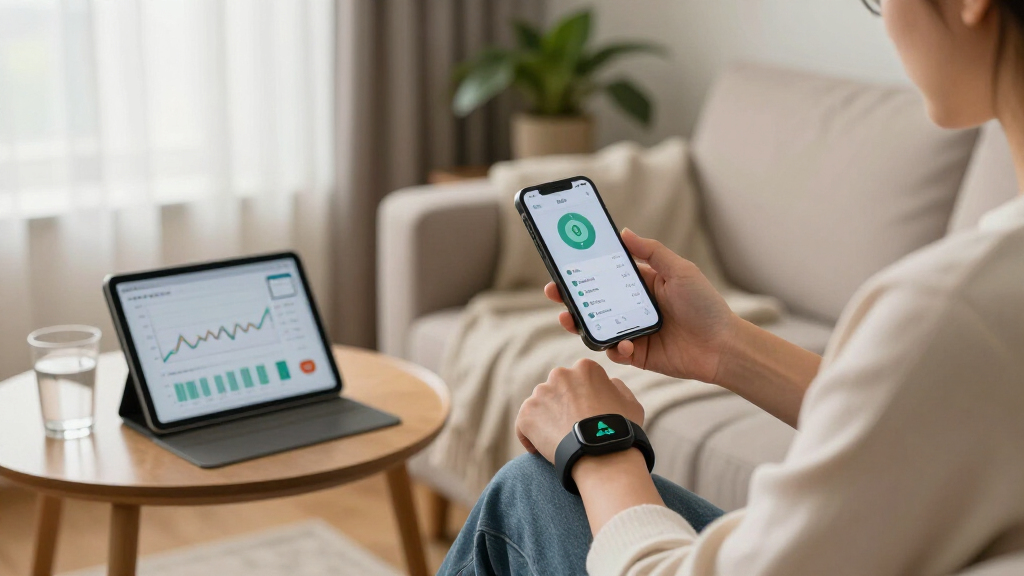

Home health monitoring devices now cover everything from blood pressure and blood oxygen to heart rhythm and temperature, but no single device does it all well — and that tradeoff shapes every pick in this lineup. The Withings BeamO earns my best overall spot because it bundles four vitals (temperature, ECG, heart rate, and respiratory tracking) into one pocket-sized device, while the Oklar FDA-cleared upper arm blood pressure monitor stands out as the best dedicated pick for hypertension tracking and the KardiaMobile 6L is the strongest choice for anyone worried about atrial fibrillation. The core tension in this category is between all-in-one convenience and clinical-grade accuracy for a single metric: multi-function devices are great for general awareness, while single-purpose FDA-cleared tools give you data a doctor will actually trust. Budget matters too — a solid basic setup can cost under $40, while premium connected systems run past $300. Keep reading for the full breakdown of all 15 devices and who each one is right for.

Get health and wellness essentials delivered free with Prime
- Fast, free delivery on millions of items
- Prime Video, Amazon Music and more included
- Member-only deals all year
Key Takeaways
- FDA clearance was the single biggest separator in this lineup — the Oklar upper arm monitor, KardiaMobile EKGs, and Withings BeamO all cleared that bar, while the generic arm cuff and smart ring did not, which directly affects whether doctors will trust the readings.
- Single-purpose devices consistently beat multi-function ones on accuracy for their specific metric; the Biokit 3-in-1 is the only hybrid that held its own, while the smart ring is best treated as a wellness trend indicator rather than a medical monitor.
- Blood pressure monitoring splits cleanly by user type: upper arm models (Oklar, iHealth Track) suit serious hypertension management, while the Oklar wrist model trades some accuracy for portability and rechargeability.
- For heart rhythm concerns, channel count matters — the KardiaMobile 6L and EMAY 6L capture six leads versus the single-lead KardiaMobile, giving doctors more diagnostic information for arrhythmia detection.
- The Connected Caregiver Safety+ is the only pick aimed at emergencies rather than routine vitals, filling a gap the other 14 devices don’t address: fall detection and immediate caregiver alerts.
| Oklar FDA Cleared Blood Pressure Monitor Upper Arm BP Machine for Home Use |  | Best Overall Blood Pressure Monitor | Display: Backlit LED | Memory: 240 readings (120 per user) | Power: 3AA batteries or Type-C cable | VIEW LATEST PRICE | See Our Full Breakdown |
| Fingertip Pulse Oximeter Blood Oxygen Saturation Monitor with OLED Screen, Lanyard, and Batteries |  | Best Budget Spot-Check Oximeter | Display: OLED | Measurements: SpO2, pulse rate, signal strength | Power: 2 x AAA batteries (included) | VIEW LATEST PRICE | See Our Full Breakdown |
| Goodbaby No-Touch Thermometer for Adults and Kids |  | Best Family Thermometer | Measurement Modes: Forehead, room/object temperature | Technology: Infrared, contactless | Power: 2 x AAA batteries | VIEW LATEST PRICE | See Our Full Breakdown |
| Oklar Wrist Blood Pressure Monitor, FDA Cleared Rechargeable BP Machine |  | Best Compact BP Monitor for Travel | Measurement Time: 35 seconds | Display: Large backlit LED | User Profiles: Dual (240 readings each) | VIEW LATEST PRICE | See Our Full Breakdown |
| Upper Arm Blood Pressure Monitor with Large Cuffs, Bluetooth Sync, and Large Display for Seniors |  | Best for Seniors and Larger Arms | Cuff Sizes: 17″ and 21″ (both included) | Arm Circumference Range: 9″ to 17″ | Display: 6″ large color LED | VIEW LATEST PRICE | See Our Full Breakdown |
| Blood Pressure Monitor, Automatic Upper Arm Blood Pressure Cuff with Large Screen and Adjustable Fit |  | Best Budget Blood Pressure Pick | Display: 4.5-inch backlit LCD | Cuff Size: 9 to 17 inches | Storage: 2 users x 199 readings each | VIEW LATEST PRICE | See Our Full Breakdown |
| Withings BeamO – Contactless Smart Thermometer, ECG Monitor, Stethoscope |  | Best Multi-Vitals Premium Device | Functions: Thermometer, ECG, stethoscope, pulse oximeter | Connectivity: Wi-Fi with app support | Power Source: 1 rechargeable battery | VIEW LATEST PRICE | See Our Full Breakdown |
| KardiaMobile 1-Lead EKG Monitor, FDA-Cleared Personal Heart Monitor for Detecting AFib & Arrhythmias |  | Best Portable AFib Tracker | Leads: 1 | Recording Time: 30 seconds | Power Source: Replaceable CR2016 battery (up to 2 years) | VIEW LATEST PRICE | See Our Full Breakdown |
| Connected Caregiver Safety+ 4G Medical Alert System for Seniors with Fall Detection and GPS |  | Best for Senior Safety and Caregivers | Coverage: Nationwide 4G | Fall Detection: Included at no extra charge | Response Time: Under 9 seconds average | VIEW LATEST PRICE | See Our Full Breakdown |
| KardiaMobile 6L EKG |  | Best Advanced Home EKG | Leads: 6 | Recording Time: 30 seconds | Detects: AFib, Bradycardia, Tachycardia, Normal Sinus Rhythm | VIEW LATEST PRICE | See Our Full Breakdown |
| Biokit 3-in-1 Smart At-Home Vitals Monitoring Kit |  | Best Starter Kit | Includes: Thermometer, blood pressure cuff, pulse oximeter | Connectivity: Bluetooth, app-enabled via Biocare | Data Storage: Automatic saving and in-app review | VIEW LATEST PRICE | See Our Full Breakdown |
| Smart Ring Health Tracker Waterproof Sport Ring |  | Best Wearable for Continuous Monitoring | Water Resistance: 5ATM (up to 50m) | Material: Marine-grade 316L stainless steel | Battery Life: 2-5 days per charge | VIEW LATEST PRICE | See Our Full Breakdown |
| EMAY 6L Portable ECG Monitor |  | Best ECG Value | Channels: 6-channel ECG recording | Connectivity: USB (PC), Bluetooth (smartphone) | Power: Rechargeable lithium battery | VIEW LATEST PRICE | See Our Full Breakdown |
| Zacurate 500 Series Fingertip Pulse Oximeter |  | Best Budget Spot-Checker | Measurements: SpO2, pulse rate, pulse strength | Reading Time: Within 10 seconds | SpO2 Range: Up to 100% | VIEW LATEST PRICE | See Our Full Breakdown |
| iHealth Track Smart Upper Arm Blood Pressure Monitor |  | Best Blood Pressure Monitor | Cuff Size: 8.7″ – 16.5″ (22-42cm) | Display: Large multi-color backlit | Connectivity: Bluetooth 4.0 | VIEW LATEST PRICE | See Our Full Breakdown |
| home health monitoring device | Display |
|---|---|
| Oklar FDA Cleared Blood Pressu | Backlit LED |
| Fingertip Pulse Oximeter Blood | OLED |
| Goodbaby No-Touch Thermometer | Digital, Celsius/Fahrenheit switchable |
| Oklar Wrist Blood Pressure Mon | Large backlit LED |
| Upper Arm Blood Pressure Monit | 6" large color LED |
| Blood Pressure Monitor | 4.5-inch backlit LCD |
| Withings BeamO | — |
| KardiaMobile 1-Lead EKG Monito | — |
| Connected Caregiver Safety+ 4G | — |
| KardiaMobile 6L EKG | — |
| Biokit 3-in-1 Smart At-Home Vi | — |
| Smart Ring Health Tracker Wate | — |
| EMAY 6L Portable ECG Monitor | — |
| Zacurate 500 Series Fingertip | Large digital LED |
| iHealth Track Smart Upper Arm | Large multi-color backlit |
More Details on Our Top Picks
Oklar FDA Cleared Blood Pressure Monitor Upper Arm BP Machine for Home Use
Oklar’s upper arm monitor earns the top spot because it nails the fundamentals without overcomplicating things: one-button operation, FDA clearance, and dual-user memory with 120 readings stored per person — enough to show a doctor real trends rather than a single snapshot. Compared with the Bluetooth-syncing Upper Arm Monitor with Large Cuffs for Seniors, it trades app connectivity for simplicity, which many households will prefer. The backlit LED display reads clearly in a dim bedroom, and the Type-C or battery power means a dead battery never blocks a reading. The tradeoff is honest: no app, no export, and no rechargeable cell — you either copy numbers manually or plug it in.
Pros:- One-button operation that anyone can use on day one
- 240 total readings split across two user profiles
- FDA-cleared accuracy for home monitoring
- Dual power via Type-C cable or 3AA batteries
Cons:- No Bluetooth or app, so trend analysis is manual
- Not rechargeable — Type-C powers it but doesn’t charge it
Best for: Couples or two-user households who want clinically credible BP tracking without a smartphone dependency
Not ideal for: Data-driven users who want charts, exports, and Apple Health syncing — this has none of that
- Display:Backlit LED
- Memory:240 readings (120 per user)
- Power:3AA batteries or Type-C cable
- Cuff Size:8.7–15.7 inches (22–40 cm)
- Measurement Type:Upper arm
- Clearance:FDA cleared
- Users:2 profiles
Our verdict“The most sensible default BP monitor for most homes: accurate, simple, and shared between two people.”
Fingertip Pulse Oximeter Blood Oxygen Saturation Monitor with OLED Screen, Lanyard, and Batteries
Not everyone needs continuous oxygen tracking — sometimes you just want a five-second SpO2 reading during an illness or after a workout. This fingertip oximeter covers that job for a fraction of what a Smart Ring Health Tracker costs, and unlike the ring, it doesn’t need charging or an app. The OLED screen is genuinely bright and legible, and the included lanyard plus batteries mean it works out of the box. Compared with the Zacurate 500 Series, the feature set is similar; this one wins on simplicity. The real limitation is what it doesn’t do: no data storage or Bluetooth, so it’s a snapshot tool, not a monitoring system. Cold fingers, nail polish, or poor circulation will also skew readings.
Pros:- Bright OLED display readable in any light
- Works immediately — batteries and lanyard included
- One-button operation with auto power-off to save battery
Cons:- No data storage, Bluetooth, or trend tracking
- Fingertip readings sensitive to cold hands, circulation, and nail polish
Best for: Budget-conscious households wanting occasional oxygen and pulse checks during illness or recovery
Not ideal for: Anyone who needs continuous overnight SpO2 tracking or logged history for a physician
- Display:OLED
- Measurements:SpO2, pulse rate, signal strength
- Power:2 x AAA batteries (included)
- Auto Power-Off:Yes
- Connectivity:None
- Included:Lanyard, batteries, instruction manual
- Portability:Pocket-sized, clip-on lanyard
Our verdict“A cheap, dependable spot-checker for oxygen levels — just don’t expect it to log or share anything.”
Goodbaby No-Touch Thermometer for Adults and Kids
When a fever hits at 2 a.m., you don’t want to wake a sleeping toddler with an armpit probe. The Goodbaby No-Touch solves that with contactless infrared readings in about a second, and its dual modes handle both foreheads and room temperatures. Where the Withings BeamO bundles temperature into a premium multi-vitals device, Goodbaby does one job for under twenty dollars — that’s the whole point of its place in this lineup. It’s clinically validated and pediatrician recommended, which matters when readings drive decisions about calling a doctor. Accuracy does depend on technique: holding it at the right distance and avoiding a sweaty forehead makes a real difference, and results drift in drafty or hot rooms.
Pros:- Contactless readings in about one second
- Safe and comfortable for newborns through seniors
- Forehead and room/object temperature modes
- Clinically validated and pediatrician recommended
Cons:- Accuracy depends on correct distance and clean, dry skin
- Readings can drift in unstable room temperatures; batteries not included
Best for: Parents of infants and young children who need fast, hygienic readings — even mid-sleep
Not ideal for: Users wanting logged temperature history or multi-vital tracking in one device
- Measurement Modes:Forehead, room/object temperature
- Technology:Infrared, contactless
- Power:2 x AAA batteries
- Display:Digital, Celsius/Fahrenheit switchable
- Housing:ABS plastic
- Clearance:Clinically validated
- Age Range:Infants through adults
Our verdict“The most practical thermometer for families with small kids — instant, contactless, and trusted by pediatricians.”
Oklar Wrist Blood Pressure Monitor, FDA Cleared Rechargeable BP Machine
Wrist monitors get criticized for accuracy, but the Oklar wrist model earns its slot through portability and accessibility — it’s the pick for travelers or anyone who finds strapping on an upper-arm cuff like Product 1’s genuinely difficult. It delivers a reading in 35 seconds, and the voice broadcast is a thoughtful touch for users with limited vision, something the arm-based Oklar doesn’t offer. Being rechargeable via Type-C also means no battery swaps on the road, and each of the two user profiles stores 240 readings — double the arm model’s per-user capacity. The honest tradeoffs: wrist positioning must be at heart level for accuracy, the charging adapter isn’t included, and extreme wrist sizes fall outside the cuff range.
Pros:- Rechargeable Type-C battery eliminates battery swaps
- Voice broadcast aids low-vision users
- 240 readings per user across two profiles
- Compact enough for a carry-on bag
Cons:- Wrist placement at heart level required for reliable accuracy
- No charging adapter in the box; cuff range excludes very small or large wrists
Best for: Frequent travelers and users with mobility or vision limitations who need a portable BP option
Not ideal for: Purists seeking maximum clinical accuracy — a properly fitted upper-arm cuff remains the gold standard
- Measurement Time:35 seconds
- Display:Large backlit LED
- User Profiles:Dual (240 readings each)
- Battery:Rechargeable, Type-C cable included
- Cuff Size:4.92–8.46 inches wrist
- Voice Broadcast:Yes
- Clearance:FDA cleared
- Measurement Type:Wrist
Our verdict“A sensible travel and accessibility pick if an arm cuff is impractical — accept the accuracy tradeoff knowingly.”
Upper Arm Blood Pressure Monitor with Large Cuffs, Bluetooth Sync, and Large Display for Seniors
This monitor solves the two problems that make most BP monitors get returned: cuffs that don’t fit and displays nobody can read. It ships with both a 17″ and a 21″ cuff, covering arms from 9 to 17 inches — a range the iHealth Track and Product 1’s Oklar can’t fully match — and its 6-inch color screen is in a different league for aging eyes. Bluetooth syncing to Apple Health and Google Fit means adult children can review a parent’s numbers remotely, which neither Oklar model offers. The tradeoffs are worth knowing: you need a smartphone for any of the app value, and the USB port powers the device rather than charging a battery, so it’s tethered or running on disposables. For tech-averse seniors, the extra features add friction.
Pros:- Two cuff sizes fit nearly every adult arm
- 6-inch color display is exceptionally readable
- Bluetooth sync with Apple Health and Google Fit
- FDA-cleared clinical accuracy
Cons:- App features require a Bluetooth smartphone
- USB power supplies the unit but doesn’t recharge it
Best for: Seniors with larger arms, and families who want BP data synced to health apps for remote oversight
Not ideal for: Tech-averse users without a smartphone — half of this device’s value lives in the app
- Cuff Sizes:17″ and 21″ (both included)
- Arm Circumference Range:9″ to 17″
- Display:6″ large color LED
- Connectivity:Bluetooth, Apple Health, Google Fit
- Power:USB Type-C or batteries
- Measurement Type:Upper arm
- Clearance:FDA cleared
Our verdict“The best choice when fit, readability, and shareable data all matter — especially for older adults under family watch.”
Blood Pressure Monitor, Automatic Upper Arm Blood Pressure Cuff with Large Screen and Adjustable Fit
This monitor earns its spot by covering the fundamentals well at a price that undercuts smarter rivals like the iHealth Track Smart Upper Arm Monitor. The 4.5-inch backlit display is genuinely large for this tier, which matters if the reader in your household has aging eyes or low vision. Dual-user storage with 199 readings each makes it a practical fit for couples tracking hypertension together — something wrist-mounted options like the Oklar Wrist Monitor can’t match in capacity. The tradeoff is clear: no Bluetooth, no app, no data export. If your doctor wants trend charts, you’ll be transcribing numbers by hand. Irregular heartbeat detection adds a layer of reassurance, but this is a read-and-record device, not a connected health hub.
Pros:- Extra-large backlit display that’s easy to read in any light
- Two-user memory with 199 readings each — ideal for couples
- Irregular heartbeat detection at a budget price
- Includes carrying bag, batteries, and USB cable for portability
Cons:- No app connectivity or data export — records must be logged manually
- Cuff range (9–17 inches) excludes very small or very large arms
Best for: Budget-conscious households, especially couples managing blood pressure who want dual-user memory without a subscription or app
Not ideal for: Data-driven users who want app syncing and trend charts — the Oklar FDA Cleared monitor or iHealth Track with Bluetooth are better fits
- Display:4.5-inch backlit LCD
- Cuff Size:9 to 17 inches
- Storage:2 users x 199 readings each
- Power:4 AAA batteries or USB cable
- Features:Irregular heartbeat detection, automatic shut-off
- Connectivity:None (manual recording)
Our verdict“A smart buy for anyone who wants reliable, no-frills blood pressure tracking for two people without paying for connectivity they won’t use.”
Withings BeamO – Contactless Smart Thermometer, ECG Monitor, Stethoscope
The BeamO is the most ambitious device in this lineup, combining four instruments — thermometer, ECG, stethoscope, and pulse oximeter — into one rechargeable wand. Compared with single-purpose tools like the Goodbaby No-Touch Thermometer, it costs several times more, but it replaces an entire cabinet of gadgets. The Wi-Fi-connected app lets families compile a shareable health record between doctor visits, which is where the premium price starts to justify itself. That said, its ECG is a screening tool, not a diagnostic one — anyone specifically tracking arrhythmias gets deeper analysis from the KardiaMobile 6L. It also leans entirely on Wi-Fi for its smart features, so it becomes a fancy thermometer whenever connectivity drops. For families with kids and aging parents under one roof, the convenience of one device for everyone is hard to beat.
Pros:- Four health tools in one compact device — thermometer, ECG, stethoscope, and SpO2
- Contactless readings are hygienic and safe for sleeping children
- Wi-Fi app creates shareable health records for doctors
- Rechargeable battery with an extensive list of regulatory certifications
Cons:- Premium price that exceeds buying several single-purpose devices
- Full smart functionality depends on a Wi-Fi connection
- ECG capability is shallower than dedicated heart monitors
Best for: Busy families who want one premium device to track temperature, heart rhythm, and respiratory health across all ages
Not ideal for: Budget shoppers or anyone monitoring a single condition — dedicated devices like the KardiaMobile or Goodbaby do each job cheaper
- Functions:Thermometer, ECG, stethoscope, pulse oximeter
- Connectivity:Wi-Fi with app support
- Power Source:1 rechargeable battery
- Response Time:30-second ECG assessment
- Temperature Range:Up to 42 °C
- Certifications:CE, FDA, FCC, ISO 13485, UL, RoHS
Our verdict“Worth the splurge only if your household genuinely uses all four functions — otherwise a dedicated device serves you better for less.”
KardiaMobile 1-Lead EKG Monitor, FDA-Cleared Personal Heart Monitor for Detecting AFib & Arrhythmias
This is the device that made personal EKG monitoring mainstream, and it remains the easiest entry point for AFib detection. Slips in a pocket, pairs with any smartphone, and delivers an FDA-cleared rhythm analysis in 30 seconds — no patches, wires, or clinic visits. Compared with its sibling, the KardiaMobile 6L, it captures only a single lead, which means cardiologists get less diagnostic surface to work with, but for routine AFib spot-checks the single lead is generally sufficient. Against the Withings BeamO, it trades versatility for cardiac depth: the BeamO does more things, but none as thoroughly as this does heart rhythm. The two-year CR2016 battery means zero charging anxiety. The honest limitation: it screens rhythm, not heart attacks, and it’s off-limits for anyone with a pacemaker or ICD.
Pros:- FDA-cleared AFib detection trusted and recommended by cardiologists
- Genuinely pocket-sized with a two-year replaceable battery
- 30-second readings with instant, easy-to-interpret results
- Works with most smartphones without Bluetooth pairing or cords
Cons:- Single lead provides less diagnostic data than six-lead alternatives
- Cannot detect heart attacks or replace medical evaluation
Best for: People with diagnosed or suspected AFib who want quick, clinic-grade rhythm checks between cardiology appointments
Not ideal for: Patients with pacemakers or ICDs, and anyone wanting multi-lead detail — the KardiaMobile 6L is the safer choice there
- Leads:1
- Recording Time:30 seconds
- Power Source:Replaceable CR2016 battery (up to 2 years)
- Compatibility:Most smartphones via app
- FDA Clearance:Yes — AFib and arrhythmia detection
- Warranty:1 year
Our verdict“The default choice for affordable, on-the-go AFib monitoring unless your cardiologist specifically wants multi-lead recordings.”
Connected Caregiver Safety+ 4G Medical Alert System for Seniors with Fall Detection and GPS
Unlike every other product here, the Safety+ isn’t a measurement device — it’s an emergency lifeline, and that distinction earns it a unique place in this roundup. The built-in fall detection at no extra charge is the standout, since competitors routinely charge $10–15/month for the same feature. The caregiver app with GPS tracking and real-time alerts sets it apart from traditional base-station alert systems, giving adult children visibility from anywhere. Compared with health trackers like the Smart Ring Health Tracker, it does far less data collection but responds to emergencies in under nine seconds — a trade most families of fall-prone seniors will take immediately. The catch is the $40/month subscription after the first free month, which compounds to nearly $500 a year, and it’s only as reliable as local 4G coverage.
Pros:- Fall detection included without the extra monthly fees most rivals charge
- Caregiver app delivers real-time location and activity updates
- Water-resistant for shower use, where most falls happen
- Under-nine-second average emergency response with nationwide 4G
Cons:- $40/month subscription adds up to roughly $480/year
- Performance depends entirely on local 4G network strength
Best for: Seniors living alone or with mobility challenges, and long-distance caregivers who need fall alerts and GPS peace of mind
Not ideal for: Anyone unwilling to commit to a $40/month ongoing subscription, or in areas with weak 4G coverage
- Coverage:Nationwide 4G
- Fall Detection:Included at no extra charge
- Response Time:Under 9 seconds average
- Battery Life:Long-lasting, rechargeable via dock
- Water Resistance:Water-resistant
- Subscription:$40/month after first free month
Our verdict“The right pick when the priority is emergency response for a vulnerable loved one rather than health metrics — just budget for the subscription.”
KardiaMobile 6L EKG
The 6L is the upgrade pick for people whose hearts need closer scrutiny. By capturing six leads instead of one, it gives cardiologists roughly six times the diagnostic information of the standard KardiaMobile 1-Lead, which can matter when a rhythm is ambiguous or when your doctor wants a fuller picture between visits. Unlike many connected health devices in this roundup — including the Connected Caregiver Safety+ and its monthly fee — the 6L works with no subscription required, a genuine rarity that protects its long-term value. It detects AFib, bradycardia, tachycardia, and normal sinus rhythm with FDA clearance. The added electrodes for the fingers and chest mean slightly more deliberate positioning than the 1-lead model, and the same hard limits apply: not for pacemaker or ICD patients, and it won’t detect heart attacks.
Pros:- Six-lead recordings provide far richer data for physician review
- No subscription needed — core detections work indefinitely
- FDA-cleared detection of AFib, bradycardia, and tachycardia
- 30-second recordings compatible with most smartphones and tablets
Cons:- Costs notably more than the 1-lead version for a single added capability
- Multi-lead placement is fussier and still excludes pacemaker/ICD patients
Best for: Patients with complex or borderline rhythm issues whose cardiologists want multi-lead recordings between office visits
Not ideal for: Casual users doing occasional AFib spot-checks — the cheaper 1-lead KardiaMobile covers that need, and neither suits pacemaker patients
- Leads:6
- Recording Time:30 seconds
- Detects:AFib, Bradycardia, Tachycardia, Normal Sinus Rhythm
- FDA Cleared:Yes
- Subscription Required:No
- Compatibility:Most smartphones and tablets
Our verdict“Buy this over the 1-lead only if your cardiac situation genuinely warrants multi-lead detail — otherwise the savings with the standard KardiaMobile are better spent elsewhere.”
Biokit 3-in-1 Smart At-Home Vitals Monitoring Kit
For someone building a home health baseline from scratch, this bundle solves the piecemeal problem: instead of buying a thermometer, cuff, and oximeter separately, you get all three speaking to a single app. That unified data trail is the real draw — scattered readings are far less useful to a doctor than a consolidated record. Compared with the iHealth Track, the blood pressure cuff here is less specialized (no rhythm-disturbance detection), but the tradeoff buys you two additional devices for context around each reading. The kit leans on Bluetooth and the Biocare app, so anyone without a smartphone loses most of the value. And while it covers the essentials well, it stops at basic vitals — no ECG capability like the EMAY 6L, so arrhythmia concerns remain out of scope.
Pros:- Three core devices bundled at a lower combined cost
- Automatic data logging creates a shareable health record
- Compact storage keeps everything in one place
- Simple operation suitable for beginners
Cons:- Full functionality requires a smartphone and the app
- Limited to basic vitals with no advanced diagnostics
Best for: Households starting from zero who want multiple vitals tracked in one app without buying devices separately
Not ideal for: Buyers who already own one good BP monitor or need cardiac rhythm monitoring — this kit duplicates basics and skips ECG entirely
- Includes:Thermometer, blood pressure cuff, pulse oximeter
- Connectivity:Bluetooth, app-enabled via Biocare
- Data Storage:Automatic saving and in-app review
- Design:Compact, space-efficient
- Setup:Intuitive, beginner-friendly
- Diagnostics:Basic vital signs only
Our verdict“A smart first purchase for families establishing a home monitoring routine, but redundant if you already own quality single-purpose devices.”
Smart Ring Health Tracker Waterproof Sport Ring
Everything else in this roundup takes a measurement when you ask for it; this ring never stops watching. Heart rate, blood oxygen, temperature, and sleep stages get tracked around the clock, which is exactly what spot-check devices like the Zacurate 500 Series oximeter cannot do — a nighttime SpO2 dip or a sleep-stage trend only appears with continuous wear. The stainless steel build and 5ATM rating mean showers and swims won’t end its career, and at roughly 3 grams it’s the most wearable option here by a wide margin. The cost of that convenience is charging every 2-5 days, and the ring’s optical sensors trade a measure of accuracy for comfort. It’s a trend-spotter, not a diagnostic tool — anyone tracking a known cardiac condition is better served by the KardiaMobile 1-Lead.
Pros:- True 24/7 monitoring including overnight blood oxygen and sleep stages
- 316L stainless steel with 5ATM water resistance for daily wear
- Discreet 3g design with vibration alerts
- Multi-sport tracking and menstrual cycle prediction included
Cons:- Battery lasts only 2-5 days per charge
- Optical readings less accurate than dedicated medical devices
- Requires the companion app for any useful data
Best for: Wellness-focused users who want passive 24/7 trends, sleep insights, and cycle tracking without wearing a watch
Not ideal for: People managing diagnosed heart conditions who need clinical-grade readings — optical sensing can’t replace a dedicated ECG or FDA-cleared monitor
- Water Resistance:5ATM (up to 50m)
- Material:Marine-grade 316L stainless steel
- Battery Life:2-5 days per charge
- Charging Time:90 minutes
- Compatibility:iOS 14+ / Android 8+, Bluetooth 5.1
- Weight:Approximately 3g (varies by size)
- Monitoring:Heart rate, SpO2, temperature, sleep stages
Our verdict“The right pick if your goal is spotting long-term patterns rather than capturing clinical snapshots.”
EMAY 6L Portable ECG Monitor
Six-channel ECG recording at home, with no subscription attached — that’s the pitch, and it’s what separates this unit from AliveCor’s KardiaMobile 6L, which gates analysis features behind recurring fees. For a buyer already paying out of pocket for monitoring, that pricing model matters. The EMAY also flexes both USB and Bluetooth, so readings can be reviewed on a PC or phone, which the smaller Smart Ring ecosystem can’t match for clinical review. The honest limitation: this is an over-the-counter device, not a hospital-grade diagnostic machine, and it’s off-limits entirely for anyone with an implanted pacemaker. You get raw data and heart rate; interpretation is your cardiologist’s job, not the box’s.
Pros:- No subscription or recurring costs for full functionality
- Dual connectivity via USB to PC and Bluetooth to phone
- Rechargeable battery instead of disposables
- Six channels provide more detail than 1-lead consumer units
Cons:- Not safe for use with implanted pacemakers
- Not a substitute for hospital diagnostic ECG equipment
Best for: Budget-conscious patients whose doctor asked for periodic 6-channel rhythm records without monthly fees
Not ideal for: Anyone with an implanted pacemaker, or buyers expecting automatic clinical diagnosis — this records, it doesn’t interpret
- Channels:6-channel ECG recording
- Connectivity:USB (PC), Bluetooth (smartphone)
- Power:Rechargeable lithium battery
- Subscription:None required
- Intended Use:Over-the-counter home health care
- Features:Sample mode, case review, measurement
Our verdict“The most cost-effective way to capture 6-channel tracings at home, provided a clinician does the interpreting.”
Zacurate 500 Series Fingertip Pulse Oximeter
Sometimes you just need a number, fast, for under thirty dollars. The Zacurate delivers SpO2, pulse rate, and pulse strength in under 10 seconds, and the large LED display means no squinting — a genuine advantage for older users compared with the smaller OLED units like the generic Fingertip Pulse Oximeter with OLED Screen elsewhere in this guide. The bundled silicone cover, lanyard, and batteries mean it works out of the box, unlike app-dependent options such as the Biokit. What you give up is memory and connectivity: nothing is stored, so tracking trends means writing readings down yourself. And the age-12-plus restriction rules it out for younger kids. As an occasional checkpoint device, though, it’s hard to beat the simplicity-per-dollar ratio.
Pros:- Readings in under 10 seconds with reliable accuracy
- Large LED display readable at a glance
- Fits a wide range of finger sizes
- Batteries, cover, and lanyard included out of the box
Cons:- No memory or connectivity — manual logging required
- Not suitable for children under 12
Best for: Budget buyers, athletes, or caregivers who need quick occasional oxygen and pulse checks without app overhead
Not ideal for: Anyone tracking long-term trends — no data storage means every reading must be logged manually
- Measurements:SpO2, pulse rate, pulse strength
- Reading Time:Within 10 seconds
- SpO2 Range:Up to 100%
- Display:Large digital LED
- Includes:2 AAA batteries, silicone cover, lanyard
- Suitable For:Ages 12 and above
- Warranty:12 months
Our verdict“The cheapest credible way to answer ‘what’s my oxygen level right now’ — just don’t expect it to remember the answer.”
iHealth Track Smart Upper Arm Blood Pressure Monitor
Among the blood pressure options crowding this category — the Oklar, the Goodbaby, and the senior-focused large-cuff monitors — the iHealth Track earns the top spot through clinically validated accuracy against ESH 2010 standards plus genuinely useful interpretation. The color-coded backlit display turns a raw number into an immediate signal: green, yellow, red — no chart consultation needed mid-reading. Its heart rhythm disturbance detection is a feature the Biokit’s bundled cuff lacks entirely, quietly flagging possible atrial fibrillation that a basic monitor would miss. The 8.7-16.5 inch cuff range fits most arms without swapping accessories, and 99 stored readings plus Bluetooth sync cover trend tracking adequately. The downsides are minor but real: Bluetooth 4.0 or later is mandatory for app features, and the four AAA batteries will need replacing on a regular monitoring schedule.
Pros:- Clinically validated accuracy meeting ESH 2010 standards
- Color-coded backlit display makes results instantly interpretable
- Automatic heart rhythm disturbance detection
- Wide-range cuff fits 8.7″-16.5″ arms out of the box
Cons:- App connectivity requires Bluetooth 4.0 or later
- Ongoing AAA battery replacements add cost with frequent use
Best for: Hypertension patients and their caregivers who need validated accuracy, rhythm screening, and color-coded clarity on every reading
Not ideal for: Users without a compatible smartphone who want app-based tracking, or anyone needing more than 99 stored readings without syncing
- Cuff Size:8.7″ – 16.5″ (22-42cm)
- Display:Large multi-color backlit
- Connectivity:Bluetooth 4.0
- Memory:Up to 99 readings
- Extra Detection:Automatic heart rhythm disturbance detection
- Power:4 AAA batteries
- Accuracy Standard:Meets ESH 2010 performance standards
Our verdict“If blood pressure is your primary monitoring concern, this is the most trustworthy and readable choice in the lineup.”

How We Picked
My ranking logic starts with clinical credibility: FDA-cleared devices with validated measurement methods rank above generic wellness gadgets, because the entire point of home monitoring is producing data your physician will act on. From there I weighed accuracy of the core measurement, since a blood pressure cuff that reads 10 points off is worse than no cuff at all. Third came ease of daily use — cuff fit, display readability, app pairing, and whether seniors could operate the device without help. Fourth was data usefulness: does the device sync, store history, and generate reports you can share with a doctor, or is it a one-off reading?
Finally, I scored value and versatility. A $25 pulse oximeter that does its one job well can outrank a $300 device that does five jobs adequately, which is why roles like Best Value and Best Overall go to different products. I also factored durability, battery life, and the total cost of ownership — including subscriptions, which the KardiaMobile ecosystem requires for its most advanced features. The result is a lineup ordered from the most clinically complete all-rounders down to budget niche picks, with each device assigned to the buyer it genuinely fits rather than ranked on spec sheets alone.
Factors to Consider When Choosing Home Health Monitoring Devices
Before picking a specific device, it helps to understand the broader landscape of home health monitoring — because the most common mistake isn’t choosing the wrong model, it’s choosing the wrong category entirely.Match the Device to the Condition You’re Actually Tracking
The biggest buying error in this category is purchasing a general wellness tracker when the goal is managing a diagnosed condition. If your doctor is monitoring hypertension, you need a validated upper arm cuff, full stop — wrist devices and rings produce more variable readings due to positioning sensitivity. If the concern is arrhythmia or AFib, a cleared EKG device matters far more than a pulse oximeter, which measures oxygen, not rhythm. People recovering from respiratory illness genuinely benefit from a pulse oximeter, but healthy buyers often over-index on blood oxygen, which is a poor early-warning signal for most conditions. Start with the metric your physician actually asks about, then buy the best device for that metric. A mismatch here makes every other feature irrelevant.
FDA Clearance Versus Wellness-Grade Accuracy
Device listings blur the line between FDA-cleared medical devices and unregulated wellness products, and the difference shows up exactly when it matters: abnormal readings. Cleared blood pressure monitors and EKGs like the Oklar and KardiaMobile lines have been validated against clinical standards, so a doctor will factor their data into treatment decisions. Uncleared devices — most smart rings, generic thermometers, and budget multifunction kits — are fine for spotting trends but can produce readings that are confidently wrong. My advice: anything you’d bring to a cardiology or hypertension appointment should be cleared; anything used for general awareness can be wellness-grade. Also check whether clearance covers your specific use case, since a device cleared for adults may not be validated for children or people with certain conditions like arrhythmia-induced BP variance.
Connectivity, Apps, and the Hidden Subscription Cost
Bluetooth sync and companion apps sound like pure upsides, but they introduce two real costs buyers often miss. First, subscription fees: KardiaMobile’s advanced arrhythmia detection and cloud reports sit behind a recurring plan, which can double the device’s cost over two years. Second, app dependency — a connected device becomes useless if the company discontinues its app, a genuine risk with smaller brands. Against that, connectivity delivers real value: automatic logging eliminates transcription errors, trend charts reveal patterns single readings hide, and shareable PDF reports make appointments more productive. The sweet spot for most buyers is a device that works standalone with a readable screen but adds sync as a bonus, like the iHealth Track. Devices that require an app to function at all are a fragility risk worth thinking hard about.
Who Will Actually Use It: Age, Dexterity, and Vision
A device that’s technically accurate but operationally frustrating gets abandoned within a month — I weighed this heavily in the rankings. Seniors need large displays, one-button operation, and pre-formed cuffs; fiddly fingertip devices and tiny ring chargers create daily friction that kills consistency. Caregivers shopping for a parent should prioritize devices with remote data sharing, like the Connected Caregiver system or iHealth’s family sharing, so problems surface without waiting for the next phone call. Dexterity matters more than buyers expect: arthritic hands struggle with wrap-style cuffs and small oximeter clips. If the user has vision limits, check that the display font is large enough before buying, since spec sheets rarely mention it. The best device is the one that gets used every single day without resentment.
When to Pay More — and When Cheaper Is Smarter
Price in this category doesn’t scale linearly with usefulness. Under $30, you can get a genuinely reliable pulse oximeter or basic thermometer, because the underlying sensor technology is mature and cheap. In the $50–100 range sit the dependable blood pressure monitors, which is where most buyers should concentrate their spending. Above $150, you’re paying for either multi-function integration (the Withings BeamO), advanced cardiac diagnostics (6-lead EKGs), or emergency response systems (fall detection) — worthwhile only if you need those specific capabilities. Paying premium prices for a single-metric device rarely buys better accuracy; it usually buys design and software. The mistake to avoid is buying the expensive multifunction device and skipping the cheap, dedicated tool that actually matches your condition.
Frequently Asked Questions
Are wrist blood pressure monitors as accurate as upper arm monitors?
Generally no, and the gap matters for medical use. Wrist monitors like the Oklar rechargeable wrist model are more sensitive to positioning — the wrist must be at heart level, and even small deviations can skew readings by several points. Upper arm monitors such as the Oklar FDA-cleared arm model and iHealth Track use the same measurement approach as clinical equipment, which is why doctors prefer them for hypertension management. That said, a wrist monitor you carry and use consistently beats an arm monitor that stays home in a drawer. If you travel constantly or can’t manage an arm cuff due to pain or large arm size, a wrist model is a reasonable compromise — just mention the device type to your doctor so they can interpret readings with that context.
Do I need a 1-lead or 6-lead personal EKG?
It depends on what you and your doctor are looking for. A 1-lead device like the basic KardiaMobile detects atrial fibrillation effectively and covers routine rhythm checks for most users — it’s the entry point I’d suggest for occasional palpitations. A 6-lead device (KardiaMobile 6L or EMAY) records additional viewing angles of the heart’s electrical activity, which helps physicians characterize arrhythmias beyond AFib and can catch patterns a single lead misses. If you have a diagnosed arrhythmia, a pacemaker history, or a cardiologist actively investigating your rhythm, the 6-lead version is worth the premium. Casual users concerned about general heart health get minimal benefit from the extra leads. Note that the EMAY works with a PC for offline analysis, while KardiaMobile leans on its app ecosystem and optional subscription for its smartest features.
Can a smart ring replace a dedicated health monitoring device?
Not for anything medical, and the devices in this roundup make the distinction clear. The smart ring’s strength is passive, continuous tracking — sleep patterns, resting heart rate trends, and general recovery — which spot-check devices can’t match. But its blood oxygen readings lack the clinical validation of a fingertip oximeter like the Zacurate, and it captures no EKG or blood pressure data at all. Think of the ring as an early-warning trend indicator: if it shows degraded sleep or unusual resting heart rate over a week, that’s a cue to break out the dedicated devices. Anyone managing a diagnosed condition should treat ring data as supplementary, never primary. The exception is sleep monitoring, where the ring genuinely outperforms everything else in this lineup.
Is a medical alert system worth it if my parent already has monitoring devices?
Yes, because they solve completely different problems — and this distinction is one of the most important in the whole category. Devices like blood pressure monitors and EKGs are about routine data collection; the Connected Caregiver Safety+ is about emergency response, combining automatic fall detection with 4G connectivity that works outside the home and instant app alerts to family. A vitals device can’t call anyone if your parent collapses; a medical alert system can’t tell you whether their blood pressure is trending upward. Many families find the combination is what finally reduces daily anxiety, since the alert system covers the hours when no one is checking in. If budget forces a choice, the alert system wins for anyone with fall risk, because its failure mode is the most dangerous.
Do I really need FDA clearance for occasional home checks?
If the readings will ever influence a medical decision — yours or a doctor’s — then yes, clearance is worth insisting on. FDA-cleared devices have been validated against reference measurements, so when the Oklar arm monitor reads 145/92, that number means something specific. Uncleared devices can drift, and their errors aren’t even consistent, which means you can’t mentally correct for them. The cost premium for clearance has also shrunk dramatically: the Oklar and iHealth monitors compete directly with unvalidated generics on price. Where clearance matters less is trend-only use — noticing that your resting heart rate creeps up during stressful weeks doesn’t require clinical precision. My practical rule: anything you’d mention in a doctor’s appointment should be cleared; anything purely for personal awareness can be whatever fits the budget.
Conclusion
Choosing among these 15 home health monitoring devices comes down to matching the tool to the health question you’re asking. For the best overall pick, the Withings BeamO wins because it covers four vitals in one clinically credible package — ideal for families and general health awareness. The best value goes to the Zacurate 500 Series pulse oximeter, which delivers reliable single-metric performance at a price that leaves budget for a second device. On the premium end, the KardiaMobile 6L justifies its cost with genuine diagnostic depth for arrhythmia management, competing closely with the EMAY for users who prefer PC-based workflows. For beginners, the Oklar FDA-cleared upper arm monitor is the easiest entry point into meaningful home monitoring — one button, one metric, doctor-trusted data. Specific needs round out the map: the Oklar wrist model for travelers, the large-display Bluetooth arm monitor for seniors, the Goodbaby no-touch thermometer for households with kids, the Biokit 3-in-1 for budget-minded multi-vitals tracking, and the Connected Caregiver Safety+ for anyone whose priority is emergency response rather than routine vitals. Whatever you choose, consistency beats sophistication: the device used every day is always the better buy than the better device left in a drawer.
Halloween Picks
halloween
As an affiliate, we earn on qualifying purchases.